Printable Babytagebuch
Tägliche Pflege-Protokollierung und Meilenstein-Erinnerungen
A complete daily log for new parents. Track feedings, sleep, naps, diapers, mood, and temperature at the top of each page, then write about milestones, firsts, and special moments below. Designed for the busy rhythm of life with a newborn — quick daily tracking paired with space to capture the memories that matter most.
Felder anpassen
Schalten Sie Felder ein oder aus. Klicken Sie auf den Stift zum Umbenennen oder fügen Sie eigene Felder hinzu.
Vorteile
Anleitung
Was ist dieses Journal?
A baby journal is a daily log for tracking your baby's feeding, sleep, health, and developmental milestones. By recording practical data alongside notes about first moments and sweet memories, you create both a useful health reference and a priceless keepsake of your baby's earliest days.
This journal is for new parents navigating the intense, beautiful blur of baby's first months and years. Pediatricians often ask about feeding patterns, sleep schedules, and diaper counts — this journal keeps that information organized. But more importantly, it captures the tiny, magical details that slip from exhausted parents' memories far too quickly.
Developmental pediatrics research emphasizes the value of tracking patterns in infant care. Parents who log feeding and sleep data are better able to identify emerging schedules, notice potential health concerns early, and communicate effectively with healthcare providers. The reflective writing component adds emotional processing to practical tracking — a powerful combination during one of life's most transformative experiences.
Ausgefülltes Beispiel
So sieht ein typischer Eintrag aus, wenn er ausgefüllt ist:
Wie Sie jedes Feld ausfüllen
Oben auf jeder Seite befinden sich schnell ausfüllbare Felder (Bewertungen, Kontrollkästchen, Zahlen). Darunter ist ein linierter Bereich zum Schreiben. Hier erfahren Sie, was jedes Feld bedeutet:
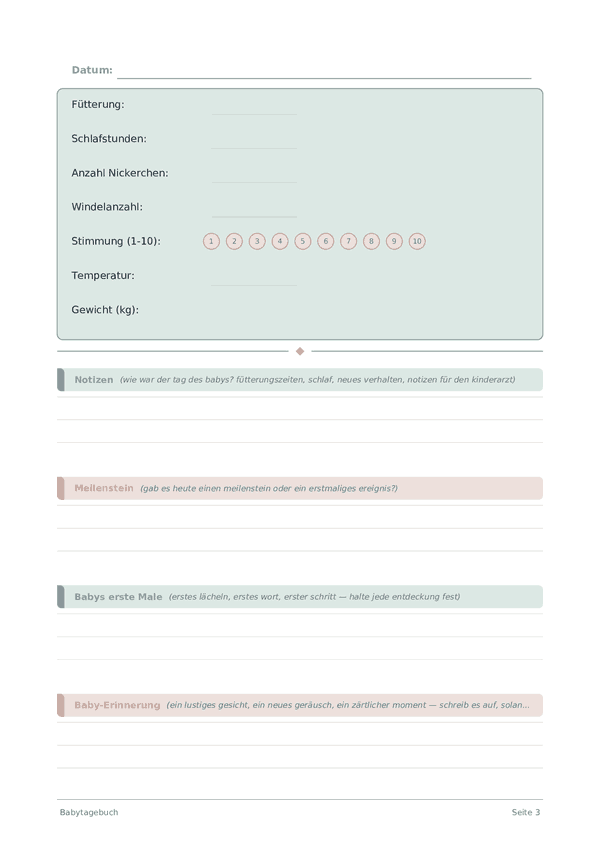
Fütterung
Brust oder Flasche? Notiere Uhrzeit, Dauer oder Menge für jede Fütterung
Schlafstunden
Notieren Sie, wie viele Stunden Sie tatsächlich geschlafen haben (nicht nur die Zeit im Bett). Das Verfolgen zusammen mit Stimmung und Energie offenbart oft starke Zusammenhänge.
Anzahl Nickerchen
Wie viele Nickerchen heute, und wie lang war jedes?
Windelanzahl
Gesamtzahl Windelwechsel heute — nass, voll oder beides
Stimmung (1-10)
Bewerten Sie Ihren allgemeinen emotionalen Zustand für den Tag. 1 bedeutet sehr niedergeschlagen oder deprimiert, 10 bedeutet außergewöhnlich glücklich und positiv. Denken Sie nicht zu lange nach — vertrauen Sie Ihrem Bauchgefühl.
Temperatur
Notieren Sie Ihre Basaltemperatur. Temperaturveränderungen helfen, den Eisprung und die allgemeine Zyklusgesundheit zu verfolgen.
Gewicht (kg)
Notieren Sie Ihr Gewicht, wenn Sie es verfolgen. Wiegen Sie sich jeden Tag zur gleichen Zeit für konsistente Daten. Konzentrieren Sie sich auf wöchentliche Trends, nicht auf tägliche Schwankungen.
Notizen
Fügen Sie zusätzlichen Kontext oder Gedanken hinzu. Diese Auffangspalte ist für alles, was nirgendwo anders hinpasst, aber später nützlich sein könnte.
Meilenstein
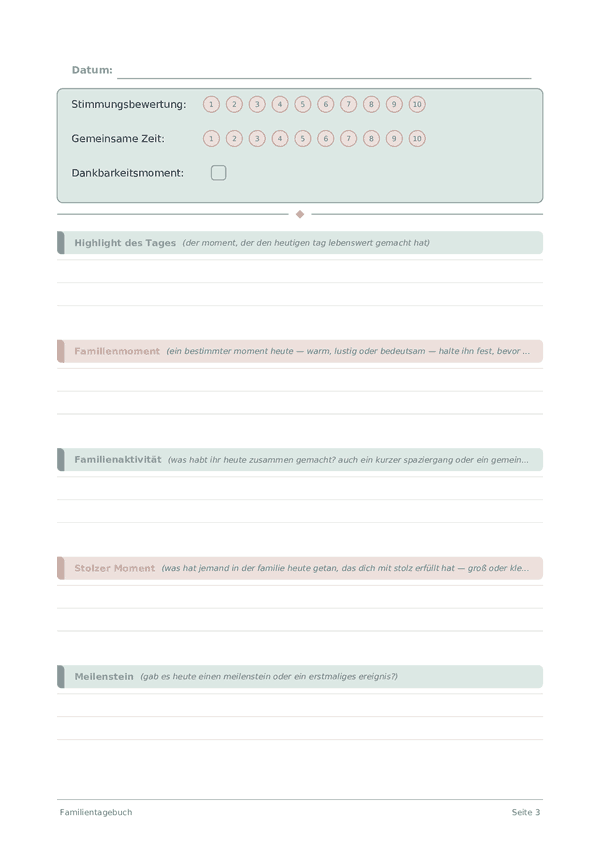
Gab es heute einen Meilenstein oder ein erstmaliges Ereignis?
Babys erste Male
Erstes Lächeln, erstes Wort, erster Schritt — halte jede Entdeckung fest
Baby-Erinnerung
Ein lustiges Gesicht, ein neues Geräusch, ein zärtlicher Moment — schreib es auf, solange du dich erinnerst
Stolzer Moment
Was hat jemand in der Familie heute getan, das dich mit Stolz erfüllt hat — groß oder klein
Tipps für den Erfolg
Wann und wie oft schreiben
During the newborn phase (0–3 months), log feeds and sleep in real time or at each wake window — brief bullet points are enough. From 3–12 months, a daily evening summary works better as routines stabilize. Write a longer reflective entry once a week about your baby’s development and your adjustment to parenthood. These first-year entries are among the most revisited journal pages parents ever write, so consistency matters more than length.
Häufig gestellte Fragen
Warum verfolgt das Babytagebuch Stillen, Schlaf, Nickerchen, Windeln und Temperatur gemeinsam?
Zusammen bilden sie den Standard-Versorgungslog, nach dem Kinderärzte fragen. Die AAP-Leitlinien für Vorsorgeuntersuchungen und Stillempfehlungen stützen sich konsequent auf Stillhäufigkeit, Schlafdauer und Ausscheidungsdaten zur Beurteilung der Säuglingsgesundheit (vergleichbar: deutsche U-Untersuchungen, BVKJ). Hat man feedings, schlafstunden, anzahl Nickerchen, windelanzahl, mood, temperature und weight auf einer Seite, liegt die Antwort auf fast jedes 'ist das normal?' schon beim Termin bereit.
Wie viele Mahlzeiten und Windeln pro Tag sind bei einem Neugeborenen typisch?
AAP-Empfehlungen für gesunde Reifgeborene nennen in den ersten Wochen etwa 8-12 Stillmahlzeiten in 24 Stunden und nach Einsetzen der Stillbeziehung etwa sechs oder mehr nasse Windeln täglich. Die Felder feeding (max 20) und windelanzahl (max 20) decken diesen Bereich ab. Die individuelle Norm variiert — anhaltende Abweichungen besprechen Sie mit Ihrer Kinderärztin, nicht in Online-Foren.
Wann sollte ich Fieber messen und ab welchem Wert die Ärztin anrufen?
AAP-Empfehlung: Jede rektale Temperatur von 38,0 °C oder höher bei einem Säugling unter drei Monaten ist ein medizinischer Notfall — sofort die Kinderärztin anrufen oder den Notruf 112 wählen. Das temperature-Feld (max 42) unterstützt die Erfassung in Celsius. Bei älteren Säuglingen sind anhaltendes Fieber über 38 °C länger als 24 Stunden, Lethargie oder Trinkverweigerung ebenfalls anrufwürdig. Vertrauen Sie Ihrer Sorge, nicht nur der Zahl.
Wie nutze ich schlafstunden sinnvoll, wenn der Nachtschlaf fragmentiert ist?
Erfassen Sie den gesamten Schlaf über 24 Stunden, nicht nur die Nacht. Neugeborene schlafen typischerweise 14-17 Stunden täglich verteilt über Nickerchen und Nacht (AAP-Empfehlungen zum Säuglingsschlaf, gestützt von National Sleep Foundation); mit 4-6 Monaten sinkt die Gesamtdauer auf 12-16 Stunden bei stärkerer nächtlicher Konsolidierung. Die Kombination aus anzahl Nickerchen und schlafstunden erfasst diese Verteilung, sodass Trends sichtbar bleiben, auch wenn einzelne Nächte chaotisch wirken.
Soll ich tagsüber oder erst abends ins Tagebuch schreiben?
Trackerfelder in Echtzeit, Schreibbereich am Tagesende. Stillmahlzeiten und Windeln zählen Sie, wie sie passieren — um 22 Uhr unterschätzt das Gedächtnis. Bewahren Sie milestone, babys erste Male, baby-Erinnerung und stolzer Moment für eine abendliche Pause, in der ein bis zwei Sätze möglich sind. Auch schlafentzogene Eltern schaffen zwei Sätze; Ziel ist Bewahrung, nicht literarische Leistung.
Ersetzt dieses Tagebuch eine Baby-Tracking-App?
Es ist ein anderer Kompromiss. Apps senken die Eingabehürde; Papier bewahrt Einträge unbegrenzt ohne Konto, Abo oder Plattformschließungs-Risiko und verbindet den täglichen Versorgungslog mit dem Andenken aus Meilensteinen und Premieren. Viele Eltern nutzen beides — App für Live-Zählungen, Tagebuch für die abendliche Synthese und Erinnerungen — aber ein Papiertagebuch trägt lange über die Neugeborenenphase hinaus.
Was kommt in babys erste Male und was in milestone?
Premieren gehören in babys erste Male: erstes Lächeln, erstes Lachen, erste Beikost, erstes Wort, erste Schritte. Milestones sind die von AAP verfolgten Entwicklungsmarker zu Vorsorgeuntersuchungen (soziales Lächeln mit zwei Monaten, freies Sitzen um sechs Monate, Worte um zwölf Monate — siehe AAP-Leitlinie; vergleichbar: deutsche U-Untersuchungen). Oft ist eine Premiere zugleich ein Meilenstein; füllen Sie dann beide Felder aus, damit der Vorsorgebezug und das Andenken zusammen bleiben.
Wie wollen Kinderärzte ein solches Tagebuch beim Termin sehen?
Bringen Sie Muster, nicht jede Seite. Heben Sie hervor: 24-Stunden-Durchschnitte für Mahlzeiten, Schlaf und Windeln der letzten Woche; alle Temperaturwerte über 38 °C; Sorgen bei Stimmung oder Nahrungstoleranz. Die von AAP empfohlene Terminvorbereitung wertet Elternbeobachtungen als wesentliche klinische Daten. Markieren oder kleben Sie Seiten mit Abweichungen an, damit der Termin auf Signal statt Blättern fokussiert.
Das könnte Ihnen auch gefallen
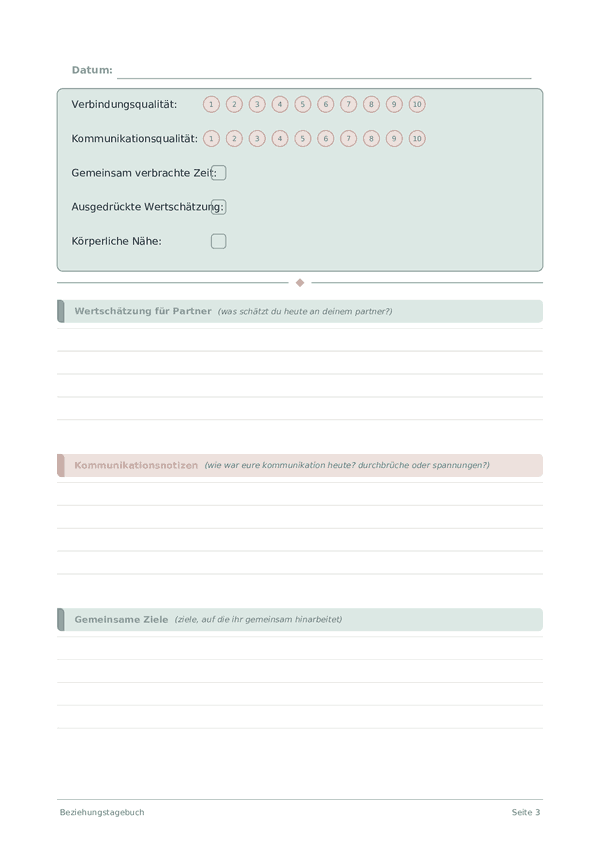
Beziehungstagebuch
Pflegen Sie Ihre Bindung durch tägliche Reflexion und bewusste Verbindung
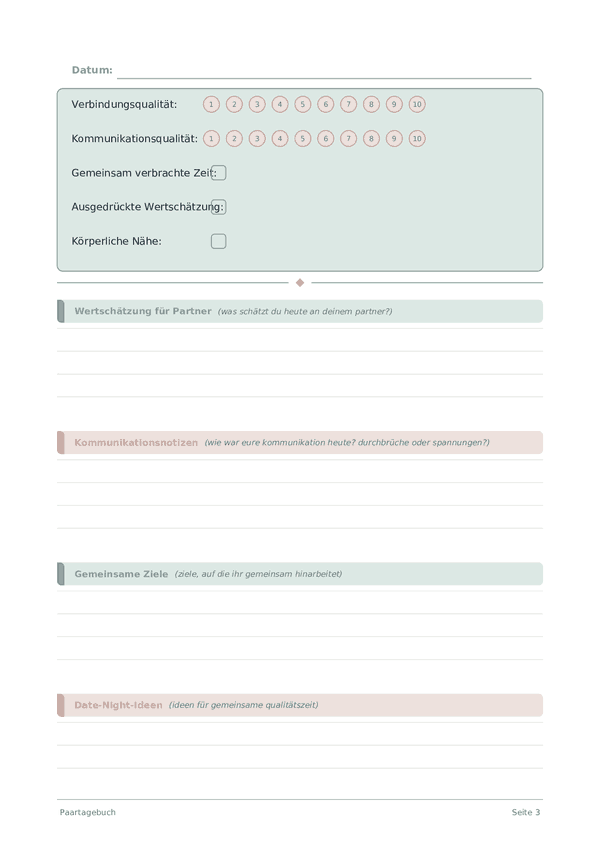
Paartagebuch
Stärken Sie Ihre Bindung mit täglichem Verbindungstracking
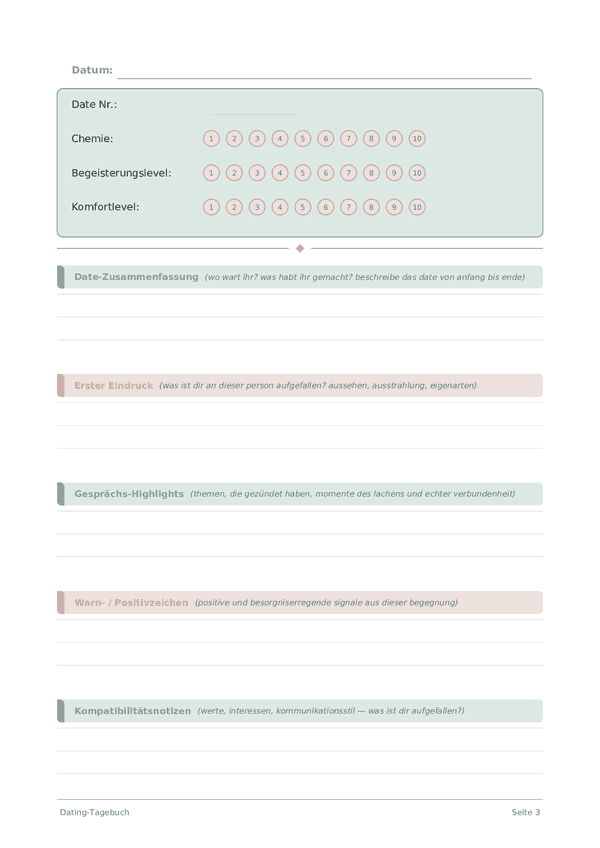
Dating-Tagebuch
Dates verfolgen, Chemie bewerten und herausfinden, was Sie wirklich wollen
Familientagebuch
Halten Sie die täglichen Momente und Erinnerungen Ihrer Familie fest
Scrollen zum Zoomen, ziehen zum Bewegen