Printable Baby Journal
Daily care tracking and milestone memories
A complete daily log for new parents. Track feedings, sleep, naps, diapers, mood, and temperature at the top of each page, then write about milestones, firsts, and special moments below. Designed for the busy rhythm of life with a newborn — quick daily tracking paired with space to capture the memories that matter most.
Personalizar campos
Activa o desactiva campos. Haz clic en el lápiz para renombrar, o añade tus propios campos.
Beneficios
Cómo Usar
¿Qué es este diario?
A baby journal is a daily log for tracking your baby's feeding, sleep, health, and developmental milestones. By recording practical data alongside notes about first moments and sweet memories, you create both a useful health reference and a priceless keepsake of your baby's earliest days.
This journal is for new parents navigating the intense, beautiful blur of baby's first months and years. Pediatricians often ask about feeding patterns, sleep schedules, and diaper counts — this journal keeps that information organized. But more importantly, it captures the tiny, magical details that slip from exhausted parents' memories far too quickly.
Developmental pediatrics research emphasizes the value of tracking patterns in infant care. Parents who log feeding and sleep data are better able to identify emerging schedules, notice potential health concerns early, and communicate effectively with healthcare providers. The reflective writing component adds emotional processing to practical tracking — a powerful combination during one of life's most transformative experiences.
Ejemplo completado
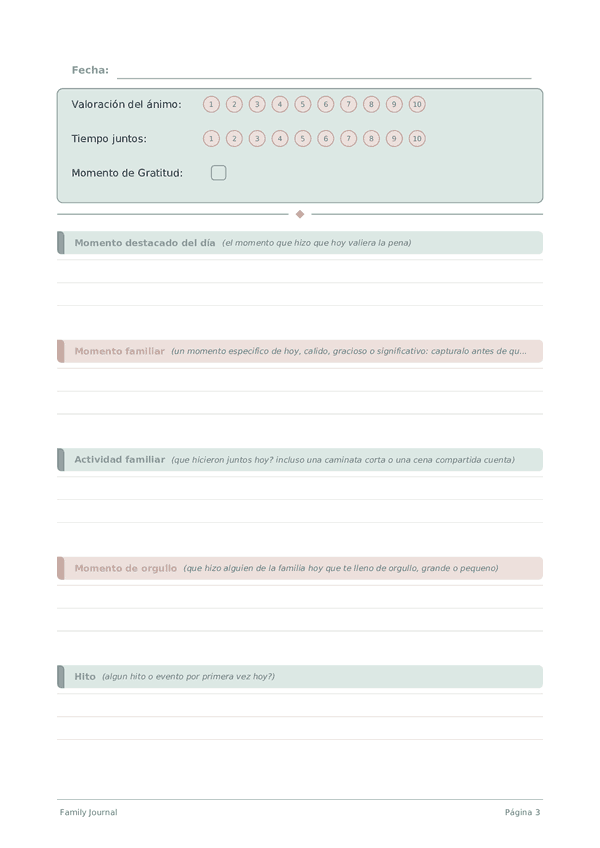
Así es como se ve una entrada típica cuando se rellena:
Cómo rellenar cada campo
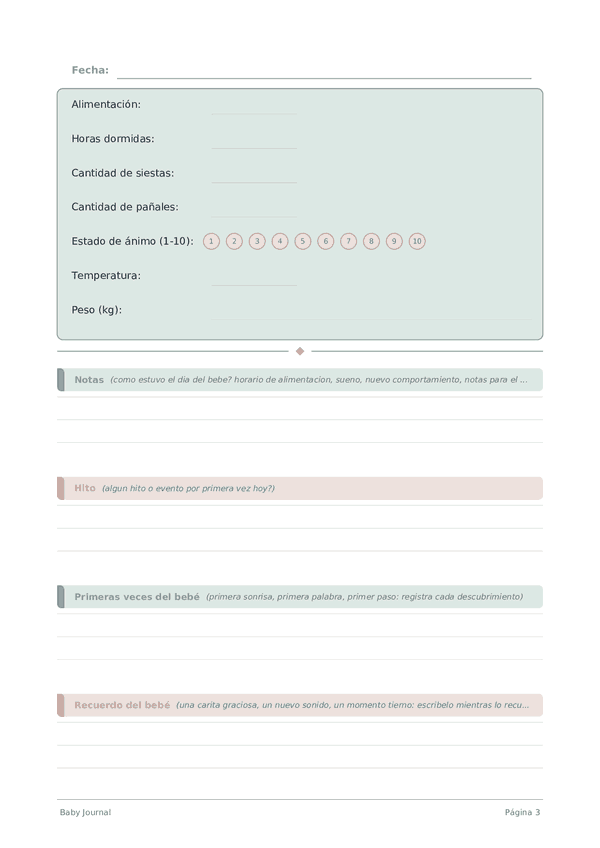
La parte superior de cada pagina tiene campos de llenado rapido (calificaciones, casillas, numeros). Debajo hay una seccion con lineas para escribir. Esto es lo que significa cada campo:
Alimentación
Pecho o formula? Anota la hora, duracion o cantidad de cada toma
Horas dormidas
Escribe cuantas horas dormiste realmente (no solo el tiempo en cama). Rastrear esto junto con el animo y la energia a menudo revela conexiones poderosas.
Cantidad de siestas
Cuantas siestas hoy y cuanto duro cada una?
Cantidad de pañales
Total de cambios de panal hoy: mojado, sucio o ambos
Estado de ánimo (1-10)
Califica tu estado emocional general del dia. 1 significa muy bajo o deprimido, 10 significa excepcionalmente feliz y positivo. No lo pienses demasiado: ve con tu instinto.
Temperatura
Registra tu temperatura basal corporal. Los cambios de temperatura ayudan a rastrear la ovulacion y la salud general del ciclo.
Peso (kg)
Registra tu peso si lo estas monitoreando. Pesate a la misma hora cada dia para datos consistentes. Enfocate en las tendencias semanales, no en las fluctuaciones diarias.
Notas
Agrega cualquier contexto o pensamiento adicional. Esta columna general es para cualquier cosa que no encaje en otro lugar pero pueda ser util despues.
Hito
Algun hito o evento por primera vez hoy?
Primeras veces del bebé
Primera sonrisa, primera palabra, primer paso: registra cada descubrimiento
Recuerdo del bebé
Una carita graciosa, un nuevo sonido, un momento tierno: escribelo mientras lo recuerdas
Momento de orgullo
Que hizo alguien de la familia hoy que te lleno de orgullo, grande o pequeno
Consejos para el exito
Cuando y con que frecuencia escribir
During the newborn phase (0–3 months), log feeds and sleep in real time or at each wake window — brief bullet points are enough. From 3–12 months, a daily evening summary works better as routines stabilize. Write a longer reflective entry once a week about your baby’s development and your adjustment to parenthood. These first-year entries are among the most revisited journal pages parents ever write, so consistency matters more than length.
Preguntas frecuentes
¿Por qué el Diario del Bebé registra tomas, sueño, siestas, pañales y temperatura juntos?
Juntos forman el registro de cuidados estándar que los pediatras solicitan. Las guías de la AAP para visitas de bienestar infantil y lactancia materna se basan sistemáticamente en la frecuencia de tomas, duración del sueño y datos de eliminación para evaluar la salud del bebé. Tener feedings, horas dormidas, cantidad de siestas, cantidad de pañales, mood, temperature y weight en una sola página significa que la respuesta a casi cualquier pregunta de «¿es esto normal?» ya está ante usted en la consulta.
¿Cuántas tomas y pañales al día son habituales en un recién nacido?
Las guías de la AAP para recién nacidos sanos a término describen aproximadamente 8-12 tomas en 24 horas para bebés alimentados al pecho en las primeras semanas, con unos seis o más pañales mojados al día una vez establecida la lactancia. Los campos feeding (máx. 20) y cantidad de pañales (máx. 20) de su diario cubren este rango. La norma específica de cada bebé varía; consulte a su pediatra sobre desviaciones persistentes, no a foros en línea.
¿Cuándo tomar la temperatura y qué valor requiere llamar al médico?
Recomendación de la AAP: cualquier temperatura rectal de 38,0 °C o más en un bebé menor de tres meses es una urgencia médica —llame al pediatra o acuda a urgencias de inmediato (en España: llame al **112**). El campo temperature (máx. 42) permite registrar en Celsius. En bebés mayores, fiebre persistente por encima de 38 °C durante más de 24 horas, letargo o rechazo de tomas también requieren llamada. Confíe en su preocupación, no solo en el número.
¿Cómo usar el dato de horas dormidas con sentido cuando el sueño nocturno está fragmentado?
Registre el sueño total de 24 horas, no solo el nocturno. Los recién nacidos suelen dormir 14-17 horas diarias entre siestas y noche (guía de sueño infantil de la AAP, respaldada por las recomendaciones de la National Sleep Foundation); hacia los 4-6 meses el total baja a 12-16 horas con mayor consolidación nocturna. La combinación de cantidad de siestas y horas dormidas captura esta distribución, por lo que las tendencias son visibles aunque las noches individuales parezcan caóticas.
¿Debo llevar el diario durante el día o solo antes de dormir?
En tiempo real para los campos del registro, al final del día para la sección de escritura. Cuente las tomas y los pañales en el momento: la memoria a las 22 h los subestimará. Reserve milestone, primeras veces del bebé, recuerdo del bebé y momento de orgullo para una pausa vespertina en la que pueda escribir una o dos frases. Incluso los progenitores con sueño pueden con dos frases; el objetivo es la conservación, no la producción literaria.
¿Es este diario un sustituto de una app de seguimiento del bebé?
Es un compromiso diferente. Las apps reducen la fricción de introducir datos; el papel conserva las entradas indefinidamente sin propiedad de cuenta, suscripción ni riesgo de cierre de plataforma, y combina el registro diario de cuidados con los recuerdos de hitos y primeros momentos. Muchos progenitores usan ambos: app para los recuentos en vivo, diario para la síntesis vespertina y los recuerdos que perduran mucho después de la etapa de recién nacido.
¿Qué diferencia primeras veces del bebé de milestone?
Las primeras veces van en primeras veces del bebé: primera sonrisa, primera carcajada, primera alimentación complementaria, primera palabra, primeros pasos. Los milestones son marcadores del desarrollo seguidos por la AAP y vinculados a las visitas de bienestar (sonrisa social hacia los 2 meses, sentarse sin apoyo hacia los 6, palabras hacia los 12 —véase la guía de vigilancia del desarrollo de la AAP). A menudo un «primera vez» es también un hito; rellene ambos campos cuando coincidan para que la referencia médica y el recuerdo queden juntos.
¿Cómo quieren los pediatras que se presente este tipo de diario en las consultas?
Lleve patrones, no cada página. Destaque: promedios de 24 horas para tomas, sueño y pañales de la última semana; cualquier temperatura por encima de 38 °C; cualquier preocupación en el estado de ánimo o la tolerancia a la alimentación. La preparación de visitas recomendada por la AAP considera las observaciones de los progenitores como datos clínicos esenciales. Marque o señale las páginas donde ocurrieron desviaciones para que la consulta se centre en la señal, no en el desplazamiento por páginas.
También Te Puede Gustar
Rueda para ampliar, arrastra para mover