Printable Diario ADHD
Il tuo compagno quotidiano strutturato per la concentrazione, la calma e lo slancio
Personalizza campi
Attiva o disattiva i campi. Clicca la matita per rinominare, oppure aggiungi i tuoi campi.
Cos'è questo diario?
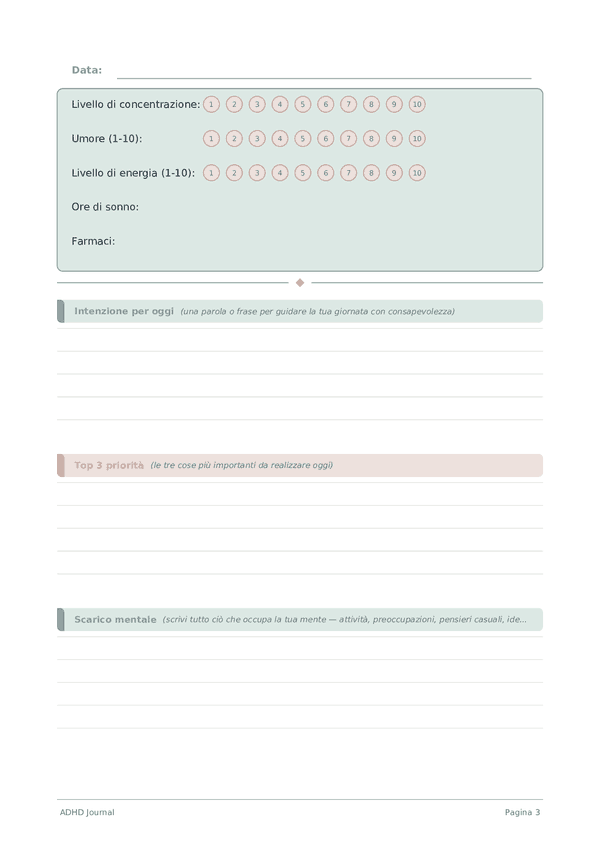
Questo è un diario ibrido — ogni pagina combina una sezione di tracciamento rapido in cima con un'area di scrittura a righe in basso. Ciò ti consente di catturare sia dati misurabili che riflessioni in forma libera in un unico posto.
Come compilare ogni campo
La parte superiore di ogni pagina ha campi a compilazione rapida (valutazioni, caselle di controllo, numeri). Sotto c'è una sezione a righe per scrivere. Ecco cosa significa ogni campo:
Livello di concentrazione
Quanto riesci a concentrarti adesso? Da 1 (dispersivo) a 10 (concentrazione laser)
Umore (1-10)
Valuta il tuo stato emotivo complessivo della giornata. 1 significa molto basso o depresso, 10 significa eccezionalmente felice e positivo. Non pensarci troppo — vai con la tua sensazione istintiva.
Livello di energia (1-10)
Valuta il tuo livello di energia fisica e mentale. 1 significa esausto e svuotato, 10 significa pieno di energia e sveglio. Questo ti aiuta a identificare quali attività aumentano o drenano la tua energia.
Ore di sonno
Scrivi quante ore hai effettivamente dormito (non solo il tempo a letto). Monitorare questo insieme all'umore e all'energia rivela spesso connessioni potenti.
Farmaci
Registra i farmaci assunti, inclusi nome e dosaggio. Un monitoraggio coerente aiuta te e il tuo medico a valutare l'efficacia del trattamento.
Intenzione per oggi
Una parola o frase per guidare la tua giornata con consapevolezza
Top 3 priorità
Le tre cose più importanti da realizzare oggi
Scarico mentale
Scrivi tutto ciò che occupa la tua mente — attività, preoccupazioni, pensieri casuali, idee incompiute. Libera spazio
Riflessione di oggi
Guarda indietro alla tua giornata con onestà. Cosa è andato bene? Cosa potrebbe migliorare? Non si tratta di giudizio — si tratta di imparare e crescere.
Consigli per il successo
Quando e con quale frequenza scrivere
Compila una pagina al giorno. La parte del tracker richiede meno di un minuto; cerca di farlo a un orario costante. La sezione di scrittura può essere fatta nello stesso momento o riservata quando hai 5 minuti tranquilli. Entrambe le parti insieme ti danno il quadro più completo della tua giornata.
Domande frequenti
Perché questo diario è pensato specificamente per l'ADHD invece che per la produttività generale?
I cervelli con ADHD faticano con il sovraccarico della memoria di lavoro, la percezione del tempo e la difficoltà ad iniziare. Questo modello risponde con una struttura deliberatamente minimale: cinque elementi del tracker (focus, umore, energia, ore di sonno, farmaci) e quattro prompt (intenzione per oggi, top 3 priorità, scarico mentale, reflection). Meno campi, gerarchia più chiara e una sezione esplicita di scarico mentale puntano direttamente alle sfide delle funzioni esecutive che mandano in tilt i sistemi di produttività standard per gli utenti neurodivergenti.
Cos'è un brain dump e perché è centrale in questo diario?
Un brain dump è lo scarico non strutturato di ogni pensiero, compito e preoccupazione su carta. Per i cervelli con ADHD, tenere in mente più loop aperti nella memoria di lavoro crea sovraccarico cognitivo e paralisi decisionale. Getting Things Done di David Allen (Penguin, 2001; rivisto 2015) ha costruito l'intera sua metodologia attorno alla cattura per questa ragione. Il campo scarico mentale offre una valvola di sfogo quotidiana prima che le priorità possano essere definite con chiarezza.
Perché solo tre priorità principali e un'intenzione?
L'ADHD spesso produce to-do list da venti voci che paralizzano invece di guidare. Limitarsi a tre priorità e un'intenzione giornaliera impone una selezione rigorosa, adattandosi ai limiti della memoria di lavoro. Essentialism di Greg McKeown (Crown Business, 2014) e Le 7 Regole per avere successo di Stephen Covey (Free Press, 1989) sostengono entrambi una riduzione radicale — particolarmente utile quando il cervello genera naturalmente più elementi 'urgenti' di quanti ne possa contenere una giornata.
Questo diario sostituisce i farmaci o la terapia per l'ADHD?
No. L'ADHD è una condizione del neurosviluppo; questo diario è uno strumento di auto-gestione di supporto, non un trattamento. Il campo per il tracker dei farmaci esiste per aiutare te e il tuo medico a vedere come i medicinali si correlano con il focus e l'umore — non per sostituire la cura clinica. Consulta un psychiatra qualificato o uno specialista ADHD per la diagnosi e il trattamento; usa il diario accanto, non al posto del supporto professionale.
In cosa si differenzia da un normale planner o da un bullet journal?
I planner standard presumono funzioni esecutive neurotipiche — che tu ricordi di consultarli, che tu stabilisca le priorità in modo coerente e che tu resista alla deriva da iperfocus. Il tracker di questo modello richiede meno di due minuti, il brain dump elimina lo stato di 'troppo sopraffatto per pianificare', e l'intenzione singola aggira la paralisi da scelta. La struttura è deliberatamente essenziale perché le pagine affollate scatenano di per sé l'evitamento tipico dell'ADHD.
Perché tracciare i farmaci e le ore di sonno insieme al focus e all'umore?
Il focus nell'ADHD varia nettamente con il sonno e i tempi di assunzione dei farmaci — pattern invisibili senza dati registrati. La revisione settimanale dell'aderenza ai farmaci, delle ore di sonno e delle tre valutazioni da 1 a 10 rivela quali combinazioni producono i giorni di focus migliori. Condividi questi pattern con il tuo medico per eventuali aggiustamenti della terapia. Questo è osservazione, non autodiagnosi: solo un clinico qualificato interpreta i dati per le decisioni terapeutiche.
Quanto tempo ci vuole perché il diario mi aiuti a individuare le mie finestre di lavoro migliori?
La maggior parte degli utenti con ADHD vede pattern chiari di focus e umore dopo due o tre settimane di voci regolari nel tracker. Incrocia le valutazioni del livello di concentrazione con l'ora del giorno, le ore di sonno e i tempi di assunzione dei farmaci. Deep Work di Cal Newport (Grand Central, 2016) raccomanda di programmare i compiti più impegnativi nella finestra di focus più alta — per l'ADHD questa finestra può essere stretta, ma è identificabile attraverso i dati invece che per tentativi ed errori.
Qual è l'errore più comune degli utenti con ADHD con questo diario?
Cercare di compilarlo perfettamente ogni giorno, poi abbandonarlo dopo una settimana saltata. Il diario è pensato per un uso imperfetto — salta un giorno, compila solo il tracker, scrivi un brain dump di una riga. Le Quattro Tendenze di Gretchen Rubin (Harmony, 2017) e Atomic Habits di James Clear (Avery, 2018) mettono entrambi in guardia dal fatto che il perfezionismo uccide le abitudini più velocemente delle mancanze. Punta alla presenza, non alla completezza.
Potrebbe piacerti anche
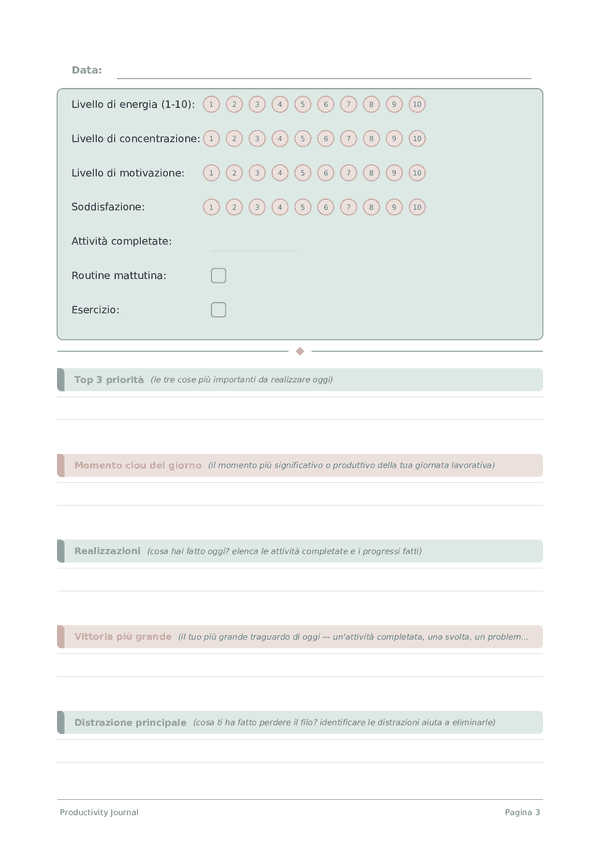
Diario della Produttività
Monitora energia, concentrazione e output quotidiano per costruire abitudini di performance ottimale
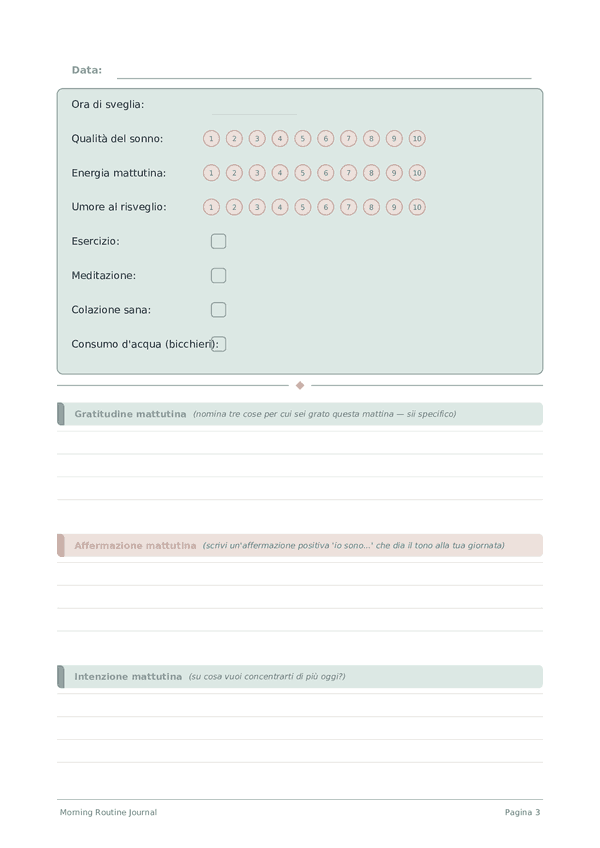
Diario della Routine Mattutina
Inizia ogni giornata con chiarezza, gratitudine e intenzione
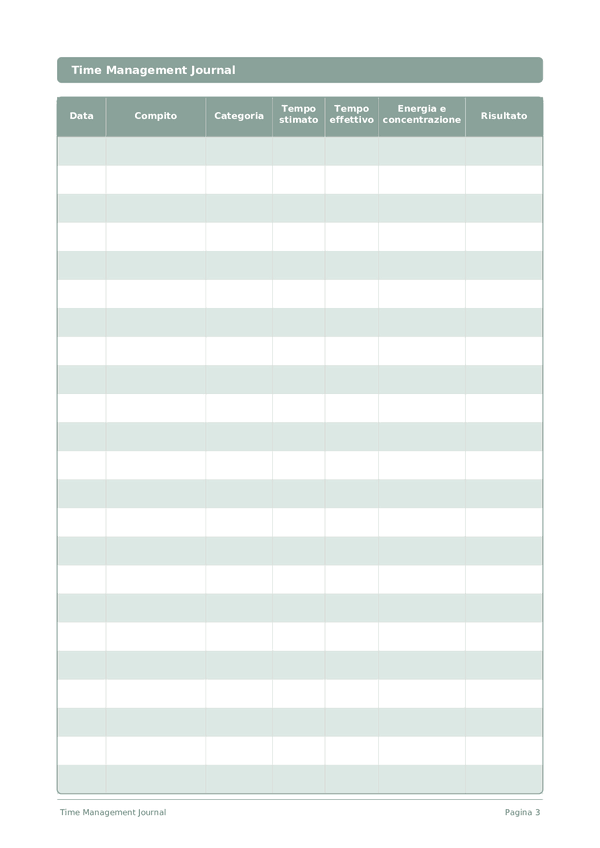
Diario della Gestione del Tempo
Monitora compiti, tempo ed energia per recuperare la tua giornata
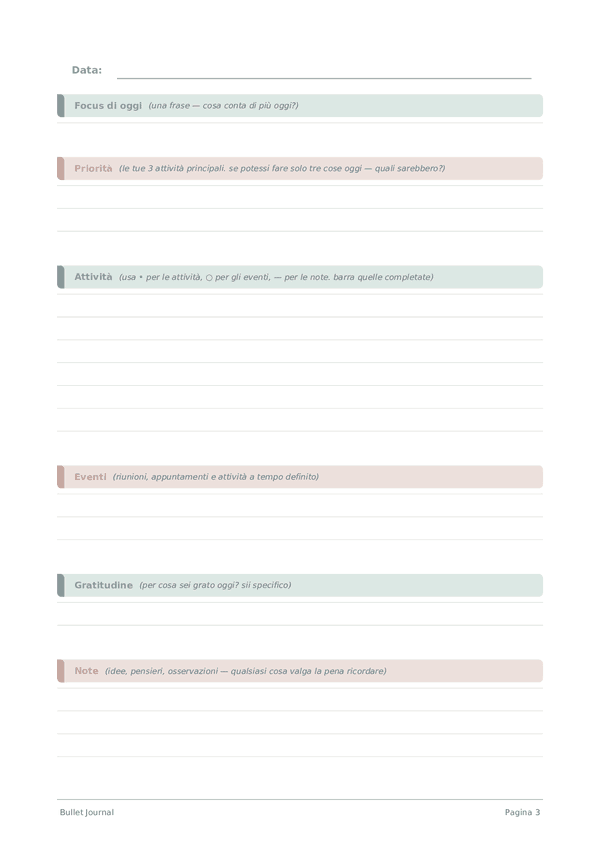
Bullet Journal
Registro quotidiano strutturato per la registrazione rapida
Scorri per ingrandire, trascina per spostare