Printable Diario del Minimalismo
Diario quotidiano di decluttering e vita intenzionale
Personalizza campi
Attiva o disattiva i campi. Clicca la matita per rinominare, oppure aggiungi i tuoi campi.
Cos'è questo diario?
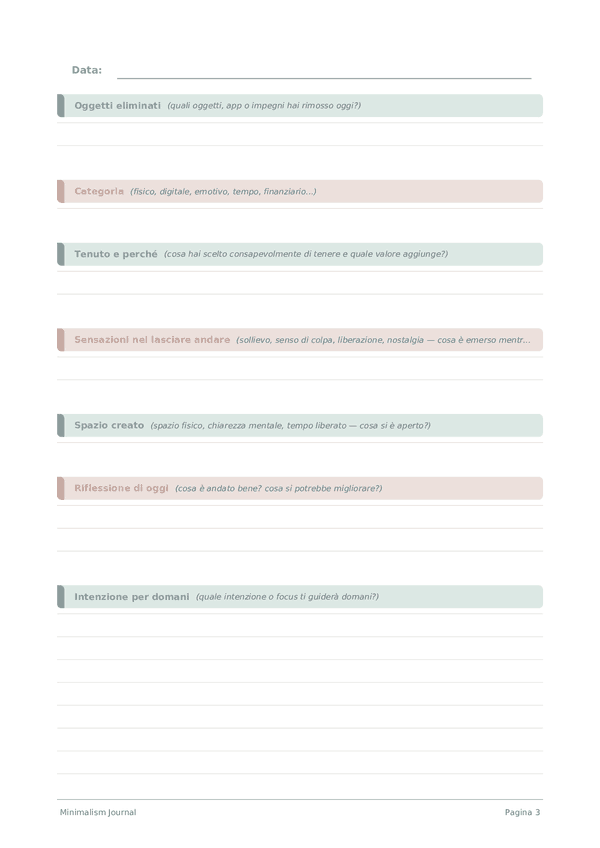
Questo è un diario con inserimenti giornalieri — ogni pagina rappresenta un giorno con domande strutturate che guidano la tua riflessione. Le sezioni sono progettate in modo che compilarle richieda solo 5–10 minuti, rendendo facile mantenere un'abitudine quotidiana.
Come compilare ogni campo
Ogni giorno troverai diverse sezioni etichettate con righe per scrivere. Ecco a cosa serve ogni sezione:
Oggetti eliminati
Quali oggetti, app o impegni hai rimosso oggi?
Categoria
Fisico, digitale, emotivo, tempo, finanziario...
Tenuto e perché
Cosa hai scelto consapevolmente di tenere e quale valore aggiunge?
Sensazioni nel lasciare andare
Sollievo, senso di colpa, liberazione, nostalgia — cosa è emerso mentre lasciavi andare?
Spazio creato
Spazio fisico, chiarezza mentale, tempo liberato — cosa si è aperto?
Riflessione di oggi
Guarda indietro alla tua giornata con onestà. Cosa è andato bene? Cosa potrebbe migliorare? Non si tratta di giudizio — si tratta di imparare e crescere.
Intenzione per domani
Quale intenzione o focus ti guiderà domani?
Consigli per il successo
Quando e con quale frequenza scrivere
Compila una pagina al giorno. La maggior parte delle persone trova che la mattina (10 minuti dopo il risveglio) o la sera (prima di dormire) funzionino meglio. Scegli un orario e mantienilo per almeno due settimane prima di cambiare. La chiave è la regolarità, non la perfezione.
Domande frequenti
Cosa cattura ogni voce giornaliera nel Minimalism Journal?
Sette campi al giorno: oggetti eliminati, categoria, tenuto e perché, sensazioni nel lasciare andare, spazio creato, reflection e intenzione per domani. La struttura traccia sia l'azione (cosa è andato via) che l'emozione (come ci si è sentiti nel lasciarlo andare), riconoscendo che il minimalismo è una pratica psicologica tanto quanto fisica. Il campo intenzione per domani trasforma ogni voce in un piccolo impegno per il giorno successivo.
Perché tracciare le sensazioni nel lasciare andare insieme agli oggetti eliminati?
Il decluttering porta in superficie emozioni intense — senso di colpa per i regali, dispiacere per oggetti legati all'identità, sollievo per il disordine accumulato. Registrare le sensazioni nel lasciare andare interrompe il ciclo di declutter-e-rimpiazzare, esponendo i fattori scatenanti emotivi. Essentialism di Greg McKeown (Crown Business, 2014) inquadra questo come discernere ciò che conta davvero; il campo dei sentimenti è dove noti quando 'potrei averne bisogno' è in realtà 'ho paura di lasciarlo andare'.
Quale sistema di categorie funziona meglio per tracciare ciò che lasci andare?
Usa categorie ampie che si adattano alla tua casa: abbigliamento, libri, cartaceo, cucina, sentimentale, digitale, duplicati. Digital Minimalism di Cal Newport (Portfolio, 2019) estende la stessa logica alle app e alle notifiche. Dopo due o quattro settimane, la revisione settimanale dei totali per categoria rivela quali aree della vita contengono più eccesso — di solito sorprendente — e dove è necessario intervenire.
Perché il campo 'oggetti tenuti' è importante quanto quello degli oggetti eliminati?
Elencare ciò che hai scelto di tenere impone una validazione consapevole. Senza questo campo, il decluttering diventa puramente sottrattivo — non sviluppi chiarezza su ciò che ha davvero guadagnato il suo spazio. Essentialism di McKeown (Crown Business, 2014) chiama questo il cambiamento 'meno ma meglio': l'obiettivo non è lo spazio vuoto, ma lo spazio riempito intenzionalmente. Ogni oggetto tenuto dovrebbe superare un controllo con una ragione esplicita.
In cosa si differenzia dal seguire il metodo KonMari di Marie Kondo?
Il KonMari è una purga una tantum per categoria; questo diario supporta una pratica incrementale quotidiana. Entrambi condividono principi fondamentali — scelta consapevole, gratitudine verso gli oggetti — ma il diario si adatta a chi non può dedicare interi fine settimana a decluttering di massa e preferisce un cambiamento lento e sostenibile. Le voci quotidiane allenano anche il muscolo della riflessione che previene l'accumulo futuro, aspetto che le purge una tantum spesso non affrontano.
Questo diario aiuta se ho tendenze all'accumulo compulsivo?
Può supportare un cambiamento graduale per le abitudini di disordine generale, ma il disturbo da accumulo clinico richiede un trattamento professionale qualificato, tipicamente la terapia cognitivo-comportamentale con uno specialista in questo disturbo. Il campo sensazioni nel lasciare andare può aiutare a notare i pattern, ma non è uno strumento clinico. Se il decluttering causa disagio significativo o compromette la vita quotidiana, consulta un professionista della salute mentale invece di affidarti a un diario di auto-aiuto.
Quanto tempo ci vuole perché il decluttering diventi una pratica stabile?
Lally et al. (2010, European Journal of Social Psychology, 40(6)) hanno scoperto che la formazione delle abitudini richiedeva in media 66 giorni, con un intervallo da 18 a 254. Per il minimalismo, aspettati 8-12 settimane di voci quotidiane prima che lasciare andare sembri una cosa normale invece che faticosa. Il campo intenzione per domani agisce come il piccolo passo successivo in stile BJ Fogg (Tiny Habits, 2019), rendendo la costanza più facile delle ambiziose operazioni di sgombero di una stanza intera.
Qual è l'errore più comune con un diario del minimalismo?
Trattarlo come un esercizio di conteggio — inseguire i totali degli oggetti invece di catturare la riflessione. Eliminare 30 oggetti in modo distratto è meno prezioso che eliminarne tre con voci oneste nel campo sensazioni nel lasciare andare. Essentialism di McKeown (Crown Business, 2014) mette in guardia dal sostituire l'attività visibile con la vera chiarezza. I campi reflection e intenzione per domani sono dove la pratica va oltre una casa ordinata.
Potrebbe piacerti anche
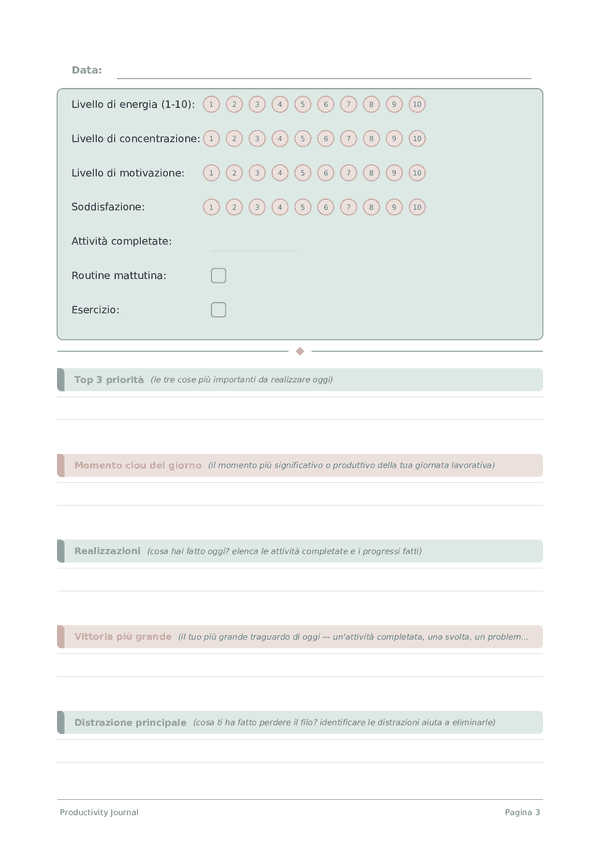
Diario della Produttività
Monitora energia, concentrazione e output quotidiano per costruire abitudini di performance ottimale
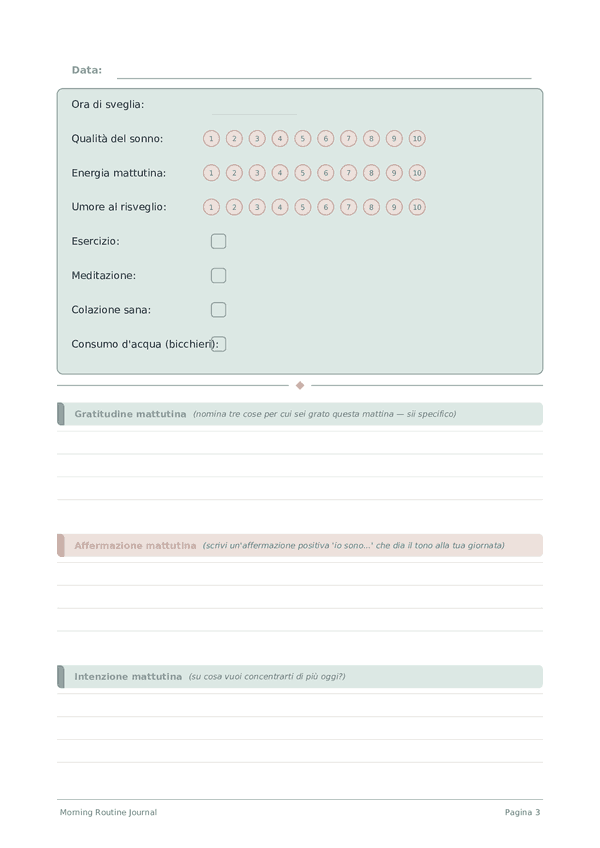
Diario della Routine Mattutina
Inizia ogni giornata con chiarezza, gratitudine e intenzione
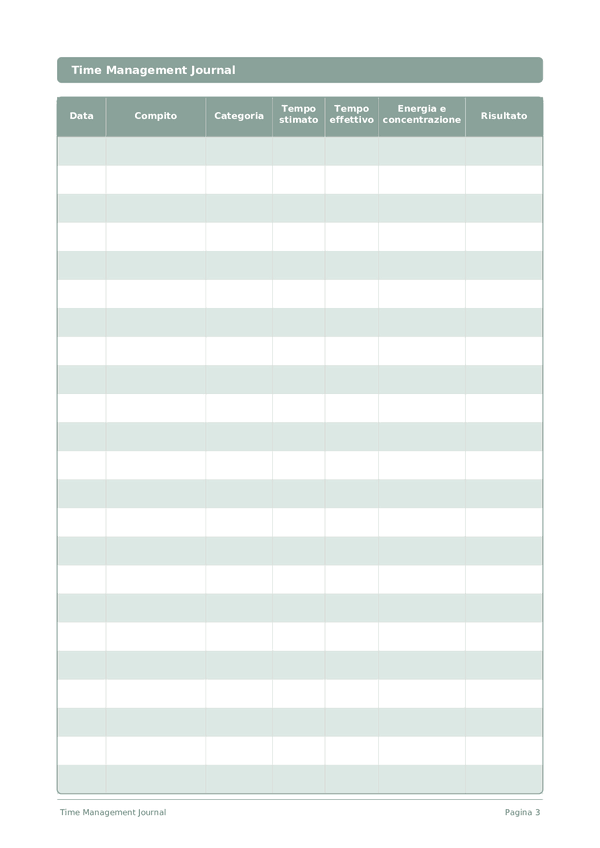
Diario della Gestione del Tempo
Monitora compiti, tempo ed energia per recuperare la tua giornata
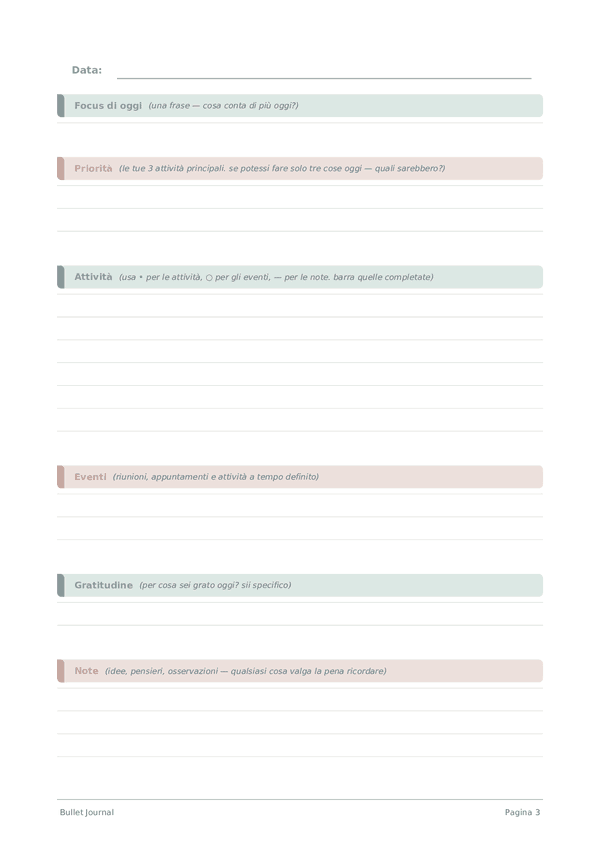
Bullet Journal
Registro quotidiano strutturato per la registrazione rapida
Scorri per ingrandire, trascina per spostare