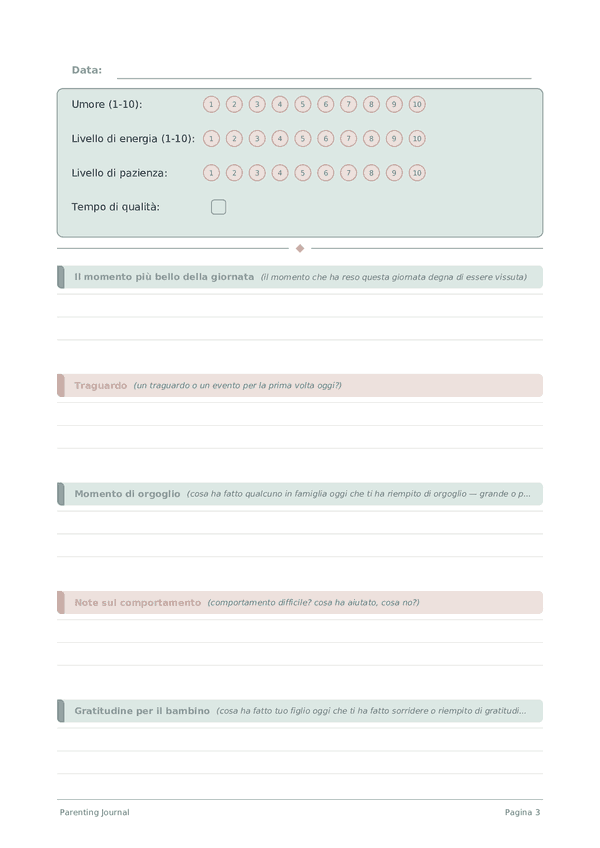
Printable Diario dei Genitori
Custodisci ogni momento del tuo percorso genitoriale
Personalizza campi
Attiva o disattiva i campi. Clicca la matita per rinominare, oppure aggiungi i tuoi campi.
Cos'è questo diario?
Questo è un diario ibrido — ogni pagina combina una sezione di tracciamento rapido in cima con un'area di scrittura a righe in basso. Ciò ti consente di catturare sia dati misurabili che riflessioni in forma libera in un unico posto.
Come compilare ogni campo
La parte superiore di ogni pagina ha campi a compilazione rapida (valutazioni, caselle di controllo, numeri). Sotto c'è una sezione a righe per scrivere. Ecco cosa significa ogni campo:
Umore (1-10)
Valuta il tuo stato emotivo complessivo della giornata. 1 significa molto basso o depresso, 10 significa eccezionalmente felice e positivo. Non pensarci troppo — vai con la tua sensazione istintiva.
Livello di energia (1-10)
Valuta il tuo livello di energia fisica e mentale. 1 significa esausto e svuotato, 10 significa pieno di energia e sveglio. Questo ti aiuta a identificare quali attività aumentano o drenano la tua energia.
Livello di pazienza
Quanto sei stato paziente con tuo figlio oggi? Da 1 (in difficoltà) a 10 (calmo)
Tempo di qualità
Hai avuto del tempo concentrato e presente con tuo figlio oggi? Descrivilo brevemente
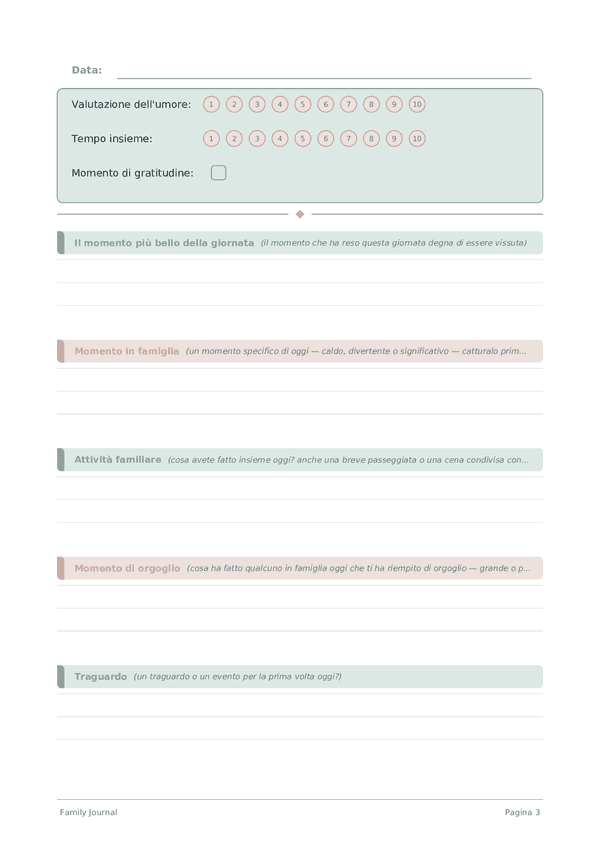
Il momento più bello della giornata
Qual è stata la parte migliore della tua giornata? Cattura il momento che ha reso oggi degno di essere vissuto. Questi momenti salienti diventano una raccolta dei tuoi ricordi più felici.
Traguardo
Un traguardo o un evento per la prima volta oggi?
Momento di orgoglio
Cosa ha fatto qualcuno in famiglia oggi che ti ha riempito di orgoglio — grande o piccolo
Note sul comportamento
Comportamento difficile? Cosa ha aiutato, cosa no?
Gratitudine per il bambino
Cosa ha fatto tuo figlio oggi che ti ha fatto sorridere o riempito di gratitudine?
Note
Aggiungi qualsiasi contesto o pensiero aggiuntivo. Questa colonna tuttofare è per tutto ciò che non si adatta altrove ma potrebbe essere utile in seguito.
Consigli per il successo
Quando e con quale frequenza scrivere
Compila una pagina al giorno. La parte del tracker richiede meno di un minuto; cerca di farlo a un orario costante. La sezione di scrittura può essere fatta nello stesso momento o riservata quando hai 5 minuti tranquilli. Entrambe le parti insieme ti danno il quadro più completo della tua giornata.
Domande frequenti
Perché il Parenting Journal traccia pazienza ed energia insieme all'umore?
Pazienza ed energia sono le leve delle risorse del genitore, non del comportamento del bambino. Il framework di neurobiologia interpersonale di Daniel Siegel sottolinea che la regolazione genitoriale guida la co-regolazione del bambino — un genitore esaurito non può modellare la calma. Valutare quotidianamente pazienza ed energia espone le traiettorie di burnout prima che raggiungano il 'ho urlato e non so perché' — trasformando una vaga stanchezza in un segnale misurabile.
Cosa conta come tempo di qualità per la casella di controllo?
Tempo concentrato, con attenzione indivisa, con tuo/a figlio/a — senza telefono, senza ascoltare a metà. Le raccomandazioni sull'uso dei media e sul tempo in famiglia sottolineano costantemente la presenza genitoriale rispetto alla durata; dieci minuti senza telefono dedicati all'attività scelta dal bambino battono un'ora di gioco parallelo distratto. La casella di controllo binaria previene di gonfiare una breve co-presenza in 'tempo di qualità' che non lo era.
Devo scrivere le voci anche nei giorni in cui mi sono sentito/a un genitore negativo?
Specialmente allora. I giorni con pazienza da 3/10 sono dati diagnostici, non fallimenti. Le ricerche di Brené Brown sulla vergogna rispetto alla colpa distinguono 'ho fatto qualcosa di difficile' da 'sono una persona cattiva' — scrivere il momento specifico nelle note sul comportamento previene alla vergogna di globalizzare un pomeriggio difficile trasformandolo in identità. I pattern nei giorni difficili puntano spesso a un trigger risolvibile: sonno, fame, transizioni, eccesso di schermi.
In cosa si differenzia traguardo da momento di orgoglio in questo modello?
I traguardi sono i primi e le transizioni evolutivamente significativi (prime parole, andare in bicicletta, leggere autonomamente, iniziare la scuola) — elementi che i pediatri usano come indicatori di sviluppo. I momenti di orgoglio sono scorci a livello di carattere: tuo/a figlio/a si è scusato/a spontaneamente, ha difeso un bambino più piccolo, ha persistito quando era frustrato/a. I traguardi tracciano 'cosa' i bambini sanno fare; i momenti di orgoglio tracciano 'chi' stanno diventando.
Il diario è sufficiente o devo leggere anche libri sulla genitorialità?
Il diario è riflessione sulla pratica, non la pratica stessa. Abbinalo a framework basati su prove: gli strumenti di comunicazione di Faber & Mazlish (Come parlare ai bambini perché ascoltino), la ricerca sulla genitorialità autorevole di Baumrind, e il framework del cervello integrale di Siegel. Il diario ti aiuta a vedere se ciò che hai letto sta effettivamente emergendo nella tua vita quotidiana.
E se il mio punteggio di pazienza è costantemente 4 o inferiore?
Una pazienza persistentemente bassa segnala un problema sistemico, non di forza di volontà. Controlla le voci di energia e tempo di qualità: la bassa energia cronica indica sonno insufficiente, distribuzione del carico con il partner, o stress genitoriale non affrontato. Cali di pazienza nel periodo postparto o perimenopausale richiedono un follow-up medico. Se l'irritabilità è accompagnata da senso di disperazione o pensieri intrusivi su possibili danni, contatta subito un clinico — i punteggi di pazienza non sostituiscono la valutazione clinica.
Come posso usare le note sul comportamento in modo costruttivo senza etichettare mio/a figlio/a?
Scrivi il comportamento più il contesto: 'crisi alle 17:00, merenda saltata, transizione dagli schermi.' L'approccio di Faber & Mazlish e le linee guida pediatriche sottolineano entrambi la descrizione del comportamento piuttosto che del bambino ('ha colpito' non 'è aggressivo'). Le note nel corso delle settimane rivelano i precedenti — fame, deficit di sonno, sovraccarico sensoriale — che puoi ingegnerizzare per evitare.
Quando la revisione settimanale dovrebbe far emergere preoccupazioni abbastanza serie da richiedere un clinico?
Porta i dati a un pediatra o psicologo infantile se vedi: regressione persistente nei traguardi, cambiamenti comportamentali marcati che durano settimane, la tua pazienza o umore a 3/10 nella maggior parte dei giorni, o qualsiasi pensiero di danni a sé stessi o al bambino. Le raccomandazioni pediatriche suggeriscono un processo decisionale condiviso per le preoccupazioni di sviluppo. Le voci del tuo diario rendono la visita concreta; non lasciare che la documentazione ritardi una chiamata che senti necessaria.
Potrebbe piacerti anche
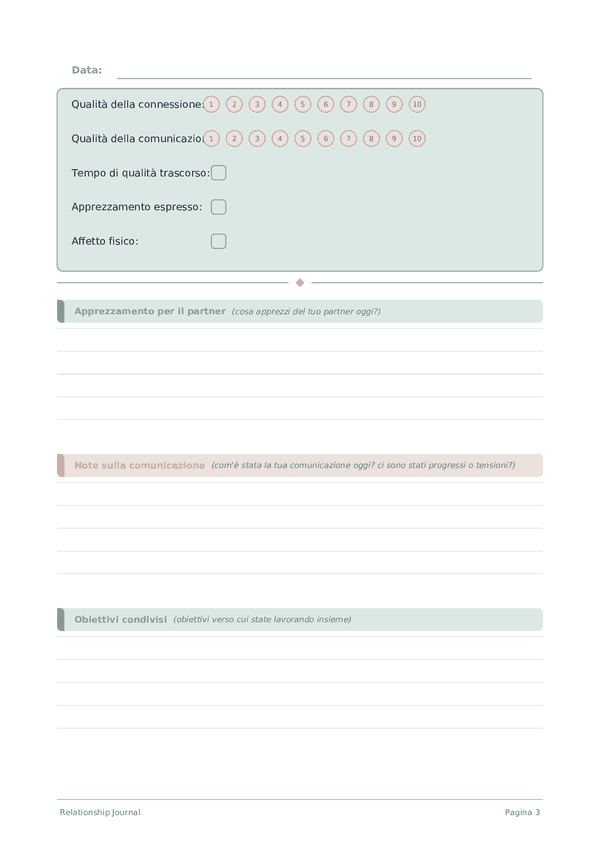
Diario della Relazione
Coltiva il tuo legame attraverso la riflessione quotidiana e la connessione intenzionale
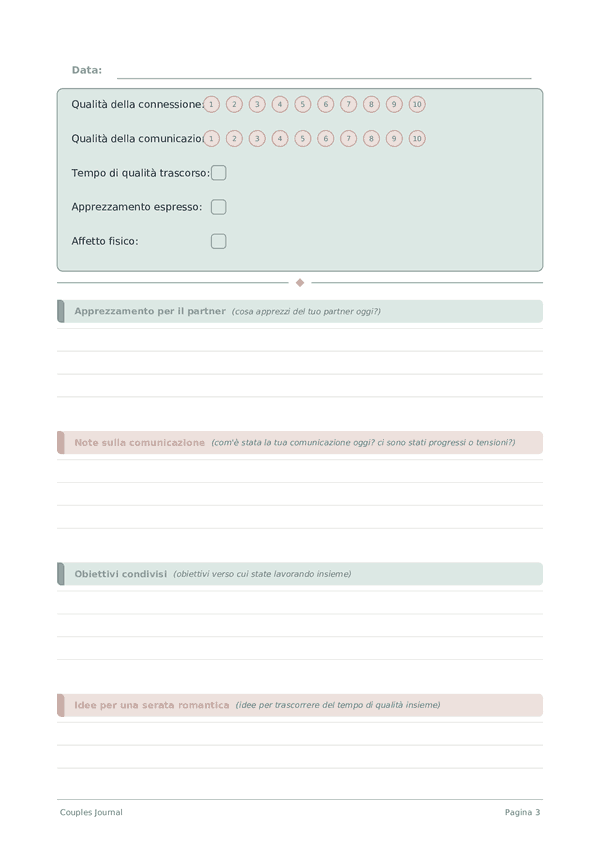
Diario di Coppia
Rafforza il tuo legame con il monitoraggio quotidiano della connessione
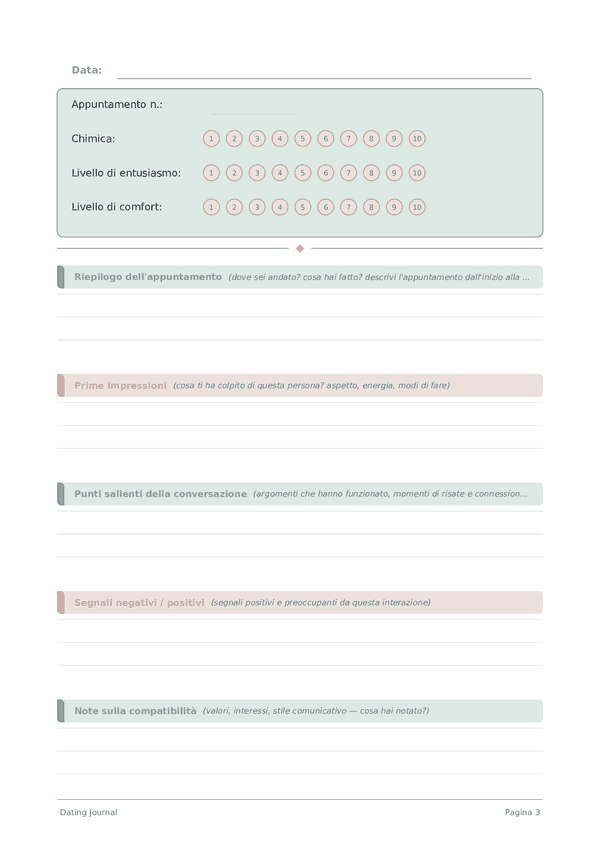
Diario degli Appuntamenti
Monitora gli appuntamenti, valuta la chimica e scopri cosa vuoi davvero
Diario di Famiglia
Cattura i momenti quotidiani e i ricordi della tua famiglia
Scorri per ingrandire, trascina per spostare