Printable ADHS-Tagebuch
Ihr strukturierter täglicher Begleiter für Fokus, Ruhe und Schwung
A daily journal designed specifically for people with ADHD. Each page helps you cut through the mental noise — track your focus and energy, capture the brain dump, set a clear intention, and prioritise what actually matters. Built around neurodivergent needs: minimal structure, maximum clarity.
Felder anpassen
Schalten Sie Felder ein oder aus. Klicken Sie auf den Stift zum Umbenennen oder fügen Sie eigene Felder hinzu.
Vorteile
Anleitung
Was ist dieses Journal?
An ADHD journal is a daily support tool designed specifically for the ADHD brain. By tracking focus, mood, energy, and medication alongside writing about intentions, priorities, and brain dumps, you externalize the mental clutter and create a system that works with your neurology rather than against it.
This journal is for adults and teens with ADHD — diagnosed or suspected — who struggle with executive function, focus, time blindness, and emotional regulation. It is built to be quick and low-friction, because an elaborate journaling system that requires too much executive function defeats its own purpose.
ADHD coaching research shows that external accountability systems dramatically improve follow-through for ADHD brains. The brain dump section is particularly powerful — getting racing thoughts onto paper frees up working memory that ADHD brains need for task execution. Tracking patterns in focus and energy helps identify optimal windows for different types of work, turning self-knowledge into a productivity advantage.
Ausgefülltes Beispiel
So sieht ein typischer Eintrag aus, wenn er ausgefüllt ist:
Wie Sie jedes Feld ausfüllen
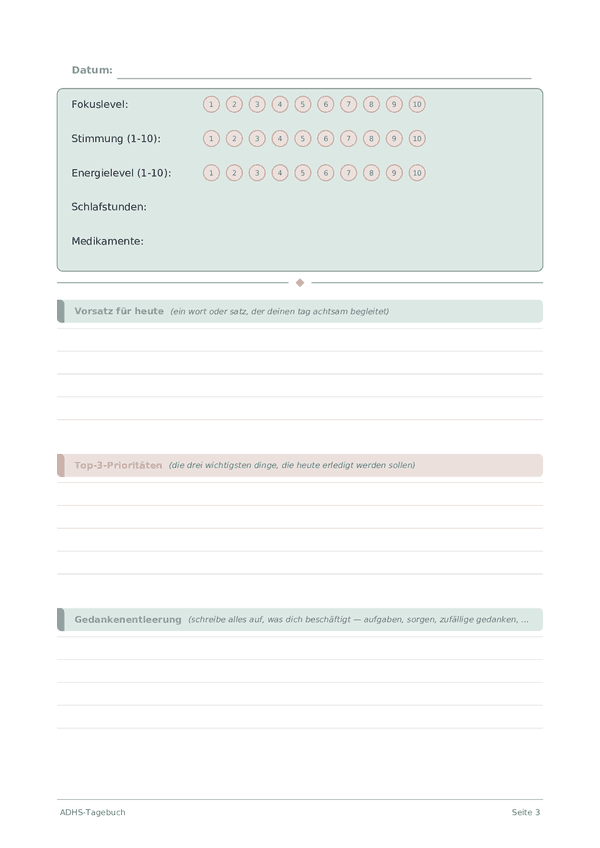
Oben auf jeder Seite befinden sich schnell ausfüllbare Felder (Bewertungen, Kontrollkästchen, Zahlen). Darunter ist ein linierter Bereich zum Schreiben. Hier erfahren Sie, was jedes Feld bedeutet:
Fokuslevel
Wie gut kannst du dich gerade konzentrieren? Bewerte von 1 (zerstreut) bis 10 (voll fokussiert)
Stimmung (1-10)
Bewerten Sie Ihren allgemeinen emotionalen Zustand für den Tag. 1 bedeutet sehr niedergeschlagen oder deprimiert, 10 bedeutet außergewöhnlich glücklich und positiv. Denken Sie nicht zu lange nach — vertrauen Sie Ihrem Bauchgefühl.
Energielevel (1-10)
Bewerten Sie Ihr körperliches und geistiges Energieniveau. 1 bedeutet erschöpft und ausgelaugt, 10 bedeutet voller Energie und wach. Dies hilft Ihnen zu erkennen, welche Aktivitäten Ihre Energie steigern oder verbrauchen.
Schlafstunden
Notieren Sie, wie viele Stunden Sie tatsächlich geschlafen haben (nicht nur die Zeit im Bett). Das Verfolgen zusammen mit Stimmung und Energie offenbart oft starke Zusammenhänge.
Medikamente
Notieren Sie eingenommene Medikamente, einschließlich Name und Dosierung. Konsequentes Verfolgen hilft Ihnen und Ihrem Arzt, die Wirksamkeit der Behandlung zu bewerten.
Vorsatz für heute
Ein Wort oder Satz, der deinen Tag achtsam begleitet
Top-3-Prioritäten
Die drei wichtigsten Dinge, die heute erledigt werden sollen
Gedankenentleerung
Schreibe alles auf, was dich beschäftigt — Aufgaben, Sorgen, zufällige Gedanken, unfertige Ideen. Schaffe Platz im Kopf
Reflexion des Tages
Blicken Sie ehrlich auf Ihren Tag zurück. Was lief gut? Was könnte besser sein? Es geht nicht um Urteile — es geht um Lernen und Wachstum.
Tipps für den Erfolg
Wann und wie oft schreiben
Write twice daily: a 2-minute evening entry (what worked today, what didn\u2019t, tomorrow\u2019s top 3) and a 1-minute morning check-in (energy level, medication, today\u2019s anchor task). Keep the journal next to where you actually sit — if it requires getting up to find it, ADHD friction will win. Weekly, spend 10 minutes reviewing patterns: which days were productive and why, which strategies helped, which times of day were your cognitive peaks. This journal works best when it is short, consistent, and immediately accessible.
Häufig gestellte Fragen
Warum ist dieses Tagebuch speziell für ADHS gemacht und nicht für allgemeine Produktivität?
ADHS-Gehirne kämpfen mit Arbeitsgedächtnis-Überlastung, Zeitwahrnehmung und Startreibung. Diese Vorlage antwortet mit bewusst minimaler Struktur: fünf Tracker-Punkte (Fokus, Stimmung, Energie, schlafstunden, medication) und vier Impulse (vorsatz für heute, top-3-Prioritäten, gedankenentleerung, reflection). Weniger Felder, klarere Hierarchie und ein expliziter gedankenentleerung-Bereich zielen direkt auf die Exekutivfunktions-Herausforderungen, an denen Standard-Produktivitätssysteme bei neurodivergenten Nutzern scheitern. Diese Anwendung ist kein diagnostisches Werkzeug und ersetzt keine fachärztliche Beurteilung.
Was ist ein Brain Dump und warum steht er im Zentrum dieses Tagebuchs?
Ein Brain Dump ist unstrukturiertes Auslagern jedes Gedankens, jeder Aufgabe und Sorge auf Papier. Für ADHS-Gehirne erzeugt das Halten mehrerer offener Schleifen im Arbeitsgedächtnis kognitive Überlastung und Entscheidungslähmung. David Allens Getting Things Done (Penguin, 2001; überarbeitet 2015) baute seine gesamte Methodologie aus diesem Grund um Erfassung. Das gedankenentleerung-Feld bietet ein tägliches Druckventil, bevor Prioritäten klar gesetzt werden können.
Warum nur drei Top-Prioritäten und eine Intention?
ADHS erzeugt oft 20-Punkt-To-do-Listen, die eher lähmen als lenken. Die Beschränkung auf drei Prioritäten und eine Tagesintention erzwingt rücksichtslose Auswahl und passt zu den Arbeitsgedächtnis-Grenzen. Greg McKeowns Essentialism (Crown Business, 2014) und Stephen Coveys The 7 Habits of Highly Effective People (Free Press, 1989) argumentieren beide für radikale Verengung — besonders wertvoll, wenn das Gehirn natürlich mehr dringende Punkte erzeugt als ein Tag aushält.
Ersetzt dieses Tagebuch ADHS-Medikation oder Therapie?
Nein. ADHS ist eine neurologische Entwicklungsstörung; dieses Tagebuch ist ein unterstützendes Selbstmanagement-Werkzeug, keine Behandlung. Diese Anwendung ist kein diagnostisches Werkzeug und ersetzt keine fachärztliche Beurteilung. ADHS-Diagnose und -Behandlung erfordert eine Untersuchung durch eine/n qualifizierte/n Psychiater/in oder Psychotherapeuten/in. Das medication-Feld hilft dir und deiner/m Behandler/in zu sehen, wie Medikamente mit Fokus und Stimmung korrelieren — kein Ersatz für klinische Versorgung.
Wie unterscheidet sich das von einem normalen Planer oder Bullet Journal?
Standardplaner setzen neurotypische Exekutivfunktion voraus — dass du daran denkst hineinzuschauen, konsequent priorisierst und Hyperfokus-Abdriften widerstehst. Der Tracker dieser Vorlage dauert unter zwei Minuten, der Brain Dump nimmt den zu-überfordert-zum-Planen-Zustand, und die eine Intention umgeht Wahllähmung. Die Struktur ist bewusst spärlich gehalten, weil überladene Seiten selbst ADHS-Vermeidung auslösen — weniger Felder bedeuten weniger Auslöser für Aufschieben oder das Aufgeben des Systems insgesamt.
Warum medication und schlafstunden neben Fokus und Stimmung tracken?
ADHS-Fokus variiert scharf mit Schlaf und Medikamenten-Timing — Muster, die ohne aufgezeichnete Daten unsichtbar sind. Das wöchentliche Review von Medikamenteneinnahme, schlafstunden und den drei 1-10-Bewertungen zeigt, welche Kombinationen die besten Fokustage erzeugen. Teile Muster mit deiner/m verschreibenden Arzt/Ärztin für Medikationsanpassungen. Das ist Beobachtung, keine Selbstdiagnose: Daten für Behandlungsentscheidungen interpretiert nur eine/r qualifizierte/r Behandler/in.
Wie lange dauert es, bis das Tagebuch meine besten Arbeitsfenster zeigt?
Die meisten ADHS-Nutzer sehen klare Fokus- und Stimmungsmuster nach zwei bis drei Wochen konsequenter Tracker-Einträge. Kreuze fokuslevel-Bewertungen mit Tageszeit, schlafstunden und Medikamenten-Timing ab. Cal Newports Deep Work (Grand Central, 2016) empfiehlt, anspruchsvolle Aufgaben in dein Höchst-Fokus-Fenster zu legen — bei ADHS kann dieses Fenster schmal sein, aber durch Daten statt Raten identifizierbar.
Welchen Fehler machen ADHS-Nutzer mit diesem Tagebuch am häufigsten?
Es jeden Tag perfekt ausfüllen wollen und es nach einer verpassten Woche aufgeben. Das Tagebuch ist für unvollkommene Nutzung gemacht — überspring einen Tag, fülle nur den Tracker, schreib einen einzeiligen Brain Dump. Gretchen Rubins The Four Tendencies (Harmony, 2017) und James Clears Atomic Habits (Avery, 2018) warnen beide, dass Perfektionismus Gewohnheiten schneller tötet als Aussetzer. Ziel: erscheinen, nicht abschließen.
Das könnte Ihnen auch gefallen
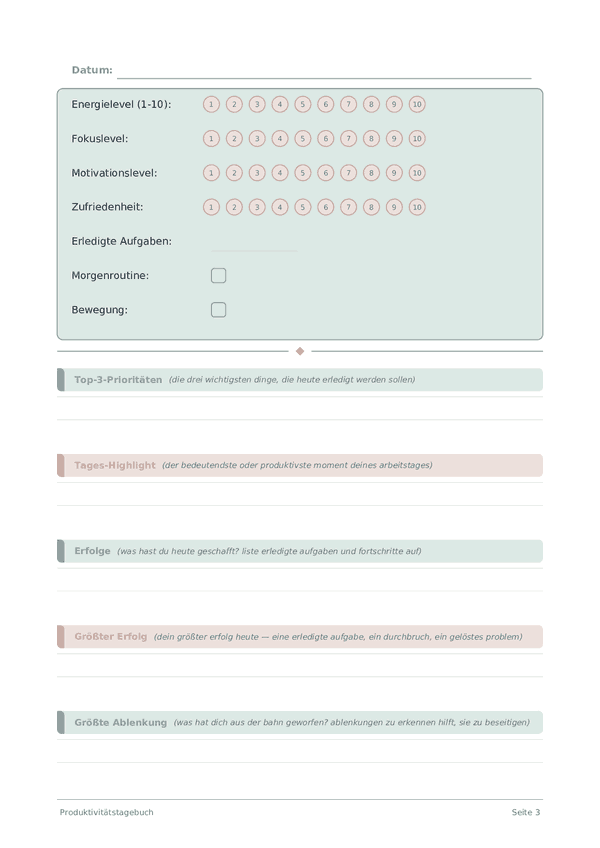
Produktivitätstagebuch
Energie, Fokus und tägliche Leistung verfolgen, um Spitzenleistung aufzubauen
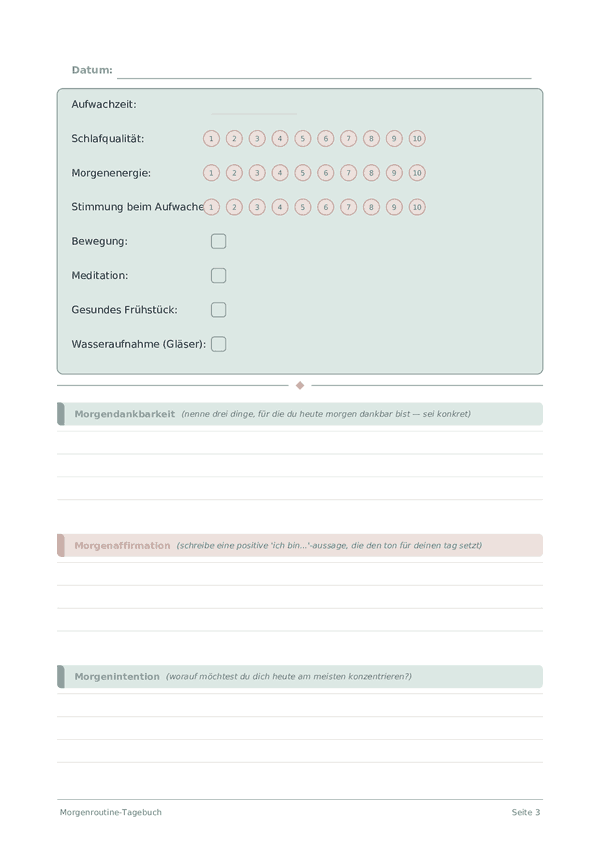
Morgenroutine-Tagebuch
Starten Sie jeden Tag mit Klarheit, Dankbarkeit und Intention
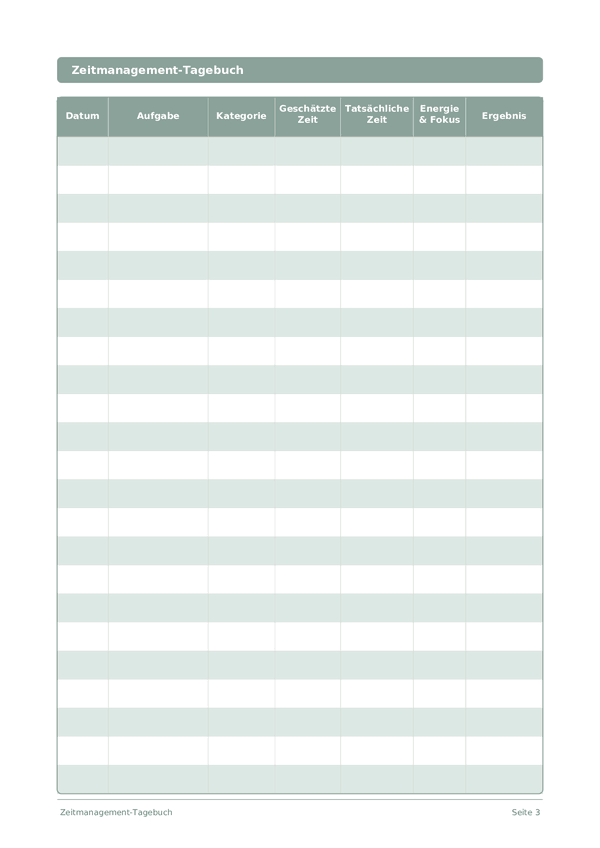
Zeitmanagement-Tagebuch
Aufgaben, Zeit und Energie verfolgen, um Ihren Tag zurückzugewinnen
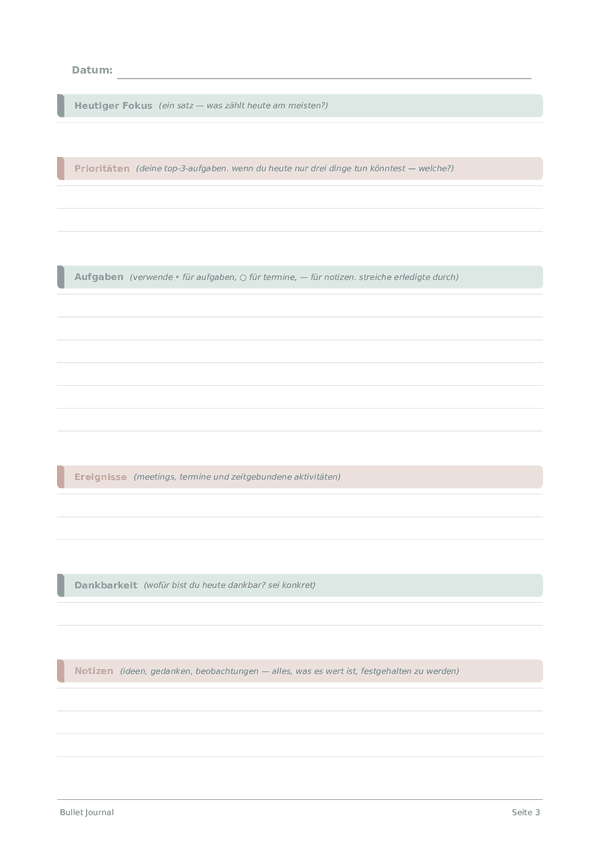
Bullet Journal
Strukturiertes Tagesprotokoll für Rapid Logging
Scrollen zum Zoomen, ziehen zum Bewegen