Printable Entscheidungstagebuch
Klar denken, sicher entscheiden, aus jeder Wahl lernen
A structured decision log that captures your reasoning, confidence, emotional state, and outcome for every important choice. Revisiting past entries reveals patterns, reduces hindsight bias, and sharpens your judgment over time.
Felder anpassen
Schalten Sie Felder ein oder aus. Klicken Sie auf den Stift zum Umbenennen oder fügen Sie eigene Felder hinzu.
Vorteile
Anleitung
Was ist dieses Journal?
A decision journal is a structured practice for recording important decisions at the moment you make them — before you know how they turn out. By capturing your reasoning, alternatives considered, emotional state, and expected outcomes, you create an honest record that lets you evaluate your decision-making process over time, separate from results.
This journal is for leaders, entrepreneurs, investors, and anyone who makes consequential decisions and wants to improve their judgment. It is based on the principle that good decisions can have bad outcomes and bad decisions can have good outcomes — the only way to improve is to evaluate the process, not just the result.
Decision science research, popularized by Annie Duke and Daniel Kahneman, shows that "resulting" — judging decisions solely by their outcomes — is one of the biggest obstacles to better judgment. This journal creates a time-stamped record of your reasoning that you can revisit months later, helping you distinguish between genuine skill and luck in your decision-making.
Ausgefülltes Beispiel
So sieht ein typischer Eintrag aus, wenn er ausgefüllt ist:
Wie Sie jedes Feld ausfüllen
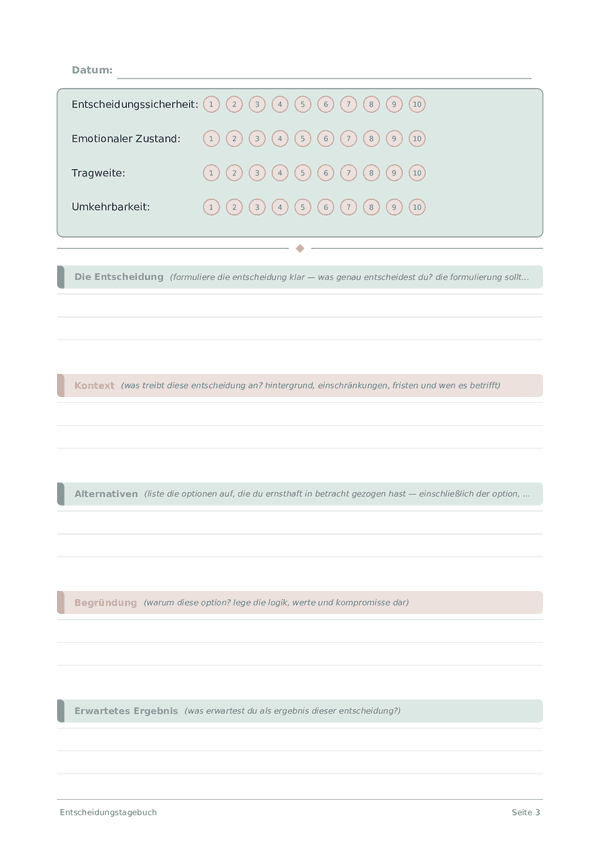
Oben auf jeder Seite befinden sich schnell ausfüllbare Felder (Bewertungen, Kontrollkästchen, Zahlen). Darunter ist ein linierter Bereich zum Schreiben. Hier erfahren Sie, was jedes Feld bedeutet:
Entscheidungssicherheit
Wie sicher bist du, dass das die richtige Entscheidung ist? Bewerte von 1 (sehr unsicher) bis 10 (gewiss)
Emotionaler Zustand
Wie klaren Kopf hast du gerade? Bewerte von 1 (zerstreut) bis 10 (sehr klar)
Tragweite
Wie gravierend sind die Folgen, wenn es schiefgeht? Bewerte von 1 (gering) bis 10 (lebensverändernd)
Umkehrbarkeit
Wie leicht kannst du den Kurs ändern, falls nötig? Bewerte von 1 (festgelegt) bis 10 (leicht rückgängig)
Die Entscheidung
Formuliere die Entscheidung klar — was genau entscheidest du? Die Formulierung sollte selbst für ein Kind verständlich sein
Kontext
Was treibt diese Entscheidung an? Hintergrund, Einschränkungen, Fristen und wen es betrifft
Alternativen
Liste die Optionen auf, die du ernsthaft in Betracht gezogen hast — einschließlich der Option, nichts zu tun
Begründung
Warum diese Option? Lege die Logik, Werte und Kompromisse dar
Erwartetes Ergebnis
Was erwartest du als Ergebnis dieser Entscheidung?
Ergebnis
Was ist tatsächlich als Ergebnis passiert?
Gelernte Lektionen
Rückblickend: War deine Argumentation stichhaltig? Was würdest du beim nächsten Mal anders machen?
Tipps für den Erfolg
Wann und wie oft schreiben
Write an entry for every significant decision: career moves, large purchases, relationship choices, health changes, and strategic pivots. Minor daily decisions do not need logging, but any choice you might second-guess later deserves an entry. At the decision point, spend 10\u201315 minutes writing your reasoning and confidence. Set calendar reminders to revisit at 30, 90, and 365 days. Quarterly, review your decision history to identify recurring biases.
Häufig gestellte Fragen
Was erfasst das Entscheidungstagebuch jenseits der Entscheidung selbst?
Der Tracker bewertet Entscheidungssicherheit, emotionalen Zustand, Einsatz und Reversibilität (jeweils 1-10). Der linierte Bereich erfasst die Entscheidung, den Kontext, erwogene Alternativen, die Begründung, das erwartete Ergebnis, das tatsächliche Ergebnis und gelernte Lektionen. Diese Struktur zwingt dich, die Begründung niederzuschreiben, bevor du das Ergebnis kennst — ein direkter Angriff auf den Rückschaufehler, bei dem das Gedächtnis die Vor-Entscheidungs-Logik dem tatsächlichen Verlauf anpasst.
Warum Reversibilität und Einsatz getrennt bewerten?
Jeff Bezos popularisierte aus ähnlichem Grund die Unterscheidung Einbahntür gegen Zweibahntür: Irreversible Entscheidungen mit hohem Einsatz verdienen weitaus mehr Abwägung als reversible mit niedrigem. Reversibilität (1-10) und Einsatz (1-10) zu bewerten verhindert Übergrübeln trivialer Wahlen und Untergrübeln großer. Peter Druckers The Effective Executive (HarperBusiness, 1967) betonte, dass effektive Entscheidungen die Tiefe der Abwägung an die Konsequenz anpassen.
Wie unterscheidet sich das von bloßen Notizen zu Entscheidungen?
Lockere Notizen driften in Rechtfertigung; diese Vorlage erzwingt Alternativen, erwartete Ergebnisse und Sicherheitsbewertungen — genau die Elemente, die du später gegen die Realität abgleichen willst. Die Felder erwartetes Ergebnis und outcome erzeugen eine Feedback-Schleife, die dein Gehirn nicht rückwirkend fälschen kann. Ohne diese Struktur erinnerst du dich, recht behalten zu haben, häufiger als tatsächlich der Fall — ein dokumentierter Bias der Urteilsforschung.
Wie oft sollte ich Einträge schreiben — jede Entscheidung oder nur die großen?
Nutze es für jede Entscheidung mit 5 oder höher bei Einsatz oder Reversibilität. Jede Kaffeewahl zu protokollieren zerstört das Signal; nur offensichtlich große zu erfassen übersieht die mittleren, bei denen Kalibrierung am stärksten wächst. Greg McKeowns Essentialism (Crown Business, 2014) legt nahe, Entscheidungskapazität als endlich zu behandeln — reserviere das Tagebuch für Entscheidungen, die eine dokumentierte Begründungsspur wert sind.
Was bringt es, den emotionalen Zustand vor der Entscheidung zu bewerten?
Der emotionale Zustand prägt Risikotoleranz und Klarheit. Ein 3/10-Emotionszustand kombiniert mit hohem Einsatz ist ein starkes Signal, die Entscheidung wenn möglich aufzuschieben. Dieser Anti-Bias-Check zieht sich durch die Urteilsliteratur. Das Tagebuch macht ihn explizit: Wenn du dich mit 1-3 bewertest, wird der Eintrag selbst zur Warnung — schlafe darüber, sammle mehr Daten oder hole Rat ein, bevor du dich festlegst.
Wie lange dauert es, bis sich Entscheidungsfindung verbessert?
Kalibrierung verbessert sich messbar nach etwa 20-30 protokollierten Entscheidungen mit eingetragenen Ergebnissen, typischerweise drei bis sechs Monate für mittlere Einsätze. Die Feedback-Schleife — erwartetes gegen tatsächliches Ergebnis — trainiert das Urteilsvermögen. Edwin Locke und Gary Latham (2002, American Psychologist, 57(9)) zeigten, dass Feedback Zielerreichung antreibt; das Gleiche gilt für Entscheidungsqualität, nicht nur Aufgabenausführung.
Welchen Fehler machen Nutzer mit einem Entscheidungstagebuch am häufigsten?
Nie zurückzukehren, um die Felder outcome und gelernte Lektionen auszufüllen. Ohne den Nach-Ergebnis-Eintrag wird das Tagebuch zu einer einseitigen Chronik des Optimismus, kein Kalibrierungswerkzeug. Stelle dir zwei Wochen nach großen Einträgen eine Kalendererinnerung. Der Bereich gelernte Lektionen ist der Ort, an dem persönliches Urteilsvermögen tatsächlich wächst — ihn auszulassen entfernt die Wachstumsschleife, für die das Tagebuch entworfen wurde.
Kann dieses Tagebuch bei Team- oder Geschäftsentscheidungen helfen, nicht nur persönlichen?
Ja. Dieselbe Struktur liegt Entscheidungsreview-Praktiken in MIT Sloan Management Review und Harvard Business Review zu Managemententscheidungen zugrunde. Für Teamnutzung füllt ihr Alternativen und Begründung gemeinsam vor der Festlegung aus und überprüft Ergebnisse in Retrospektiven. Die vier Bewertungen geben der Gruppe ein gemeinsames Vokabular für Sicherheit und Einsatz — und reduzieren, dass die lauteste Stimme automatisch gewinnt.
Das könnte Ihnen auch gefallen
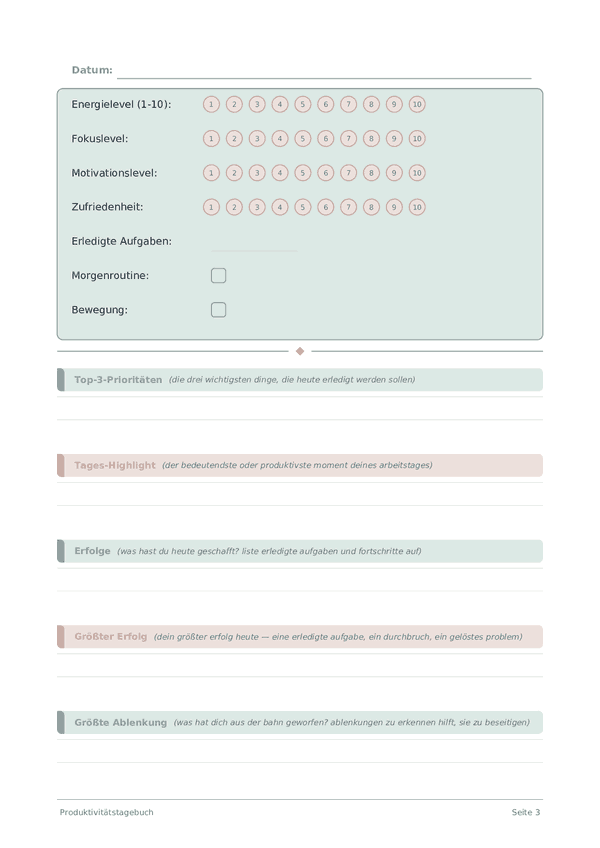
Produktivitätstagebuch
Energie, Fokus und tägliche Leistung verfolgen, um Spitzenleistung aufzubauen
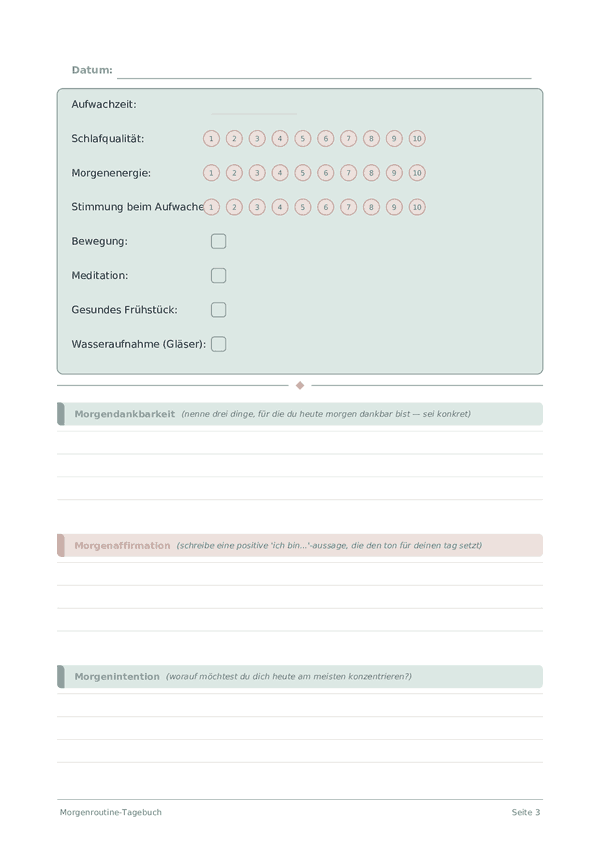
Morgenroutine-Tagebuch
Starten Sie jeden Tag mit Klarheit, Dankbarkeit und Intention
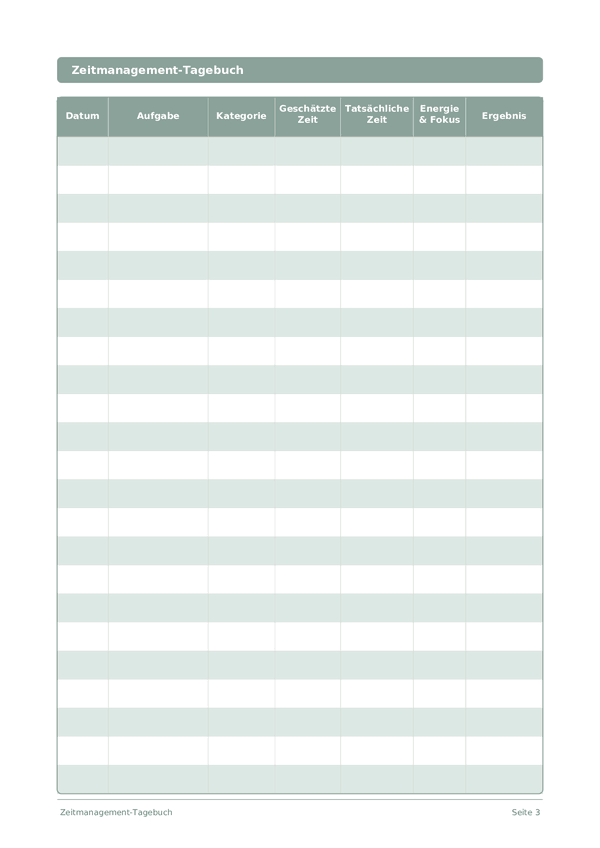
Zeitmanagement-Tagebuch
Aufgaben, Zeit und Energie verfolgen, um Ihren Tag zurückzugewinnen
Bullet Journal
Strukturiertes Tagesprotokoll für Rapid Logging
Scrollen zum Zoomen, ziehen zum Bewegen