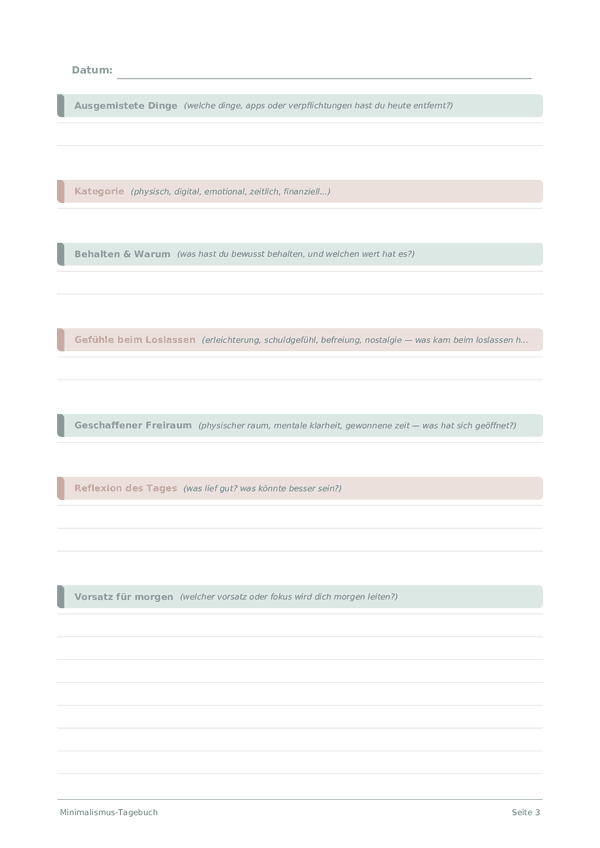
Printable Minimalismus-Tagebuch
Tägliches Ausmisten und bewusstes Leben
Guide your minimalism journey with daily decluttering logs, reflections on letting go, and intentions for intentional living. Create space for what truly matters.
Felder anpassen
Schalten Sie Felder ein oder aus. Klicken Sie auf den Stift zum Umbenennen oder fügen Sie eigene Felder hinzu.
Was ist dieses Journal?
A minimalism journal is a daily practice for documenting your journey toward a simpler, more intentional life. Each entry records what you decluttered, how it felt to let go, and the space — both physical and mental — that you created. It transforms minimalism from a one-time purge into a sustainable daily practice.
This journal is for anyone drawn to living with less — whether you are in the early stages of decluttering a packed home or already living simply and want to maintain that intentionality. It is equally valuable for digital minimalism, relationship decluttering, and simplifying your schedule.
Research on the psychology of possessions shows that our relationship with objects is deeply emotional. Simply discarding things creates anxiety, but reflective decluttering — where you process the feelings attached to each item — leads to lasting freedom from accumulation. This journal guides that reflective process, making minimalism a practice of self-discovery as much as tidying.
Ausgefülltes Beispiel
So sieht ein typischer Eintrag aus, wenn er ausgefüllt ist:
Wie Sie jedes Feld ausfüllen
Jeden Tag finden Sie mehrere beschriftete Abschnitte mit Zeilen zum Schreiben. Hier erfahren Sie, wofür jeder Abschnitt gedacht ist:
Ausgemistete Dinge
Welche Dinge, Apps oder Verpflichtungen hast du heute entfernt?
Kategorie
Physisch, digital, emotional, zeitlich, finanziell...
Behalten & Warum
Was hast du bewusst behalten, und welchen Wert hat es?
Gefühle beim Loslassen
Erleichterung, Schuldgefühl, Befreiung, Nostalgie — was kam beim Loslassen hoch?
Geschaffener Freiraum
Physischer Raum, mentale Klarheit, gewonnene Zeit — was hat sich geöffnet?
Reflexion des Tages
Blicken Sie ehrlich auf Ihren Tag zurück. Was lief gut? Was könnte besser sein? Es geht nicht um Urteile — es geht um Lernen und Wachstum.
Vorsatz für morgen
Welcher Vorsatz oder Fokus wird dich morgen leiten?
Tipps für den Erfolg
Wann und wie oft schreiben
Write daily in the evening, reflecting on your relationship with possessions and consumption that day. Each entry takes just 5-10 minutes. Weekly, review your entries to spot consumption triggers and patterns. When you are in an active decluttering phase, write before and after each session to process the emotions that arise. Once your space stabilizes, shift to 3-4 entries per week focused on maintaining intentionality and resisting lifestyle creep.
Häufig gestellte Fragen
Was erfasst jeder tägliche Eintrag im Minimalismus-Tagebuch?
Sieben Felder pro Tag: ausgemistete Dinge, kategorie, behalten & Warum, gefühle beim Loslassen, geschaffener Freiraum, reflection und vorsatz für morgen. Die Struktur trackt sowohl Handlung (was ging) als auch Emotion (wie das Loslassen sich anfühlte) und erkennt an, dass Minimalismus ebenso eine psychologische wie eine physische Praxis ist. Vorsatz für morgen macht jeden Eintrag zu einer kleinen Verpflichtung für den nächsten Tag.
Warum Gefühle beim Loslassen neben den entrümpelten Dingen tracken?
Entrümpeln bringt starke Emotionen zutage — Schuld bei Geschenken, Trauer um Identitätsstücke, Erleichterung über gehortetes Zeug. Gefühle beim Loslassen zu protokollieren verhindert den Entrümpel-und-Nachkauf-Kreislauf, indem es emotionale Auslöser offenlegt. Greg McKeowns Essentialism (Crown Business, 2014) rahmt das als Unterscheiden, was wirklich zählt; das Gefühlsfeld ist der Ort, an dem du bemerkst, dass könnte ich noch brauchen eigentlich habe Angst loszulassen heißt.
Welches Kategoriensystem eignet sich am besten zum Tracken dessen, was du loslässt?
Verwende breite Kategorien, die zu deinem Zuhause passen: Kleidung, Bücher, Papiere, Küche, Sentimentales, Digitales, Duplikate. Cal Newports Digital Minimalism (Portfolio, 2019) erweitert die gleiche Logik auf Apps und Benachrichtigungen. Nach zwei bis vier Wochen zeigen die Wochensummen kategorie, welche Lebensbereiche den meisten Überschuss bergen — meist überraschend — und wo als Nächstes Aufmerksamkeit nötig ist.
Warum ist das Feld behaltene Dinge so wichtig wie das Entrümpelte?
Aufzulisten, was du zu behalten gewählt hast, erzwingt bewusste Bestätigung. Ohne dieses Feld wird Entrümpeln rein subtraktiv — du entwickelst keine Klarheit darüber, was sich seinen Platz wirklich verdient hat. McKeowns Essentialism (Crown Business, 2014) nennt das den less-but-better-Shift: Ziel ist nicht leerer Raum, sondern bewusst gefüllter Raum. Jeder behaltene Gegenstand sollte einen expliziten Grund-Check bestehen.
Wie unterscheidet sich das von Marie Kondos KonMari-Methode?
KonMari ist eine einmalige Kategorie-für-Kategorie-Aufräumaktion; dieses Tagebuch unterstützt tägliche inkrementelle Praxis. Beide teilen Kernprinzipien — bewusste Wahl, Dankbarkeit gegenüber Objekten —, aber das Tagebuch passt zu Menschen, die keine Wochenenden für Massenentrümpelung opfern können und langsame, nachhaltige Veränderung bevorzugen. Tägliche Einträge bauen zudem den Reflexionsmuskel auf, der zukünftige Anhäufung verhindert.
Hilft mir dieses Tagebuch bei Hortungstendenzen?
Es kann graduellen Wandel bei allgemeinen Unordnungs-Gewohnheiten unterstützen, aber eine klinische Hortungs-Störung erfordert qualifizierte professionelle Behandlung, typischerweise kognitiv-behaviorale Therapie bei einer/einem auf Hortung spezialisierten Behandler/in. Das Feld gefühle beim Loslassen kann helfen, Muster zu bemerken, ist aber kein klinisches Instrument. Wenn Entrümpeln signifikanten Stress verursacht oder das Alltagsleben beeinträchtigt, konsultieren Sie eine/n psychotherapeutische/n Fachperson statt sich auf ein Selbsthilfe-Tagebuch zu verlassen.
Wie lange dauert es, bis Entrümpeln zur stabilen Praxis wird?
Lally et al. (2010, European Journal of Social Psychology, 40(6)) fanden, dass Habitbildung im Mittel 66 Tage dauerte, Spannweite 18-254. Für Minimalismus rechne mit 8-12 Wochen täglicher Einträge, bis Loslassen sich routiniert statt mühsam anfühlt. Das Feld vorsatz für morgen wirkt als der winzige nächste Schritt im Sinn von BJ Foggs Tiny Habits (2019) und macht Konsequenz leichter als ambitionierte Ein-Raum-Blitzaktionen.
Welchen Fehler machen Nutzer mit einem Minimalismus-Tagebuch am häufigsten?
Es als Zählübung zu behandeln — Stückzahlen jagen statt Reflexion zu erfassen. 30 Dinge gedankenlos zu entrümpeln ist weniger wertvoll als drei mit ehrlichen gefühle beim Loslassen-Einträgen. McKeowns Essentialism (Crown Business, 2014) warnt davor, sichtbare Aktivität durch echte Klarheit zu ersetzen. Die Felder reflection und vorsatz für morgen sind der Ort, an dem die Praxis über ein aufgeräumtes Zuhause hinaus vertieft.
Das könnte Ihnen auch gefallen
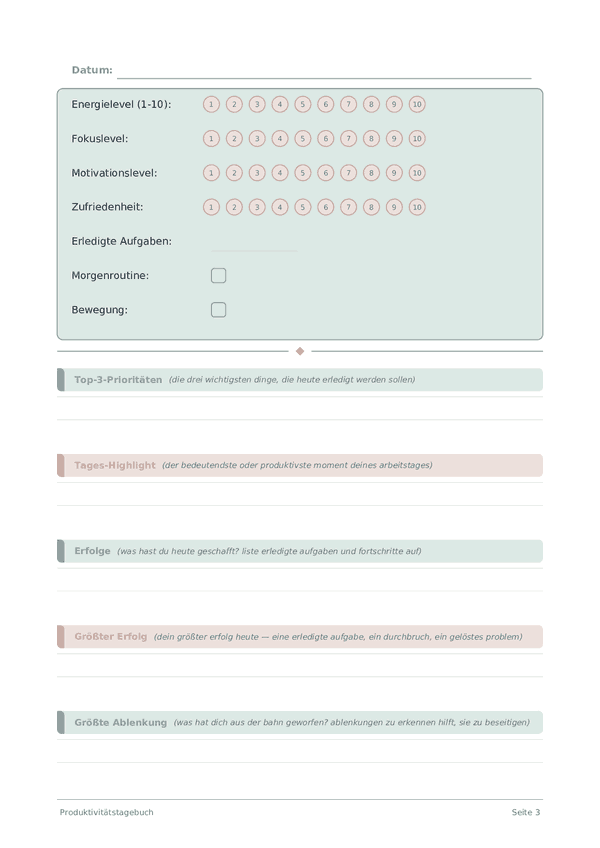
Produktivitätstagebuch
Energie, Fokus und tägliche Leistung verfolgen, um Spitzenleistung aufzubauen
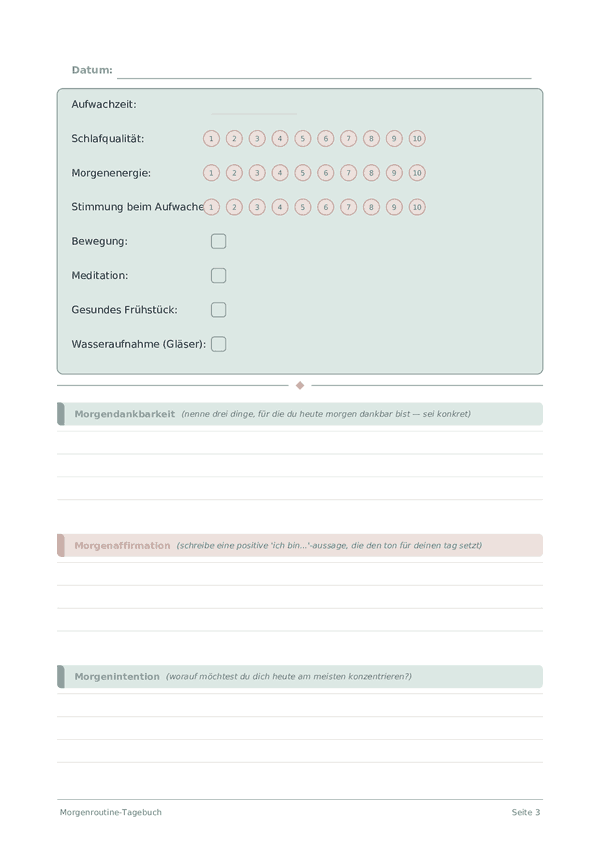
Morgenroutine-Tagebuch
Starten Sie jeden Tag mit Klarheit, Dankbarkeit und Intention
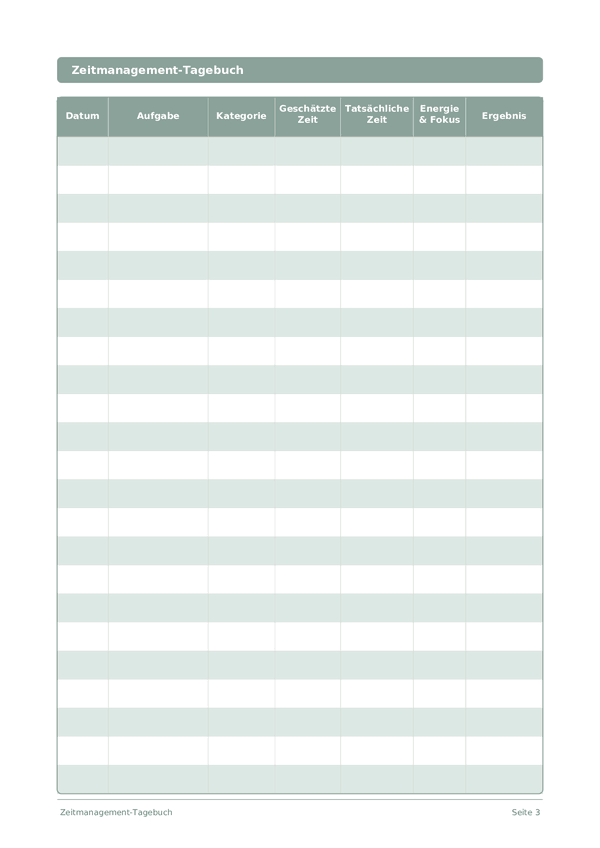
Zeitmanagement-Tagebuch
Aufgaben, Zeit und Energie verfolgen, um Ihren Tag zurückzugewinnen
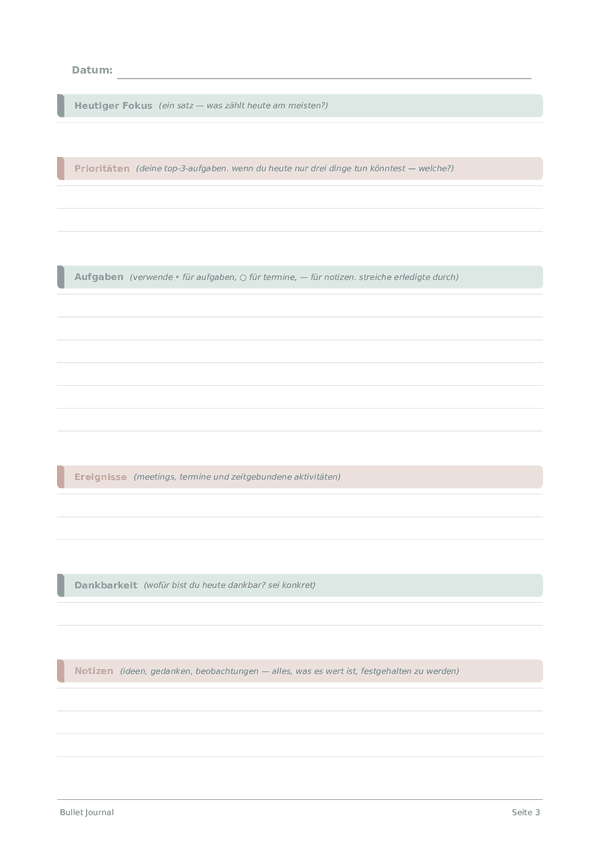
Bullet Journal
Strukturiertes Tagesprotokoll für Rapid Logging
Scrollen zum Zoomen, ziehen zum Bewegen