Printable Garden Journal
Plan, track, and learn from every growing season
A structured daily log for gardeners. Record weather, watering, fertilizing, plant activities, harvests, and pest observations — all in one place. Build a season-by-season knowledge base that helps you grow more successfully each year.
Personalizar campos
Activa o desactiva campos. Haz clic en el lápiz para renombrar, o añade tus propios campos.
Beneficios
Cómo Usar
¿Qué es este diario?
A garden journal is a daily log for tracking weather conditions, plant care activities, and observations in your garden. By recording what you planted, watered, harvested, and noticed, you build a seasonal record that becomes more valuable each year — revealing what works in your specific soil, climate, and microenvironment.
This journal is for gardeners of all types — from balcony container growers to homesteaders with acres. Whether you grow flowers, vegetables, herbs, or a mix of everything, consistent journaling transforms your garden from a series of annual experiments into a cumulative body of knowledge.
Master gardeners consistently cite their journals as their most valuable tool. The garden journal captures information that no book or website can provide: what grew well in your specific conditions, when your microclimate's last frost actually occurs, which pest strategies worked in your soil, and the exact timing that produced your best harvests. Over years, this data becomes irreplaceable.
Ejemplo completado
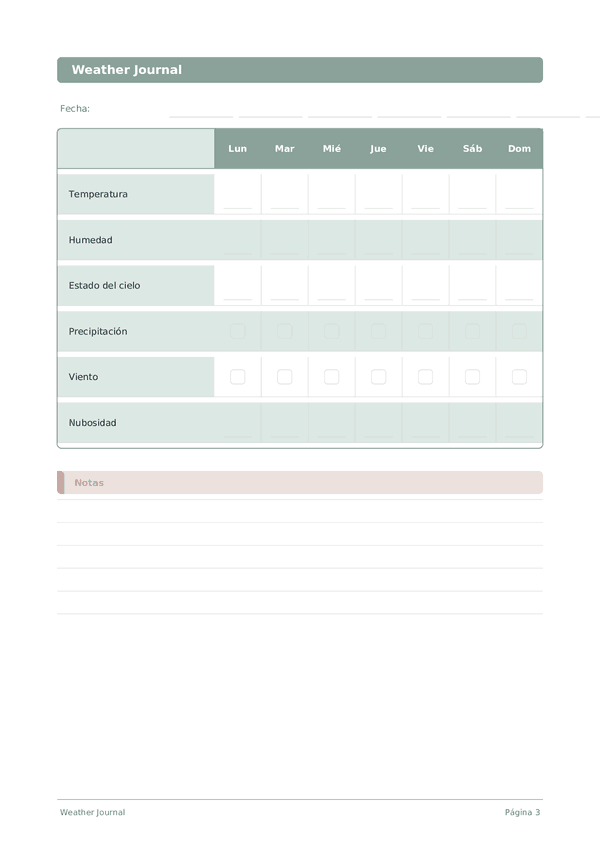
Así es como se ve una entrada típica cuando se rellena:
Cómo rellenar cada campo
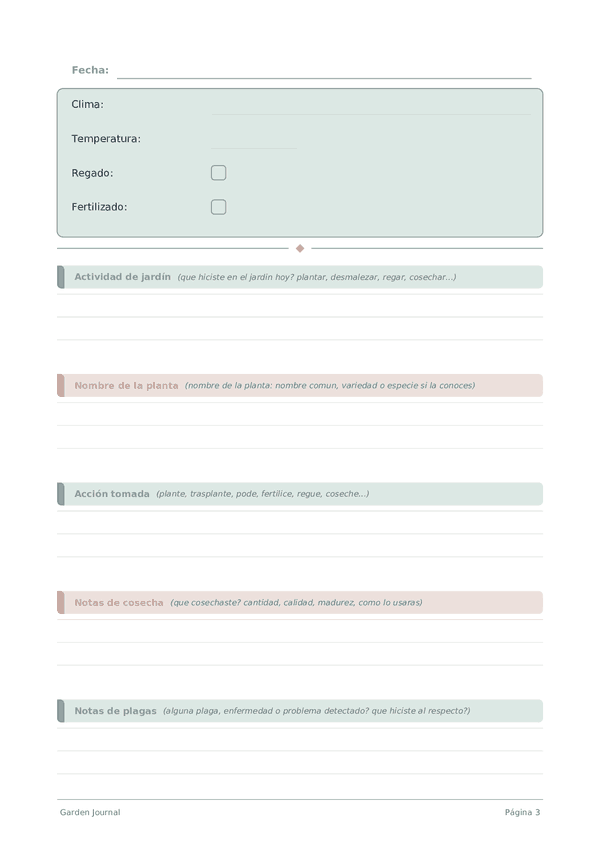
La parte superior de cada pagina tiene campos de llenado rapido (calificaciones, casillas, numeros). Debajo hay una seccion con lineas para escribir. Esto es lo que significa cada campo:
Clima
Soleado, nublado, lluvia, viento: condiciones actuales
Temperatura
Registra tu temperatura basal corporal. Los cambios de temperatura ayudan a rastrear la ovulacion y la salud general del ciclo.
Regado
Regaste tu jardin o plantas especificas hoy?
Fertilizado
Aplicaste fertilizante o enmiendas al suelo de tus plantas hoy?
Actividad de jardín
Que hiciste en el jardin hoy? Plantar, desmalezar, regar, cosechar...
Nombre de la planta
Nombre de la planta: nombre comun, variedad o especie si la conoces
Acción tomada
Plante, trasplante, pode, fertilice, regue, coseche...
Notas de cosecha
Que cosechaste? Cantidad, calidad, madurez, como lo usaras
Notas de plagas
Alguna plaga, enfermedad o problema detectado? Que hiciste al respecto?
Observaciones
Observaciones generales del jardin: progreso del crecimiento, efectos del clima, condicion del suelo, vida silvestre
Consejos para el exito
Cuando y con que frecuencia escribir
During the growing season, write a brief entry every day or every other day \u2014 even just noting weather, watering, and any visible changes. Weekly, do a deeper walkthrough and record plant health, new growth, and pest activity. At season\u2019s end, review the full log and write a summary of what worked, what failed, and what to change. In the off-season, revisit your journal monthly when planning next year\u2019s garden.
Preguntas frecuentes
¿Qué debo escribir en un diario de jardín cada día?
La Royal Horticultural Society recomienda registrar el clima, la temperatura, el riego, el abonado y cualquier acción tomada en plantas específicas, exactamente la estructura de registro y los indicadores que ofrece esta plantilla. Añade avisos de plagas y notas de cosecha cuando sea relevante. Las entradas diarias no necesitan ser largas; una o dos líneas más las casillas de regado y abonado son suficientes para construir un registro estacional utilizable.
¿Por qué registrar el clima y la temperatura junto a las tareas del jardín?
El rendimiento de las plantas depende del clima. Los materiales de la USDA Cooperative Extension hacen hincapié en correlacionar temperatura, lluvia y fechas de heladas con los resultados de las plantas para refinar la práctica local. La sección de registro sitúa el clima y la temperatura junto a las casillas de regado y abonado precisamente para que puedas detectar, por ejemplo, que el exceso de riego coincidió con semanas frías y nubladas, un patrón invisible sin el registro diario.
¿Cómo encajan las zonas de rusticidad vegetal USDA aquí?
Las Zonas de Rusticidad Vegetal USDA definen los mínimos invernales promedio por región y orientan la selección de plantas perennes. El diario no imprime la zona, pero espera que la conozcas: escríbela en la portada. Luego registra la primera y última helada, y las oscilaciones de temperatura inusuales en tu registro diario. A lo largo de años, tus registros refinan la zona oficial con una versión de microclima precisa para tu jardín exacto.
¿Qué va en el indicador de notas sobre plagas?
Especie (o tu mejor suposición), plantas afectadas, gravedad, contexto meteorológico y cualquier intervención. Las guías de plagas de la RHS recomiendan registrar las fechas del primer avistamiento cada temporada: los pulgones en la misma semana de mayo revelan una presión predecible. Evita lanzarte a tratamientos amplios: registra primero, identifica, luego actúa. «Bringing Nature Home» de Doug Tallamy (Timber Press, 2007) recuerda que muchas orugas son activos del ecosistema, no plagas.
¿En qué se diferencia esto de una app de jardinería?
Las apps envían recordatorios genéricos según tu ubicación. Este diario registra lo que ocurrió realmente en tu suelo, tu microclima, tus manos. Los indicadores de notas de cosecha y observaciones capturan información cualitativa —sabor, vigor, presión de enfermedades— que ninguna app recoge. Muchos jardineros experimentados usan ambos: la app para identificar plantas y alertas de heladas, el papel para la narrativa que abarca toda la temporada.
¿Cuánto tiempo tarda en dar frutos el diario?
Una temporada de cultivo completa produce comparaciones útiles; tres temporadas empiezan a revelar patrones fiables. Los materiales educativos de la RHS y la American Horticultural Society enfatizan que la jardinería es una disciplina plurianual: lo que falla un año puede prosperar al siguiente por el clima. Revisar las entradas pasadas antes de cada siembra de primavera es cuando el valor del diario se multiplica más visiblemente.
¿Deben los principiantes rastrear cada planta o el jardín en general?
Empieza con el registro diario general más tres o cuatro plantas prioritarias que realmente te importan: tomates, rosas, lo que te motive. El campo nombre de la planta de la sección libre admite entradas específicas sin obligarte a cubrir cada especie. Las guías de la Royal Horticultural Society para principiantes advierten contra el exceso de registro, que lleva al abandono. La amplitud de cobertura crece de forma natural una vez el hábito se afianza.
¿Cómo cambia el registro de cosechas la planificación de la siguiente temporada?
Los rendimientos muestran el retorno de inversión. Si tu calabacín produjo 14 frutos y tus pimientos dos, la asignación de bancales la próxima primavera cambia en consecuencia. Las publicaciones de la American Horticultural Society recomiendan registrar cantidad y calidad (sabor, vida útil en almacenamiento) juntos. A lo largo de tres temporadas, la columna notas de cosecha se convierte en la página más consultada al diseñar los bancales del año siguiente.
También Te Puede Gustar
Rueda para ampliar, arrastra para mover