Printable Diario dell'Ansia
Diario quotidiano di monitoraggio dell'ansia e riflessione basata sulla CBT
Personalizza campi
Attiva o disattiva i campi. Clicca la matita per rinominare, oppure aggiungi i tuoi campi.
Cos'è questo diario?
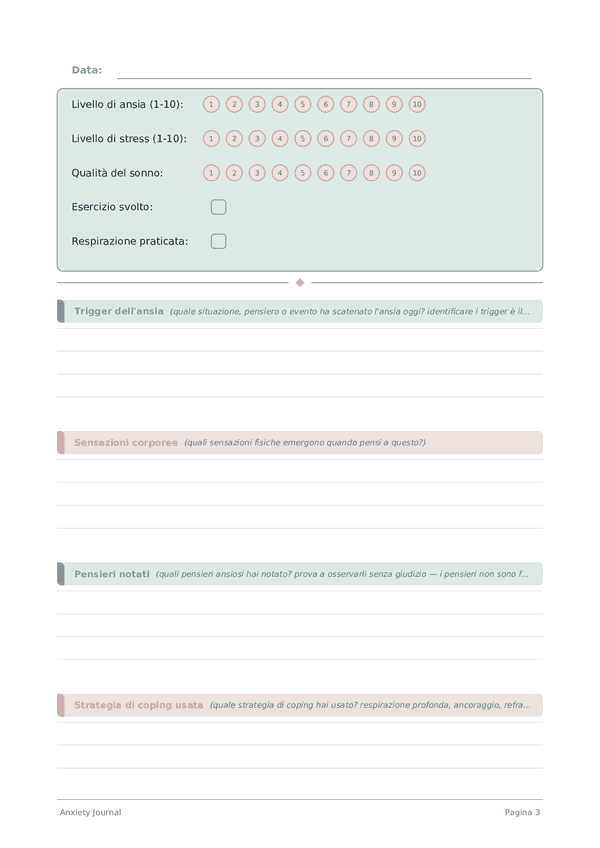
Questo è un diario ibrido — ogni pagina combina una sezione di tracciamento rapido in cima con un'area di scrittura a righe in basso. Ciò ti consente di catturare sia dati misurabili che riflessioni in forma libera in un unico posto.
Come compilare ogni campo
La parte superiore di ogni pagina ha campi a compilazione rapida (valutazioni, caselle di controllo, numeri). Sotto c'è una sezione a righe per scrivere. Ecco cosa significa ogni campo:
Livello di ansia (1-10)
Valuta il tuo livello di ansia oggi. Dare un numero alla sensazione la rende più gestibile e monitorabile.
Livello di stress (1-10)
Valuta il tuo stress su una scala da 1 a 10. Nel tempo, identificherai i tuoi schemi di stress e le strategie di coping più efficaci.
Qualità del sonno
Valuta quanto è stato riposante il tuo sonno. 1 significa terribile e agitato, 5 significa profondo e rigenerante. La qualità conta quanto la quantità.
Esercizio svolto
Hai fatto esercizio oggi? Anche una breve passeggiata conta. Il movimento è uno dei riduttori naturali d'ansia più efficaci.
Respirazione praticata
Hai praticato la respirazione consapevole oggi? La respirazione diaframmatica attiva il sistema nervoso parasimpatico e calma l'ansia.
Trigger dell'ansia
Quale situazione, pensiero o evento ha scatenato l'ansia oggi? Identificare i trigger è il primo passo nella gestione dell'ansia basata sulla CBT.
Sensazioni corporee
Quali sensazioni fisiche emergono quando pensi a questo?
Pensieri notati
Quali pensieri ansiosi hai notato? Prova a osservarli senza giudizio — i pensieri non sono fatti.
Strategia di coping usata
Quale strategia di coping hai usato? Respirazione profonda, ancoraggio, reframing, camminata, parlare con qualcuno — cosa ha aiutato?
Cosa ha aiutato
Cosa ha portato sollievo? Annota cosa ha funzionato così puoi usarlo di nuovo quando l'ansia aumenta.
Consigli per il successo
Quando e con quale frequenza scrivere
Compila una pagina al giorno. La parte del tracker richiede meno di un minuto; cerca di farlo a un orario costante. La sezione di scrittura può essere fatta nello stesso momento o riservata quando hai 5 minuti tranquilli. Entrambe le parti insieme ti danno il quadro più completo della tua giornata.
Domande frequenti
Perché questo diario valuta separatamente ansia, stress e sonno?
Questi costrutti si sovrappongono ma sono distinti. L'American Psychological Association definisce l'ansia come preoccupazione anticipatoria, lo stress come risposta alle richieste, e la qualità del sonno come fattore fisiologico che modera entrambi. Le linee guida del NIMH sui disturbi d'ansia li trattano come correlati ma misurabili separatamente. Tre valutazioni da 0 a 10 ti permettono di individuare quale dimensione è responsabile di una giornata difficile, invece di collassarle in un unico numero.
Come si compila 'pensieri notati' seguendo i principi della CBT?
Scrivi il pensiero automatico esattamente come è — la frase precisa nella tua testa — poi identifica la distorsione cognitiva presente. Aaron Beck («Cognitive Therapy and the Emotional Disorders», 1976) ha catalogato schemi come la catastrofizzazione, la lettura del pensiero e il pensiero tutto-o-niente. Nominare la distorsione è il primo passo della ristrutturazione cognitiva, prima di scrivere 'cosa ha aiutato'. Sii specifico: «Fallirò» anziché «Mi sono sentito male».
A cosa serve registrare le 'sensazioni corporee' per l'ansia?
L'ansia produce segnali somatici — cuore che batte forte, petto stretto, respiro superficiale — che il lavoro di esposizione interocetica (Protocollo Unificato di Barlow; Barlow et al., 2017, Behaviour Research and Therapy, 88) affronta direttamente. Registrare le sensazioni costruisce la consapevolezza necessaria per distinguere un picco di panico da un livello elevato stabile, e per applicare la respirazione o il grounding prima dell'escalation.
Perché c'è una casella 'respirazione praticata'?
La respirazione lenta e ritmica attiva il tono vagale e riduce l'arousal fisiologico. Laborde et al. (2022, Neuroscience and Biobehavioral Reviews, 138) hanno esaminato i protocolli di respirazione lenta e trovato effetti acuti consistenti sulla variabilità della frequenza cardiaca e sull'ansia auto-riferita. La casella rafforza l'abitudine pratica; nel corso delle settimane puoi correlare le giornate con respirazione praticata=true rispetto alle valutazioni di livello di ansia (1-10). Le voci quotidiane costruiscono i dati necessari per portare schemi concreti alla terapia o all'auto-revisione.
Questo diario sostituisce la terapia se ho un disturbo d'ansia?
No. Il diario supporta il trattamento basato sull'evidenza ma non lo sostituisce. Il NIMH e l'APA raccomandano la CBT, la terapia di esposizione o la farmacoterapia per i disturbi d'ansia diagnosticati. Se hai un disturbo d'ansia clinico — ansia generalizzata, panico, ansia sociale — consulta un professionista della salute mentale abilitato. Questo diario funziona bene come strumento per i compiti tra una sessione e l'altra di terapia.
Come interpreto settimane di valutazioni?
Cerca correlazioni, non singole giornate. Dopo due settimane, verifica se livello di ansia (1-10) aumenta quando qualità del sonno cala, o diminuisce nelle giornate in cui esercizio svolto è spuntato. Hofmann et al. (2012, Cognitive Therapy and Research, 36(5)) hanno analizzato la CBT per l'ansia e rilevato che il monitoraggio dei sintomi migliorava la risposta al trattamento chiarendo i trigger. Porta gli schemi in terapia se applicabile.
Cosa faccio se non riesco a identificare un chiaro 'trigger dell'ansia'?
È comune nell'ansia generalizzata, dove la preoccupazione è diffusa. Il modello di evitamento della preoccupazione di Borkovec (1994) e Behar et al. (2009, Journal of Anxiety Disorders, 23(8)) descrivono la preoccupazione come soppressione di immagini concrete temute. Scrivi cosa stavi facendo, con chi eri e quanto era teso il tuo corpo — il trigger può emergere come contesto somatico, non come un evento preciso.
In cosa si differenzia questo da un diario dell'umore generico?
È strutturato attorno al formato del registro dei pensieri CBT: situazione, pensieri automatici, sensazioni corporee, coping usato e cosa ha aiutato. Quella sequenza — più vicina al registro quotidiano dei pensieri di Beck — mira specificamente alla ristrutturazione cognitiva. Un diario dell'umore registra sentimenti; questo diario lavora sulle valutazioni che li guidano, che è l'ingrediente attivo nelle meta-analisi CBT di Hofmann.
Potrebbe piacerti anche
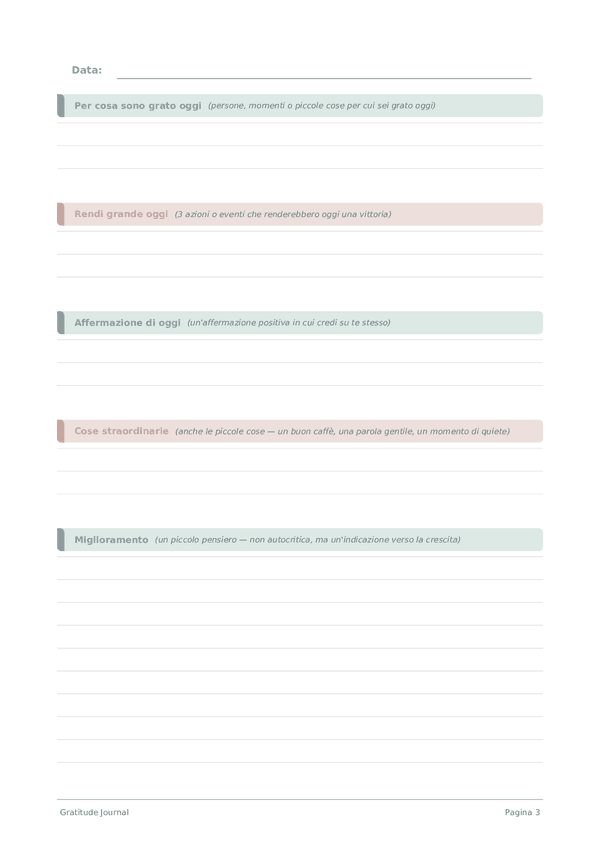
Diario della Gratitudine
Coltiva la riconoscenza e la positività ogni giorno
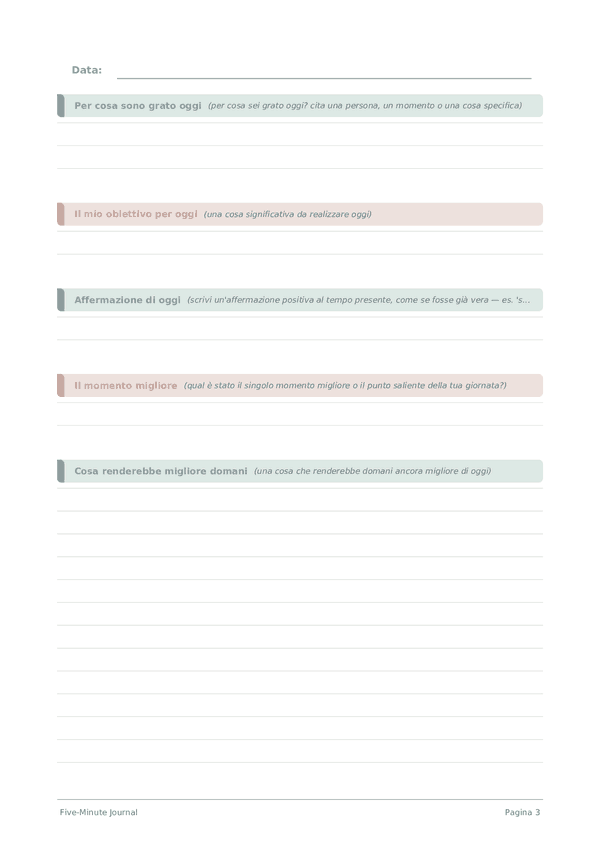
Diario dei Cinque Minuti
Diario quotidiano di gratitudine e riflessione in cinque minuti
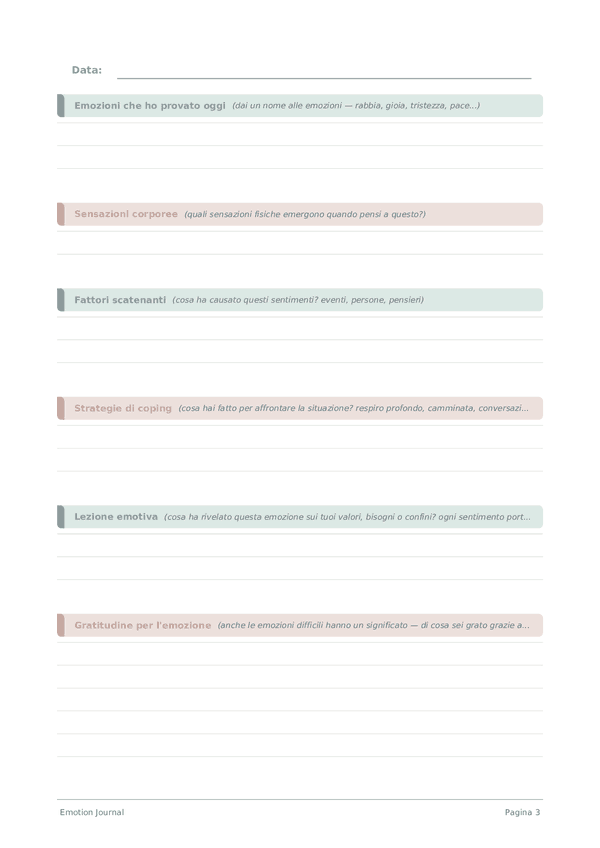
Diario delle Emozioni
Comprendi, elabora e cresci attraverso le tue emozioni
Tracker delle Abitudini
Costruisci abitudini migliori un giorno alla volta
Scorri per ingrandire, trascina per spostare