Printable Diario delle Emozioni
Comprendi, elabora e cresci attraverso le tue emozioni
Personalizza campi
Attiva o disattiva i campi. Clicca la matita per rinominare, oppure aggiungi i tuoi campi.
Cos'è questo diario?
Questo è un diario con inserimenti giornalieri — ogni pagina rappresenta un giorno con domande strutturate che guidano la tua riflessione. Le sezioni sono progettate in modo che compilarle richieda solo 5–10 minuti, rendendo facile mantenere un'abitudine quotidiana.
Come compilare ogni campo
Ogni giorno troverai diverse sezioni etichettate con righe per scrivere. Ecco a cosa serve ogni sezione:
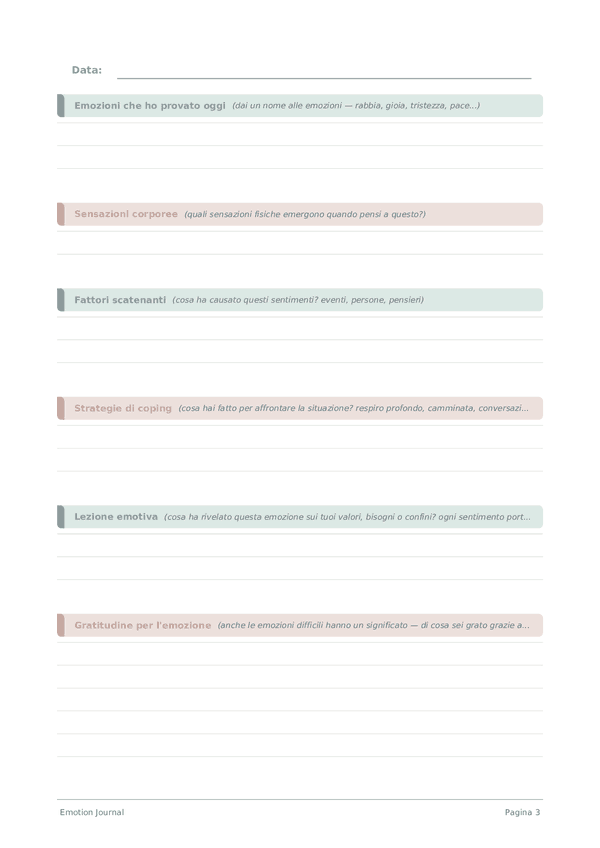
Emozioni che ho provato oggi
Nomina le emozioni specifiche che hai provato. La ricerca mostra che dare un nome alle emozioni riduce la loro intensità e aumenta la consapevolezza di sé.
Sensazioni corporee
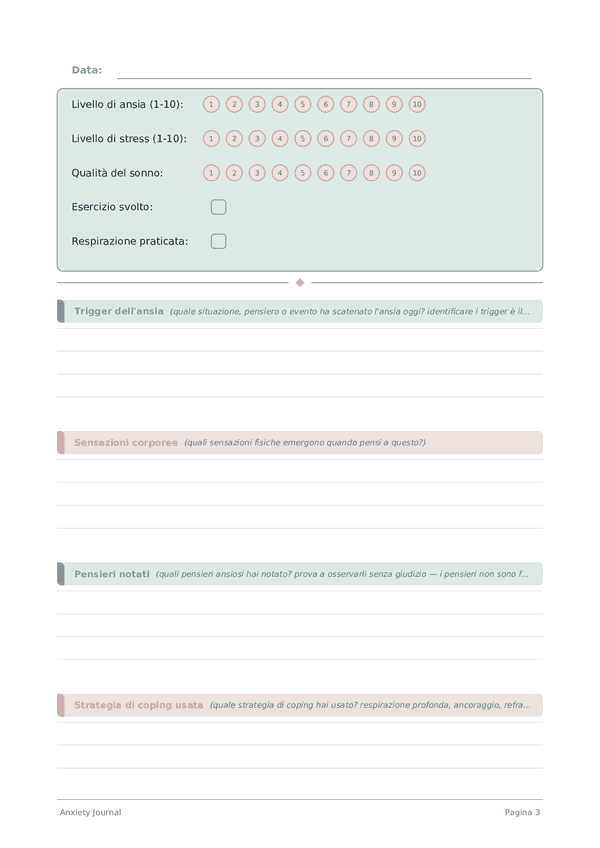
Quali sensazioni fisiche emergono quando pensi a questo?
Fattori scatenanti
Identifica cosa ha causato le tue reazioni emotive — eventi, persone, pensieri, ambienti. Riconoscere i trigger ti dà il potere di prepararti o evitarli.
Strategie di coping
Cosa hai fatto per affrontare la situazione? Respiro profondo, camminata, conversazione...
Lezione emotiva
Cosa ha rivelato questa emozione sui tuoi valori, bisogni o confini? Ogni sentimento porta un messaggio che vale la pena ascoltare
Gratitudine per l'emozione
Anche le emozioni difficili hanno un significato — di cosa sei grato grazie a ciò che hai provato oggi?
Consigli per il successo
Quando e con quale frequenza scrivere
Compila una pagina al giorno. La maggior parte delle persone trova che la mattina (10 minuti dopo il risveglio) o la sera (prima di dormire) funzionino meglio. Scegli un orario e mantienilo per almeno due settimane prima di cambiare. La chiave è la regolarità, non la perfezione.
Domande frequenti
Quanto devo essere specifico nella sezione 'emozioni che ho provato oggi'?
Molto specifico. La ricerca di Lisa Feldman Barrett sulla granularità emotiva (Kashdan, Barrett, McKnight, 2015, Current Directions in Psychological Science, 24(1)) mostra che le persone che distinguono emozioni a grana fine — «frustrato», «risentito», «umiliato» anziché semplicemente «male» — regolano le emozioni più efficacemente e ricorrono meno all'alcol o all'aggressività sotto stress. Usa le tre righe per nominare emozioni distinte, non un'unica parola ombrello.
Perché il diario chiede delle 'sensazioni corporee'?
Le emozioni emergono come segnali fisici prima delle etichette coscienti. Il legame interocezione-emozione è documentato in Critchley e Garfinkel (2017, Current Opinion in Psychology, 17). Nominare dove si avverte tensione, calore o pesantezza migliora quella che Hayes (Acceptance and Commitment Therapy) chiama defusione cognitiva — osservare il sentimento invece di fondersi con esso. Due righe bastano per una rapida scansione corporea.
Come identifico accuratamente un 'trigger'?
Usa le tre righe per mappare la situazione, il pensiero e l'emozione in sequenza — il modello A-B-C di Albert Ellis (REBT) e la terapia cognitiva di Aaron Beck («Cognitive Therapy and the Emotional Disorders», 1976). Il trigger è raramente l'evento da solo; è il significato che la mente gli ha attribuito. Scrivere tutti e tre espone la valutazione che ha guidato l'emozione.
Cosa conta come 'coping strategy' sana da registrare?
Distingui tra approccio ed evitamento. Il modello transazionale di Folkman e Lazarus e l'inventario COPE di Carver categorizzano le strategie come orientate al problema, orientate all'emozione o evitanti. Registra quello che hai fatto davvero — incluso il coping poco utile come scorrere i social o mangiare. La registrazione onesta rivela gli schemi. Aldao, Nolen-Hoeksema, Schweizer (2010, Clinical Psychology Review, 30(2)) hanno rilevato che la ruminazione e la soppressione predicono risultati peggiori rispetto alla rivalutazione.
Questo diario è uguale a un tracker dell'umore?
No. I tracker dell'umore usano valutazioni numeriche; questo diario costruisce la granularità emotiva attraverso la narrazione. Tre righe per emozioni che ho provato oggi, più sensazioni corporee, trigger e lezione, seguono il formato di scrittura espressiva di Pennebaker (Pennebaker, 1997, Psychological Science, 8(3)), che produceva benefici per la salute e l'umore che le sole valutazioni non danno. Abbinalo a un tracker per dati completi. Voci brevi ma quotidiane producono schemi più affidabili di riflessioni infrequenti e più lunghe.
Cosa significa 'lezione emotiva' e come ne trovo una?
Ogni emozione segnala un bisogno insoddisfatto o un valore violato. Il framework RULER di Marc Brackett (Yale Center for Emotional Intelligence) e il lavoro di Susan David sull'«agilità emotiva» trattano le emozioni come informazioni. Chiediti: cosa vuole farmi notare questo sentimento — sui miei confini, valori o bisogni insoddisfatti? Tre righe è lo spazio per un'intuizione onesta, non una filosofia completa.
Posso usarlo per emozioni difficili come rabbia o vergogna?
Sì, è proprio il suo punto di forza. Sopprimere le emozioni peggiora i risultati (Gross, 2002, Psychophysiology, 39(3) sulla soppressione espressiva). Nominare le emozioni difficili su carta — incluso gratitudine per l'emozione alla fine — supporta ciò che la DBT di Linehan chiama «accettazione radicale». Se vergogna, rabbia o dolore sembrano opprimenti o persistenti, consulta un professionista della salute mentale abilitato affiancando il journaling.
Con quale frequenza devo compilarlo per vedere risultati?
Punta al quotidiano nei periodi emotivamente intensi, tre o quattro volte alla settimana negli altri. Burton e King (2004, Journal of Research in Personality, 38(2)) hanno rilevato che due minuti di scrittura espressiva per tre giorni producevano miglioramenti misurabili del benessere. La costanza conta più della lunghezza. Rivedi settimanalmente per individuare quali trigger e strategie di coping si ripetono. Voci brevi ma quotidiane producono schemi più affidabili di riflessioni infrequenti e più lunghe.
Potrebbe piacerti anche
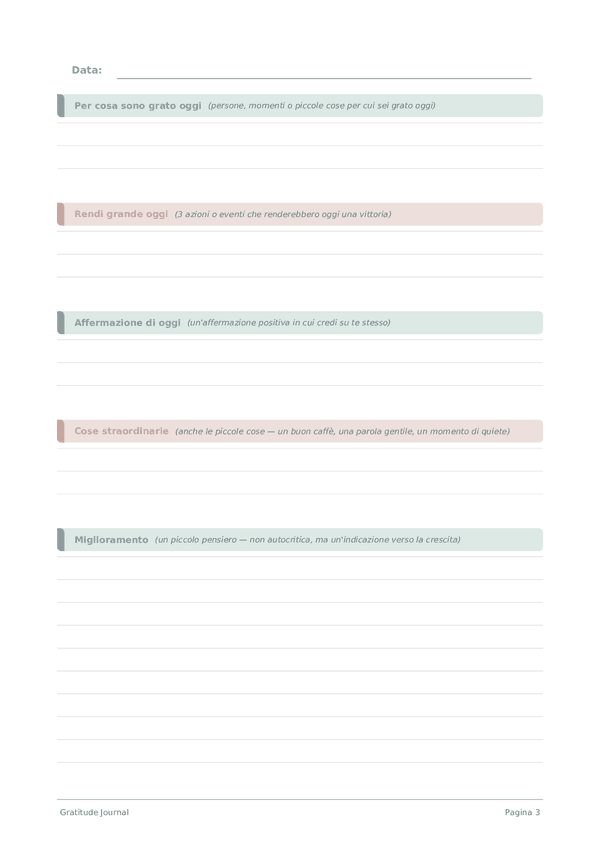
Diario della Gratitudine
Coltiva la riconoscenza e la positività ogni giorno
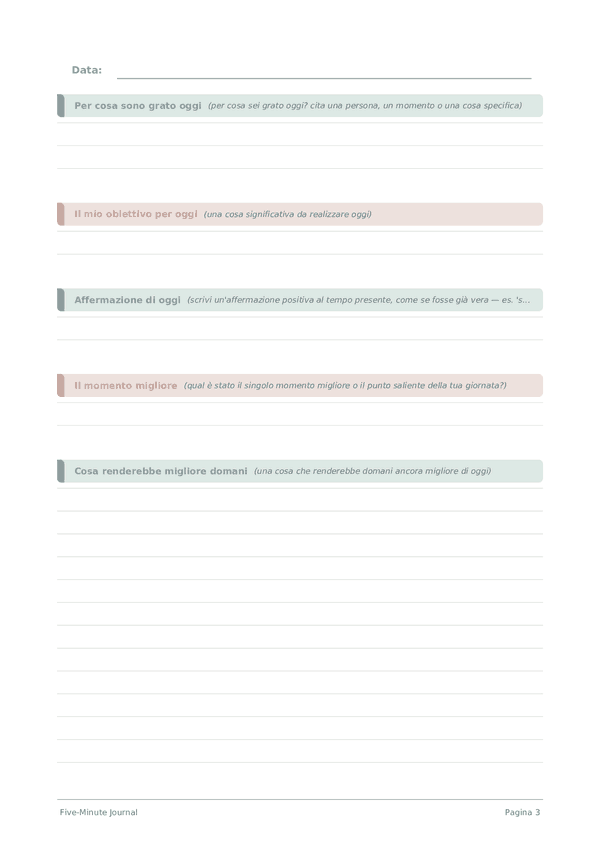
Diario dei Cinque Minuti
Diario quotidiano di gratitudine e riflessione in cinque minuti
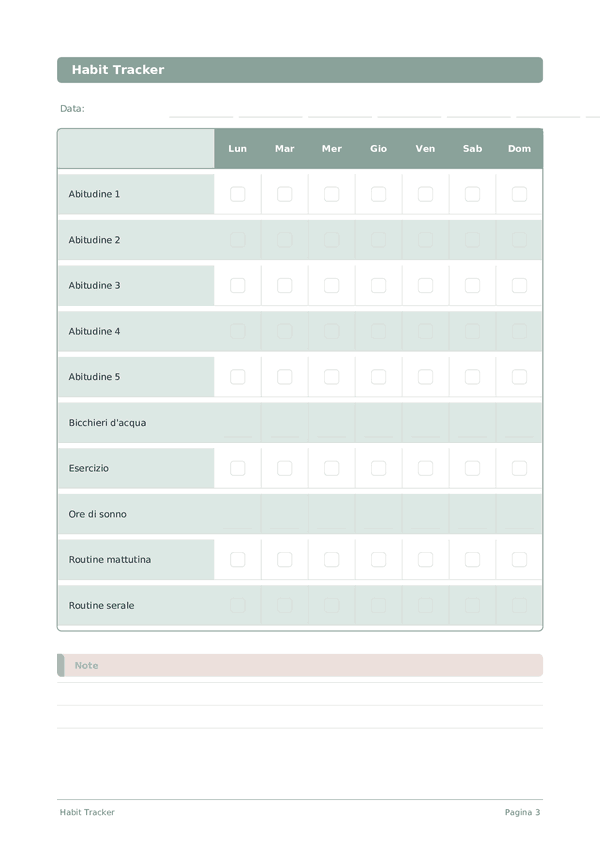
Tracker delle Abitudini
Costruisci abitudini migliori un giorno alla volta
Diario dell'Ansia
Diario quotidiano di monitoraggio dell'ansia e riflessione basata sulla CBT
Scorri per ingrandire, trascina per spostare