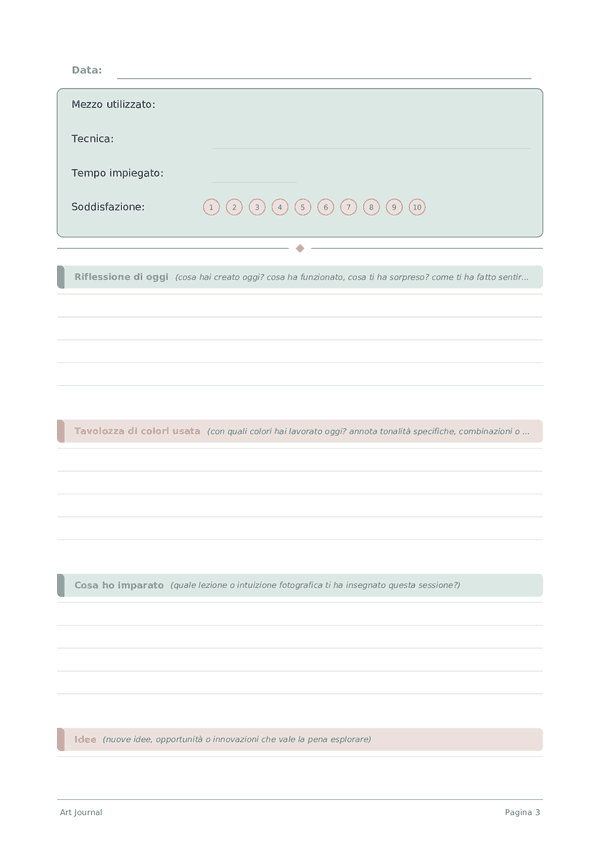
Printable Diario d'Arte
Documenta il tuo processo creativo e la crescita artistica
Personalizza campi
Attiva o disattiva i campi. Clicca la matita per rinominare, oppure aggiungi i tuoi campi.
Cos'è questo diario?
Questo è un diario ibrido — ogni pagina combina una sezione di tracciamento rapido in cima con un'area di scrittura a righe in basso. Ciò ti consente di catturare sia dati misurabili che riflessioni in forma libera in un unico posto.
Come compilare ogni campo
La parte superiore di ogni pagina ha campi a compilazione rapida (valutazioni, caselle di controllo, numeri). Sotto c'è una sezione a righe per scrivere. Ecco cosa significa ogni campo:
Mezzo utilizzato
Con quale medium hai lavorato oggi? es. acquerello, olio, matita, carboncino, digitale
Tecnica
Su quale tecnica ti sei concentrato o hai sperimentato? es. pennello a secco, stratificazione, tratteggio incrociato
Tempo impiegato
Quanto tempo hai studiato?
Soddisfazione
Quanto sei soddisfatto della sessione di oggi? (1=frustrato, 5=molto soddisfatto)
Riflessione di oggi
Guarda indietro alla tua giornata con onestà. Cosa è andato bene? Cosa potrebbe migliorare? Non si tratta di giudizio — si tratta di imparare e crescere.
Tavolozza di colori usata
Con quali colori hai lavorato oggi? Annota tonalità specifiche, combinazioni o scelte che ti sono sembrate giuste
Cosa ho imparato
Scrivi una cosa nuova che hai imparato oggi. Può essere un fatto, un'abilità, un'intuizione su te stesso o una lezione di vita. Imparare ogni giorno si accumula in saggezza.
Idee
Cattura le tue idee prima che svaniscano. Nessuna idea è troppo piccola o sciocca. Alcune delle migliori intuizioni iniziano come pensieri grezzi e incompiuti.
Consigli per il successo
Quando e con quale frequenza scrivere
Compila una pagina al giorno. La parte del tracker richiede meno di un minuto; cerca di farlo a un orario costante. La sezione di scrittura può essere fatta nello stesso momento o riservata quando hai 5 minuti tranquilli. Entrambe le parti insieme ti danno il quadro più completo della tua giornata.
Domande frequenti
Cosa tiene traccia l'Art Journal?
Ogni pagina registra una sessione creativa: mezzo utilizzato (tecnica usata), technique (tecnica), tempo impiegato (fino a 480 minuti) e satisfaction (soddisfazione, 0-10), con otto righe per la riflessione — palette di colori usata, cosa hai imparato e idee. È pensato per artisti, illustratori e chiunque voglia documentare la propria pratica visiva. A differenza di un portfolio, cattura il processo: le scelte, gli errori e le piccole scoperte che nel tempo costruiscono uno stile personale.
Come uso i campi 'medium' e 'tecnica' in modo significativo?
Sii specifico/a: "acquerello, bagnato su bagnato" vale molto più di "pittura". Il framework della pratica deliberata di Ericsson (Ericsson et al., 1993, Psychological Review, 100(3), 363-406) richiede di identificare l'esatta abilità che si sta allenando. Inserire medium e tecnica in modo preciso ti permette di rispondere in seguito a domande come: «Quale tecnica valuto più in alto?» o «Cosa non ho mai provato?» Dopo tre mesi, il campo diventa un auto-curriculum dei tuoi punti di forza e delle lacune.
Perché dovrei valutare la soddisfazione dopo ogni sessione?
La valutazione crea un ciclo di feedback che collega impegno, condizioni e risultato. Csikszentmihalyi (1990, Flow, Harper) ha scoperto che gli artisti che riflettono sulla qualità della sessione entrano nello stato di flow in modo più affidabile. Valuta subito dopo: la memoria tende ad amplificare le sessioni positive e a cancellare quelle mediocri. I pattern emergono nel giro di 4-6 settimane: le sessioni con alta soddisfazione spesso condividono condizioni comuni (orario, durata, medium, umore) che puoi riprodurre intenzionalmente.
Tenere un art journal migliora davvero il mio lavoro?
La riflessione abbinata alla pratica deliberata sì. Ericsson (2016, Peak, Houghton Mifflin Harcourt) mostra che gli artisti capaci di articolare cosa ha funzionato e cosa no progrediscono più rapidamente di chi si limita a produrre. Il campo cosa ho imparato (cosa ho imparato) è la componente di pratica deliberata; il tracker della soddisfazione è il segnale di feedback. Senza riflessione, le ore producono ripetizione anziché miglioramento — una conclusione coerente con le ricerche nei domini artistici e atletici.
Qual è la differenza rispetto a un semplice sketchbook?
Lo sketchbook contiene il lavoro; questo diario contiene il processo che sta dietro. I campi strutturati ti obbligano a nominare medium, tecnica e palette — un'abitudine metacognitiva che, secondo la ricerca di Bjork sulle «difficoltà desiderabili» (Bjork & Bjork, 2011, Psychology and the Real World, Worth Publishers), rafforza la ritenzione e il trasferimento delle competenze. Puoi usare entrambi: schizza altrove, registra qui. Le 8 righe di riflessione sono il livello mancante che la maggior parte degli sketchbook non ha.
Cosa dovrei scrivere nella sezione palette di colori?
Elenca i pigmenti effettivi o i codici esadecimali usati (es. «oltremare, terra di Siena bruciata, bianco titanio»). Con 30-50 voci, inizierai a vedere la tua palette abituale e i colori inesplorati. Il diario diventa così una libreria personale di riferimento cromatico. Annota quali combinazioni hanno funzionato e quali sembravano sporche — questo cattura la conoscenza tacita che gli artisti di solito costruiscono solo attraverso anni di tentativi ed errori.
Con quale frequenza dovrei scrivere nel diario — a ogni sessione o solo per i grandi progetti?
A ogni sessione, anche quelle da 10 minuti. L'effetto spaziatura documentato da Cepeda et al. (2006, Psychological Bulletin, 132(3), 354-380) mostra che voci frequenti e brevi battono quelle rare e lunghe per la ritenzione. Le sessioni brevi sono anche dove avvengono le micro-scoperte più importanti — un trucco col pennello, un mix di colori, un'osservazione sulla luce. Saltarle significa perdere i dati granulari che rendono possibile trovare pattern in seguito.
Non sono un/a artista 'vero/a' — questo diario mi è utile lo stesso?
Sì — il diario è per la pratica, non per le credenziali. La ricerca di Dweck sul mindset (Mindset, 2006, Random House) mostra che concentrarsi sul processo e sul miglioramento (mindset di crescita) anziché sul talento innato (mindset fisso) predice lo sviluppo delle abilità a lungo termine. La valutazione della soddisfazione e il prompt cosa ho imparato sono progettati per misurare la crescita, non la qualità del risultato. I principianti ne traggono i maggiori benefici perché la riflessione precoce previene la formazione di cattive abitudini.
Potrebbe piacerti anche
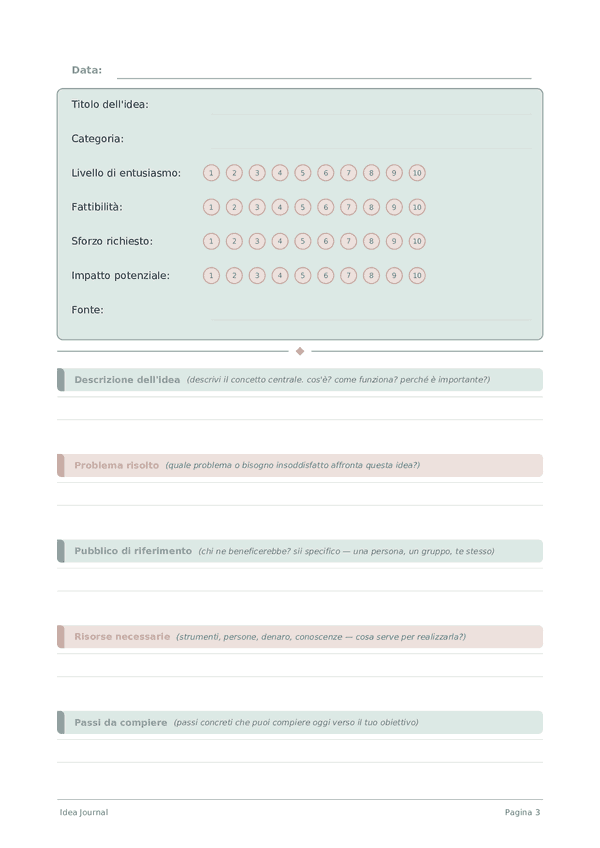
Diario delle Idee
Cattura, valuta e sviluppa le tue migliori idee
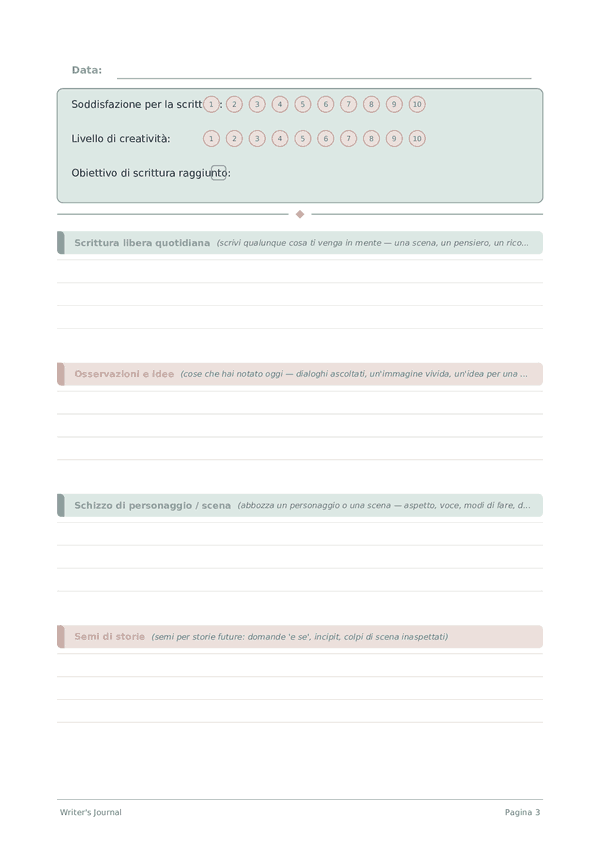
Diario dello Scrittore
Pratica quotidiana di scrittura creativa e sviluppo dell'arte
Diario degli Schizzi
Pagine a griglia di punti aperte per schizzare, disegnare ed esplorare visivamente

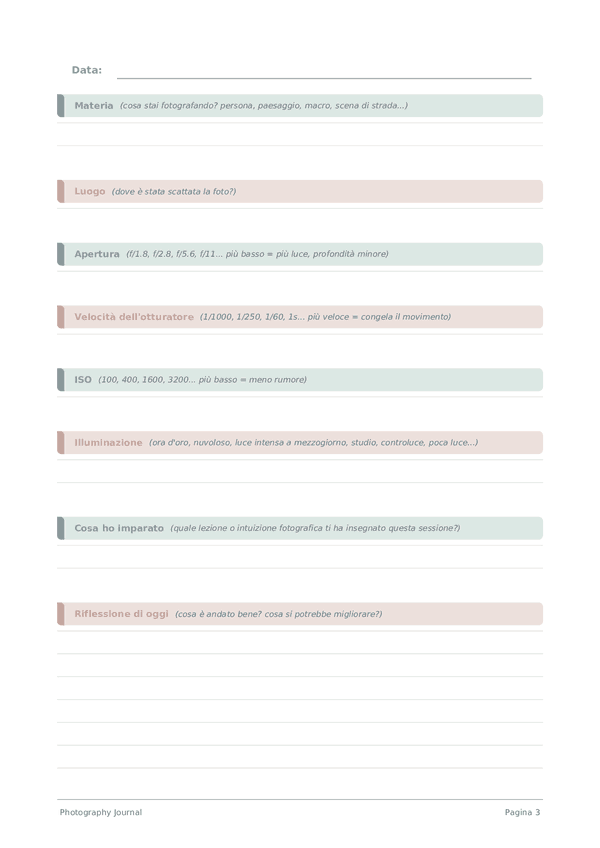
Diario di Fotografia
Registra le tue riprese, le impostazioni e le intuizioni creative dopo ogni sessione
Scorri per ingrandire, trascina per spostare