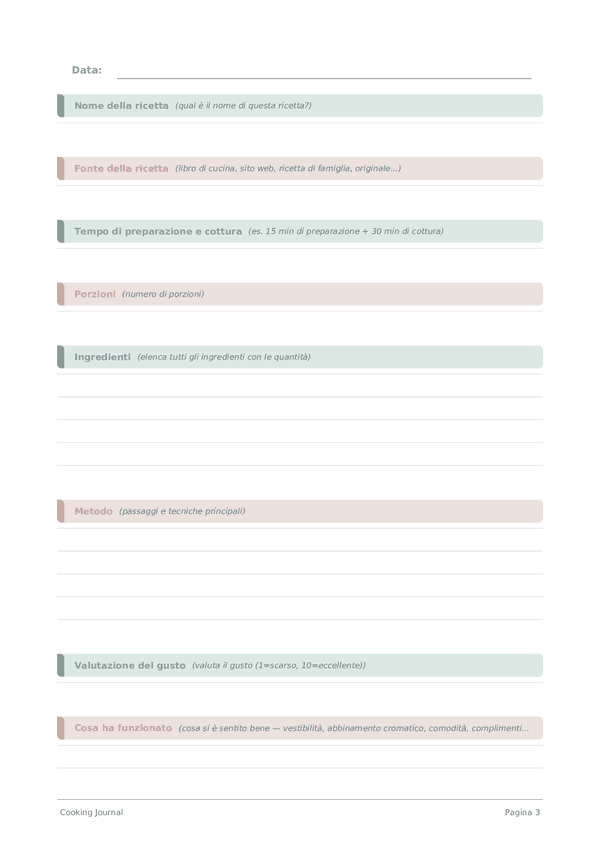
Printable Diario di Cucina
Diario di test delle ricette e appunti di cucina
Personalizza campi
Attiva o disattiva i campi. Clicca la matita per rinominare, oppure aggiungi i tuoi campi.
Cos'è questo diario?
Questo è un diario con inserimenti giornalieri — ogni pagina rappresenta un giorno con domande strutturate che guidano la tua riflessione. Le sezioni sono progettate in modo che compilarle richieda solo 5–10 minuti, rendendo facile mantenere un'abitudine quotidiana.
Come compilare ogni campo
Ogni giorno troverai diverse sezioni etichettate con righe per scrivere. Ecco a cosa serve ogni sezione:
Nome della ricetta
Qual è il nome di questa ricetta?
Fonte della ricetta
Libro di cucina, sito web, ricetta di famiglia, originale...
Tempo di preparazione e cottura
es. 15 min di preparazione + 30 min di cottura
Porzioni
Numero di porzioni
Ingredienti
Elenca tutti gli ingredienti con le quantità
Metodo
Passaggi e tecniche principali
Valutazione del gusto
Valuta il gusto (1=scarso, 10=eccellente)
Cosa ha funzionato
Cosa si è sentito bene — vestibilità, abbinamento cromatico, comodità, complimenti ricevuti?
Lo rifaresti?
Sì, No o Forse con alcune modifiche
Consigli per il successo
Quando e con quale frequenza scrivere
Compila una pagina al giorno. La maggior parte delle persone trova che la mattina (10 minuti dopo il risveglio) o la sera (prima di dormire) funzionino meglio. Scegli un orario e mantienilo per almeno due settimane prima di cambiare. La chiave è la regolarità, non la perfezione.
Domande frequenti
Cosa registra il Cooking Journal per ogni piatto?
Nove campi per ricetta: nome della ricetta (nome ricetta), fonte della ricetta (fonte), tempo di preparazione e cottura (tempi di preparazione e cottura), servings (porzioni), ingredients (5 righe), method (5 righe), valutazione del gusto (valutazione del gusto), cosa ha funzionato (cosa ha funzionato, 2 righe) e lo rifaresti? (lo rifarei). La struttura rende ogni tentativo di cucina un esperimento documentato anziché un'esperienza isolata — col tempo costruisci un ricettario personale calibrato sul tuo gusto, i tuoi ingredienti e la tua attrezzatura.
Perché annotare gli ingredienti se la ricetta originale ce li ha già?
Annoti quello che hai usato davvero, non quello che la ricetta prevedeva. Sostituzioni, tagli disponibili, prodotti maturi o acerbi e aggiustamenti di quantità influiscono tutti sul risultato. Registrare gli ingredienti reali trasforma un successo occasionale in qualcosa di replicabile — e un fallimento in un problema diagnosticabile. Lo spazio per 5 righe di ingredienti si adatta a un piatto di media complessità; le ricette complesse possono occupare più pagine.
Qual è la differenza rispetto a salvare ricette online?
Le ricette salvate sono segnalibri; questo diario è il resoconto personale della tua versione. Le ricette online presuppongono una cucina ideale e ingredienti medi; il tuo diario registra cosa è successo nella tua cucina, con il tuo fornello, il tuo sale, i punti caldi del tuo forno. Dopo 20-30 voci, il diario diventa più utile di qualsiasi libro di cucina perché è calibrato sul tuo specifico ambiente e sulle tue preferenze.
Cosa va nella sezione cosa ha funzionato?
Osservazioni tecniche specifiche: «ho ridotto il brodo della metà prima di aggiungere la panna — la salsa copriva il dorso del cucchiaio», «60 secondi di cottura a fuoco vivo hanno creato una crosta migliore rispetto a 90». La specificità è fondamentale: voci vaghe («è venuto bene») sbiadiscono; quelle concrete costruiscono un'intuizione culinaria trasferibile. Nel tempo, la colonna cosa ha funzionato diventa la tua raccolta personale di piccole tecniche imparate a spese proprie.
Come uso il campo valutazione del gusto in modo onesto?
Valuta in base alle tue aspettative per quel piatto, non rispetto a uno standard da ristorante stellato. Una buona pasta da settimana valutata 7/10 rispetto all'obiettivo «buona pasta da settimana» è più utile di 4/10 rispetto a un ideale irraggiungibile. Abbina la valutazione a delle note — un 5/10 con «troppo salato» è azionabile; un 5/10 da solo è solo scoraggiamento. Nel tempo, i pattern di valutazione rivelano le cucine e i metodi che funzionano costantemente per te.
Devo annotare i piatti che faccio spesso o solo le ricette nuove?
Entrambi, ma per ragioni diverse. Le ricette nuove richiedono il template completo — stai imparando. I piatti ripetuti beneficiano di voci periodiche per tracciare la raffinatezza: i cambiamenti apportati, cosa è migliorato, cosa ha raggiunto un plateau. Molti cuochi casalinghi arrivano a un tetto confortevole sui piatti familiari senza accorgersi di aver smesso di sperimentare. Il diario interrompe questa deriva facendo di ogni ripetizione un'opportunità per un piccolo cambiamento.
Tenere un diario di cucina mi rende davvero un cuoco/una cuoca migliore?
Sì, quando le voci includono osservazioni specifiche e revisioni. La cucina migliora attraverso lo stesso meccanismo di pratica deliberata documentato da Ericsson (2016, Peak, Houghton Mifflin Harcourt) in altri domini — attenzione focalizzata su tecniche specifiche con feedback. Il valutazione del gusto fornisce il feedback; cosa ha funzionato fornisce l'attenzione specifica. Senza scrivere, la maggior parte dei cuochi ripete gli stessi piatti senza migliorarli consapevolmente.
Come uso il diario per la pianificazione dei pasti o la spesa?
Scorri le voci segnate con lo rifaresti? = sì per costruire il piano settimanale, poi compila la lista della spesa dalle sezioni ingredienti. Questo evita la trappola comune di comprare per pasti ambiziosi che non vengono mai cucinati. La revisione trimestrale delle valutazioni del gusto rivela quali categorie di cibo riescono costantemente bene — utile sia per la pianificazione che per migliorare le ricette che cucini più spesso.
Potrebbe piacerti anche
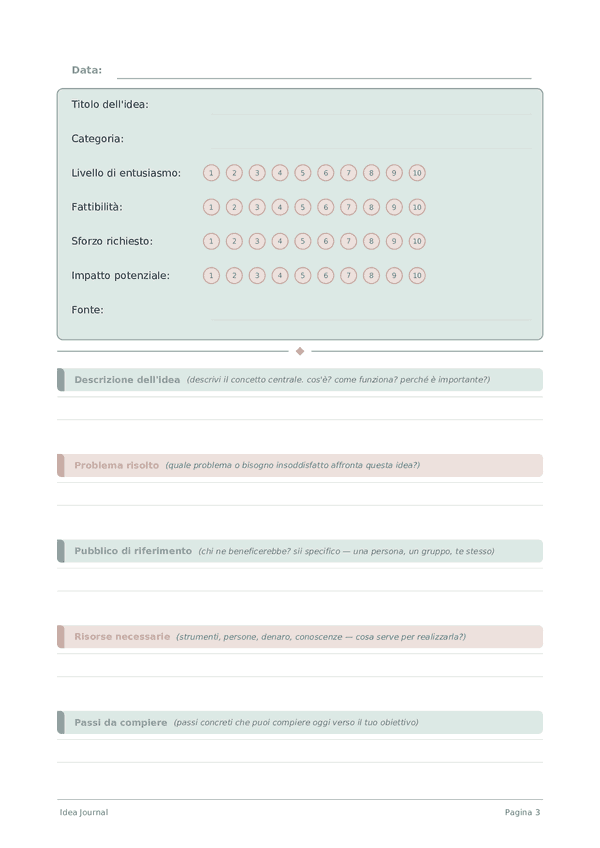
Diario delle Idee
Cattura, valuta e sviluppa le tue migliori idee
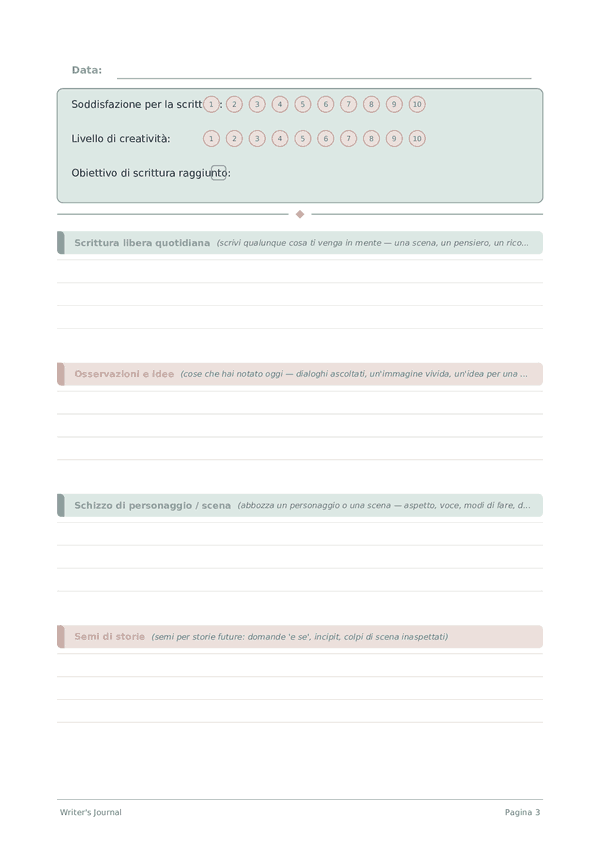
Diario dello Scrittore
Pratica quotidiana di scrittura creativa e sviluppo dell'arte
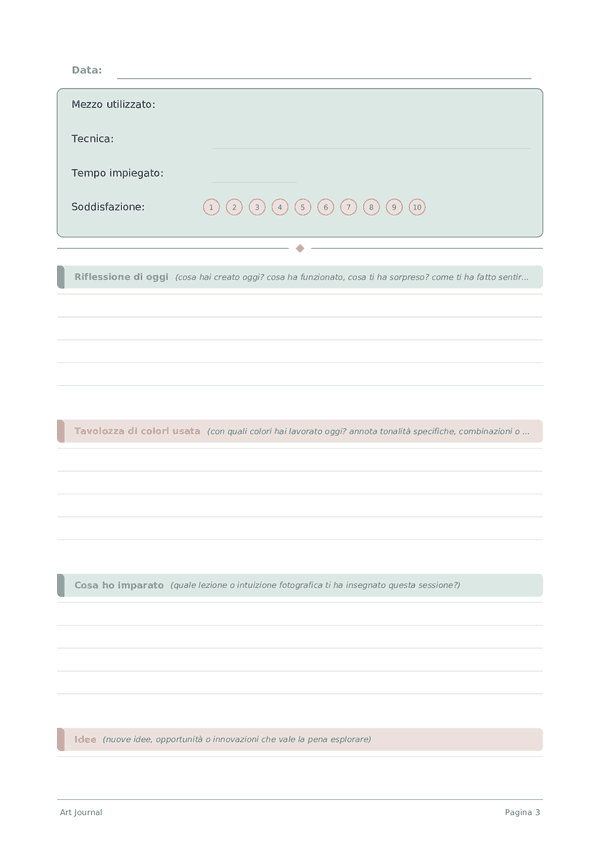
Diario d'Arte
Documenta il tuo processo creativo e la crescita artistica
Diario degli Schizzi
Pagine a griglia di punti aperte per schizzare, disegnare ed esplorare visivamente
Scorri per ingrandire, trascina per spostare