Printable Diario delle Decisioni
Pensa con chiarezza, decidi con sicurezza, impara da ogni scelta
Personalizza campi
Attiva o disattiva i campi. Clicca la matita per rinominare, oppure aggiungi i tuoi campi.
Cos'è questo diario?
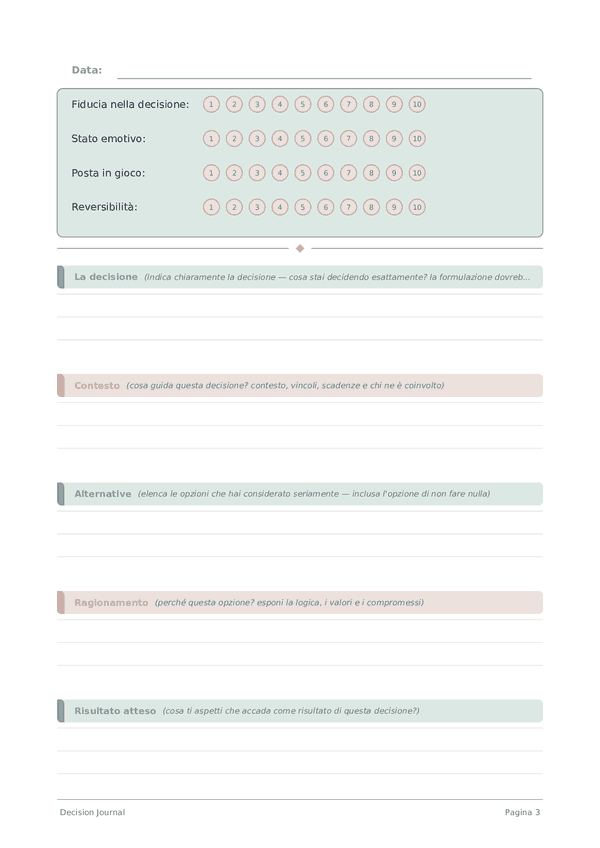
Questo è un diario ibrido — ogni pagina combina una sezione di tracciamento rapido in cima con un'area di scrittura a righe in basso. Ciò ti consente di catturare sia dati misurabili che riflessioni in forma libera in un unico posto.
Come compilare ogni campo
La parte superiore di ogni pagina ha campi a compilazione rapida (valutazioni, caselle di controllo, numeri). Sotto c'è una sezione a righe per scrivere. Ecco cosa significa ogni campo:
Fiducia nella decisione
Quanto sei sicuro che questa sia la scelta giusta? Da 1 (molto incerto) a 10 (certo)
Stato emotivo
Quanto hai la mente lucida adesso? Da 1 (confuso) a 10 (molto chiaro)
Posta in gioco
Quanto sono significative le conseguenze se va male? Da 1 (minore) a 10 (che cambia la vita)
Reversibilità
Quanto facilmente puoi cambiare rotta se necessario? Da 1 (bloccato) a 10 (facilmente annullabile)
La decisione
Indica chiaramente la decisione — cosa stai decidendo esattamente? La formulazione dovrebbe essere comprensibile anche a un bambino
Contesto
Cosa guida questa decisione? Contesto, vincoli, scadenze e chi ne è coinvolto
Alternative
Elenca le opzioni che hai considerato seriamente — inclusa l'opzione di non fare nulla
Ragionamento
Perché questa opzione? Esponi la logica, i valori e i compromessi
Risultato atteso
Cosa ti aspetti che accada come risultato di questa decisione?
Risultato
Cosa è successo effettivamente come risultato?
Lezioni apprese
Guardando indietro: il tuo ragionamento era valido? Cosa faresti diversamente la prossima volta?
Consigli per il successo
Quando e con quale frequenza scrivere
Compila una pagina al giorno. La parte del tracker richiede meno di un minuto; cerca di farlo a un orario costante. La sezione di scrittura può essere fatta nello stesso momento o riservata quando hai 5 minuti tranquilli. Entrambe le parti insieme ti danno il quadro più completo della tua giornata.
Domande frequenti
Cosa cattura il Decision Journal oltre alla decisione in sé?
Il tracker valuta la fiducia nella decisione, lo stato emotivo, la posta in gioco e la reversibilità (ciascuno da 1 a 10). La sezione a righe cattura la decisione, il contesto, le alternative considerate, il ragionamento, il risultato atteso, il risultato effettivo e le lezioni apprese. Questa struttura ti obbliga a scrivere il ragionamento prima di conoscere l'esito — attaccando direttamente il bias del senno di poi, per cui la memoria riscrive la logica pre-decisionale per adattarla a ciò che è realmente accaduto.
Perché valutare la reversibilità e la posta in gioco separatamente?
Jeff Bezos ha reso popolare la distinzione tra porta a senso unico e porta a doppio senso per ragioni simili: le decisioni irreversibili ad alto rischio meritano molta più deliberazione di quelle reversibili a basso rischio. Valutare separatamente la reversibilità (1-10) e la posta in gioco (1-10) evita di sovra-pensare le scelte banali e di sotto-pensare quelle importanti. The Effective Executive di Peter Drucker (HarperBusiness, 1967) sottolineava che le decisioni efficaci abbinano la profondità della deliberazione alle conseguenze.
In cosa si differenzia dal semplice prendere appunti sulle scelte?
Gli appunti informali tendono verso la giustificazione; questo modello impone le alternative, i risultati attesi e le valutazioni di fiducia — gli elementi che vuoi confrontare più tardi con la realtà. I campi risultato atteso e outcome creano un ciclo di feedback che il tuo cervello non può falsificare retrospettivamente. Senza questa struttura, ricordi di essere stato più nel giusto di quanto non fossi, un bias documentato nella ricerca sul giudizio.
Con quale frequenza devo scrivere voci — per ogni decisione o solo per quelle importanti?
Usalo per qualsiasi decisione con un punteggio di 5 o superiore per la posta in gioco o la reversibilità. Registrare ogni scelta banale distrugge il segnale; registrare solo le più ovvie fa perdere le decisioni medie dove la calibrazione migliora di più. Essentialism di Greg McKeown (Crown Business, 2014) suggerisce di trattare la capacità decisionale come finita — riserva il diario per le decisioni che meritano una traccia documentata del ragionamento.
A cosa serve valutare lo stato emotivo prima di decidere?
Lo stato emotivo modella la tolleranza al rischio e la chiarezza. Uno stato emotivo di 3/10 combinato con una posta in gioco alta è un forte segnale per rimandare la decisione se possibile. Questo controllo anti-bias è presente in tutta la letteratura sul giudizio. Il diario lo rende esplicito: se ti valuti 1-3, la voce stessa diventa una bandiera di avvertimento — dormici sopra, raccogli più dati o chiedi un parere prima di impegnarti.
Quanto tempo ci vuole per vedere un miglioramento nel processo decisionale?
La calibrazione migliora in modo misurabile dopo circa 20-30 decisioni registrate con gli esiti compilati, tipicamente da tre a sei mesi per le scelte a rischio medio. Il ciclo di feedback — confrontare risultato atteso con outcome — è ciò che allena il giudizio. Locke e Latham (2002, American Psychologist, 57(9)) hanno dimostrato che il feedback guida le performance degli obiettivi; lo stesso vale per la qualità delle decisioni, non solo per l'esecuzione dei compiti.
Qual è l'errore più comune con un diario delle decisioni?
Non tornare mai a compilare i campi outcome e lezioni apprese. Senza la voce post-risultato, il diario diventa un registro unilaterale di ottimismo, non uno strumento di calibrazione. Imposta un promemoria nel calendario due settimane dopo le voci principali. La sezione lezioni apprese è dove il giudizio personale migliora davvero — saltarla elimina l'intero ciclo di crescita per cui il diario è stato progettato.
Questo diario può aiutare con le decisioni di team o aziendali, non solo personali?
Sì. La stessa struttura è alla base delle pratiche di revisione delle decisioni negli articoli della MIT Sloan Management Review e della Harvard Business Review sulla qualità delle decisioni manageriali. Per l'uso in team, compila le alternative e il ragionamento in modo collaborativo prima di impegnarti, poi rivedi gli esiti nelle retrospettive. Le quattro valutazioni offrono al gruppo un vocabolario condiviso per la fiducia e la posta in gioco — riducendo il rischio che vinca di default la voce più alta.
Potrebbe piacerti anche
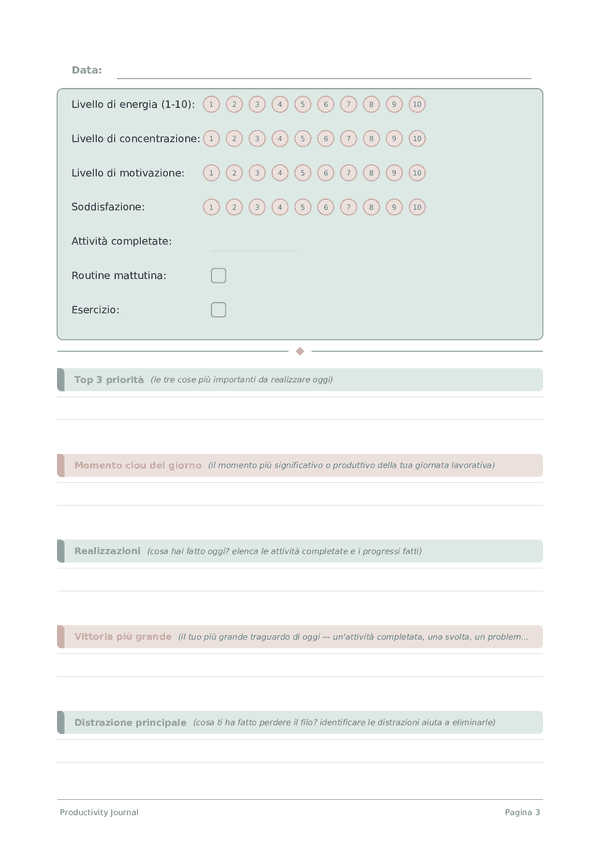
Diario della Produttività
Monitora energia, concentrazione e output quotidiano per costruire abitudini di performance ottimale
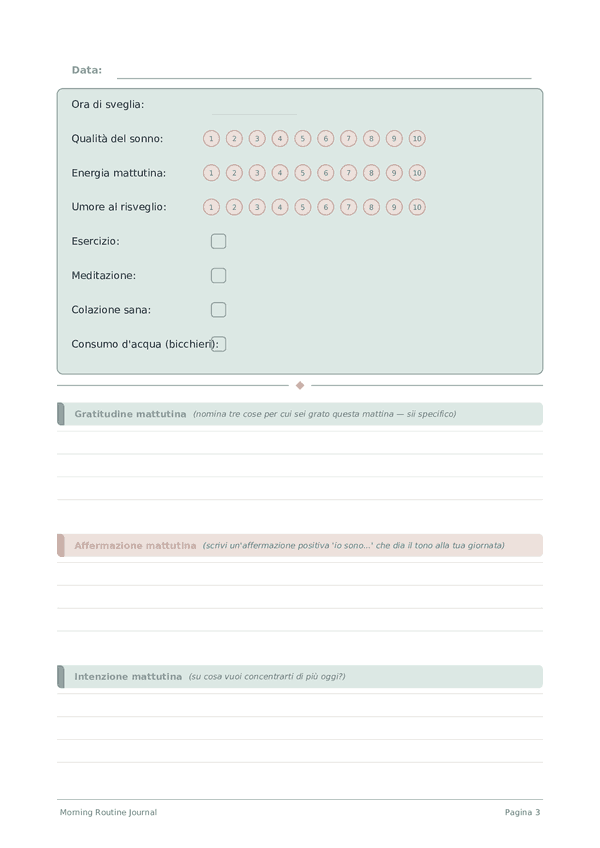
Diario della Routine Mattutina
Inizia ogni giornata con chiarezza, gratitudine e intenzione
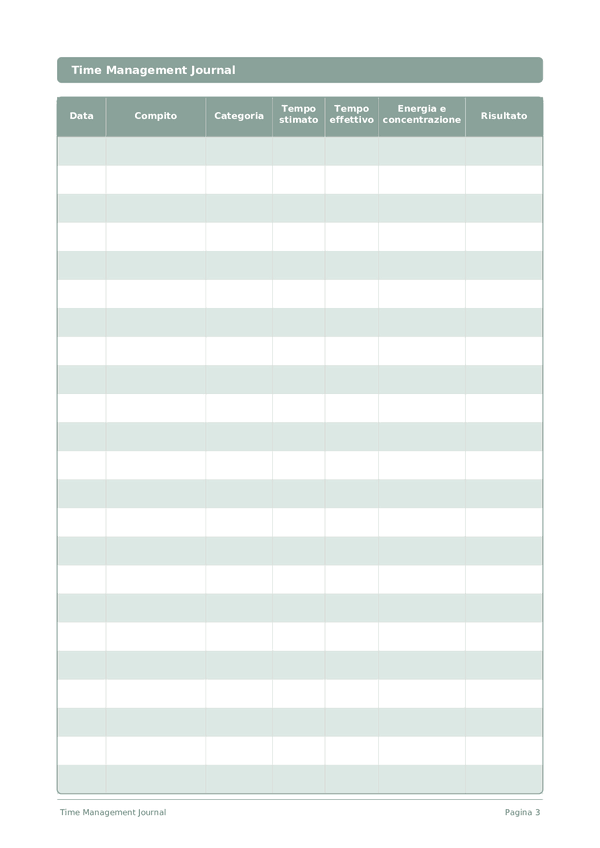
Diario della Gestione del Tempo
Monitora compiti, tempo ed energia per recuperare la tua giornata
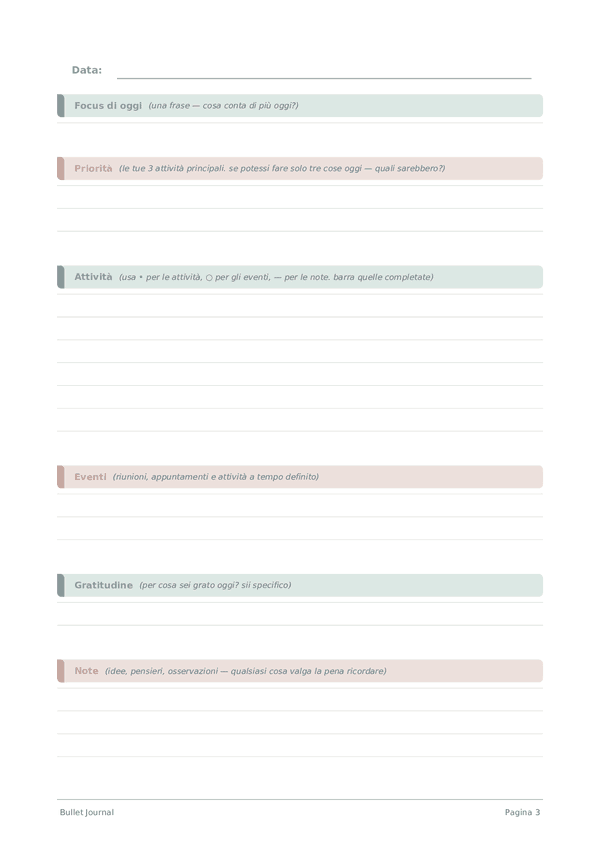
Bullet Journal
Registro quotidiano strutturato per la registrazione rapida
Scorri per ingrandire, trascina per spostare