Printable Diario della Paura
Diario di esplorazione delle paure e costruzione del coraggio
Personalizza campi
Attiva o disattiva i campi. Clicca la matita per rinominare, oppure aggiungi i tuoi campi.
Cos'è questo diario?
Questo è un diario con inserimenti giornalieri — ogni pagina rappresenta un giorno con domande strutturate che guidano la tua riflessione. Le sezioni sono progettate in modo che compilarle richieda solo 5–10 minuti, rendendo facile mantenere un'abitudine quotidiana.
Come compilare ogni campo
Ogni giorno troverai diverse sezioni etichettate con righe per scrivere. Ecco a cosa serve ogni sezione:
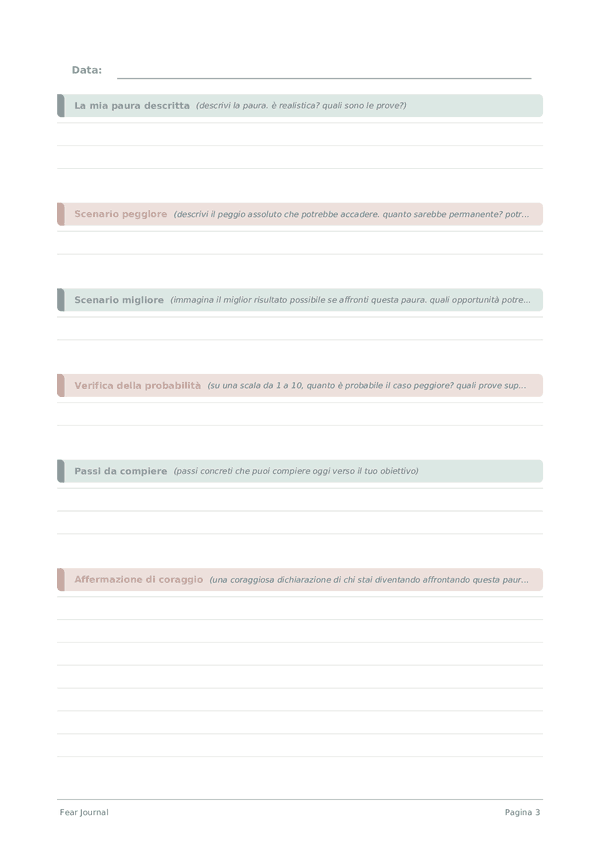
La mia paura descritta
Descrivi nel dettaglio di cosa hai paura. Spesso le paure si rimpiccioliscono quando le metti su carta. Sii onesto — questo diario è solo per i tuoi occhi.
Scenario peggiore
Scrivi lo scenario peggiore assoluto. Poi chiediti: quanto è probabile, davvero? E se accadesse, potrei sopravvivere? Di solito la risposta è sì.
Scenario migliore
Immagina il miglior risultato possibile se affronti questa paura. Quali opportunità potrebbero aprirsi per te?
Verifica della probabilità
Su una scala da 1 a 10, quanto è probabile il caso peggiore? Quali prove supportano o contraddicono la tua paura?
Passi da compiere
Suddividi il tuo obiettivo in azioni concrete. Cosa farai esattamente, quando e come? Più specifico è, meglio è.
Affermazione di coraggio
Una coraggiosa dichiarazione di chi stai diventando affrontando questa paura. Scrivila al tempo presente.
Consigli per il successo
Quando e con quale frequenza scrivere
Compila una pagina al giorno. La maggior parte delle persone trova che la mattina (10 minuti dopo il risveglio) o la sera (prima di dormire) funzionino meglio. Scegli un orario e mantienilo per almeno due settimane prima di cambiare. La chiave è la regolarità, non la perfezione.
Domande frequenti
Qual è la metodologia del 'fear-setting' usata in questo diario?
Il fear-setting è un'analisi strutturata della paura resa popolare da Tim Ferriss ma radicata nella premeditazione stoica (Seneca, Epitteto) e nell'analisi decisionale. La sequenza scenario peggiore, scenario migliore, verifica della probabilità e passi da compiere del diario rispecchia l'analisi decisionale di Edwards (1954, Psychological Bulletin, 51(4)) e la ricerca contemporanea sul decision-making strutturato — esaminare esplicitamente i risultati indebolisce l'anticipazione catastrofica vaga che guida l'evitamento.
Come aiuta davvero scrivere il 'scenario peggiore'?
Utilizza l'esposizione immaginale combinata con la ristrutturazione cognitiva. Beck («Cognitive Therapy and the Emotional Disorders», 1976) e la CBT basata sull'esposizione (Foa e Kozak, 1986, Psychological Bulletin, 99(1)) mostrano che specificare i risultati temuti ne riduce il potere. La paura vaga rimane catastrofica; i casi peggiori nominati di solito sembrano sopravvivibili. Due righe impongono specificità — cosa succede concretamente se si verifica il risultato temuto?
Perché includere 'scenario migliore' se la paura è al centro?
Per ripristinare il pensiero equilibrato. Distorsioni cognitive come la catastrofizzazione si concentrano esclusivamente sui negativi. La CBT di Beck usa esplicitamente il bilanciamento delle prove — incluse sia le possibilità positive sia quelle negative — per indebolire la presa della distorsione. Due righe è lo spazio per un caso migliore credibile, non per una fantasia utopistica. Il contrasto con scenario peggiore calibra le stime di probabilità che verifica della probabilità formalizza.
Come faccio 'verifica della probabilità' in modo onesto?
Valuta la probabilità realistica che scenario peggiore si verifichi in un arco di tempo definito. Kahneman («Thinking, Fast and Slow», 2011) e la sua ricerca con Tversky sull'euristica della disponibilità mostrano che le paure vivide sembrano più probabili di quanto siano. Due righe: valuta da 0 a 100% e una frase sulle prove a supporto della tua stima. La calibrazione migliora con la pratica ripetuta su più paure.
Cosa va in 'passi da compiere' per il lavoro sulla paura?
Due categorie: passi per prevenire scenario peggiore e passi per riprendersi se si verifica. Questa doppia pianificazione è alla base della flessibilità psicologica (ACT di Hayes) e della ricerca sul decision-making preparato. Tre righe è lo spazio per entrambe. Il lato della ripresa conta di più — sapere che potresti affrontare il peggio disinnesca la paura più dei soli piani preventivi.
È sicuro per l'ansia clinica o le fobie?
Usalo con cautela. Le fobie specifiche, il disturbo da panico e il PTSD rispondono meglio alla terapia di esposizione condotta da un clinico specializzato (linee guida NIMH sui disturbi d'ansia). La scrittura non strutturata sulla paura per l'ansia grave può diventare ruminazione anziché elaborazione. Se le paure sono debilitanti, consulta un professionista della salute mentale abilitato. Questo diario complementa il lavoro CBT/esposizione come strumento tra le sessioni.
Cos'è una buona 'affermazione di coraggio'?
Un'affermazione identitaria credibile, non uno slogan. Cohen e Sherman (2014, Annual Review of Psychology, 65) sull'auto-affermazione hanno mostrato che le affermazioni basate sui valori erano efficaci; le generiche «Sono coraggioso» meno. Meglio: «Sono qualcuno che agisce nonostante la paura quando l'azione è importante» — verificabile attraverso i tuoi passi da compiere. La singola riga è intenzionale — un'affermazione, non un elenco.
Con quale frequenza fare un'analisi della paura?
Su richiesta, non ogni giorno. Il fear-setting funziona come intervento mirato quando si evita una decisione o un'azione specifica. Ripeterlo ogni giorno sulla stessa paura può diventare ruminazione — Watkins (2008, Psychological Bulletin, 134(2)) ha rilevato che il pensiero negativo ripetitivo peggiora l'umore e la qualità delle decisioni. Usalo una volta per ogni paura significativa, poi rivisitalo solo quando emergono nuove informazioni.
Potrebbe piacerti anche
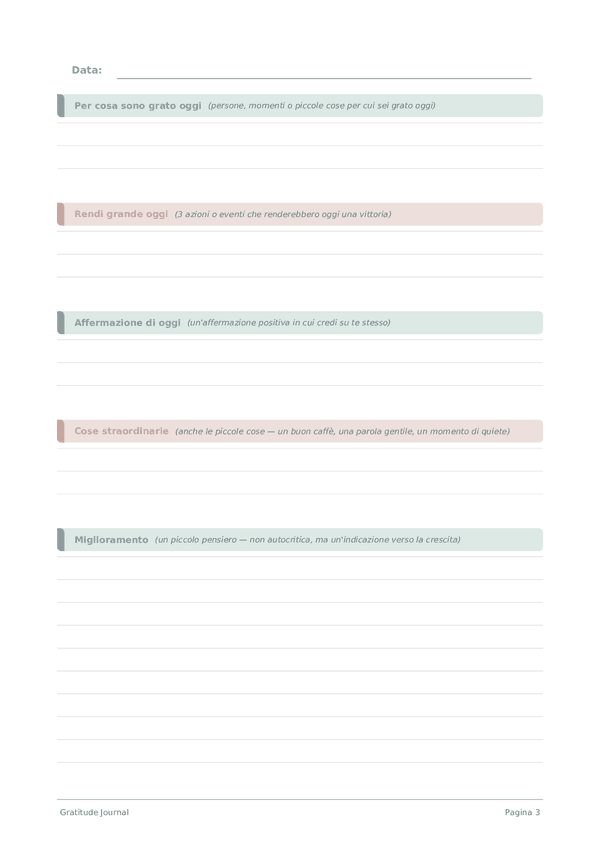
Diario della Gratitudine
Coltiva la riconoscenza e la positività ogni giorno
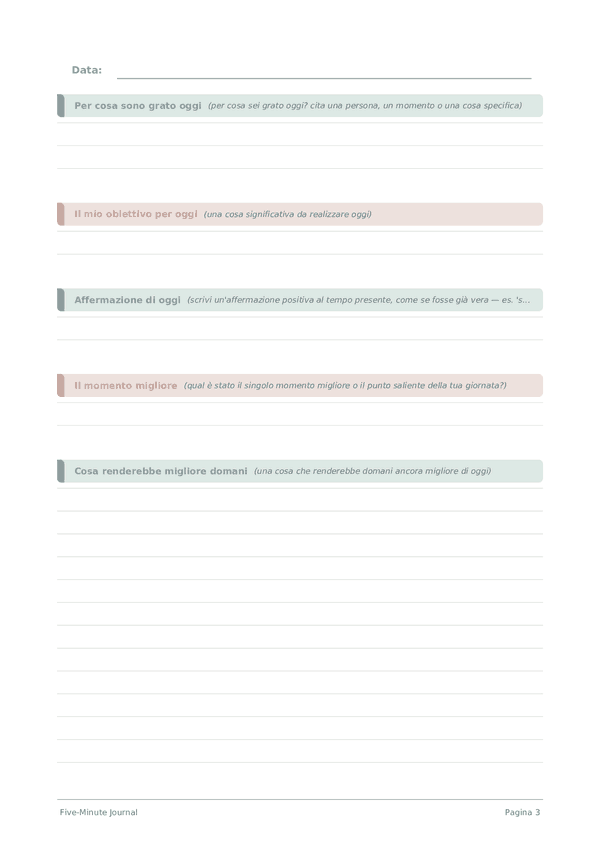
Diario dei Cinque Minuti
Diario quotidiano di gratitudine e riflessione in cinque minuti
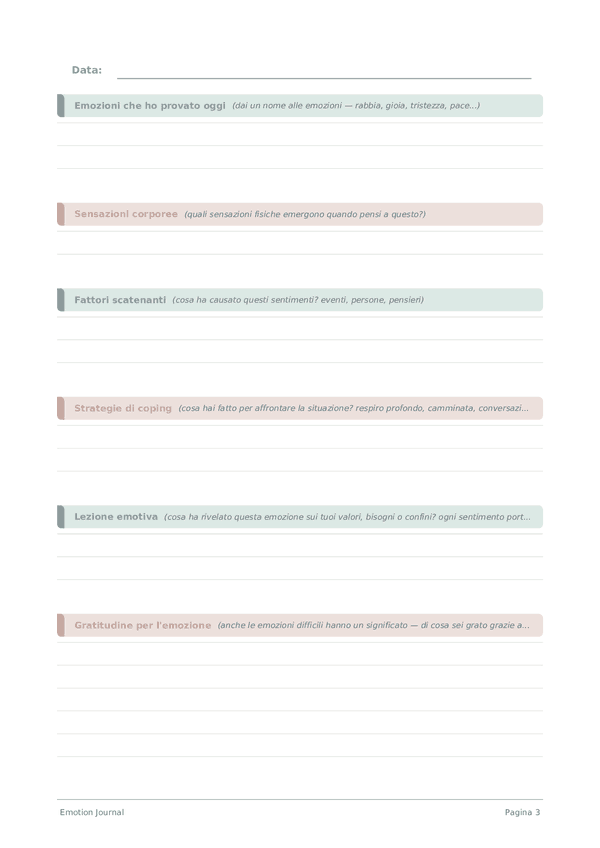
Diario delle Emozioni
Comprendi, elabora e cresci attraverso le tue emozioni
Tracker delle Abitudini
Costruisci abitudini migliori un giorno alla volta
Scorri per ingrandire, trascina per spostare