Printable Diario della Salute Mentale
Un check-in quotidiano completo per la tua mente
Personalizza campi
Attiva o disattiva i campi. Clicca la matita per rinominare, oppure aggiungi i tuoi campi.
Cos'è questo diario?
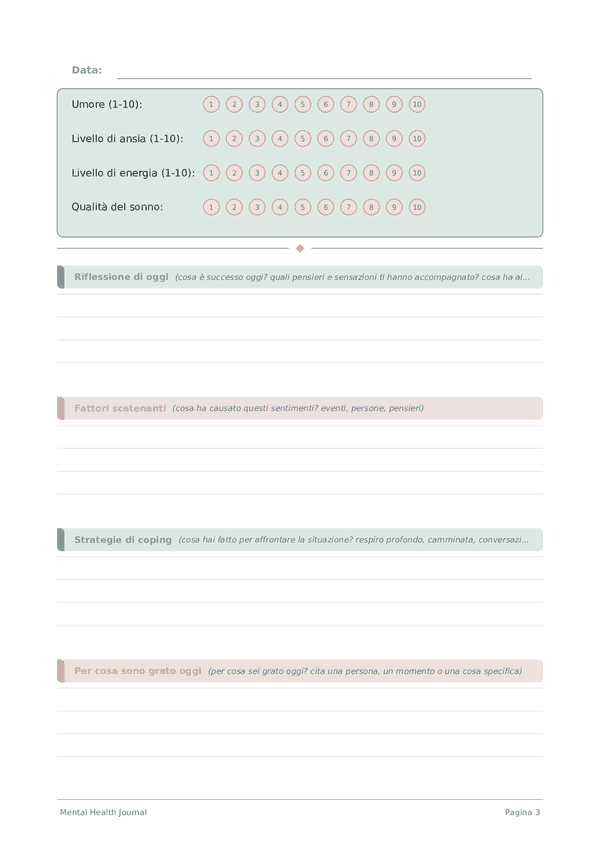
Questo è un diario ibrido — ogni pagina combina una sezione di tracciamento rapido in cima con un'area di scrittura a righe in basso. Ciò ti consente di catturare sia dati misurabili che riflessioni in forma libera in un unico posto.
Come compilare ogni campo
La parte superiore di ogni pagina ha campi a compilazione rapida (valutazioni, caselle di controllo, numeri). Sotto c'è una sezione a righe per scrivere. Ecco cosa significa ogni campo:
Umore (1-10)
Valuta il tuo stato emotivo complessivo della giornata. 1 significa molto basso o depresso, 10 significa eccezionalmente felice e positivo. Non pensarci troppo — vai con la tua sensazione istintiva.
Livello di ansia (1-10)
Valuta il tuo livello di ansia oggi. Dare un numero alla sensazione la rende più gestibile e monitorabile.
Livello di energia (1-10)
Valuta il tuo livello di energia fisica e mentale. 1 significa esausto e svuotato, 10 significa pieno di energia e sveglio. Questo ti aiuta a identificare quali attività aumentano o drenano la tua energia.
Qualità del sonno
Valuta quanto è stato riposante il tuo sonno. 1 significa terribile e agitato, 5 significa profondo e rigenerante. La qualità conta quanto la quantità.
Riflessione di oggi
Guarda indietro alla tua giornata con onestà. Cosa è andato bene? Cosa potrebbe migliorare? Non si tratta di giudizio — si tratta di imparare e crescere.
Fattori scatenanti
Identifica cosa ha causato le tue reazioni emotive — eventi, persone, pensieri, ambienti. Riconoscere i trigger ti dà il potere di prepararti o evitarli.
Strategie di coping
Cosa hai fatto per affrontare la situazione? Respiro profondo, camminata, conversazione...
Per cosa sono grato oggi
Elenca 1–3 cose per cui sei grato oggi. Possono essere grandi o piccole — un buon pasto, una parola gentile, il sole. Scrivere di gratitudine è una delle pratiche di benessere più supportate scientificamente.
Cosa è andato bene
Anche le piccole vittorie contano — nomina almeno una
Consigli per il successo
Quando e con quale frequenza scrivere
Compila una pagina al giorno. La parte del tracker richiede meno di un minuto; cerca di farlo a un orario costante. La sezione di scrittura può essere fatta nello stesso momento o riservata quando hai 5 minuti tranquilli. Entrambe le parti insieme ti danno il quadro più completo della tua giornata.
Domande frequenti
Cosa cattura questo diario che un singolo punteggio dell'umore non cattura?
Separa quattro dimensioni — mood, livello di ansia (1-10), energy, qualità del sonno — su scale 0-10. Il framework HiTOP del NIMH e i framework di valutazione clinica le trattano come indicatori distinguibili anziché come un unico composito. Una giornata con bassa energia ma umore stabile si legge diversamente da basso umore con energia normale, e la sezione di riflessione ti permette di registrare il contesto che i numeri da soli non possono catturare.
Come dovrei condividere questo con il mio terapeuta?
Porta da due a quattro settimane di voci completate a una sessione. Le linee guida di pratica clinica dell'APA trattano i dati sui sintomi generati dal paziente come aggiuntivi alla valutazione. Evidenzia le giornate in cui le valutazioni divergevano nettamente, o dove un singolo trigger appariva in più voci. Molti terapeuti usano questo formato come dati tra le sessioni; chiedi se preferiscono il tracker, la riflessione, o entrambi.
Cosa va in 'triggers' rispetto a 'cosa è andato bene'?
I trigger sono situazioni, pensieri, persone o ambienti che hanno abbassato le tue valutazioni. Cosa è andato bene cattura il contrario — momenti che hanno sollevato l'umore o ripristinato l'energia. Insieme mappano la tua regolazione affettiva quotidiana. La teoria broaden-and-build di Fredrickson (2001, American Psychologist, 56(3)) supporta la registrazione attiva degli eventi positivi per ampliare i repertori comportamentali nel tempo. Il monitoraggio prolungato fa emergere schemi invisibili nelle singole giornate e supporta conversazioni cliniche informate.
In cosa si differenzia dal Diario dell'Ansia o dal Diario dell'Umore?
Il Diario della Salute Mentale è più ampio e a frequenza inferiore: campiona quattro dimensioni fondamentali più riflessione aperta, adatto a un check-in quotidiano. Il Diario dell'Ansia si concentra sui registri dei pensieri CBT; il Diario dell'Umore enfatizza la granularità emotiva. Scegli in base alle esigenze — una diagnosi di ansia orienta verso il Diario dell'Ansia, l'automonitoraggio ampio verso questo.
Questo può aiutarmi a notare i primi segnali di peggioramento?
Sì, è un utilizzo fondamentale. Il modello cognitivo di Beck e il modello comportamentale della depressione di Lewinsohn evidenziano entrambi la deriva lenta nel sonno, nell'energia e nell'umore come segnali prodromici. Tracciare settimane di valutazioni 0-10 rende visibili le tendenze al ribasso prima che raggiungano soglie di crisi. Se vedi un calo prolungato, contatta tempestivamente un professionista della salute mentale abilitato.
Cosa dovrei scrivere in 'strategie di coping'?
Annota specificamente cosa hai fatto e come è andato. Aldao, Nolen-Hoeksema, Schweizer (2010, Clinical Psychology Review, 30(2)) hanno rilevato che la rivalutazione cognitiva e l'accettazione si correlano con risultati migliori; la ruminazione e l'evitamento con risultati peggiori. Categorizzare le tue strategie — «ho fatto una passeggiata», «ho scorruto i social media» — nel corso delle settimane rivela quali aiutano davvero le tue valutazioni.
È sicuro usarlo se ho pensieri di autolesionismo?
Il journaling non sostituisce le cure di crisi. Se stai vivendo pensieri di autolesionismo o suicidio, contatta immediatamente i servizi di emergenza o una linea di crisi. Le linee guida di crisi dell'OMS per la salute mentale e dell'APA sottolineano l'intervento professionale come primario. Il diario può complementare il trattamento in corso con un professionista della salute mentale abilitato, ma non deve ritardare l'aiuto urgente.
Con quale frequenza dovrei completare la sezione di riflessione?
Punta al quotidiano per il tracker, tre-cinque volte a settimana per la riflessione. La riflessione quotidiana funziona per alcuni ma produce affaticamento in altri; Burton e King (2004, Journal of Research in Personality, 38(2)) hanno mostrato che anche brevi sessioni di scrittura espressiva producevano effetti, mentre Pennebaker (1997, Psychological Science, 8(3)) ha dimostrato che tre-quattro sessioni settimanali sono spesso sufficienti per i benefici dell'elaborazione emotiva.
Potrebbe piacerti anche
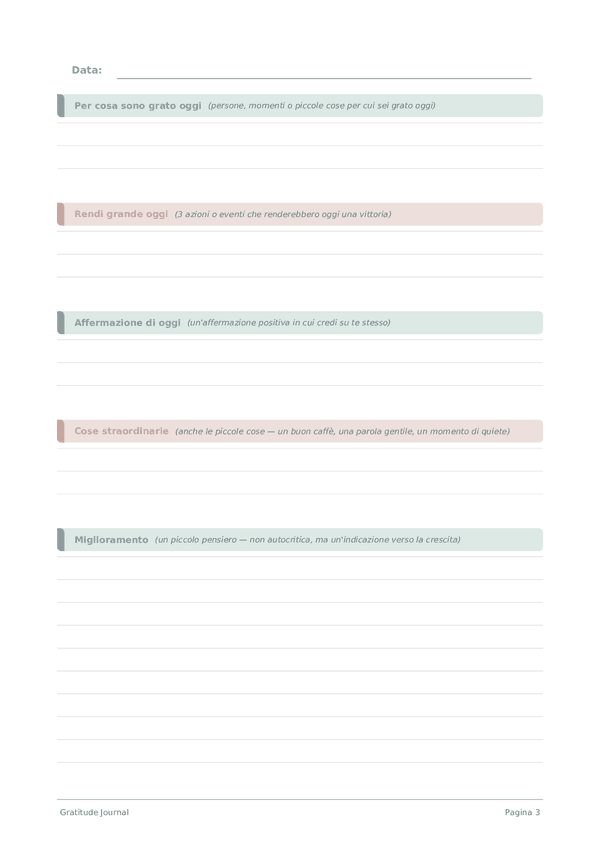
Diario della Gratitudine
Coltiva la riconoscenza e la positività ogni giorno
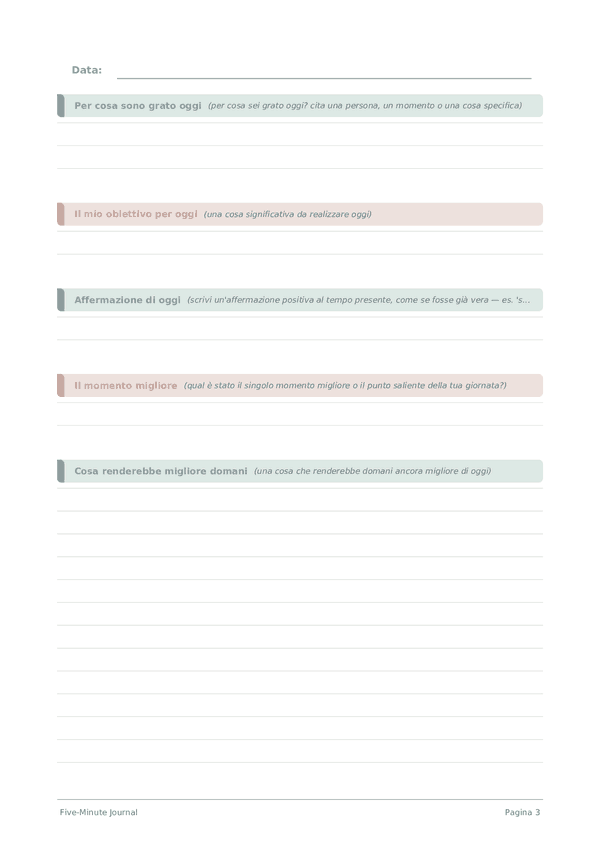
Diario dei Cinque Minuti
Diario quotidiano di gratitudine e riflessione in cinque minuti
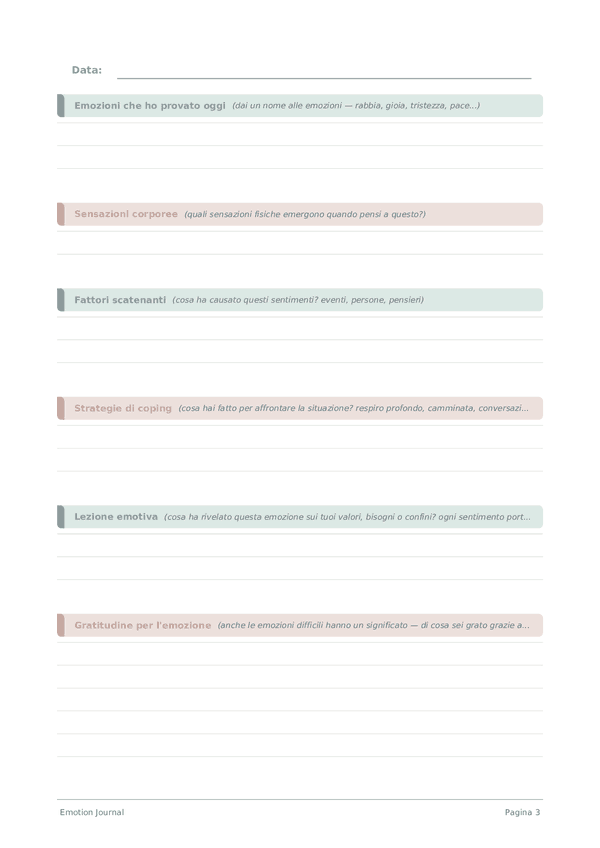
Diario delle Emozioni
Comprendi, elabora e cresci attraverso le tue emozioni
Tracker delle Abitudini
Costruisci abitudini migliori un giorno alla volta
Scorri per ingrandire, trascina per spostare