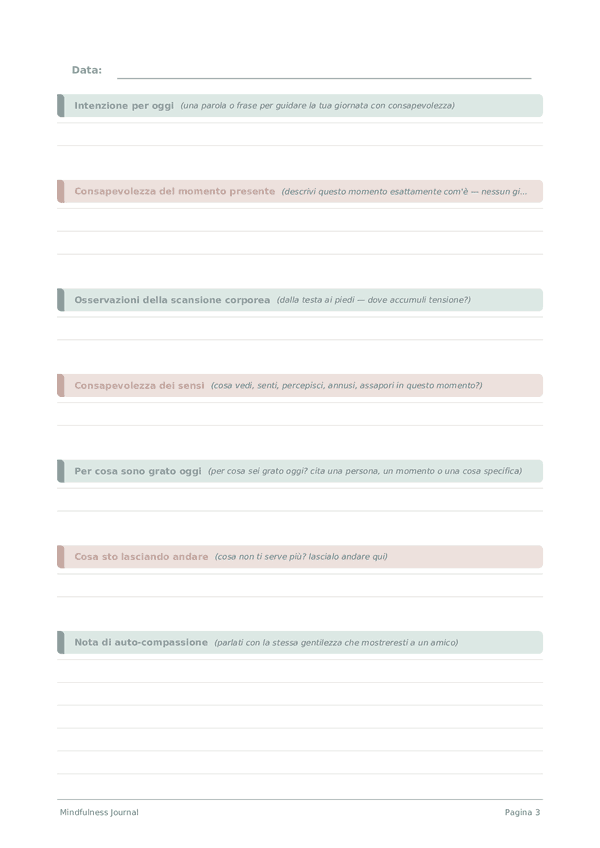
Printable Diario di Mindfulness
Radicati nel momento presente con la scrittura quotidiana ispirata all'MBSR
Personalizza campi
Attiva o disattiva i campi. Clicca la matita per rinominare, oppure aggiungi i tuoi campi.
Cos'è questo diario?
Questo è un diario con inserimenti giornalieri — ogni pagina rappresenta un giorno con domande strutturate che guidano la tua riflessione. Le sezioni sono progettate in modo che compilarle richieda solo 5–10 minuti, rendendo facile mantenere un'abitudine quotidiana.
Come compilare ogni campo
Ogni giorno troverai diverse sezioni etichettate con righe per scrivere. Ecco a cosa serve ogni sezione:
Intenzione per oggi
Una parola o frase per guidare la tua giornata con consapevolezza
Consapevolezza del momento presente
Descrivi cosa noti in questo momento — suoni, sensazioni, pensieri. Questo ti radica nel presente e costruisce la consapevolezza della mindfulness.
Osservazioni della scansione corporea
Scansiona dalla testa ai piedi — dove c'è tensione, calore, intorpidimento o agio? Osserva semplicemente senza cercare di cambiare nulla
Consapevolezza dei sensi
Cosa vedi, senti, percepisci, annusi, assapori in questo momento?
Per cosa sono grato oggi
Elenca 1–3 cose per cui sei grato oggi. Possono essere grandi o piccole — un buon pasto, una parola gentile, il sole. Scrivere di gratitudine è una delle pratiche di benessere più supportate scientificamente.
Cosa sto lasciando andare
Scrivi qualcosa che sei pronto a lasciare andare — una preoccupazione, un risentimento, un'aspettativa. Nominare ciò che lasci andare è il primo passo verso la libertà da esso.
Nota di auto-compassione
Parlati con la stessa gentilezza che mostreresti a un amico
Consigli per il successo
Quando e con quale frequenza scrivere
Compila una pagina al giorno. La maggior parte delle persone trova che la mattina (10 minuti dopo il risveglio) o la sera (prima di dormire) funzionino meglio. Scegli un orario e mantienilo per almeno due settimane prima di cambiare. La chiave è la regolarità, non la perfezione.
Domande frequenti
Cos'è l'MBSR e perché questo diario è basato su di esso?
L'MBSR (Mindfulness-Based Stress Reduction) è stato sviluppato da Jon Kabat-Zinn presso l'University of Massachusetts Medical Center nel 1979 e rimane uno degli interventi di mindfulness più studiati. Khoury et al. (2015, Journal of Psychosomatic Research, 78(6)) hanno analizzato 29 studi e rilevato che l'MBSR produceva effetti moderati su stress e ansia negli adulti sani. Le sezioni del diario rispecchiano le sue pratiche fondamentali.
Come si fanno correttamente le 'osservazioni della scansione corporea'?
La scansione corporea è una delle pratiche cardine dell'MBSR. Sposta l'attenzione lentamente dai piedi alla testa, notando sensazione, temperatura, tensione o assenza — senza cercare di cambiare nulla. Due righe è lo spazio per un riassunto: dove hai notato tensione, dove si trovava la facilità. Kerr et al. (2013, Frontiers in Human Neuroscience, 7) hanno rilevato che la pratica regolare della scansione corporea modificava la regolazione della corteccia somatosensoriale.
Qual è la differenza tra mindfulness e rilassamento?
La mindfulness è la consapevolezza non giudicante dell'esperienza presente, incluso il contenuto spiacevole. Il rilassamento mira a ridurre l'arousal. Kabat-Zinn le distingue esplicitamente: l'MBSR coltiva l'equanimità con ciò che è, non sentimenti piacevoli. Goyal et al. (2014, JAMA Internal Medicine, 174(3)) hanno rilevato che i programmi di mindfulness miglioravano ansia e depressione dove il semplice rilassamento non raggiungeva la stessa dimensione dell'effetto.
Cosa fa 'nota di auto-compassione' in un diario della mindfulness?
La ricerca di Kristin Neff sulla self-compassion (Neff, 2003, Self and Identity, 2(2)) la identifica come un costrutto gemello alla mindfulness — tre pilastri: mindfulness, umanità comune, auto-gentilezza. I programmi derivati dall'MBSR come il Mindful Self-Compassion (MSC) li integrano. La riga conclusiva ti allena a rivolgerti a te stesso nel modo in cui parleresti a un amico che affronta la stessa difficoltà.
Come si collega 'consapevolezza dei sensi' al grounding?
Nominare ciò che vedi, senti, tocchi, annusi e assapori è la classica tecnica di grounding 5-4-3-2-1 usata nell'assistenza informata al trauma e nella tolleranza al disagio della DBT (Linehan). Ancora l'attenzione al presente sensoriale, interrompendo i loop di ruminazione che Watkins (2008, Psychological Bulletin, 134(2)) ha identificato come transdiagnostici tra depressione e ansia. Le due righe impongono la selezione di dati vividi del momento presente.
Devo fare il journaling prima o dopo la meditazione?
Dopo. L'impostazione dell'intenzione può essere fatta prima, ma body scan, consapevolezza dei sensi e cosa sto lasciando andare sono più chiari dopo esserti seduto. Killingsworth e Gilbert (2010, Science, 330(6006)) hanno mostrato che il mind-wandering si correla con minor felicità; una breve seduta prima della scrittura riduce la divagazione e produce voci più oneste. Anche cinque minuti di consapevolezza del respiro affinano il risultato del journaling.
Il journaling della mindfulness è appropriato durante il recupero dal trauma?
Usa cautela. Alcuni sopravvissuti a traumi sperimentano un disagio maggiore durante la mindfulness incentrata sul corpo — Treleaven («Trauma-Sensitive Mindfulness», Norton, 2018) e la ricerca di Britton et al. (2021, Clinical Psychological Science, 9(6)) documentano effetti avversi. Se hai una storia di trauma, consulta un professionista della salute mentale abilitato con formazione nel trauma prima di una pratica prolungata. Modifica o accorcia body scan se necessario.
Quanto ci vuole perché il journaling della mindfulness produca risultati?
L'MBSR è un protocollo di 8 settimane perché è lì che emergono approssimativamente i cambiamenti misurabili. Tang, Holzel e Posner (2015, Nature Reviews Neuroscience, 16(4)) hanno esaminato cambiamenti neurali che appaiono nell'arco di settimane. Voci quotidiane — anche dieci minuti — per 8 settimane raggiungono la soglia di dosaggio usata dalla maggior parte degli studi. La pratica incoerente produce risultati incoerenti; il diario supporta l'aderenza.
Potrebbe piacerti anche
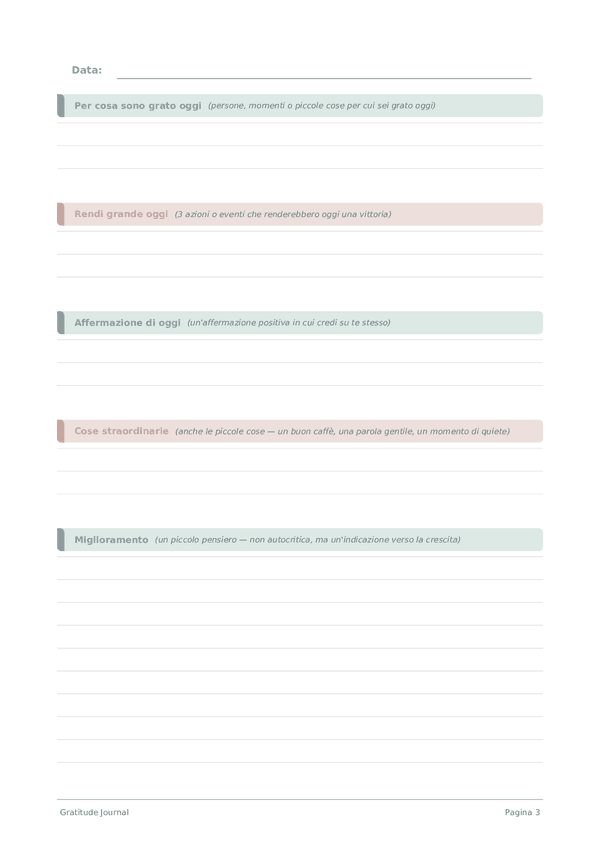
Diario della Gratitudine
Coltiva la riconoscenza e la positività ogni giorno
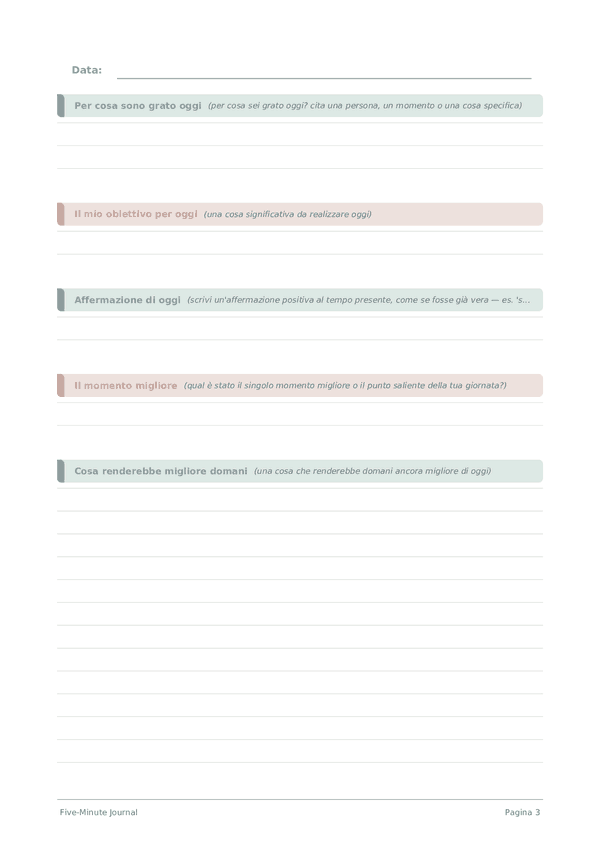
Diario dei Cinque Minuti
Diario quotidiano di gratitudine e riflessione in cinque minuti
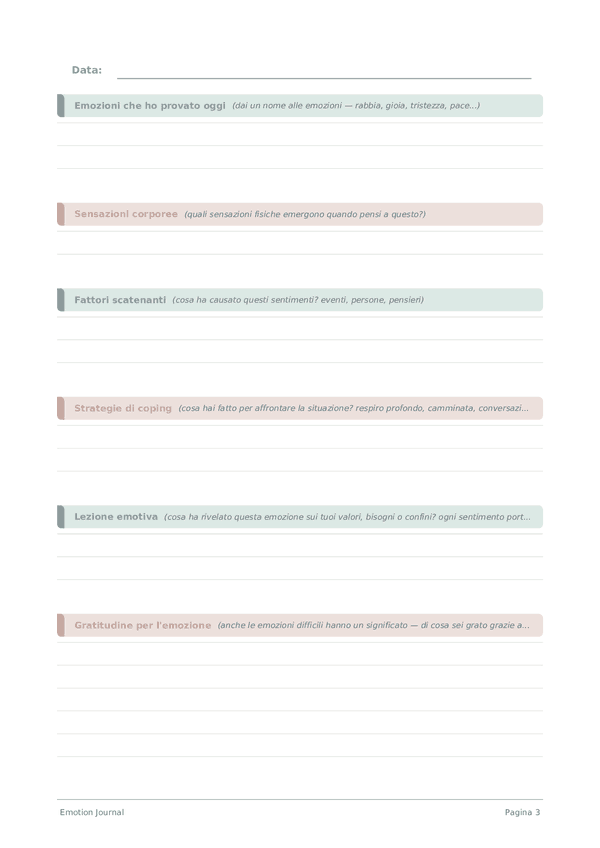
Diario delle Emozioni
Comprendi, elabora e cresci attraverso le tue emozioni
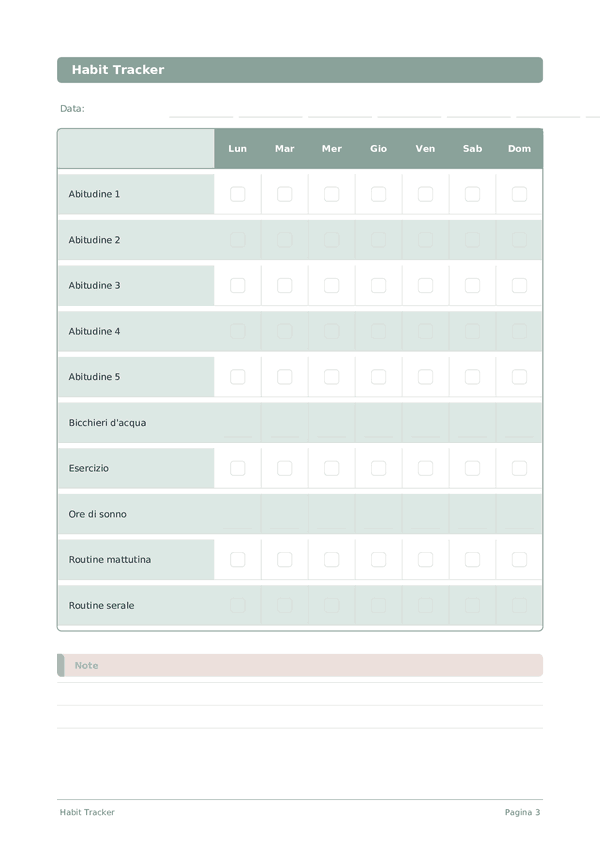
Tracker delle Abitudini
Costruisci abitudini migliori un giorno alla volta
Scorri per ingrandire, trascina per spostare