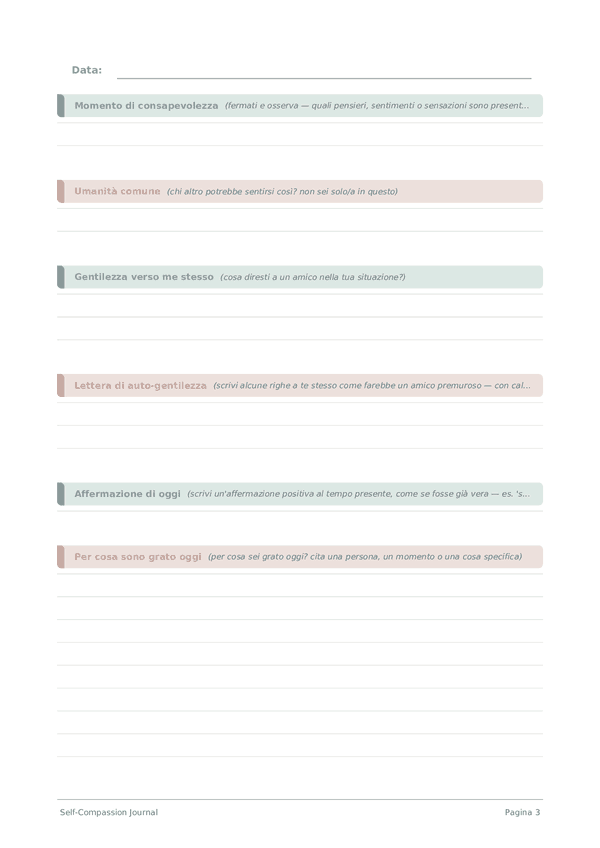
Printable Diario dell'Autocompassione
Pratica quotidiana dell'autocompassione e diario della gentilezza interiore
Personalizza campi
Attiva o disattiva i campi. Clicca la matita per rinominare, oppure aggiungi i tuoi campi.
Cos'è questo diario?
Questo è un diario con inserimenti giornalieri — ogni pagina rappresenta un giorno con domande strutturate che guidano la tua riflessione. Le sezioni sono progettate in modo che compilarle richieda solo 5–10 minuti, rendendo facile mantenere un'abitudine quotidiana.
Come compilare ogni campo
Ogni giorno troverai diverse sezioni etichettate con righe per scrivere. Ecco a cosa serve ogni sezione:
Momento di consapevolezza
Fermati e osserva — quali pensieri, sentimenti o sensazioni sono presenti in questo momento, senza giudicare?
Umanità comune
Chi altro potrebbe sentirsi così? Non sei solo/a in questo
Gentilezza verso me stesso
Scrivi qualcosa di gentile a te stesso, come faresti con un caro amico che sta vivendo la stessa esperienza. L'auto-compassione è un'abilità che cresce con la pratica.
Lettera di auto-gentilezza
Scrivi alcune righe a te stesso come farebbe un amico premuroso — con calore, comprensione e incoraggiamento
Affermazione di oggi
Scrivi un'affermazione positiva su te stesso al presente, come se fosse già vera. Ad esempio: 'Sono capace e resiliente.' Ripetere le affermazioni riconfigura i tuoi schemi di pensiero nel tempo.
Per cosa sono grato oggi
Elenca 1–3 cose per cui sei grato oggi. Possono essere grandi o piccole — un buon pasto, una parola gentile, il sole. Scrivere di gratitudine è una delle pratiche di benessere più supportate scientificamente.
Consigli per il successo
Quando e con quale frequenza scrivere
Compila una pagina al giorno. La maggior parte delle persone trova che la mattina (10 minuti dopo il risveglio) o la sera (prima di dormire) funzionino meglio. Scegli un orario e mantienilo per almeno due settimane prima di cambiare. La chiave è la regolarità, non la perfezione.
Domande frequenti
Quali sono i tre pilastri della self-compassion di Kristin Neff?
Mindfulness, umanità comune e auto-gentilezza — definiti in Neff (2003, Self and Identity, 2(2)) e sviluppati nel suo successivo lavoro pubblicato. Le sezioni del diario momento di consapevolezza, umanità comune e gentilezza verso me stesso corrispondono direttamente. Il programma Mindful Self-Compassion (MSC) di Neff e Germer (Neff e Germer, 2013, Journal of Clinical Psychology, 69(1)) ha mostrato miglioramenti misurabili nel benessere nell'arco di un protocollo di 8 settimane con questa struttura.
Cosa va in 'umanità comune'?
Il riconoscimento che la lotta che stai affrontando ti connette agli altri anziché isolarti. Neff (2003, Self and Identity, 2(2)) ha identificato l'isolamento come un ostacolo centrale nell'autocritica — «solo io lotto con questo». Due righe: nomina la difficoltà e indica come fa parte dell'esperienza umana condivisa. Questo reframe il giudizio di sé come uno schema universale, non un difetto personale.
In cosa si differenzia 'gentilezza verso me stesso' dall'indulgenza?
Neff e Vonk (2009, Journal of Personality, 77(1)) hanno esplicitamente distinto la self-compassion dall'autoindulgenza — la self-compassion implica trattarti con cura sostenendo la crescita, non evitare le cose difficili. Tre righe è lo spazio per una gentilezza che ti responsabilizza, non per il permesso di disimpegnarti. «Mi riposerò stasera» differisce da «salterò la scadenza».
A cosa serve 'lettera di auto-gentilezza'?
È un intervento basato sulle immagini adattato dal programma MSC di Neff e Germer (Neff e Germer, 2013, Journal of Clinical Psychology, 69(1)). Tre righe per scrivere a te stesso come faresti con un amico nella stessa situazione. La ricerca di Neff e la terapia focalizzata sulla compassione di Gilbert (Gilbert, 2009, «The Compassionate Mind», Constable) mostrano entrambi che questo esercizio di scrittura di lettere ammorbidisce la voce autocritica.
La self-compassion abbassa la motivazione?
No — il contrario. Breines e Chen (2012, Personality and Social Psychology Bulletin, 38(9)) hanno rilevato che la self-compassion dopo il fallimento aumentava la motivazione a migliorare rispetto all'autocritica. La self-compassion fornisce la sicurezza per riconoscere gli errori; la dura autocritica spesso scatena l'evitamento. La struttura del diario supporta un trattamento di sé orientato alla crescita, non alla compiacenza. Le voci quotidiane per otto settimane approssimano la dose usata nei protocolli MSC supportati dalla ricerca.
È appropriato durante la depressione?
Spesso utile ma non curativo. MacBeth e Gumley (2012, Clinical Psychology Review, 32(6)) hanno analizzato la self-compassion e rilevato che si associava costantemente a minore psicopatologia. La ricerca MSC di Neff e Germer mostra benefici in campioni subclinici e clinici. Per la depressione diagnosticata, consulta un professionista della salute mentale abilitato — la pratica della self-compassion complementa ma non sostituisce il trattamento basato sull'evidenza.
In cosa si differenzia dal pensiero positivo o dalle affermazioni?
La self-compassion riconosce la difficoltà anziché sovrascriverla. Neff e Vonk (2009, Journal of Personality, 77(1)) hanno mostrato che la self-compassion produceva un benessere più stabile dell'autostima perché non dipende da valutazioni positive. La sezione momento di consapevolezza invita esplicitamente al contatto con il dolore; le pratiche di affermazione spesso lo saltano. Meccanismi diversi, strumenti complementari. Le voci quotidiane per otto settimane approssimano la dose usata nei protocolli MSC supportati dalla ricerca.
Quanto ci vuole per vedere effetti?
Neff e Germer (2013, Journal of Clinical Psychology, 69(1)) hanno usato un protocollo MSC di 8 settimane con miglioramenti misurabili nel benessere. Le voci quotidiane in quell'arco approssimano la dose. L'autocritica è spesso ben praticata per anni; aspettati resistenza iniziale e cambiamenti notevoli dopo 4-8 settimane di voci costanti. Il formato compatto a sei sezioni mantiene il completamento quotidiano realistico.
Potrebbe piacerti anche
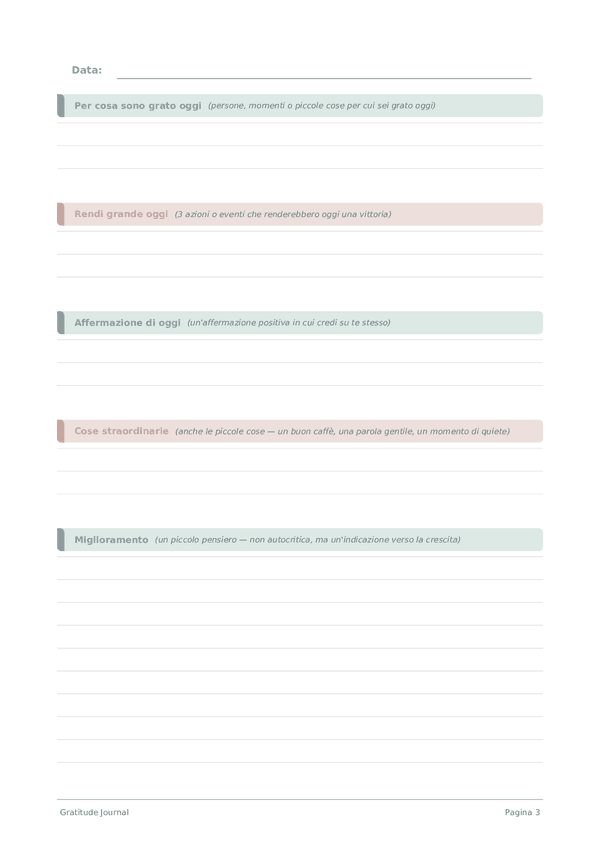
Diario della Gratitudine
Coltiva la riconoscenza e la positività ogni giorno
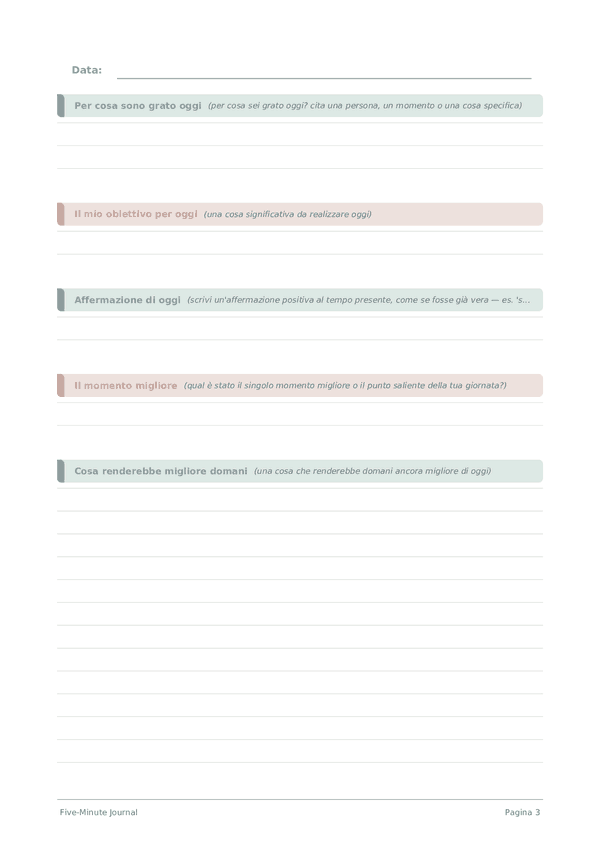
Diario dei Cinque Minuti
Diario quotidiano di gratitudine e riflessione in cinque minuti
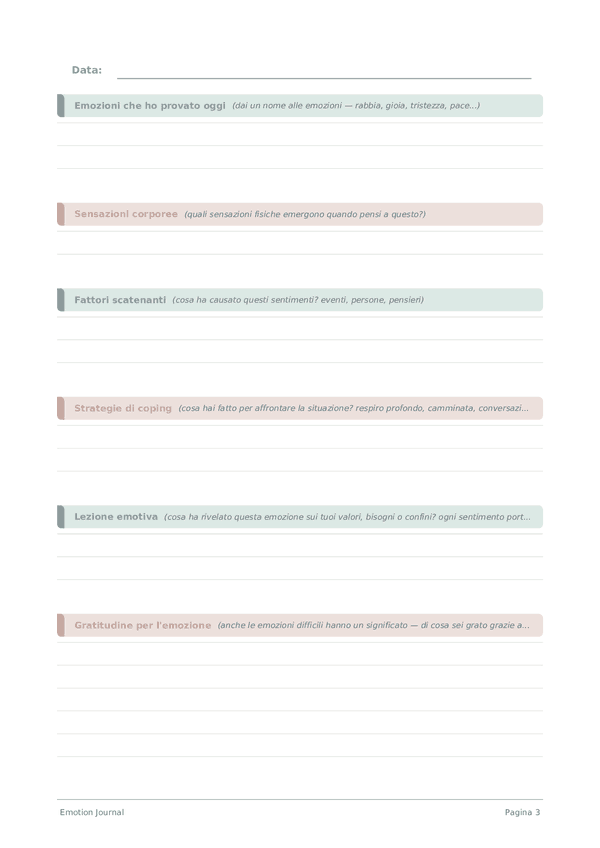
Diario delle Emozioni
Comprendi, elabora e cresci attraverso le tue emozioni
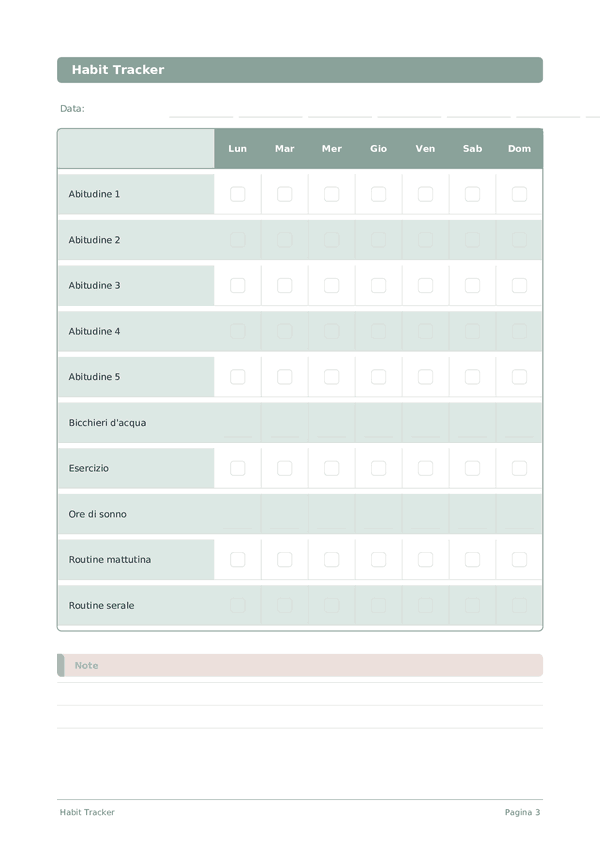
Tracker delle Abitudini
Costruisci abitudini migliori un giorno alla volta
Scorri per ingrandire, trascina per spostare