Printable Diario dello Stress
Diario quotidiano di monitoraggio e gestione dello stress
Personalizza campi
Attiva o disattiva i campi. Clicca la matita per rinominare, oppure aggiungi i tuoi campi.
Cos'è questo diario?
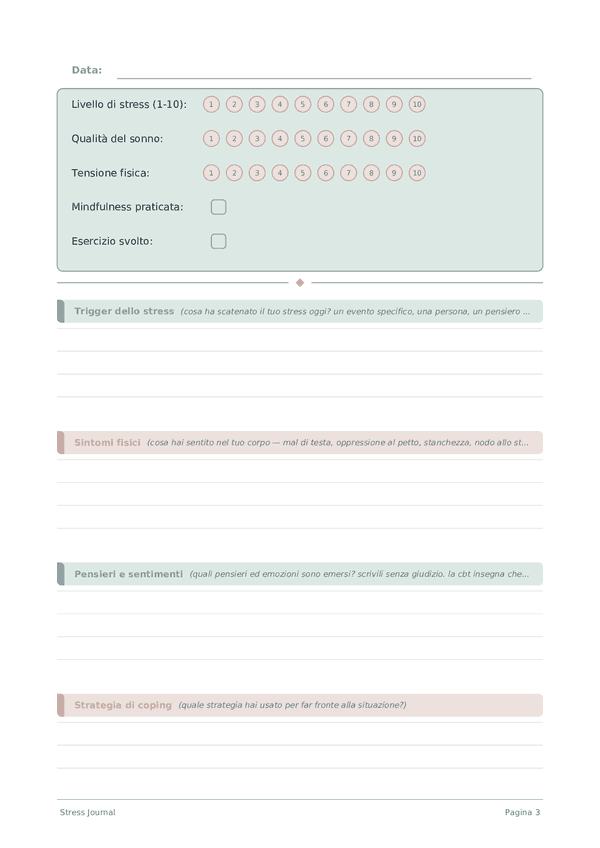
Questo è un diario ibrido — ogni pagina combina una sezione di tracciamento rapido in cima con un'area di scrittura a righe in basso. Ciò ti consente di catturare sia dati misurabili che riflessioni in forma libera in un unico posto.
Come compilare ogni campo
La parte superiore di ogni pagina ha campi a compilazione rapida (valutazioni, caselle di controllo, numeri). Sotto c'è una sezione a righe per scrivere. Ecco cosa significa ogni campo:
Livello di stress (1-10)
Valuta il tuo stress su una scala da 1 a 10. Nel tempo, identificherai i tuoi schemi di stress e le strategie di coping più efficaci.
Qualità del sonno
Valuta quanto è stato riposante il tuo sonno. 1 significa terribile e agitato, 5 significa profondo e rigenerante. La qualità conta quanto la quantità.
Tensione fisica
Valuta la tensione fisica nel tuo corpo oggi — spalle tese, mascella serrata, oppressione al petto. La consapevolezza corporea è la base della gestione dello stress.
Mindfulness praticata
Hai praticato la mindfulness oggi? Anche solo 5 minuti di respirazione consapevole o una scansione corporea riducono il cortisolo e costruiscono resilienza allo stress nel tempo.
Esercizio svolto
Hai fatto esercizio oggi? Anche una breve passeggiata conta. Il movimento è uno dei riduttori naturali d'ansia più efficaci.
Trigger dello stress
Cosa ha scatenato il tuo stress oggi? Un evento specifico, una persona, un pensiero o una situazione? Identificare i trigger è il primo passo nella gestione dello stress basata sulla CBT.
Sintomi fisici
Cosa hai sentito nel tuo corpo — mal di testa, oppressione al petto, stanchezza, nodo allo stomaco? I sintomi fisici sono i segnali di stress del tuo corpo che vale la pena tracciare.
Pensieri e sentimenti
Quali pensieri ed emozioni sono emersi? Scrivili senza giudizio. La CBT insegna che esaminare i nostri pensieri aiuta a spezzare il ciclo stress-pensiero.
Strategia di coping
Quale strategia hai usato per far fronte alla situazione?
Cosa posso controllare
Separa ciò che puoi controllare da ciò che non puoi. Concentra la tua energia su ciò che è controllabile — questa è una tecnica fondamentale di resilienza CBT e stoica.
Consigli per il successo
Quando e con quale frequenza scrivere
Compila una pagina al giorno. La parte del tracker richiede meno di un minuto; cerca di farlo a un orario costante. La sezione di scrittura può essere fatta nello stesso momento o riservata quando hai 5 minuti tranquilli. Entrambe le parti insieme ti danno il quadro più completo della tua giornata.
Domande frequenti
Come usa questo diario l'analisi di 'trigger dello stress'?
Usa il modello transazionale dello stress di Lazarus e Folkman (1984, «Stress, Appraisal, and Coping», Springer). Lo stress nasce dalla valutazione delle richieste rispetto alle risorse, non dall'evento in sé. La sezione del trigger a sei righe chiede cosa è successo più come l'hai letto. Nominare la valutazione — «l'ho visto come una minaccia» — separa il fattore di stress dalla risposta allo stress, che è dove l'intervento funziona.
Perché registrare 'tensione fisica' separatamente da livello di stress (1-10)?
Lo stress si manifesta somaticamente prima delle etichette coscienti. La ricerca di McEwen sul carico allostatico (McEwen, 2007, Physiological Reviews, 87(3)) documenta le firme fisiologiche dello stress cronico inclusa la tensione muscolare. Valutare tensione fisica 0-10 accanto a livello di stress (1-10) soggettivo rivela dissociazioni — alta tensione corporea con stress soggettivo lieve segnala che stai sottostimando il carico, uno schema comune nel burnout.
Cosa serve identificare 'cosa posso controllare'?
Separa gli aspetti controllabili e incontrollabili del fattore di stress — la base del coping centrato sul problema (Folkman e Lazarus). I framework stoici formalizzano questa distinzione; la CBT la applica attraverso la ristrutturazione cognitiva (Beck, 1976). La riga impone una domanda che molte persone saltano sotto stress: quale parte di questo posso effettivamente influenzare con l'azione? Due righe ti concentra sull'agentività.
Perché la casella 'mindfulness praticata'?
La mindfulness-based stress reduction (Kabat-Zinn; Khoury et al., 2015, Journal of Psychosomatic Research, 78(6)) ha mostrato effetti moderati sullo stress negli adulti sani. La casella impone il monitoraggio del comportamento. Nel corso delle settimane, correlate le giornate con mindfulness praticata=true rispetto a livello di stress (1-10) — molti utenti trovano una riduzione di 1-2 punti associata alla pratica regolare, ma solo quando documentata.
In cosa si differenzia da un diario dell'umore generico?
Questo diario mira specificamente al sistema di risposta allo stress: livello di stress (1-10) valutato, qualità del sonno, tensione fisica, coping comportamentale (esercizio svolto, mindfulness praticata) più analisi strutturata di trigger e valutazione. Un diario dell'umore cattura lo stato emotivo in modo ampio. Il modello dello stress di Lazarus e Folkman e la ricerca di McEwen sul carico allostatico trattano entrambi lo stress come un costrutto distinto con i propri punti di intervento.
Quali schemi cercare dopo due settimane?
Tre: quali trigger dello stress ricorrono, se qualità del sonno precede livello di stress (1-10) del giorno successivo, e quali strategie di coping riducono effettivamente le valutazioni nelle voci successive. Aldao, Nolen-Hoeksema, Schweizer (2010, Clinical Psychology Review, 30(2)) hanno analizzato le strategie di coping e rilevato che la rivalutazione e il problem-solving superano costantemente l'evitamento e la ruminazione su due settimane di dati. Gli schemi emergono da due a quattro settimane di voci, più a lungo per carichi cronici significativi.
È sicuro se sto vivendo un burnout?
Usa con cura. Il burnout (Maslach e Leiter, 2016, World Psychiatry, 15(2)) comporta esaurimento emotivo che il semplice monitoraggio non può invertire. Il diario può identificare schemi utili per il cambiamento sistemico — ridurre le richieste, aumentare il recupero — ma se sei persistentemente esausto, cinico e distaccato, consulta un medico del lavoro o un professionista della salute mentale abilitato. Il burnout non si risolve con un journaling migliore.
Quanto ci vuole per vedere risultati?
Due-quattro settimane per la visibilità degli schemi, otto settimane per la riduzione auto-riferita dello stress. Khoury et al. (2015, Journal of Psychosomatic Research, 78(6)) hanno rilevato che i programmi di mindfulness richiedevano circa otto settimane per effetti misurabili sullo stress. La sezione tracker del diario combinata con i comportamenti di coping si avvicina a meccanismi simili; aspettati intuizioni prima del sollievo dei sintomi, specialmente quando i trigger sono ambientali.
Potrebbe piacerti anche
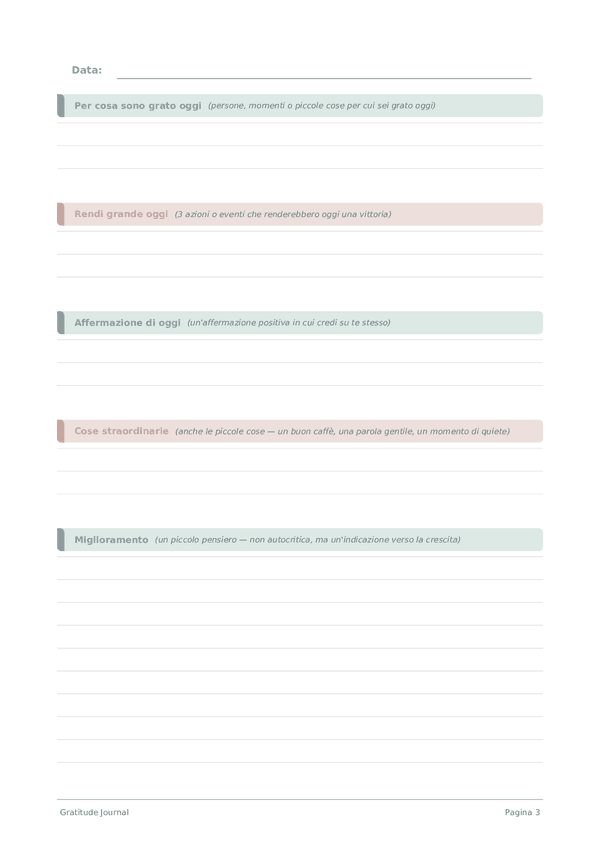
Diario della Gratitudine
Coltiva la riconoscenza e la positività ogni giorno
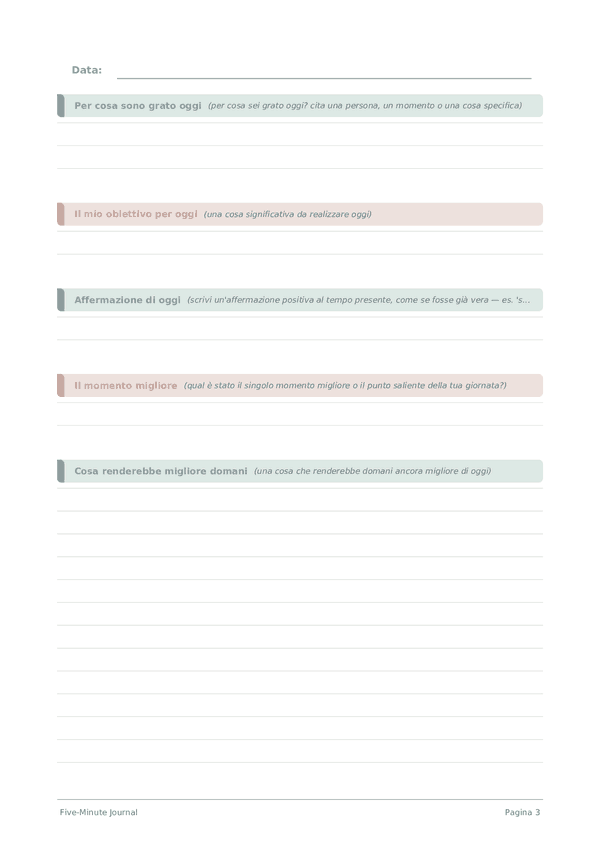
Diario dei Cinque Minuti
Diario quotidiano di gratitudine e riflessione in cinque minuti
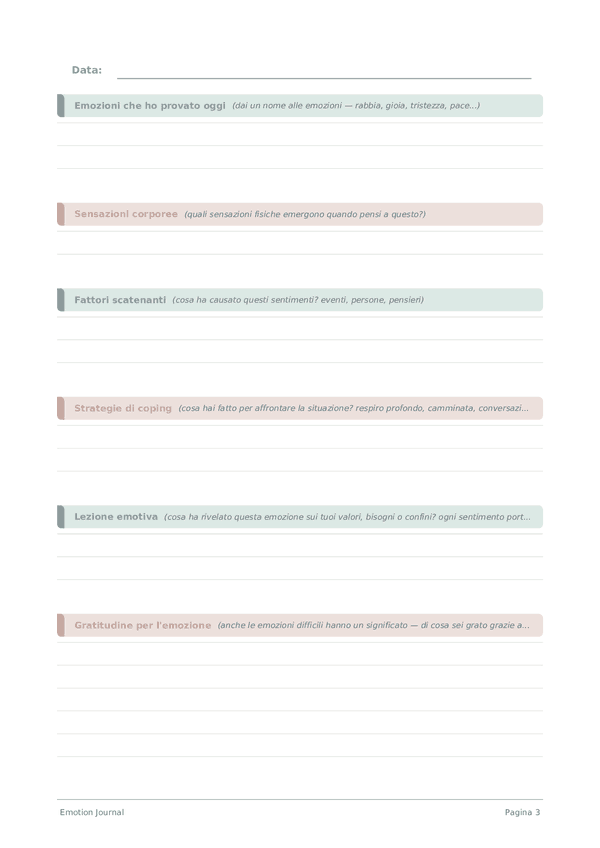
Diario delle Emozioni
Comprendi, elabora e cresci attraverso le tue emozioni
Tracker delle Abitudini
Costruisci abitudini migliori un giorno alla volta
Scorri per ingrandire, trascina per spostare