Printable Diario di Terapia
Massimizza i benefici delle tue sessioni di terapia
Personalizza campi
Attiva o disattiva i campi. Clicca la matita per rinominare, oppure aggiungi i tuoi campi.
Cos'è questo diario?
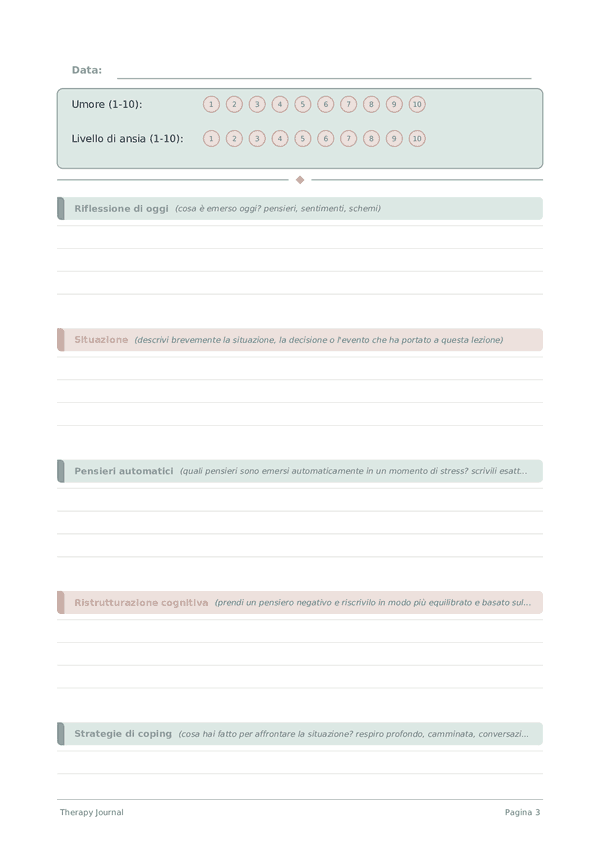
Questo è un diario ibrido — ogni pagina combina una sezione di tracciamento rapido in cima con un'area di scrittura a righe in basso. Ciò ti consente di catturare sia dati misurabili che riflessioni in forma libera in un unico posto.
Come compilare ogni campo
La parte superiore di ogni pagina ha campi a compilazione rapida (valutazioni, caselle di controllo, numeri). Sotto c'è una sezione a righe per scrivere. Ecco cosa significa ogni campo:
Umore (1-10)
Valuta il tuo stato emotivo complessivo della giornata. 1 significa molto basso o depresso, 10 significa eccezionalmente felice e positivo. Non pensarci troppo — vai con la tua sensazione istintiva.
Livello di ansia (1-10)
Valuta il tuo livello di ansia oggi. Dare un numero alla sensazione la rende più gestibile e monitorabile.
Riflessione di oggi
Guarda indietro alla tua giornata con onestà. Cosa è andato bene? Cosa potrebbe migliorare? Non si tratta di giudizio — si tratta di imparare e crescere.
Situazione
Descrivi la situazione o l'evento in modo oggettivo, come se fossi un osservatore neutrale. Separare i fatti dai sentimenti ti aiuta a vedere le cose più chiaramente.
Pensieri automatici
Quali pensieri sono emersi automaticamente in un momento di stress? Scrivili esattamente come sono venuti — anche se sembrano irrazionali
Ristrutturazione cognitiva
Prendi un pensiero negativo e riscrivilo in modo più equilibrato e basato sull'evidenza. Cosa direbbe un amico saggio?
Strategie di coping
Cosa hai fatto per affrontare la situazione? Respiro profondo, camminata, conversazione...
Per cosa sono grato oggi
Elenca 1–3 cose per cui sei grato oggi. Possono essere grandi o piccole — un buon pasto, una parola gentile, il sole. Scrivere di gratitudine è una delle pratiche di benessere più supportate scientificamente.
Consigli per il successo
Quando e con quale frequenza scrivere
Compila una pagina al giorno. La parte del tracker richiede meno di un minuto; cerca di farlo a un orario costante. La sezione di scrittura può essere fatta nello stesso momento o riservata quando hai 5 minuti tranquilli. Entrambe le parti insieme ti danno il quadro più completo della tua giornata.
Domande frequenti
Come supporta questo diario la psicoterapia?
Funziona come compito tra le sessioni, una pratica supportata attraverso CBT, ACT e schema therapy. Kazantzis, Whittington e Dattilio (2010, Clinical Psychology: Science and Practice, 17(2)) hanno analizzato i compiti terapeutici e rilevato che i compiti completati miglioravano i risultati. I campi strutturati (situation, pensieri automatici, ristrutturazione cognitiva, strategie di coping) rispecchiano il registro quotidiano dei pensieri di Beck usato nella terapia cognitivo-comportamentale.
Cosa va in 'pensieri automatici' rispetto a 'ristrutturazione cognitiva'?
Pensieri automatici cattura i pensieri verbatim emersi nella situazione — esattamente come sono apparsi. Ristrutturazione cognitiva è l'alternativa ristrutturata e bilanciata dalle prove. Questa è la classica tecnica a due colonne di Beck (Beck, «Cognitive Therapy and the Emotional Disorders», 1976). La sezione a 10 righe dà spazio per entrambi. Non saltare il pensiero originale — il reframe funziona solo in contrasto.
Come portare questo al mio terapeuta in modo produttivo?
Porta due-quattro settimane di voci ed evidenzia gli schemi. Le linee guida di pratica clinica dell'APA e Kazantzis et al. (2010, Clinical Psychology: Science and Practice, 17(2)) raccomandano che i dati generati dal paziente ancorino il lavoro della sessione. Segna le voci dove il reframe sembrava difficile — probabilmente è lì che si concentra il lavoro terapeutico. Non aspettarti che il terapeuta legga ogni voce; offri un riassunto più dettagli selezionati.
Perché 'mood' e 'livello di ansia (1-10)' sono gli unici campi del tracker?
Questi due indicatori coprono gli obiettivi terapeutici più comuni — sintomi di depressione e ansia — e si allineano concettualmente ai brevi screener clinici (PHQ-9 per la depressione, GAD-7 per l'ansia). Mantenere il tracker minimale preserva la funzione primaria del diario come riflessione che collega le sessioni. Aggiungi più dimensioni tramite il Diario della Salute Mentale se necessario.
Questo diario sostituisce la terapia?
No. Complementa ma non sostituisce la psicoterapia. Le linee guida dell'APA, del NIMH e dell'OMS sulla salute mentale trattano tutte la psicoterapia come un intervento clinico che richiede fornitori qualificati. Il diario è uno strumento per estendere gli effetti della terapia tra le sessioni — catturare ciò che è emerso, praticare tecniche come la ristrutturazione cognitiva — sotto la guida di un professionista della salute mentale abilitato.
E se non vedo attualmente un terapeuta?
Il diario ha ancora valore di auto-aiuto, ma sii consapevole dei suoi limiti. Cuijpers et al. (2010, Clinical Psychology Review, 30(1)) hanno esaminato la CBT di auto-aiuto e trovato effetti più piccoli ma reali rispetto alla CBT guidata da un terapeuta. La sequenza di ristrutturazione cognitiva è utilizzabile da soli. Se ti trovi bloccato sullo stesso contenuto, o il disagio peggiora, consulta un clinico abilitato.
Quanto devo essere onesto nel diario?
Il più possibile — le voci selettive ne riducono il valore terapeutico. Pennebaker (1997, Psychological Science, 8(3)) sulla scrittura espressiva ha mostrato che i benefici scalavano con il coinvolgimento emotivo. Se sei preoccupato che qualcuno lo legga, conservalo in modo sicuro o usa un codice privato. Il journaling modificato per gli altri vanifica l'elaborazione cognitiva che produce il beneficio. Il ritmo guidato dal terapeuta tipicamente ottimizza quanto impegno nei compiti aiuta rispetto a quanto sovraccaricare.
Con quale frequenza scrivere tra le sessioni?
Punta a due-quattro voci tra sessioni settimanali. Ogni giorno può affaticare; meno di una volta a settimana perde slancio. Kazantzis et al. (2016, Cognitive Therapy and Research, 40(6)) hanno rilevato che l'impegno moderato nei compiti (alcune voci a settimana) era ottimale — troppo poco e gli effetti svaniscono, troppo e la qualità cala. Chiedi al tuo terapeuta un ritmo target.
Potrebbe piacerti anche
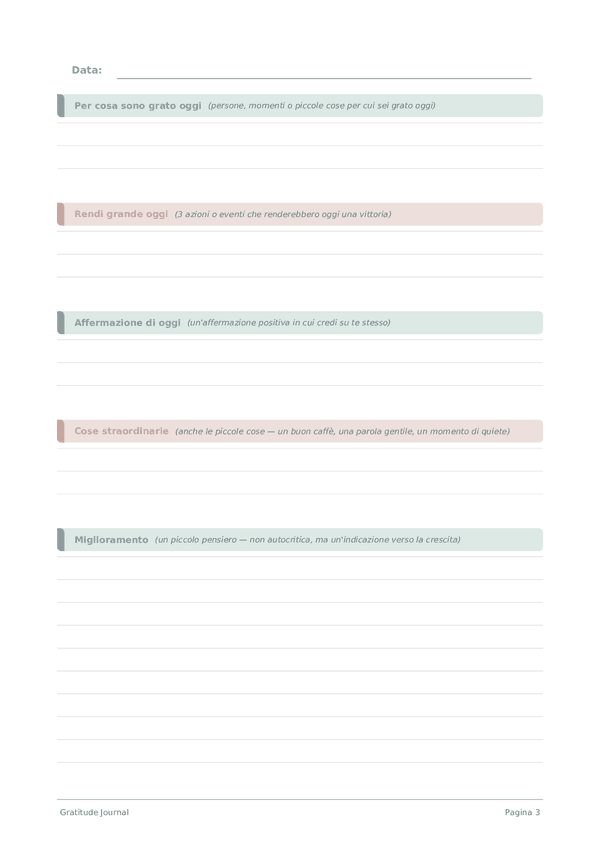
Diario della Gratitudine
Coltiva la riconoscenza e la positività ogni giorno
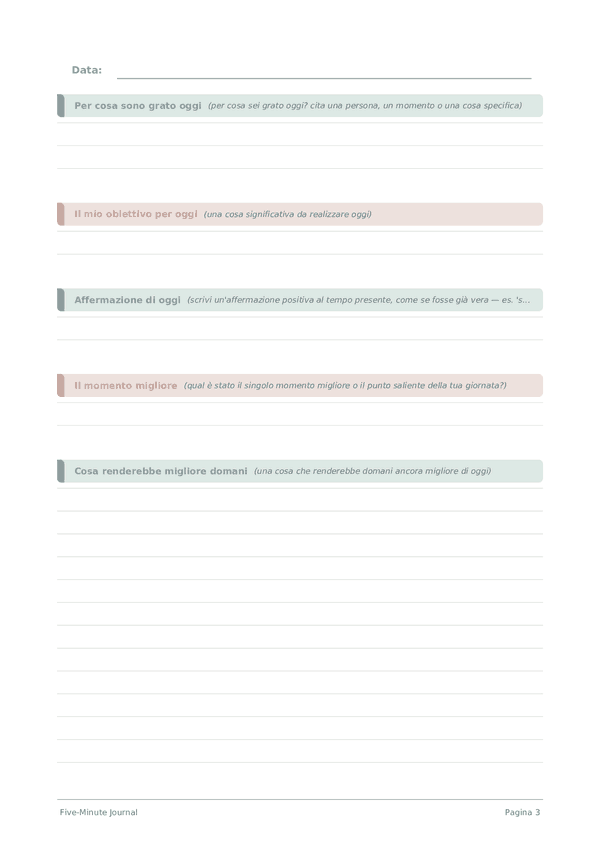
Diario dei Cinque Minuti
Diario quotidiano di gratitudine e riflessione in cinque minuti
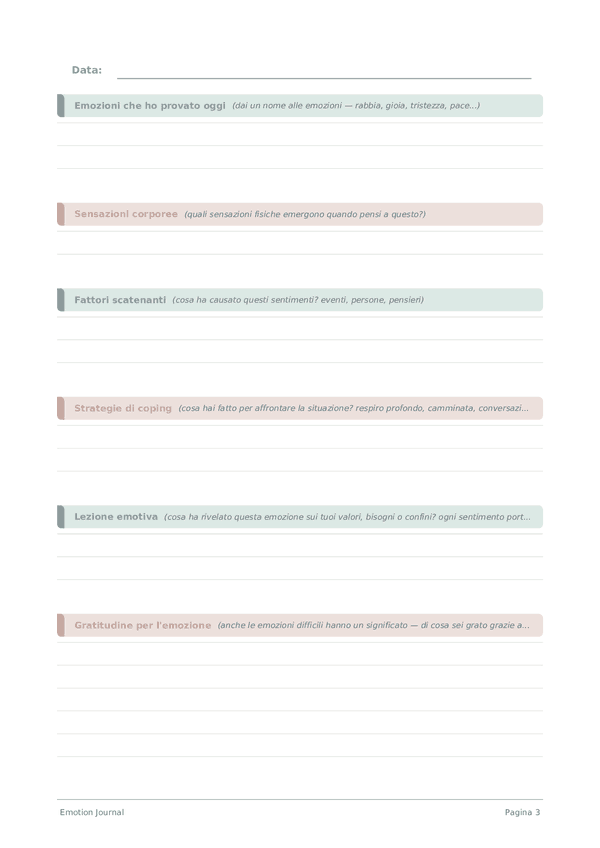
Diario delle Emozioni
Comprendi, elabora e cresci attraverso le tue emozioni
Tracker delle Abitudini
Costruisci abitudini migliori un giorno alla volta
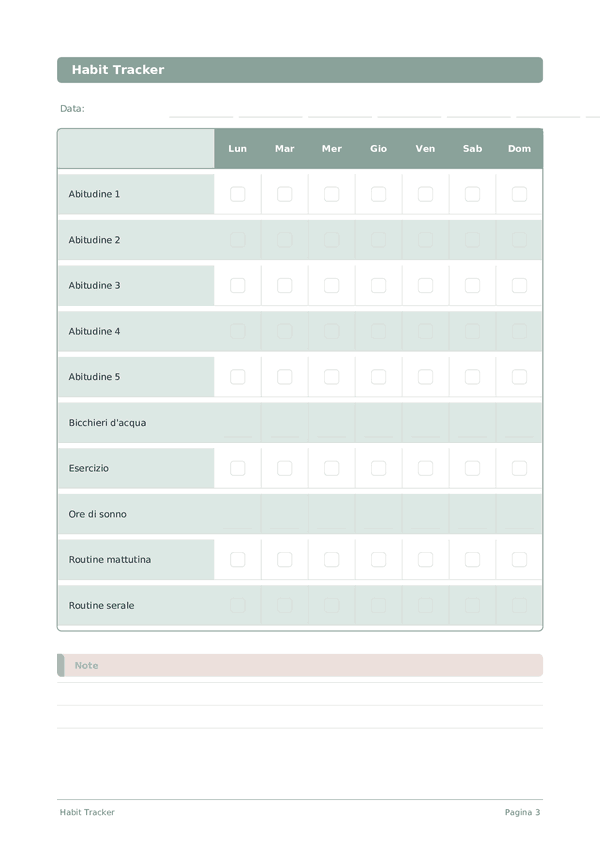
Scorri per ingrandire, trascina per spostare