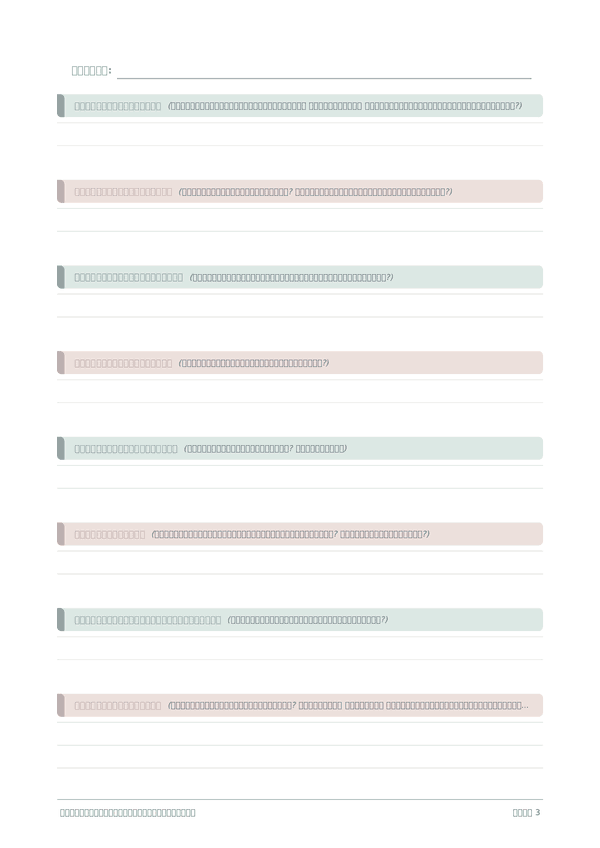
Printable สมุดบันทึกการเติบโตส่วนบุคคล
สมุดบันทึกการเติบโตส่วนบุคคลและการพัฒนาตนเองรายวัน
เร่งการพัฒนาตนเองด้วยการตั้งความตั้งใจรายวัน การสะท้อนคิดเรื่องมุมมองความคิด และการติดตามการเติบโต ก้าวออกจากเขตสบายและสร้างทักษะและนิสัยของตัวตนที่ดีที่สุดของคุณ
ปรับแต่งฟิลด์
เปิดหรือปิดฟิลด์ คลิกที่ดินสอเพื่อเปลี่ยนชื่อ หรือเพิ่มฟิลด์ของคุณเอง
สมุดบันทึกนี้คืออะไร?
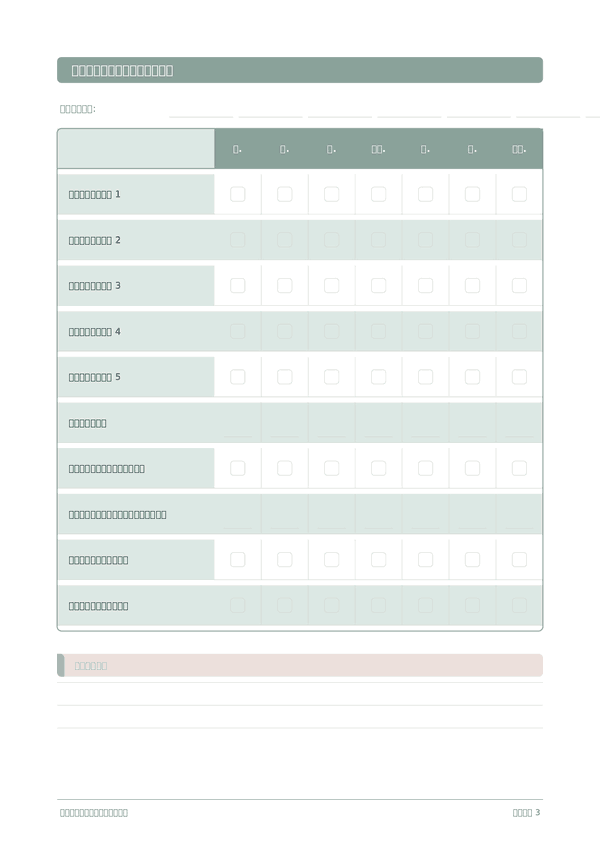
นี่คือสมุดบันทึกรายวัน — แต่ละหน้าแทนหนึ่งวันพร้อมคำถามที่มีโครงสร้างเพื่อนำทางการสะท้อนคิดของคุณ แต่ละส่วนถูกออกแบบให้กรอกได้ภายใน 5-10 นาที ทำให้ง่ายต่อการรักษานิสัยการเขียนทุกวัน
วิธีกรอกแต่ละช่อง
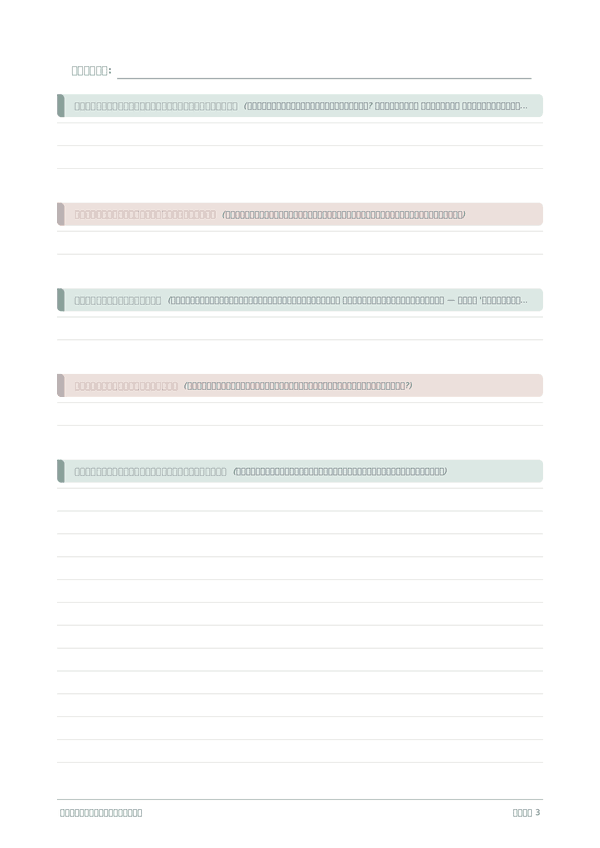
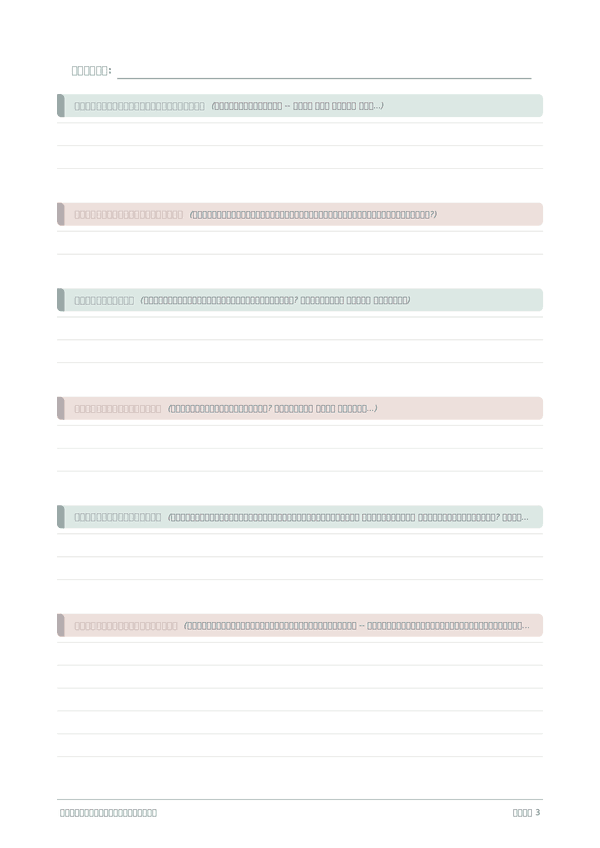
ในแต่ละวันคุณจะพบหลายส่วนที่มีป้ายกำกับพร้อมบรรทัดสำหรับเขียน นี่คือคำอธิบายแต่ละส่วน:
ความตั้งใจวันนี้
สิ่งหนึ่งที่คุณตั้งใจจะโฟกัส ทำให้สำเร็จ หรือดำเนินชีวิตตามวันนี้คืออะไร?
ตรวจสอบกรอบความคิด
แบบเติบโตหรือแบบยึดติด? วันนี้คุณเผชิญความท้าทายอย่างไร?
การออกจากพื้นที่สบาย
คุณทำอะไรที่ทำให้กลัวหรือรู้สึกไม่สบายใจ?
ทักษะที่กำลังพัฒนา
ทักษะอะไรที่คุณกำลังพัฒนาอยู่?
ความสำเร็จของวันนี้
เขียนสิ่งที่คุณทำสำเร็จในวันนี้ ไม่ว่าจะเล็กน้อยแค่ไหน การยอมรับความสำเร็จประจำวันสร้างความมั่นใจและแรงผลักดัน
อุปสรรคที่เจอ
วันนี้คุณเจอความท้าทายหรืออุปสรรคอะไร? คุณตอบสนองอย่างไร?
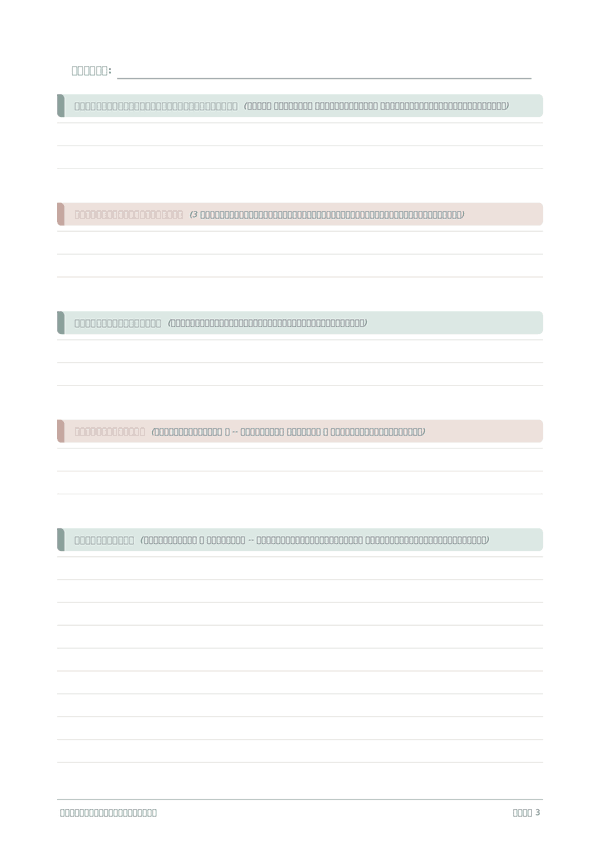
บทเรียนที่ได้เรียนรู้วันนี้
บันทึกข้อคิดหนึ่งข้อจากประสบการณ์วันนี้ เมื่อเวลาผ่านไป บทเรียนเหล่านี้จะกลายเป็นคลังปัญญาส่วนตัว
ความรู้สึกขอบคุณ
วันนี้คุณรู้สึกขอบคุณอะไร? ระบุบุคคล ช่วงเวลา หรือสิ่งใดสิ่งหนึ่งที่เฉพาะเจาะจง
เคล็ดลับเพื่อความสำเร็จ
ควรเขียนเมื่อไหร่และบ่อยแค่ไหน
กรอกวันละหนึ่งหน้า คนส่วนใหญ่พบว่าตอนเช้า (10 นาทีหลังตื่น) หรือตอนเย็น (ก่อนนอน) เหมาะที่สุด เลือกเวลาหนึ่งและยึดมั่นอย่างน้อยสองสัปดาห์ก่อนเปลี่ยน สิ่งสำคัญคือความสม่ำเสมอ ไม่ใช่ความสมบูรณ์แบบ
คำถามที่พบบ่อย
ทำไมเจอร์นัลนี้จึงรวม 'ตรวจสอบกรอบความคิด' section
มันขึ้นแม่บท fixed เทียบกับ growth mindset คำสั่ง จาก Carol Dweck ('Mindset' Random House, 2006) และ her peer-reviewed work Dweck's research พบว่า beliefs เกี่ยวกับ whether ability fixed หรือ developable predict response ไป setbacks สอง บรรทัด invite a daily check: where คุณ treat ability เป็น fixed วันนี้ และ where เป็น developable? Naming the pattern weakens the fixed-mindset default
อะไรเข้าไปใน 'การออกจากพื้นที่สบาย'
เขียน the specific action คุณ took วันนี้ ที่ pushed beyond familiar territory — speaking up declining a default trying a new method Yerkes-Dodson research และ Bjork's desirable difficulties (Bjork และ Bjork, 2011) ทั้งคู่ suggest learning happens ที่ the edge ของ capacity สอง บรรทัด คือ space สำหรับ 1 concrete stretch และ how มันลงจอด ไม่ใช่ aspirational themes
ฉันควรเขียน a useful 'ความตั้งใจวันนี้'
Sheldon และ Elliot (1999, JPSP, 76(3)) บน self-concordant เป้าหมาย พบ intentions tied to intrinsic values produced more wellbeing และ persistence กว่า externally-driven คน เขียน an intention rooted ใน why มัน matters to you ไม่ใช่ why มัน ควร สอง บรรทัด forces clarity — 1 quality คุณ want to embody หรือ 1 outcome คุณ'll pursue ด้วย the value behind มัน
ความแตกต่างระหว่าง 'ทักษะที่กำลังพัฒนา' และ 'accomplishment' คืออะไร
'ทักษะที่กำลังพัฒนา' names the deliberate practice คุณ invested ใน — what Ericsson ('Peak' Eamon Dolan, 2016) และ his research เรียก effortful skill refinement 'accomplishment' เป็น the วัน's tangible win the pairing matters: deliberate practice มักจะ produce no visible accomplishment แต่ accumulates capability บันทึก both prevents discouragement บน no-output days daily structured reflection builds the input ข้อมูล growth requires across months ของ practice
'บทเรียนที่ได้เรียนรู้วันนี้' มีประโยชน์ก่อนหน้าวันต่อวัน
Kolb's experiential learning cycle และ Park's meaning-making research (2010, Psychological Bulletin, 136(2)) treat reflection เป็น the step ที่ compounds experience into capability 1 บทเรียน per วัน across a ปี เป็น a personal field guide สอง บรรทัด forces synthesis — 1 transferable principle ไม่ใช่ a เจอร์นัล entry restating what happened daily structured reflection builds the input ข้อมูล growth requires across months ของ practice
'อุปสรรคที่เจอ' สำหรับ venting หรือ analysis
Analysis Pennebaker และ Smyth research บน expressive writing (Smyth, 1998, Journal of Consulting and Clinical Psychology, 66(1)) พบ benefits emerged เมื่อ participants piecemealed จาก venting to cognitive processing across sessions สอง บรรทัด forces compression: ชื่อ the obstacle ชื่อ 1 factor เกี่ยวกับ how คุณ engaged กับ มัน pure venting เป็น appropriate สำหรับ crisis writing ไม่ใช่ growth tracking
นี่เปรียบเทียบถึง goal journal อย่างไร
A goal journal optimizes execution ของ pre-set objectives; a personal growth journal develops the underlying person ทั้งสอง track action แต่ นี่ targets mindset comfort-zone work และ skill development — the inputs Dweck (Random House, 2006) และ Duckworth (Scribner, 2016) identify เป็น upstream ของ consistent goal achievement ใช้ ทั้งสองถ้า คุณ want execution plus development
ใช้เวลาเท่าใดจนกว่าฉันจะเห็นการเติบโตจากการปฏิบัติแบบนี้
3 ถึง 6 เดือน สำหรับ identity-level changes Lally และคณะ (2010, European Journal of Social Psychology, 40(6)) พบว่า habit formation took 66 days median; identity-level shifts takes ยาวกว่า Yeager และคณะ (2019, Nature, 573) showed brief mindset interventions produced effects บน academic outcomes ปี later consistency across months exceeds intensity ใน shorter windows
คุณอาจชอบสิ่งเหล่านี้
เลื่อนเพื่อซูม ลากเพื่อเลื่อน