Printable Allergietagebuch
Allergische Reaktionen und Expositionsprotokoll
Track allergic reactions with detailed exposure and symptom logging. Identify patterns, monitor treatment effectiveness, and build comprehensive records to share with your allergist for better diagnosis and management.
Felder anpassen
Schalten Sie Felder ein oder aus. Klicken Sie auf den Stift zum Umbenennen oder fügen Sie eigene Felder hinzu.
Was ist dieses Journal?
An allergy journal is a systematic log for tracking allergic reactions and identifying the substances that trigger them. Whether you are dealing with food allergies, seasonal hay fever, skin sensitivities, or environmental allergens, this journal helps you record each incident with enough detail to spot patterns and make informed decisions about avoidance strategies and treatments.
Allergies can be frustratingly difficult to pin down, especially when multiple allergens are involved or reactions are delayed. By recording the allergen, how you were exposed, the symptoms that appeared, their severity, timing, and what provided relief, you build a comprehensive history that an allergist can use to guide testing and treatment. Many people discover previously unrecognized triggers simply by reviewing a few weeks of careful entries.
This journal is particularly valuable for parents tracking children's allergies, individuals with multiple sensitivities, or anyone preparing for allergy testing. It ensures that no reaction goes undocumented and provides the detailed evidence needed for accurate diagnosis and effective management plans.
Ausgefülltes Beispiel
So sieht ein typischer Eintrag aus, wenn er ausgefüllt ist:
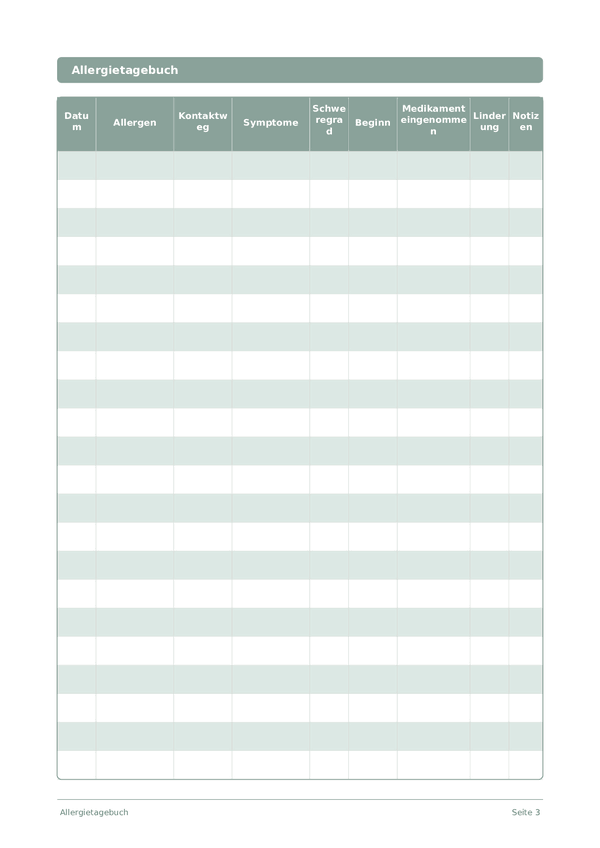
| Datum | Allergen | Kontaktweg | Symptome | Schweregrad | Beginn | Medikament eingenommen | Linderung | Notizen |
|---|---|---|---|---|---|---|---|---|
| 2026-02-28 | Pollen (birch) | Inhalation | Sneezing, itchy eyes, runny nose | 6 | Within 30 min | Cetirizine 10mg | 1 hour | Windy day, was outdoors for 2 hours |
| 2026-03-01 | Shrimp | Ingestion | Hives on arms, lip swelling | 8 | 15 minutes | Diphenhydramine 25mg | 3 hours | Accidental exposure in restaurant dish |
| 2026-03-02 | Dust mites | Inhalation | Nasal congestion, cough | 4 | 1 hour | Nasal corticosteroid spray | 2 hours | After cleaning old bookshelf |
| 2026-03-03 | Nickel (jewelry) | Skin contact | Red rash, itching at contact area | 5 | 6 hours | Hydrocortisone cream | 2 days | Wore new earrings for first time |
Wie Sie jedes Feld ausfüllen
Jede Seite ist eine Tabelle mit Spalten. Füllen Sie pro Eintrag eine Zeile aus. Hier erfahren Sie, wofür jede Spalte gedacht ist:
Datum
Schreiben Sie das heutige Datum. Dies verankert Ihren Eintrag in der Zeit und hilft beim späteren Durchsehen der Einträge.
Allergen
Notieren Sie das Allergen oder den vermuteten Auslöser. Präzision hilft Ihnen und Ihrem Arzt, genau zu bestimmen, was Reaktionen verursacht.
Kontaktweg
Symptome
Listen Sie Symptome auf, die Sie heute erlebt haben. Seien Sie konkret in Bezug auf Art, Ort und Schwere. Muster bei Symptomen deuten oft auf Auslöser oder Behandlungsbedarf hin.
Schweregrad
Wie stark sind deine Symptome heute? Bewerte von 1 (leicht) bis 10 (stark beeinträchtigend)
Beginn
Medikament eingenommen
Hast du heute deine Medikamente genommen? Notiere was, wann und ob Dosen ausgelassen wurden
Linderung
Notizen
Fügen Sie zusätzlichen Kontext oder Gedanken hinzu. Diese Auffangspalte ist für alles, was nirgendwo anders hinpasst, aber später nützlich sein könnte.
Tipps für den Erfolg
Wann und wie oft schreiben
Log every allergic reaction immediately with full details — waiting even a few hours causes you to forget potential triggers. During allergy season, make a brief daily entry even on symptom-free days, noting weather, outdoor time, and pollen exposure. This creates a complete picture for your allergist. If you suspect food allergies, log every meal and snack for at least 2 weeks to establish patterns. Before allergy appointments, review your journal to summarize your top triggers, most effective treatments, and any new or worsening reactions.
Häufig gestellte Fragen
Warum den Expositionsweg neben dem Allergen protokollieren?
AAAAI (American Academy of Allergy, Asthma & Immunology) merkt an, dass Reaktionen je nach Weg variieren — eingenommene Nahrung verursacht GI- und systemische Reaktionen; inhalierte Pollen lösen respiratorische Symptome aus; Hautkontakt erzeugt Dermatitis. Die kontaktweg-Spalte unterscheidet diese für Ihren Allergologen. ACAAI (American College of Allergy, Asthma & Immunology) nutzt Wegdaten zur Differenzierung von IgE-vermittelten Reaktionen, Kontaktdermatitis oder nicht-allergischen Intoleranzen.
Wie schnell sollten Symptome nach Exposition auftreten?
Laut AAAAI: IgE-vermittelte Reaktionen (echte Allergie) beginnen typischerweise innerhalb von Minuten bis 2 Stunden nach Exposition — das erfasst die beginn-Spalte. Verzögerte Reaktionen (24–48 Stunden, z.B. Kontaktdermatitis, eosinophile Ösophagitis) deuten auf nicht-IgE-Mechanismen. Anaphylaxie (Schweregrad ≥7/10 mit respiratorischen oder zirkulatorischen Symptomen) erreicht typischerweise einen Höhepunkt in 5–30 Minuten — sofort Adrenalin und Notruf 112.
Welcher Schweregrad rechtfertigt Notfallhilfe?
ACAAI- und AAAAI-Kriterien: jede Reaktion mit Atemnot, Halsschwellung, Schwindel, schnellem Puls, Nesselsucht am ganzen Körper oder Erbrechen nach vermuteter Allergenexposition ist potenzielle Anaphylaxie — verwenden Sie den Adrenalin-Autoinjektor, falls verschrieben, und rufen Sie den Notruf 112. Schweregrad ≥7 mit Mehrsystembeteiligung (Haut + Atmung + GI) definiert Anaphylaxie. Dokumentieren Sie alles anschließend im Tagebuch für Ihren Allergologen.
Wie hilft das meinem Allergologen, spezifische Allergien zu diagnostizieren?
Laut AAAAI nutzen Allergologen 4–8 Wochen Reaktionstagebücher zur Identifikation verdächtiger Allergene für Pricktests oder Bluttests (spezifisches IgE). Muster über mehrere Expositionen zählen mehr als Einzelereignisse. Die Spalten allergen, route, symptoms, beginn und severity entsprechen der strukturierten Anamnese, die Allergologen erheben. Bringen Sie alle Seiten zum Termin — diese Belege engen Testpanels ein und reduzieren unnötige Tests.
Kann ich es für Umweltallergien wie Pollen oder Tierhaare nutzen?
Ja. AAAAI tracked Umweltallergene über Symptomtagebücher, korreliert mit lokalen Pollendaten (in Deutschland: Polleninformationsdienst der Stiftung Deutscher Polleninformationsdienst, PID). Notieren Sie Allergen (z.B. 'Eichenpollen', 'Katzenhaare'), Weg (Inhalation, Kontakt) und Symptome. Cross-Referenz mit täglichen Pollenprognosen. Drei Pollensaisons Daten helfen bei der Bestimmung spezifischer Sensibilisierungen für die Immuntherapie-Eignung laut ACAAI-Leitlinien.
Wie tracke ich Nahrungsmittelallergie-Reaktionen sicher?
Wichtige Sicherheitshinweis: Niemals absichtlich einem bekannten Allergen aussetzen zum Testen — ärztlich überwachte orale Nahrungsmittelprovokationen sind laut AAAAI die einzige sichere Diagnosemethode. Nutzen Sie dieses Tagebuch nur für unbeabsichtigte Expositionen und Mustererkennung. Notieren Sie alle Zutaten von Mahlzeiten, die mit Reaktionen verbunden sind, in der Notizspalte — versteckte Allergene (z.B. Milch in verarbeiteten Lebensmitteln) verursachen oft unerklärliche Reaktionen.
Was sagen linderung-Daten meinem Allergologen?
Linderungsdauer und -timing zeigen die Medikamentenwirksamkeit. Laut AAAAI: H1-Antihistaminika (Cetirizin, Loratadin, Fexofenadin) wirken typischerweise innerhalb 30–60 Minuten bei leichten Reaktionen. Anhaltende Symptome über 4–6 Stunden nach Antihistaminikum deuten auf schwerere Pathologie oder falsche Medikamentenwahl hin. Dokumentieren Sie Medikamentenname, Dosis, Timing und Zeit bis zur Linderung — dies informiert allergologische Entscheidungen über Rezepteskalation oder Überweisung.
Wann zum Allergologen versus selbst behandeln?
AAAAI-Überweisungskriterien: jede Anaphylaxie-Vorgeschichte, wiederkehrende Reaktionen auf identifizierte oder unbekannte Auslöser, Allergien mit Auswirkung auf den Alltag, vermutete Nahrungsmittelallergien bei Kindern, Asthma plus Allergien. ACAAI empfiehlt Abklärung, wenn OTC-Antihistaminika Symptome nicht kontrollieren oder Sie 2+ Notaufnahmebesuche wegen allergischer Reaktionen hatten. Bringen Sie 4–8 Wochen Tagebucheinträge — sie beschleunigen die Diagnose erheblich.
Das könnte Ihnen auch gefallen
Scrollen zum Zoomen, ziehen zum Bewegen