Printable Ernährungstagebuch
Jede Mahlzeit achtsam und bewusst verfolgen
A structured daily food log to record meals, portions, calories, hunger cues, and mood. Build awareness of your eating patterns, spot nutritional gaps, and make more intentional choices for better health.
Felder anpassen
Schalten Sie Felder ein oder aus. Klicken Sie auf den Stift zum Umbenennen oder fügen Sie eigene Felder hinzu.
Vorteile
Anleitung
Was ist dieses Journal?
A food journal is a daily log where you record everything you eat and drink, along with contextual details like meal timing, portion sizes, hunger levels, and how food makes you feel. It goes beyond simple calorie counting by helping you understand your relationship with food — the emotional, physical, and situational factors that shape your eating habits.
This journal is for anyone who wants to develop healthier eating patterns, manage food sensitivities or allergies, support a weight management goal, or simply become more mindful about what they consume. Nutritionists, dietitians, and doctors often recommend food journaling as one of the most effective tools for understanding and improving dietary habits.
Research consistently shows that people who keep food journals are more successful at reaching their nutrition goals. Writing down what you eat creates a natural pause for reflection — you become more aware of mindless snacking, emotional eating, and portion sizes. Over weeks and months, your journal reveals clear patterns: which foods give you energy, which leave you sluggish, and how your mood and hunger interact with your choices.
Ausgefülltes Beispiel
So sieht ein typischer Eintrag aus, wenn er ausgefüllt ist:
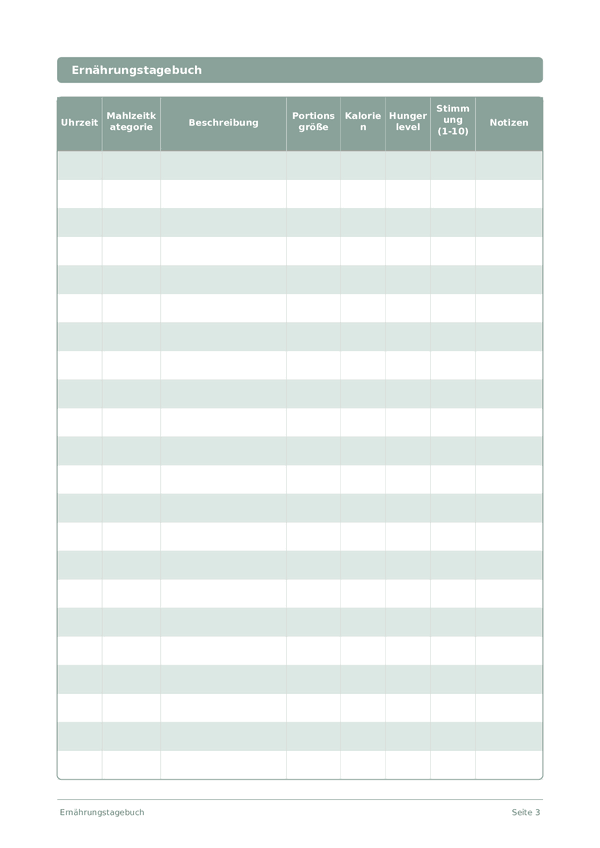
| Uhrzeit | Mahlzeitkategorie | Beschreibung | Portionsgröße | Kalorien | Hungerlevel | Stimmung (1-10) | Notizen |
|---|---|---|---|---|---|---|---|
| 7:30 | Breakfast | Oatmeal with blueberries, walnuts, and honey. Black coffee. | 1 bowl, 1 cup | 420 | 7 | Rested, calm | Felt satisfied until mid-morning |
| 10:15 | Snack | Greek yogurt with a drizzle of honey | 150g | 130 | 4 | Focused | Light snack before a meeting |
| 13:00 | Lunch | Grilled chicken salad with mixed greens, cherry tomatoes, cucumber, feta, olive oil dressing. Whole wheat roll. | Large bowl, 1 roll | 580 | 8 | Hungry, slightly stressed | Ate at my desk, felt rushed |
| 16:00 | Snack | Apple with almond butter | 1 medium apple, 1 tbsp | 195 | 5 | Afternoon slump | Craving something sweet |
| 19:30 | Dinner | Baked salmon with roasted sweet potatoes and steamed broccoli. Glass of white wine. | 150g salmon, 1 potato, 1 cup broccoli | 720 | 7 | Relaxed | Cooked at home, enjoyed the meal slowly |
| 21:00 | Snack | Chamomile tea and two dark chocolate squares | 1 cup, 20g | 110 | 2 | Content | Not really hungry, just a habit |
Wie Sie jedes Feld ausfüllen
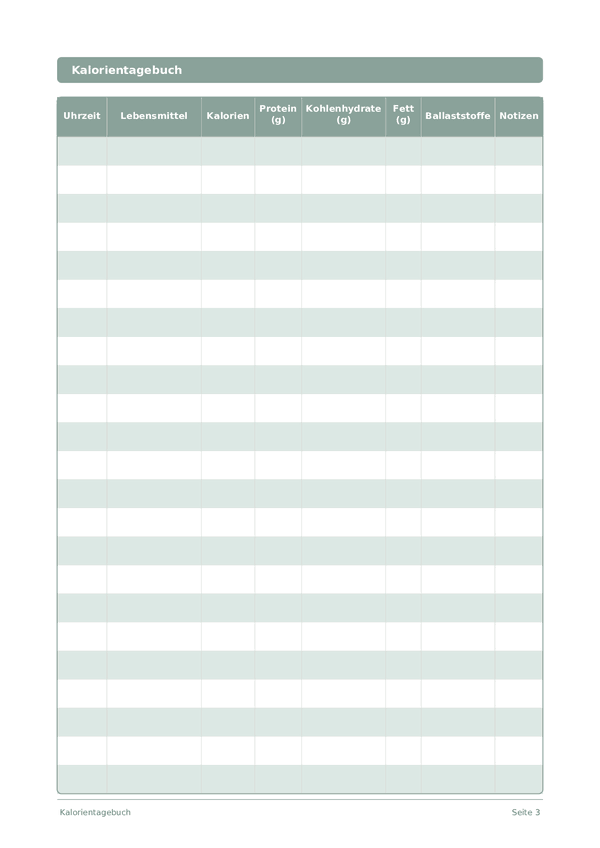
Jede Seite ist eine Tabelle mit Spalten. Füllen Sie pro Eintrag eine Zeile aus. Hier erfahren Sie, wofür jede Spalte gedacht ist:
Uhrzeit
Notieren Sie, wann Sie gegessen haben. Die Essenszeiten beeinflussen Energie, Schlaf und Verdauung. Muster werden nach einigen Wochen sichtbar.
Mahlzeitkategorie
Beschreibung
Schreiben Sie eine kurze Beschreibung, worum es bei diesem Eintrag geht. Ihr zukünftiges Ich wird Ihrem heutigen Ich für den Kontext danken.
Portionsgröße
Kalorien
Protokollieren Sie Ihre ungefähre Kalorienzufuhr. Sie brauchen keine perfekten Zahlen — Schätzungen helfen Ihnen, achtsam mit Essgewohnheiten umzugehen.
Hungerlevel
Wie hungrig warst du insgesamt heute? 1 = überhaupt nicht hungrig, 10 = ausgehungert
Stimmung (1-10)
Bewerten Sie Ihren allgemeinen emotionalen Zustand für den Tag. 1 bedeutet sehr niedergeschlagen oder deprimiert, 10 bedeutet außergewöhnlich glücklich und positiv. Denken Sie nicht zu lange nach — vertrauen Sie Ihrem Bauchgefühl.
Notizen
Fügen Sie zusätzlichen Kontext oder Gedanken hinzu. Diese Auffangspalte ist für alles, was nirgendwo anders hinpasst, aber später nützlich sein könnte.
Tipps für den Erfolg
Wann und wie oft schreiben
Log every meal and snack as close to real-time as possible — this is a table-based journal, so each entry is quick: food, portion, time. Aim for completeness over detail; a simple entry is better than a skipped one. Review your food log weekly to spot patterns: late-night eating, skipped meals, emotional triggers. Share your monthly summary with a nutritionist if you are working on dietary goals. Most people see their biggest insights after 2-3 weeks of consistent logging.
Häufig gestellte Fragen
Wie unterstützt die hungerlevel-Skala 1–10 achtsames Essen?
Die Academy of Nutrition and Dietetics empfiehlt die Hunger-Sättigungs-Skala (1=ausgehungert, 5=neutral, 10=übervoll), um körperlichen Hunger von emotionalem Essen zu unterscheiden. Eine Bewertung vor jeder Mahlzeit unterbricht automatisches Essen. American Journal of Clinical Nutrition (2014, 100(2)) zeigt, dass achtsame Esser weniger Kalorien mit größerer Zufriedenheit konsumieren. Die Pre-Meal-Hunger-Spalte verwandelt ein inneres Signal in eine aufzeichenbare Gewohnheit und unterstützt Gewichtsziele ohne Restriktion.
Warum die Stimmung neben den Mahlzeiten protokollieren?
Laut APA (2021) und Adipositas-Forschung in JAMA (2018, 319(7)) sind 30–60% der Überessepisoden emotional gesteuert (Stress, Langeweile, Traurigkeit, Feier). Die Stimmung neben dem Essen zu protokollieren zeigt Muster, die das Kalorienzählen allein nicht offenbart. Nach 2–3 Wochen identifizieren die meisten Nutzer 1–3 emotionale Auslöser — Wissen, das gezielte Interventionen wie den HALT-Check (Hungry, Angry, Lonely, Tired) vor dem Essen ermöglicht.
Wie unterscheidet sich ein Ernährungstagebuch von einem Kalorienzähler?
Ein Ernährungstagebuch betont Kontext — Mahlzeitenzeit, Hunger, Stimmung, Portion — statt präziser Zahlen. USDA Dietary Guidelines (2020–2025) und Cochrane-Reviews stützen beide Ansätze. Die Food-Journal-Vorlage enthält Kalorienschätzung als eine von acht Spalten und reduziert numerische Präzision absichtlich. Dies funktioniert laut APA besser bei Nutzern mit Neigung zu Essstörungen oder solchen, denen strenges Kalorienzählen nicht nachhaltig erscheint.
Soll ich Portionen wiegen oder schätzen?
Für Genauigkeit kalibriert das Wiegen auf einer Küchenwaage in den ersten 1–2 Wochen Ihre Portionsschätzungen — geschätzte Werte sind laut American Journal of Clinical Nutrition (2018, 107(6)) typischerweise um 20–40% daneben. Nach der Kalibrierung funktionieren handbasierte Maße (Handfläche=Protein, Faust=Kohlenhydrate, Daumen=Fett) für die meisten Mahlzeiten. Die portionsgröße-Spalte akzeptiert jede konsistente Einheit — Gramm, Tassen, Handvoll — solange Sie dabei bleiben.
Kann dieses Tagebuch Nahrungsmittelunverträglichkeiten identifizieren?
Ja, bei systematischer Anwendung. AAAAI (American Academy of Allergy, Asthma & Immunology) und AAP empfehlen eine 2–4-wöchige Eliminationsdiät mit detailliertem Ernährungsprotokoll zur Identifikation von Unverträglichkeiten. Nutzen Sie die Notizspalte zur Erfassung von Symptomen (Blähungen, Kopfschmerz, Müdigkeit, Hautreaktionen) innerhalb von 24–48 Stunden nach Mahlzeiten. Bei vermuteten Allergien (Anaphylaxie, Nesselsucht) konsultieren Sie einen Allergologen; dies ist Screening, keine Diagnose.
Welche Mahlzeitenkategorien sollte ich verwenden?
Standardkategorien laut USDA Dietary Guidelines: Frühstück, Mittagessen, Abendessen, Snack. Manche Nutzer fügen 'Getränk' für koffeinhaltige oder alkoholische Getränke hinzu. Die mahlzeitkategorie-Spalte akzeptiert freien Text — Konsistenz zählt mehr als das exakte Label. Das Tracken von 3 Mahlzeiten + 2 Snacks täglich offenbart Häufigkeitsmuster; ADA Standards of Care (2024, Diabetes Care, 47 Suppl 1) verknüpfen unregelmäßiges Essen-Timing mit höherer Blutzuckervariabilität.
Wie lange bis ich Muster in meinem Ernährungstagebuch sehe?
Die meisten Nutzer identifizieren klare Muster in 2–3 Wochen. Verhaltensforschung von NIH NCCIH (2022) zeigt, dass 21 Tage konsequentes Logging die typische Schwelle für Selbstinsight sind. Wöchentlich überprüfen: Mahlzeiten nach Kategorie clustern, spätes Essen suchen, Hochhungerzeiten erkennen und Stimmung mit spezifischen Nahrungsmitteln verknüpfen. Bringen Sie 4+ Wochen zu einer Ernährungsfachkraft für personalisierte Analyse.
Ist Ernährungsjournaling bei Essstörungs-Vorgeschichte sicher?
Nur unter fachlicher Begleitung. APA und Academy for Eating Disorders merken an, dass detailliertes Ernährungs-Tracking Anorexie, Bulimie, Binge-Eating-Störung oder Orthorexie verschlechtern kann, indem es die Essens-Fixierung verstärkt. Bei entsprechender Vorgeschichte konzentrieren Sie sich auf Hunger- und Stimmungsbewertungen ohne Kalorien oder nutzen Sie nur die Notizspalte. Eine Ernährungsfachkraft oder Essstörungs-Spezialistin kann das Tagebuch sicher anpassen.
Das könnte Ihnen auch gefallen
Scrollen zum Zoomen, ziehen zum Bewegen