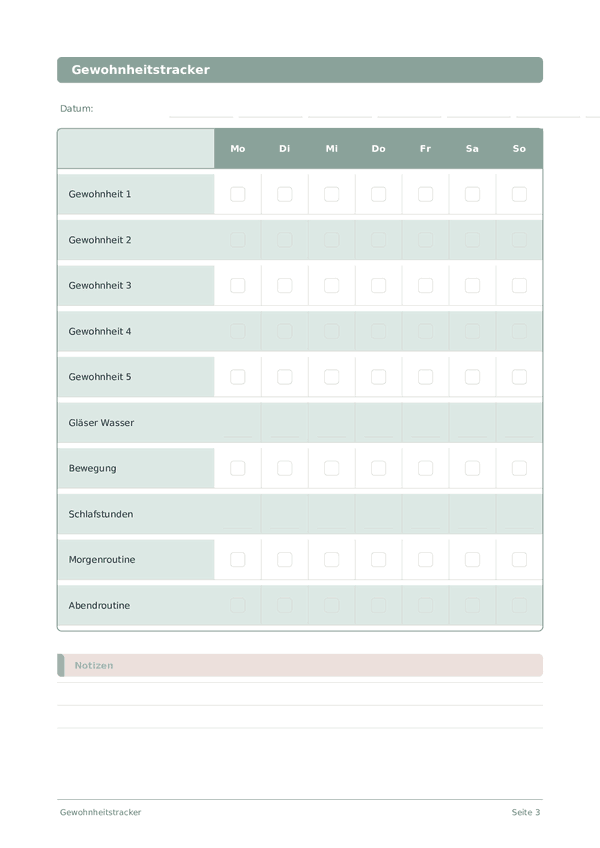
Printable Gewohnheitstracker
Bessere Gewohnheiten aufbauen — Tag für Tag
Track up to five custom habits plus water intake and exercise in a clean grid layout. Visualize your streaks and build momentum toward lasting behavior change.
Felder anpassen
Schalten Sie Felder ein oder aus. Klicken Sie auf den Stift zum Umbenennen oder fügen Sie eigene Felder hinzu.
Vorteile
Anleitung
Was ist dieses Journal?
A habit tracker is a visual accountability tool that turns abstract intentions into concrete daily actions. By marking off habits each day on a grid, you create a chain of consistency that becomes increasingly motivating to maintain — a concept known as the "don't break the chain" method, popularized by Jerry Seinfeld.
Habit tracking works because it leverages several psychological principles at once: visual progress creates dopamine rewards, the fear of breaking a streak provides gentle accountability, and the act of marking a checkbox shifts your identity from "someone trying to build a habit" to "someone who does this every day."
This tracker lets you monitor up to five custom habits alongside water intake, exercise, sleep hours, and morning/evening routines. The weekly grid format gives you an instant visual snapshot of your consistency, making it easy to spot which habits stick and which need a different approach.
Ausgefülltes Beispiel
So sieht ein typischer Eintrag aus, wenn er ausgefüllt ist:
| Mon | Tue | Wed | Thu | Fri | Sat | Sun | |
|---|---|---|---|---|---|---|---|
| Gewohnheit 1 | ✓ | ✓ | ✓ | ✓ | ✓ | ✓ | |
| Gewohnheit 2 | ✓ | ✓ | ✓ | ✓ | ✓ | ||
| Gewohnheit 3 | ✓ | ✓ | ✓ | ✓ | ✓ | ||
| Gewohnheit 4 | ✓ | ✓ | ✓ | ✓ | ✓ | ✓ | |
| Gewohnheit 5 | ✓ | ✓ | ✓ | ✓ | ✓ | ||
| Gläser Wasser | 8 | 6 | 7 | 8 | 5 | 7 | 9 |
| Bewegung | ✓ | ✓ | ✓ | ✓ | |||
| Schlafstunden | 7.5 | 6 | 7 | 8 | 6.5 | 8 | 9 |
| Morgenroutine | ✓ | ✓ | ✓ | ✓ | ✓ | ||
| Abendroutine | ✓ | ✓ | ✓ | ✓ | ✓ |
Wie Sie jedes Feld ausfüllen
Jede Seite ist ein Wochenraster. Die Zeilen sind Ihre Tracking-Elemente, die Spalten sind die Wochentage. Hier erfahren Sie, was jedes Element bedeutet:
Gewohnheit 1
Haken Sie diese Gewohnheit für den Tag ab. Beständigkeit ist wichtiger als Perfektion — selbst eine teilweise Erledigung zählt.
Gewohnheit 2
Haken Sie diese Gewohnheit für den Tag ab. Beständigkeit ist wichtiger als Perfektion — selbst eine teilweise Erledigung zählt.
Gewohnheit 3
Haken Sie diese Gewohnheit für den Tag ab. Beständigkeit ist wichtiger als Perfektion — selbst eine teilweise Erledigung zählt.
Gewohnheit 4
Haken Sie diese Gewohnheit für den Tag ab. Beständigkeit ist wichtiger als Perfektion — selbst eine teilweise Erledigung zählt.
Gewohnheit 5
Haken Sie diese Gewohnheit für den Tag ab. Beständigkeit ist wichtiger als Perfektion — selbst eine teilweise Erledigung zählt.
Gläser Wasser
Verfolgen Sie Ihre tägliche Wasseraufnahme. Die meisten Menschen benötigen 6–8 Gläser. Das Abhaken der Gläser im Laufe des Tages hilft Ihnen, ausreichend hydriert zu bleiben.
Bewegung
Haken Sie ab, ob Sie heute Sport gemacht haben. Selbst ein 10-minütiger Spaziergang zählt. Das Ziel ist es, ein Bewusstsein für Ihre Aktivitätsmuster zu entwickeln.
Schlafstunden
Notieren Sie, wie viele Stunden Sie tatsächlich geschlafen haben (nicht nur die Zeit im Bett). Das Verfolgen zusammen mit Stimmung und Energie offenbart oft starke Zusammenhänge.
Morgenroutine
Hast du heute deine Morgenroutine abgeschlossen? Notiere, was du gemacht oder ausgelassen hast
Abendroutine
Tipps für den Erfolg
Wann und wie oft schreiben
Mark off each habit as you complete it throughout the day. For morning habits, check them off right after your morning routine. For evening habits, fill them in before bed. On Sunday evening, take 5 minutes to review the whole week — which habits stuck, which slipped, and why. After a month, replace any habit you've mastered with a new challenge.
Häufig gestellte Fragen
Wie viele Gewohnheiten sollte ich in diesem Raster verfolgen?
Beginnen Sie mit ein bis drei, nicht allen fünf Slots. BJ Fogg ('Tiny Habits', Houghton Mifflin Harcourt, 2019) und Wood und Neal (2007, Psychological Review, 114(4)) zur Gewohnheitsautomatik empfehlen, kleine Verhaltensweisen auf bestehende Routinen aufzustapeln statt zu überladen. Nutzen Sie gewohnheit 4 und gewohnheit 5 erst, wenn Ihre ersten Gewohnheiten auf Autopilot laufen — typischerweise nach mehreren Wochen konsistenter Häkchen.
Wie lange dauert es, bis eine Gewohnheit automatisch wird?
Lally, van Jaarsveld, Potts und Wardle (2010, European Journal of Social Psychology, 40(6)) fanden eine Mediandauer der Gewohnheitsbildung von 66 Tagen, mit einer Spanne von 18 bis 254 Tagen je nach Verhaltenskomplexität. Das Sieben-Tage-Layout des Rasters zeigt sichtbare Serien, während Sie Automatik aufbauen; ein verpasster Tag entgleiste in ihren Daten die Bildungskurve nicht.
Was kommt in 'gläser Wasser' versus 'schlafstunden'?
Gläser Wasser ist eine Zählung bis 12 — ein verhaltensbezogener Output, den Sie kontrollieren. Schlafstunden bis 24 ist ein Ergebnis, teils außerhalb Ihrer Kontrolle. Nutzen Sie das erste für Verantwortlichkeit, das zweite als Kontextdaten. WHO Mental Health und Sleep-Foundation-Leitlinien empfehlen 7–9 Stunden pro Nacht für Erwachsene; gemeinsam mit Gewohnheiten geloggt zeigt es, wie Schlaf die Adhärenz beeinflusst.
Sollte ich Häkchen nur bei vollständigem Abschluss setzen?
Verwenden Sie eine Alles-oder-Nichts-Regel für gewohnheit 1 bis gewohnheit 5. Charles Duhigg ('The Power of Habit', Random House, 2012) und James Clear ('Atomic Habits', Avery, 2018) betonen beide binären Abschluss zum Aufbau identitätsbasierter Gewohnheiten. Teilanerkennung verwischt die Serie und schwächt die in der Gewohnheitsforschung dokumentierte Reiz-Routine-Belohnungs-Schleife. Sichtbare Wochenserien wirken als unmittelbare Verstärkung.
Was, wenn ich einen Tag verpasse — zählt die Serie?
Lassen Sie ein Auslassen nicht zu zweien werden. Lally et al. (2010, European Journal of Social Psychology, 40(6)) fanden, dass ein einzelner verpasster Tag die Bildungsbahn nicht signifikant zurücksetzte. Das Sieben-Tage-Raster macht verpasste Zellen sichtbar, ohne zu katastrophisieren. Notieren Sie den Kontext neben der Lücke, damit Sie situative Trigger ansprechen können, nicht nur Willenskraft.
Wie unterscheidet sich das von einer Habit-App?
Papier eliminiert die variable Belohnungsschleife, die Apps durch Benachrichtigungen und Gamification schaffen. Sellen und Harper ('The Myth of the Paperless Office', MIT Press, 2003) und breitere Aufmerksamkeitsforschung zeigen: Papier unterstützt fokussierten Überblick ohne App-Wechselkosten. Die visuelle Dichte des Rasters lässt Sie wöchentliche Muster auf einen Blick erkennen, was Scrollen durch App-Historie oft verbirgt.
Sollten 'morgenroutine' und 'abendroutine' eine große Gewohnheit sein?
Ja — deshalb sind es einzelne Checkboxen. Mehrere Verhaltensweisen an einen Routineblock zu binden, ist eine Stacking-Technik, die BJ Fogg ('Tiny Habits', 2019) Verankerung nennt. Definieren Sie Ihre morgenroutine als feste Sequenz (z.B. Bett machen, Wasser, Dehnen). Ein Häkchen bestätigt den ganzen Block und trainiert die Verhaltenskette als Einheit.
Wird das Verfolgen von Gewohnheiten Verhalten wirklich ändern?
Selbstbeobachtung ist eine der konsistent wirksamsten Verhaltensänderungstechniken. Harkin et al. (2016, Psychological Bulletin, 142(2)) meta-analysierten 138 Studien und fanden, dass Fortschrittsbeobachtung das Erreichen von Zielen signifikant verbesserte, mit stärkeren Effekten, wenn die Beobachtung physisch festgehalten und öffentlich berichtet wurde. Tägliche Häkchen erfüllen beide Kriterien mit einem/r Accountability-Partner/in.
Das könnte Ihnen auch gefallen
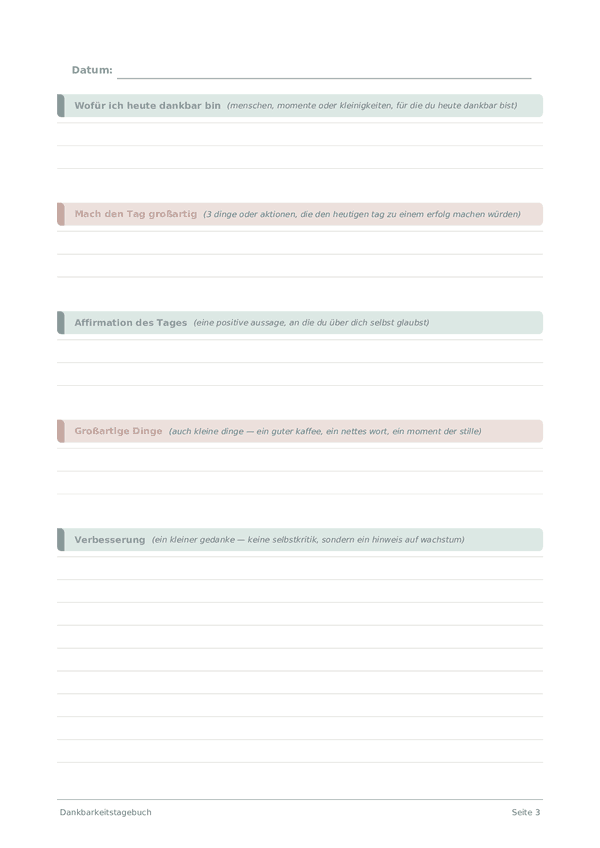
Dankbarkeitstagebuch
Kultivieren Sie täglich Dankbarkeit und Positivität
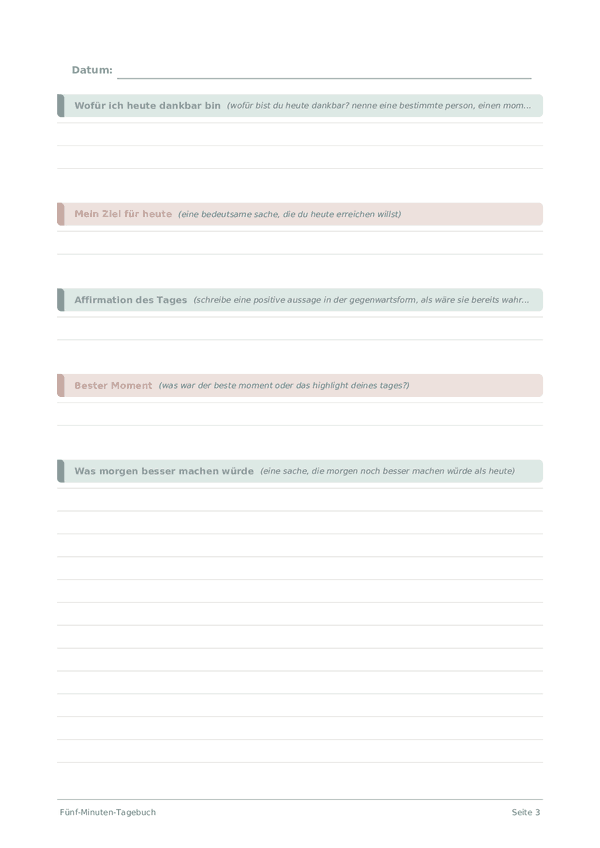
Fünf-Minuten-Tagebuch
Tägliches Fünf-Minuten-Tagebuch für Dankbarkeit und Reflexion
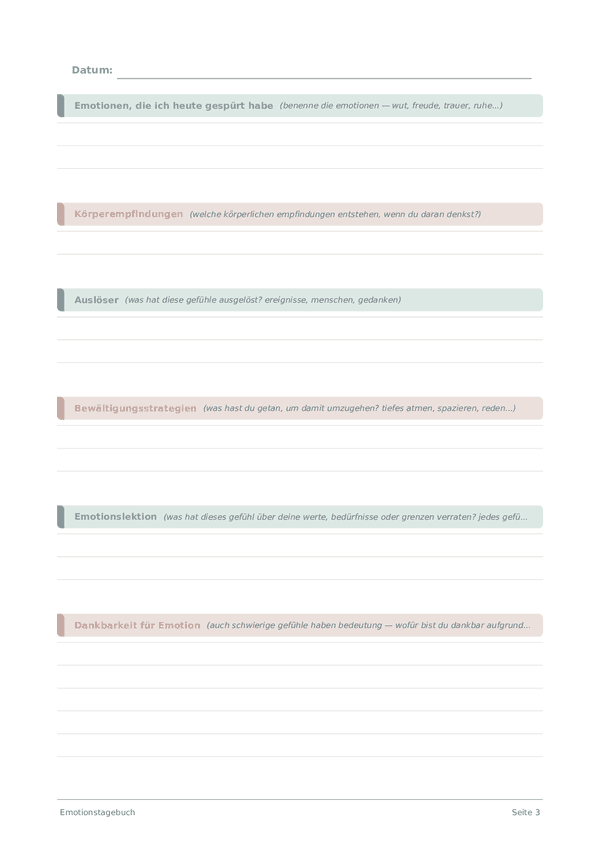
Emotionstagebuch
Verstehen, verarbeiten und durch Ihre Emotionen wachsen
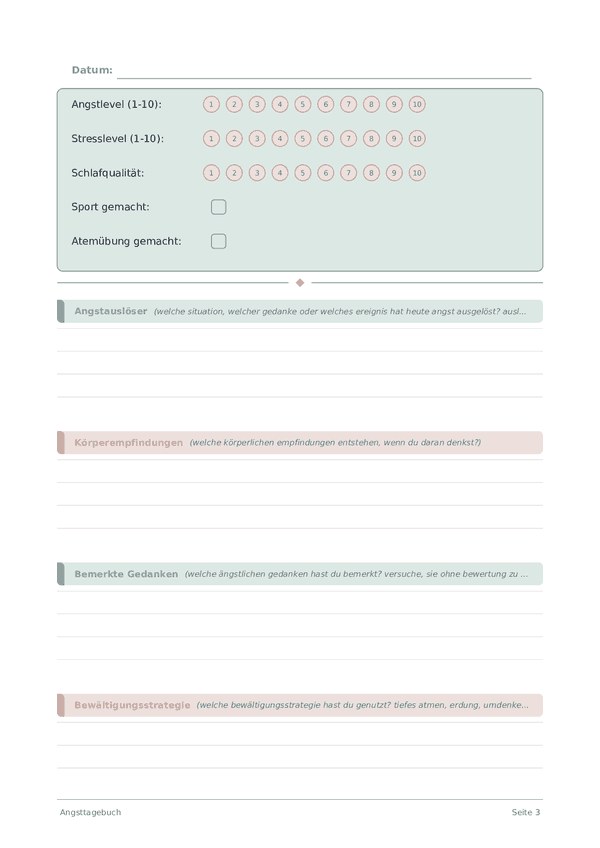
Angsttagebuch
Tägliches Angsttracking und KVT-basiertes Reflexionstagebuch
Scrollen zum Zoomen, ziehen zum Bewegen