Printable Migränetagebuch
Migräne-Tracker und Kopfschmerzprotokoll
Track migraine patterns with detailed attack logging for better diagnosis and treatment. Record triggers, symptoms, medications, and relief outcomes to identify patterns and communicate effectively with your neurologist.
Felder anpassen
Schalten Sie Felder ein oder aus. Klicken Sie auf den Stift zum Umbenennen oder fügen Sie eigene Felder hinzu.
Was ist dieses Journal?
A migraine journal is a detailed attack diary designed for anyone who experiences recurrent migraines or severe headaches. By systematically recording each episode — including onset time, pain level, duration, location of pain, aura symptoms, potential triggers, and medications used — you create a medical-grade log that helps both you and your neurologist understand your unique migraine pattern.
Migraines are highly individual, and what triggers one person may have no effect on another. The power of a migraine journal lies in revealing your personal triggers over time. After several weeks of consistent entries, you may discover connections between attacks and factors like sleep changes, certain foods, weather shifts, hormonal cycles, or stress. This insight is invaluable for developing a targeted prevention strategy.
Healthcare providers frequently recommend migraine diaries as part of treatment planning. A well-maintained journal helps your doctor evaluate medication effectiveness, determine whether preventive treatment is needed, and track whether attack frequency is improving. It transforms vague recollections into concrete data that drives better clinical decisions.
Ausgefülltes Beispiel
So sieht ein typischer Eintrag aus, wenn er ausgefüllt ist:
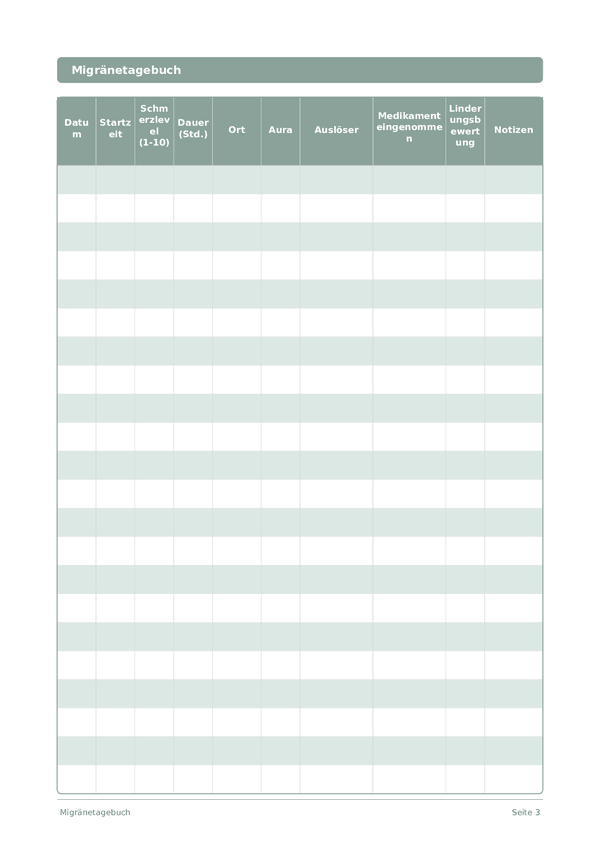
| Datum | Startzeit | Schmerzlevel (1-10) | Dauer (Std.) | Ort | Aura | Auslöser | Medikament eingenommen | Linderungsbewertung | Notizen |
|---|---|---|---|---|---|---|---|---|---|
| 2026-02-25 | 14:00 | 7 | 6 | Right temple | Visual spots | Skipped lunch, bright lights | Sumatriptan 50mg | 6 | Had to leave work early |
| 2026-02-27 | 06:30 | 5 | 3 | Both temples | None | Poor sleep (4 hours) | Ibuprofen 400mg | 8 | Woke up with headache, resolved by mid-morning |
| 2026-03-01 | 18:00 | 8 | 10 | Left side | Tingling in hand | Red wine at dinner, stress | Sumatriptan 50mg + Metoclopramide | 5 | Severe nausea, had to lie down in dark room |
| 2026-03-03 | 11:00 | 4 | 2 | Forehead | None | Screen time, dehydration | Paracetamol 500mg | 9 | Mild episode, resolved with medication and water |
Wie Sie jedes Feld ausfüllen
Jede Seite ist eine Tabelle mit Spalten. Füllen Sie pro Eintrag eine Zeile aus. Hier erfahren Sie, wofür jede Spalte gedacht ist:
Datum
Schreiben Sie das heutige Datum. Dies verankert Ihren Eintrag in der Zeit und hilft beim späteren Durchsehen der Einträge.
Startzeit
Schmerzlevel (1-10)
Bewerten Sie Ihre Schmerzintensität auf einer Skala. Das Verfolgen der Schmerzwerte hilft, Auslöser zu identifizieren, Behandlungen zu bewerten und mit Gesundheitsdienstleistern zu kommunizieren.
Dauer (Std.)
Ort
Wo wurde das Foto aufgenommen?
Aura
Auslöser
Identifizieren Sie, was Ihre emotionalen Reaktionen ausgelöst hat — Ereignisse, Menschen, Gedanken, Umgebungen. Auslöser zu erkennen gibt Ihnen die Möglichkeit, sich darauf vorzubereiten oder sie zu vermeiden.
Medikament eingenommen
Hast du heute deine Medikamente genommen? Notiere was, wann und ob Dosen ausgelassen wurden
Linderungsbewertung
Notizen
Fügen Sie zusätzlichen Kontext oder Gedanken hinzu. Diese Auffangspalte ist für alles, was nirgendwo anders hinpasst, aber später nützlich sein könnte.
Tipps für den Erfolg
Wann und wie oft schreiben
Log every headache and migraine event as it happens — onset time, symptoms, triggers, and treatment. On headache-free days, still record a brief entry noting sleep quality, stress, and any potential trigger exposures. This baseline data is essential because your doctor needs to see both attack days and non-attack days to identify patterns. Weekly, tally your headache days. Monthly, bring your complete log to your neurologist — studies show patients with migraine diaries receive more accurate diagnoses and better-targeted treatment plans.
Häufig gestellte Fragen
Welche Informationen brauchen Neurologen aus einem Migränetagebuch?
Laut American Migraine Foundation und International Headache Society (ICHD-3, 2018)-Kriterien benötigen Neurologen Attackenfrequenz pro Monat, Dauer in Stunden, Schmerzintensität (0–10), exakte Lokalisation, Aura-Vorhandensein und Typ, mögliche Auslöser der letzten 24 Stunden, eingesetzte Medikamente mit Dosis sowie Linderungserfolge — alle acht Spalten dieser Vorlage. Cephalalgia (2019, 39(3)) zeigt, dass 8–12 Wochen detailliertes Tracking eine zuverlässige Differentialdiagnose zwischen Migränesubtypen, Spannungskopfschmerz und Cluster-Kopfschmerz ermöglicht.
Wie hilft die Aura-Spalte bei der Diagnose?
ICHD-3 (2018) unterscheidet Migräne mit Aura (visuelle, sensorische, sprachliche oder motorische Symptome vor dem Schmerz) von Migräne ohne Aura — unterschiedliche Behandlungsimplikationen. Die Aura-Spalte erfasst Vorhandensein und Typ. Häufige visuelle Auren: Zickzacklinien, blinde Flecken, Lichtblitze. Aura ohne nachfolgenden Kopfschmerz kommt ebenfalls vor. American Migraine Foundation merkt an, dass ~25–30% der Migränepatienten Aura erleben. Dokumentieren Sie das Beginn-Timing relativ zum Kopfschmerz.
Welche Auslöser sollte ich am sorgfältigsten tracken?
Laut Headache (2019, 59(9)) und American Migraine Foundation: häufige Auslöser sind Stress, Schlafveränderungen, Menstruationszyklus, bestimmte Lebensmittel (gereifter Käse, verarbeitetes Fleisch, Alkohol, Mononatriumglutamat), Wetterwechsel, Dehydration, ausgelassene Mahlzeiten und intensive Sinnesreize. Die Triggers-Spalte sollte alle Kandidaten innerhalb von 24 Stunden vor Attackenbeginn erfassen. Muster benötigen 3–6 Monate Logging — einzelne Attacken identifizieren selten echte Auslöser.
Wie erkenne ich, ob ein Medikament wirklich wirkt?
Wirksamkeitskriterien der International Headache Society: Schmerzreduktion von stark (7+) auf leicht (≤3) innerhalb 2 Stunden, 24 Stunden anhaltend, kein Rückfall. Notieren Sie Medikamentenname, Dosis, Timing und linderungsbewertung (0–10). Vergleichen Sie über 10+ Attacken — die Reaktion auf eine einzelne Attacke ist unzuverlässig. American Headache Society (2021) empfiehlt Prophylaxe-Erwägung, wenn Attacken 4 Tage/Monat überschreiten oder die Funktion deutlich beeinträchtigen.
Welche Schmerzlevel und Dauern sind klinisch bedeutsam?
ICHD-3-Migränekriterien fordern Attacken von 4–72 Stunden (unbehandelt), mit moderaten bis starken Schmerzen (5+ auf 10-Punkte-Skala), oft einseitig und pulsierend. Status migraenosus (kontinuierliche Attacke >72 Stunden) rechtfertigt ärztliche Abklärung. Die Spalten dauer (Std.) und schmerzlevel (1-10) erfassen dies. Headache (2020, 60(3)) zeigt, dass Patienten ohne tägliches Logging die Häufigkeit um 30–50% unterschätzen.
Wie unterscheidet sich dieses Tagebuch von Apps wie Migraine Buddy?
Apps automatisieren Erinnerungen, hängen aber bei retrospektiven Einträgen vom Gedächtnis ab; Papier-Logs ermutigen zur sofortigen Dokumentation nach der Attacke. Das strukturierte 10-Spalten-Format hier entspricht den ICHD-3-Diagnosekriterien umfassender als die meisten Apps. Cephalalgia (2020)-Studien zeigen, dass standardisierte Papier-Tagebücher Goldstandard für klinische Studien und neurologische Konsultationen bleiben. Nutzen Sie beides — App für Erinnerungen, Tagebuch für die medizinische Aufzeichnung.
Wann erfordern Kopfschmerzen dringende ärztliche Hilfe?
Red Flags von American Migraine Foundation und Mayo Clinic: 'Donnerschlag'-Kopfschmerz mit Spitzenintensität in Sekunden, schlimmster Kopfschmerz des Lebens, Kopfschmerz mit Fieber und steifem Nacken, neurologische Symptome (Schwäche, Sehverlust, Verwirrtheit, undeutliche Sprache), Kopfschmerz nach Kopfverletzung, neues Kopfschmerzmuster nach 50. Diese deuten auf ernste Zustände (Schlaganfall, Hirnblutung, Meningitis) — sofort Notruf 112.
Wie lange bis Muster für die Behandlung nützlich werden?
Laut American Headache Society offenbaren 8–12 Wochen detailliertes tägliches Logging typischerweise Auslösermuster, optimale Medikamentenreaktion und Attackenfrequenz-Baseline. Drei Monate Daten sind Standard für die Bewertung präventiver Medikation — prüfen Sie, ob Attacken um ≥50% in Häufigkeit oder Schweregrad zurückgingen. Bringen Sie alle Seiten zu Ihrem Neurologen; Trends zählen mehr als einzelne Attacken für Behandlungsentscheidungen.
Das könnte Ihnen auch gefallen
Scrollen zum Zoomen, ziehen zum Bewegen