Printable Hautpflegetagebuch
Täglicher Hautpflegeroutine-Tracker und Hautgesundheitstagebuch
Build your best skin through daily routine tracking and pattern recognition. Log products, monitor lifestyle factors like hydration and sleep, and identify what truly improves your complexion over time.
Felder anpassen
Schalten Sie Felder ein oder aus. Klicken Sie auf den Stift zum Umbenennen oder fügen Sie eigene Felder hinzu.
Was ist dieses Journal?
A skin journal is a daily tracking tool designed for anyone who wants to understand and improve their skin health. By rating your skin condition, logging water intake, sleep, stress levels, and noting breakouts alongside your skincare routine and diet, you create a holistic picture of the factors influencing your complexion. This journal bridges the gap between guessing what works and knowing what works.
Skin is the body's largest organ, and its condition is influenced by a complex web of internal and external factors. A product that works wonders for one person may cause breakouts in another, and environmental changes can shift your skin's needs overnight. By maintaining consistent daily entries, you can isolate which products, foods, or habits correlate with your best and worst skin days — information that even a dermatologist cannot determine from a single office visit.
Whether you are battling acne, managing eczema or rosacea, building an anti-aging routine, or simply curious about optimizing your skin, this journal turns anecdotal impressions into reliable data. It is especially powerful when introducing new products, as you can precisely track their effects over the crucial first weeks of use.
Ausgefülltes Beispiel
So sieht ein typischer Eintrag aus, wenn er ausgefüllt ist:
Wie Sie jedes Feld ausfüllen
Oben auf jeder Seite befinden sich schnell ausfüllbare Felder (Bewertungen, Kontrollkästchen, Zahlen). Darunter ist ein linierter Bereich zum Schreiben. Hier erfahren Sie, was jedes Feld bedeutet:
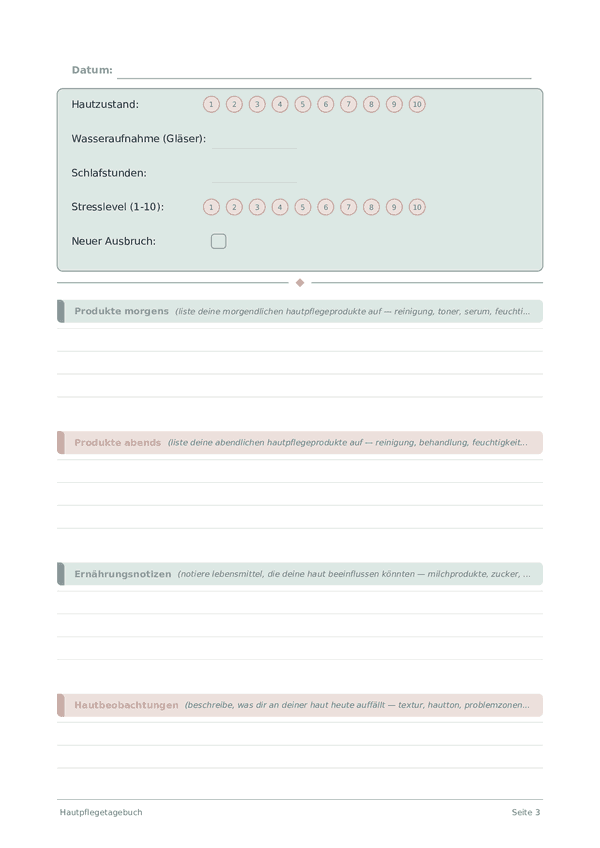
Hautzustand
Bewerten Sie Ihren Hautzustand heute. Verfolgen Sie Verbesserungen oder Verschlechterungen, um Auslöser wie Nahrung, Stress oder Produkte zu identifizieren.
Wasseraufnahme (Gläser)
Wie viele Gläser Wasser hast du heute getrunken? Ziel sind 6–8 Gläser für optimale Hautfeuchtigkeit
Schlafstunden
Notieren Sie, wie viele Stunden Sie tatsächlich geschlafen haben (nicht nur die Zeit im Bett). Das Verfolgen zusammen mit Stimmung und Energie offenbart oft starke Zusammenhänge.
Stresslevel (1-10)
Bewerten Sie Ihren Stress auf einer Skala von 1–10. Mit der Zeit erkennen Sie Ihre Stressmuster und welche Bewältigungsstrategien am besten funktionieren.
Neuer Ausbruch
Sind heute neue Unreinheiten aufgetreten? Ankreuzen, um Muster über die Zeit zu erkennen
Produkte morgens
Liste deine morgendlichen Hautpflegeprodukte auf — Reinigung, Toner, Serum, Feuchtigkeitscreme, Sonnenschutz...
Produkte abends
Liste deine abendlichen Hautpflegeprodukte auf — Reinigung, Behandlung, Feuchtigkeitscreme, Gesichtsöl...
Ernährungsnotizen
Notiere Lebensmittel, die deine Haut beeinflussen könnten — Milchprodukte, Zucker, verarbeitete Lebensmittel, Alkohol oder hautfreundliche Nahrung
Hautbeobachtungen
Beschreibe, was dir an deiner Haut heute auffällt — Textur, Hautton, Problemzonen, Verbesserungen
Was sich geändert hat
Hast du heute etwas geändert — neues Produkt, andere Ernährung, mehr Schlaf? Notiere es, um Ursache und Wirkung nachzuverfolgen
Tipps für den Erfolg
Wann und wie oft schreiben
Do a brief skin check and log every morning — note any new breakouts, irritation, dryness, or improvement. Record your full skincare routine (AM and PM products) and mark any product changes. Weekly, review your skin photos side by side to detect gradual changes invisible day-to-day. Monthly, assess which products and habits correlate with your best and worst skin weeks. Before dermatologist visits, prepare a summary from your journal: current routine, recent changes, trigger patterns, and product duration. This data transforms your appointment from guesswork into evidence-based care.
Häufig gestellte Fragen
Wie verbessert tägliches Tracking tatsächlich den Hautzustand?
Laut American Academy of Dermatology (AAD) und Journal of the American Academy of Dermatology identifiziert strukturiertes Tracking, welche Produkte, Lebensmittel und Lifestyle-Faktoren Ihre Haut tatsächlich beeinflussen. Hautzell-Turnover dauert ~28 Tage, sodass Ursache-Wirkungs-Muster über 4–6 Wochen sichtbar werden. Die Kombination der Vorlage aus objektiven Metriken (Schlaf, Wasser, Stress) und Produktlogs ermöglicht Hypothesentests — die meisten Nutzer identifizieren 1–3 umsetzbare Auslöser innerhalb von 8 Wochen.
Welche Verbindung besteht zwischen Schlaf, Stress und Haut?
AAD und dermatologische Forschung in JAAD (2019) bestätigen, dass Cortisol durch schlechten Schlaf (<7 Stunden laut NHLBI) und chronischen Stress die Talgproduktion erhöht, Akne verschlimmert und die Hautbarriere-Reparatur verlangsamt. Die Felder schlafstunden und stresslevel (1-10) erfassen diese Schlüsselvariablen. Muster über 6–8 Wochen offenbaren persönliche Schwellen — viele Nutzer finden, dass Akneschübe mit Stress ≥7/10 oder Schlaf <6 Stunden für 3+ aufeinanderfolgende Nächte korrelieren.
Wie sollte ich AM- und PM-Hautpflege-Produkte protokollieren?
Laut AAD-Empfehlung machen separate Produktlisten die Musteranalyse sauberer. Nutzen Sie die Prompts produkte morgens und produkte abends, um jedes Produkt aufzulisten (Marke, Schlüsselwirkstoff wie Retinol, Salicylsäure, Niacinamid). Bei Einführung eines neuen Produkts notieren Sie das Startdatum und beobachten 4–6 Wochen vor der Beurteilung — anfängliches 'Purging' durch Retinoide und Säuren ist normal. Stoppen Sie und konsultieren Sie eine Dermatologin bei anhaltender Reizung.
Kann Ernährung wirklich die Haut beeinflussen?
Laut JAAD (2017, 77(6)) und AAD-Reviews: hoch-glykämische Ernährung und Milchprodukte korrelieren mit Akne; Rosazea kann durch Alkohol und scharfe Speisen aufflackern; Ekzeme können durch Nahrungsallergene auflodern. Nutzen Sie das ernährungsnotizen-Prompt zur Erfassung verdächtiger Lebensmittel mit Hautreaktion 24–48 Stunden später. Cochrane-Reviews erkennen an, dass Ernährungseffekte individuell sind — Ihre Tagebuchmuster zählen mehr als Bevölkerungsdurchschnitte. Konsultieren Sie eine Dermatologin oder Allergologin für systematische Bewertung.
Was zeigt die neuer Ausbruch-Checkbox über die Zeit?
Tägliches Abhaken von neuer Ausbruch erstellt eine Schubhäufigkeitsgrafik über Wochen. AAD betrachtet konsistente Muster als klinisch bedeutsam: 3+ neue Läsionen/Woche können auf hormonelle Akne, Kontaktreaktionen oder Produktreizung hinweisen. Die Checkbox in Kombination mit Stress-, Schlaf- und Produktlogs offenbart kausale Muster. Fotos parallel zum Tagebuch (separates Gerät) ergänzen objektive Belege, die Dermatologen bei Videosprechstunden schätzen.
Wie unterscheidet sich das von Hautpflege-Apps wie TroveSkin oder YouCam Makeup?
KI-basierte Apps analysieren Fotos auf Oberflächenmetriken, integrieren aber selten Lifestyle-Kontext. Laut JAAD (2021, 84(5)) Reviews zur digitalen Dermatologie variiert die App-Genauigkeit stark und kann keine Zustände diagnostizieren. Das Papiertagebuch erfasst verhaltensbedingte und umweltbedingte Faktoren — Ernährung, Schlaf, Stress, Produkte —, die die meisten Hautprobleme tatsächlich antreiben. Kombinieren Sie bei Bedarf: App fürs visuelle Tracking, Tagebuch für Kontext. Apps ersetzen nicht die dermatologische Bewertung.
Wie lange bis ich Ergebnisse einer neuen Hautpflege-Routine sehe?
Laut AAD: Zell-Turnover dauert bei Erwachsenen ~28 Tage, länger mit dem Alter. Die meisten Wirkstoffe (Retinoide, exfolierende Säuren, Vitamin C) zeigen messbare Ergebnisse in 6–12 Wochen. Das was sich geändert hat-Prompt ist am 4-, 8- und 12-Wochen-Markt am nützlichsten — vergleichen Sie Basisbewertungen mit aktuellen. Geduld ist entscheidend; zu schneller Produktwechsel verhindert ordentliche Bewertung. Dokumentieren Sie Veränderungen; bringen Sie sie zur Dermatologin für personalisierte Einschätzung.
Wann sollten Hautprobleme einen Dermatologenbesuch auslösen?
AAD-Red-Flags: anhaltende Akne ohne Ansprechen auf OTC-Behandlung über 8+ Wochen, plötzliche schwere Ausbrüche, schmerzhafte zystische Läsionen, anhaltender Ausschlag, verdächtige Muttermale (ABCDE-Kriterien: Asymmetrie, Begrenzung, Color/Farbe, Durchmesser >6 mm, Entwicklung), unerklärliche Hautveränderungen. Bringen Sie 8+ Wochen Tagebuchdaten — probierte Produkte, Ernährungs-/Lifestyle-Muster, Schubhäufigkeit. Dies beschleunigt eine präzise Diagnose. Plötzliche Gesichtsschwellung oder Bläschen-Ausschlag mit Fieber erfordert Notfallhilfe.
Das könnte Ihnen auch gefallen
Scrollen zum Zoomen, ziehen zum Bewegen