Printable Music Journal
Track practice sessions, tempo, and musical growth
A focused music practice journal to log every session with intention. Record the instrument, piece, practice duration, tempo, and rate your overall performance. Reflect on what improved, what still challenges you, and set goals for your next session. Consistent journaling reveals your musical progress over time and sharpens your practice.
Customize fields
Toggle fields on or off. Click the pencil to rename, or add your own fields.
Benefits
How to Use
What is this journal?
A music journal helps you turn every practice session into a purposeful step forward. Instead of sitting down and noodling aimlessly, you set clear intentions, track measurable progress, and reflect on what actually improved. Over time, these notes become a personal coaching log that reveals your strengths, exposes weak spots, and keeps motivation high.
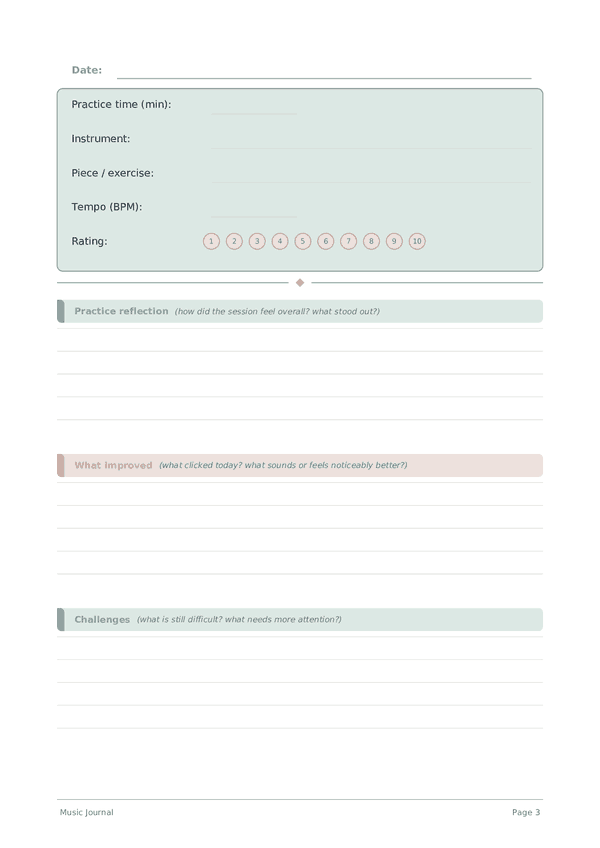
The top section captures quick metrics — how long you practised, which instrument and piece you worked on, the tempo you reached, and an overall session rating. The bottom section is where the real learning happens: you write about what improved, what challenged you, and what you plan to tackle next time.
Whether you are preparing for a recital, learning a new instrument, or simply playing for the love of music, consistent journaling transforms scattered practice into deliberate progress. Fill in the tracker during or right after your session, then spend two minutes writing your reflection while the experience is vivid.
Filled example
Here's what a typical entry looks like when filled in:
How to fill in each field
The top of each page has quick-fill fields (ratings, checkboxes, numbers). Below that is a lined section for writing. Here's what each field means:
Practice time (min)
How many minutes did you practice today?
Instrument
Guitar, piano, violin, voice, drums...
Piece / exercise
Name of the piece, song, or exercise you worked on
Tempo (BPM)
Target or achieved tempo in BPM (beats per minute)
Rating
Overall rating of the experience
Practice reflection
How did the session feel overall? What stood out?
What improved
What clicked today? What sounds or feels noticeably better?
Challenges
What is still difficult? What needs more attention?
Goals for next session
What will you focus on in your next practice session?
Tips for success
When and how often to write
Write after every practice session or meaningful listening experience, even just two or three sentences. For active musicians, daily post-practice entries of five minutes each build a powerful feedback loop — you will see problem areas resolving over weeks instead of guessing. For listeners and collectors, three entries per week capture enough to build a meaningful personal archive. Monthly, read back through your entries to spot patterns in what inspires or frustrates you.