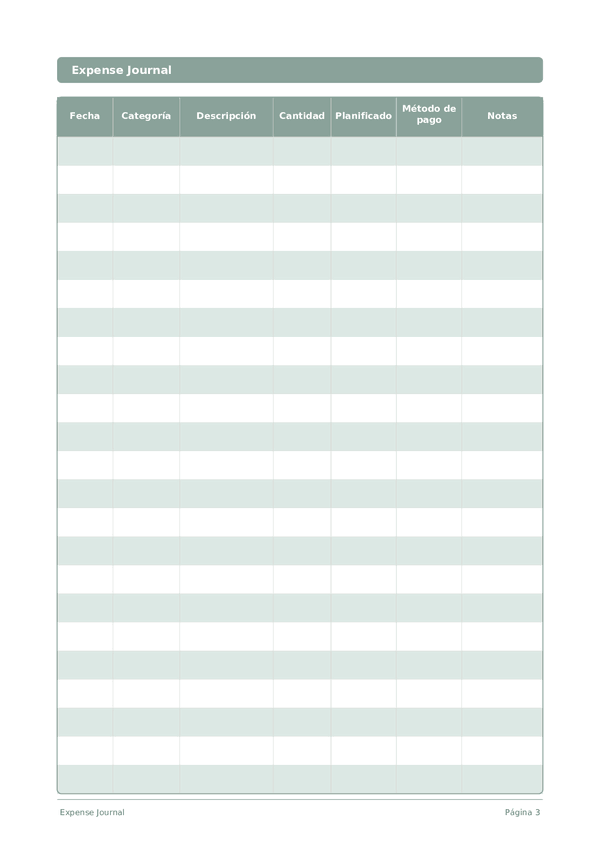
Printable Expense Journal
Track every dollar to take control of your finances
A daily expense log designed to capture every purchase with date, category, amount, and payment method. Compare planned budgets against actual spending, spot financial leaks, and build lasting money awareness. The simple table format makes it easy to fill in on the go and review at the end of each week or month.
Personalizar campos
Activa o desactiva campos. Haz clic en el lápiz para renombrar, o añade tus propios campos.
Beneficios
Cómo Usar
¿Qué es este diario?
An expense journal is a straightforward daily log for tracking every purchase and expenditure you make. By recording the date, category, description, amount, and payment method for each transaction, you build complete visibility into where your money goes. This journal is designed for anyone who wants to take control of their spending — from students and young professionals to families managing household budgets.
Most people significantly underestimate their discretionary spending. Small daily purchases — coffee, snacks, subscriptions, impulse buys — add up to surprisingly large sums over a month. An expense journal makes these invisible costs visible. When you write down every transaction, you naturally become more intentional about your spending, and patterns emerge that help you identify areas where you can cut back without sacrificing quality of life.
This journal is also an excellent companion to budgeting. By comparing your actual expenses against planned amounts, you can see exactly where you are on track and where adjustments are needed. Whether you are saving for a specific goal, paying down debt, or simply building healthier financial habits, consistent expense tracking is the foundation of financial awareness and control.
Ejemplo completado
Así es como se ve una entrada típica cuando se rellena:
| Fecha | Categoría | Descripción | Cantidad | Planificado | Método de pago | Notas |
|---|---|---|---|---|---|---|
| 2026-03-03 | Groceries | Weekly grocery shopping at Whole Foods | 87.5 | 80 | Debit card | Slightly over budget, bought organic produce |
| 2026-03-03 | Transport | Gas fill-up | 52 | 50 | Credit card | Prices went up this week |
| 2026-03-03 | Dining out | Lunch with coworkers, Thai restaurant | 18.75 | 15 | Cash | Unplanned, should bring lunch tomorrow |
| 2026-03-03 | Subscriptions | Spotify Premium monthly | 10.99 | 10.99 | Credit card | Auto-renewal |
| 2026-03-03 | Health | Pharmacy — vitamins and cold medicine | 24.3 | 0 | Debit card | Unexpected, feeling under the weather |
Cómo rellenar cada campo
Cada pagina es una tabla con columnas. Completa una fila por entrada. Esto es lo que significa cada columna:
Fecha
Escribe la fecha de hoy. Esto ancla tu entrada en el tiempo y ayuda cuando revisas entradas despues.
Categoría
Asigna una categoria a esta entrada (ej. comida, transporte, entretenimiento). Las categorias consistentes hacen que tus datos sean faciles de analizar.
Descripción
Escribe una breve descripcion de esta entrada. Tu yo del futuro te agradecera el contexto.
Cantidad
Registra el monto de esta entrada. Se preciso: el redondeo crea inexactitudes que se acumulan con el tiempo.
Planificado
Método de pago
Notas
Agrega cualquier contexto o pensamiento adicional. Esta columna general es para cualquier cosa que no encaje en otro lugar pero pueda ser util despues.
Consejos para el exito
Cuando y con que frecuencia escribir
Log every expense the moment it happens, or at minimum during a 5-minute evening review. The key is daily consistency — even one skipped day creates gaps that snowball into abandonment. At the end of each week, total your categories and compare to the previous week. Monthly, review category totals against your budget targets and identify the top three areas where actual spending deviated most from your plan.
Preguntas frecuentes
¿Por qué usar un diario de gastos en papel si existen aplicaciones como Mint o YNAB?
Tres razones. Registrar a mano genera un momento de conciencia: Soman (2001, Journal of Consumer Research, 27(4)) demostró que un registro de pago más «costoso» reduce el gasto posterior. Privacidad financiera: los agregadores de cuentas acceden a todo el historial de transacciones. Tercero: las apps automatizan el seguimiento, pero la pausa manual es lo que cambia el comportamiento. Muchos usuarios combinan el registro en papel con el digital.
¿Qué categorías de gastos debo usar en mi presupuesto?
La Encuesta de Gasto del Consumidor de la U.S. Bureau of Labor Statistics (2024) reporta asignaciones medias: vivienda (~33 %), transporte (~17 %), alimentación (~12 %), seguros y pensiones (~12 %), salud (~8 %), ocio (~5 %), ropa (~3 %). Para presupuestos personales, bastan 7–10 categorías: alimentación, restaurantes, transporte, suministros, comunicaciones, ocio, ropa, salud, regalos, otros. Mantenga las categorías fijas: la comparación mensual requiere definiciones estables.
¿Qué es el método de los sobres y funciona con un diario en papel?
El presupuesto por sobres fue popularizado por Dave Ramsey en The Total Money Makeover (Thomas Nelson, 2003). Su base académica es Heath & Soll (1996, Journal of Consumer Research, 23(1)): la categorización mental del presupuesto reduce significativamente el gasto excesivo. Al inicio del mes, se distribuye el efectivo en sobres por categoría; el gasto solo proviene de cada sobre. El diario y los sobres se refuerzan mutuamente.
¿Cómo uso la comparación previsto vs. real en este diario de gastos?
Al inicio del mes, anote el importe planificado por categoría en la columna «previsto». Registre los gastos reales a medida que se produzcan. Semanal y mensualmente, calcule la desviación. El presupuesto base cero (Pyhrr, 1970, Harvard Business Review) exige que cada unidad presupuestaria tenga una asignación. Si los gastos reales superan el plan en más de un 15 % en una categoría, revise el plan o los hábitos de gasto.
¿Cuántos registros caben en una página del diario de gastos?
18 líneas por día, suficientes para la mayoría de los hogares. La Survey of Consumer Payment Choice de la Reserva Federal (2022) indica que los consumidores realizan una media de 39 transacciones al mes, aproximadamente 1,3 por día. Los hogares de alta frecuencia alcanzan 6–8 diarias. La plantilla incluye 32 páginas: 30 días más portada e instrucciones. Para compras pequeñas del mismo tipo, agrúpelas en una línea con el total.
¿Cómo analizo el diario de gastos a final de mes?
Proceso en cinco pasos: 1) sume los totales por categoría; 2) identifique las 3 categorías con mayor peso; 3) señale desviaciones previsto-real superiores al 15 %; 4) contabilice las compras impulsivas en una línea separada; 5) comprométase a 1–2 ajustes para el mes siguiente. La revisión mensual de gastos es una recomendación estándar de la U.S. Consumer Financial Protection Bureau (CFPB) (en España: Banco de España) y programas similares de educación financiera.
¿Es este diario de gastos adecuado para presupuestos familiares o solo personales?
Para ambos. En el uso familiar, añada las iniciales del responsable del gasto en la columna de «notas». Archuleta et al. (2011, Journal of Family and Economic Issues, 32(4)) hallaron que la planificación financiera conjunta se correlaciona con mayor satisfacción conyugal y menos conflictos económicos. Alternativa: dos diarios con una reconciliación semanal de 30 minutos. En cualquier caso, la visibilidad compartida del gasto elimina los gastos ocultos.
¿Es cierto que se gasta más con tarjeta que en efectivo?
Sí, confirmado de forma consistente. El primer estudio fue Hirschman (1979, Journal of Consumer Research, 6(1)). Soman (2001, JCR, 27(4)) midió un gasto notablemente mayor con tarjeta en supermercados. Prelec & Simester (2001, Marketing Letters, 12(1)) realizaron un experimento de subasta en el MIT que mostró una disposición a pagar hasta un 100 % superior con tarjeta. La columna «método de pago» le permite verificar este patrón con sus propios datos a lo largo de un mes.
También Te Puede Gustar
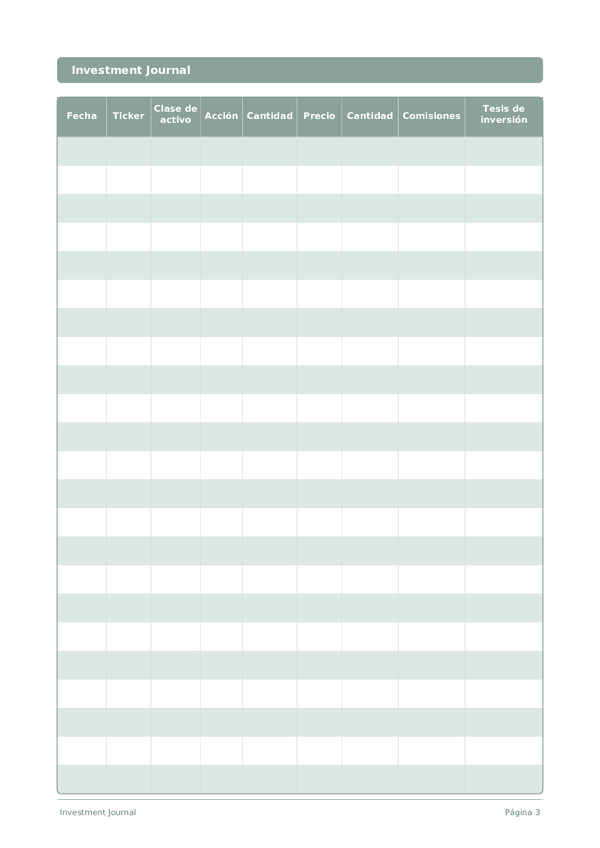
Investment Journal
Track trades, analyze decisions, and grow your portfolio
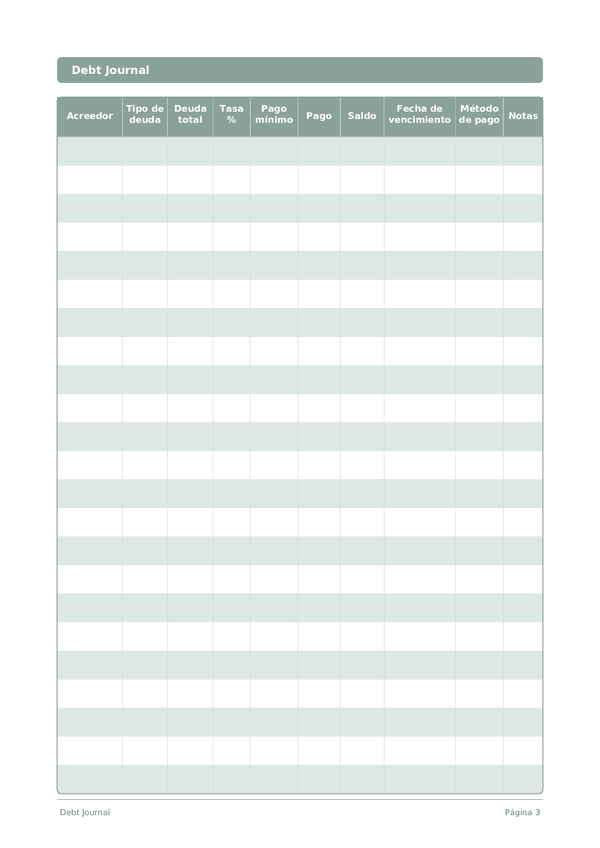
Debt Journal
Track and eliminate debt with a clear payoff strategy
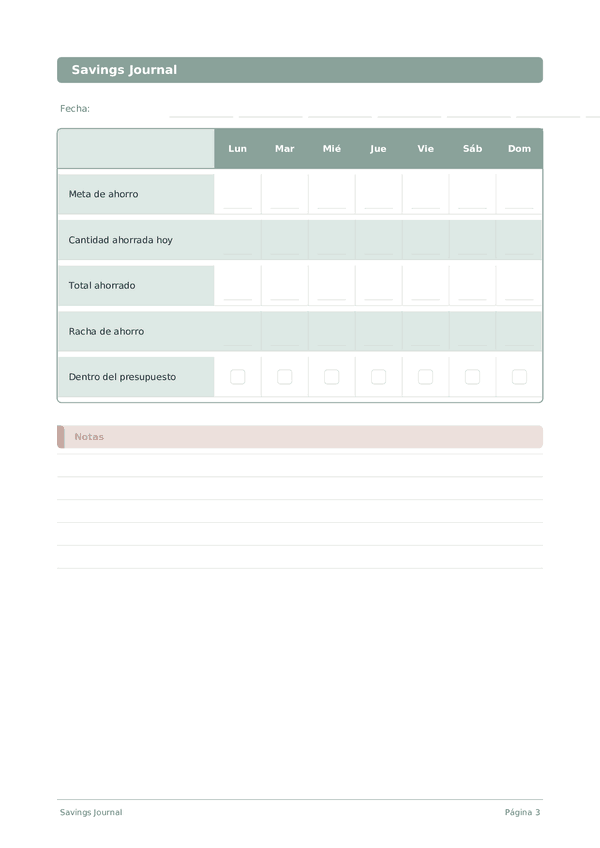
Savings Journal
Track daily savings habits and build toward your financial goals
Career Journal
Track achievements and accelerate professional growth every day
Rueda para ampliar, arrastra para mover