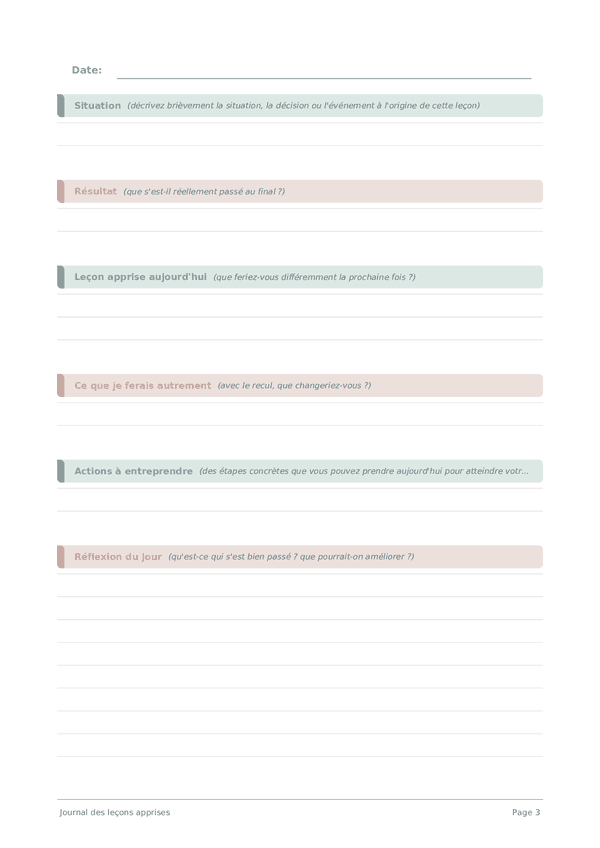
Printable Journal des leçons apprises
Tirez la sagesse de chaque expérience et progressez plus vite
Stop letting valuable lessons slip away. This structured daily journal guides you through the full after-action cycle — from describing what happened and the outcome, to distilling the core lesson, imagining what you would do differently, and committing to concrete next steps. Grounded in after-action review methodology used by top organisations and reflective learning research, it transforms experience into lasting personal growth.
Personnaliser les champs
Activez ou désactivez les champs. Cliquez sur le crayon pour renommer, ou ajoutez vos propres champs.
Avantages
Comment utiliser
Qu'est-ce que ce journal ?
A lessons learned journal is a daily practice for extracting wisdom from experience. Each entry records a situation, its outcome, and — most importantly — the lesson embedded in it. Over time, you build a personal wisdom library that transforms mistakes into assets and experience into genuine expertise.
This journal is for lifelong learners, professionals who want to accelerate their growth, and anyone who believes that experience alone does not teach — reflection on experience teaches. It is particularly valuable for leaders, managers, and entrepreneurs who make decisions in complex, uncertain environments.
Research on experiential learning shows that professionals who regularly reflect on their experiences develop expertise up to 23% faster than those who simply accumulate experience without reflection. The key is structured reflection — not just asking "what happened?" but "what would I do differently?" and "what concrete steps will I take next time?" This journal provides that structure.
Exemple rempli
Voici à quoi ressemble une entrée typique une fois remplie :
Comment remplir chaque champ
Chaque jour, vous trouverez plusieurs sections étiquetées avec des lignes pour écrire. Voici à quoi sert chaque section :
Situation
Décrivez la situation ou l'événement objectivement, comme si vous étiez un observateur neutre. Séparer les faits des émotions vous aide à voir les choses plus clairement.
Résultat
Que s'est-il réellement passé au final ?
Leçon apprise aujourd'hui
Retenez un enseignement de l'expérience d'aujourd'hui. Avec le temps, ces leçons deviennent une bibliothèque de sagesse personnelle.
Ce que je ferais autrement
Avec le recul, que changeriez-vous ?
Actions à entreprendre
Décomposez votre objectif en actions concrètes. Que ferez-vous exactement, quand et comment ? Plus c'est précis, mieux c'est.
Réflexion du jour
Revenez sur votre journée honnêtement. Qu'est-ce qui s'est bien passé ? Qu'est-ce qui pourrait être amélioré ? Il ne s'agit pas de juger — il s'agit d'apprendre et de grandir.
Conseils pour réussir
Quand et à quelle fréquence écrire
Write an entry whenever a meaningful experience occurs — aim for at least 3-4 entries per week. The best time is the same evening, while details and emotions are vivid. On Sundays, spend 15 minutes reviewing the week\u2019s lessons and highlight the one that matters most. Monthly, re-read your accumulated lessons and notice which ones you have actually applied versus merely recorded. This review cycle is what transforms isolated observations into lasting personal wisdom.
Questions fréquentes
Quelle est la structure d'after-action review à la base de ce journal ?
Chaque entrée a six champs : situation, résultat, leçon apprise, j'aurais fait différemment, étapes d'action, réflexion. Cela reflète la méthodologie after-action review née dans l'armée américaine et adoptée dans les organisations — décrire ce qui s'est passé, ce qui devait se passer, pourquoi l'écart, et quels changements pour la prochaine fois. Le champ étapes d'action est le pont critique qui convertit l'insight en comportement modifié.
Pourquoi séparer la leçon du champ « j'aurais fait différemment » ?
Une leçon est un insight général (« je sous-estime le temps de préparation ») ; « j'aurais fait différemment » est un changement comportemental spécifique (« ajouter 30 % de marge aux estimations »). Les confondre maintient les leçons abstraites et non actionnables. La séparation impose abstraction et concrétude dans la même entrée. Getting Things Done de David Allen (Penguin, 2001 ; révisé 2015) fait une distinction similaire entre la capture d'insight et l'engagement sur l'action suivante.
En quoi diffère-t-il d'une entrée de réflexion ou de journal ordinaire ?
Les journaux traitent les émotions ; ce journal extrait des connaissances transférables. Le format structuré à six champs empêche la dérive vers la rumination — chaque entrée doit se terminer par des étapes d'action. La recherche sur l'apprentissage par la réflexion montre constamment que la réflexion structurée produit plus de changements comportementaux que l'écriture libre. Le gabarit impose cette structure.
À quelle fréquence écrire des entrées — quotidiennement ou après des événements significatifs ?
Utilise-le après toute décision, erreur ou résultat surprenant — pas selon un calendrier quotidien fixe. La plupart des utilisateurs écrivent trois à cinq entrées par semaine. Forcer des entrées quotidiennes quand rien de notable ne s'est passé produit un contenu creux. Cal Newport dans Deep Work (Grand Central, 2016) souligne la qualité de réflexion sur la quantité. Réserve le journal pour les moments qui enseignent vraiment quelque chose.
Quels types de situations valent le mieux la peine d'être consignés ?
Trois types donnent le plus d'insights : les résultats qui t'ont surpris (positifs ou négatifs), les décisions prises sous pression, et les erreurs répétées. Les recherches de Sophie Leroy sur l'attention résiduelle (2009, Organizational Behavior and Human Decision Processes, 109(2)) suggèrent que le traitement des erreurs de changement de contexte réduit spécifiquement leur récurrence. Les champs situation et j'aurais fait différemment les ciblent directement.
Combien de temps avant que les leçons se traduisent en changements comportementaux réels ?
La plupart des utilisateurs voient des changements comportementaux sur des schémas spécifiques après quatre à huit semaines d'utilisation régulière. Le champ étapes d'action est le mécanisme de conversion — sans lui, les leçons restent théoriques. Lally et al. (2010, European Journal of Social Psychology, 40(6)) ont trouvé que la formation d'habitude prenait en moyenne 66 jours. Les étapes doivent être assez petites pour être vraiment réalisées la prochaine fois.
Quelle est l'erreur la plus fréquente avec ce journal ?
Écrire des leçons trop générales pour agir dessus. « Mieux communiquer » est inutile ; « envoyer l'ordre du jour 24 heures avant les réunions » est actionnable. Aussi : ne pas revenir vérifier si les étapes d'action ont été entreprises. Locke & Latham (2002, American Psychologist, 57(9)) ont montré que des objectifs spécifiques avec retour d'information améliorent la performance — les résolutions vagues non. Rends chaque étape assez concrète pour être vérifiable la semaine prochaine.
Ce journal peut-il aider pour des rétrospectives d'équipe ou des revues de projet ?
Oui — la structure est parallèle aux after-action reviews formels utilisés en gestion de projet. Pour une utilisation en équipe, remplis situation et résultat collaborativement, puis capture les leçons individuelles avant de les partager. Le champ étapes d'action devient la liste d'engagements de la rétrospective. Harvard Business Review et MIT Sloan Management Review présentent tous deux cette pratique comme un outil clé d'apprentissage organisationnel.
Vous aimerez aussi
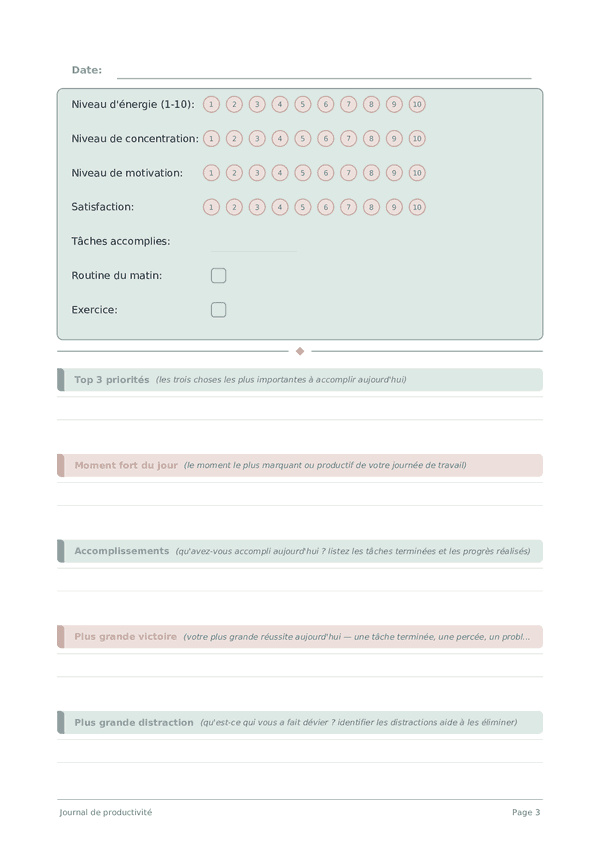
Journal de productivité
Suivez l'énergie, la concentration et le rendement quotidien pour des habitudes de haute performance
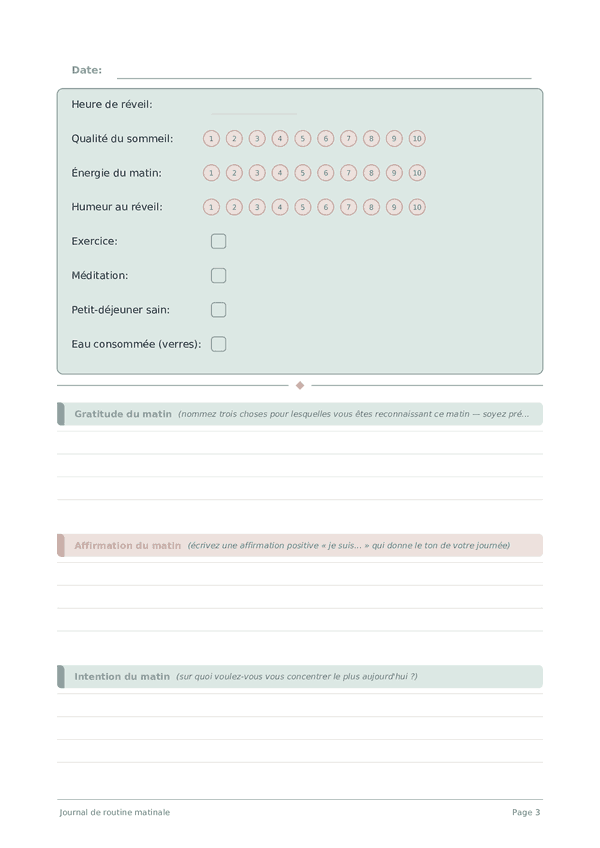
Journal de routine matinale
Commencez chaque journée avec clarté, gratitude et intention
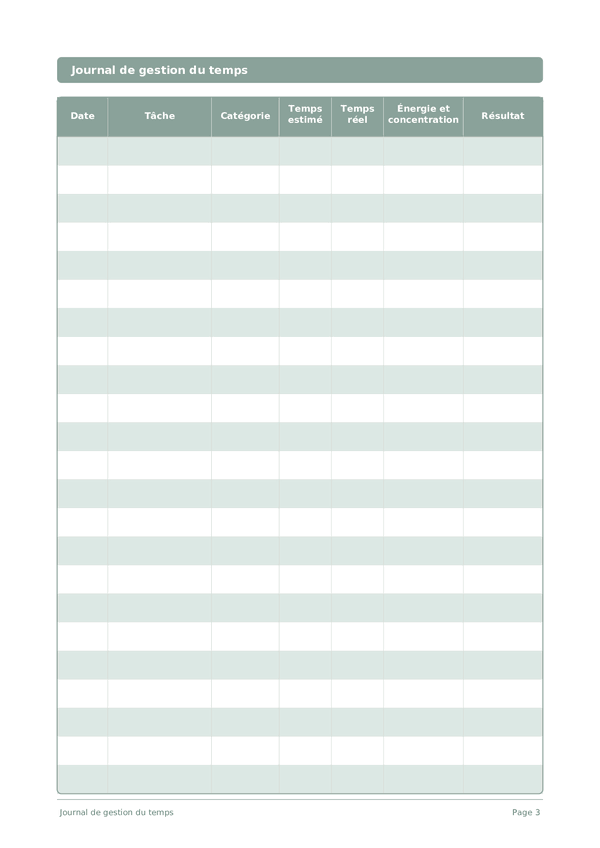
Journal de gestion du temps
Suivez les tâches, le temps et l'énergie pour reprendre le contrôle de votre journée
Bullet journal
Carnet quotidien structuré pour la prise de notes rapide
Molette pour zoomer, glisser pour déplacer