Printable Journal de prière
Rapprochez-vous de Dieu par la prière quotidienne
A structured daily prayer journal based on the A.C.T.S. framework — Adoration, Confession, Thanksgiving, and Supplication. Begin each entry with scripture, lift up prayers for others, record answered prayers, and close with personal reflection. This proven format guides you through a rich, balanced prayer life and creates a lasting record of your spiritual journey.
Personnaliser les champs
Activez ou désactivez les champs. Cliquez sur le crayon pour renommer, ou ajoutez vos propres champs.
Avantages
Comment utiliser
Qu'est-ce que ce journal ?
A prayer journal is a daily devotional writing practice that structures your prayer life into intentional, reflective conversation with God. Following the ACTS framework — Adoration, Confession, Thanksgiving, and Supplication — each entry deepens your spiritual communion while creating a written record of your faith journey.
This journal is for anyone who wants to enrich their prayer life, whether you are a lifelong believer seeking deeper devotion or someone exploring a more structured approach to prayer. It creates space for praise, honest confession, gratitude, and intercession for others.
Spiritual directors and pastoral counselors have long recognized that written prayer engages the mind differently than spoken prayer alone. The practice of recording answered prayers over time builds a personal testimony of God's faithfulness, strengthening faith during seasons of doubt and providing a source of encouragement you can return to whenever you need it.
Exemple rempli
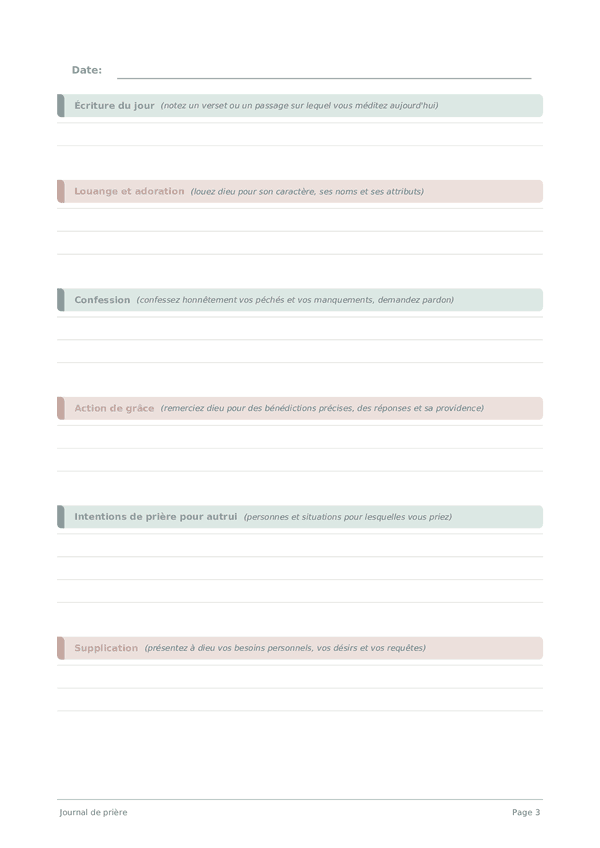
Voici à quoi ressemble une entrée typique une fois remplie :
Comment remplir chaque champ
Chaque jour, vous trouverez plusieurs sections étiquetées avec des lignes pour écrire. Voici à quoi sert chaque section :
Écriture du jour
Notez un verset ou un passage sur lequel vous méditez aujourd'hui
Louange et adoration
Louez Dieu pour Son caractère, Ses noms et Ses attributs
Confession
Confessez honnêtement vos péchés et vos manquements, demandez pardon
Action de grâce
Remerciez Dieu pour des bénédictions précises, des réponses et Sa providence
Intentions de prière pour autrui
Personnes et situations pour lesquelles vous priez
Supplication
Présentez à Dieu vos besoins personnels, vos désirs et vos requêtes
Prière exaucée
Notez les prières qui ont été exaucées
Réflexion du jour
Revenez sur votre journée honnêtement. Qu'est-ce qui s'est bien passé ? Qu'est-ce qui pourrait être amélioré ? Il ne s'agit pas de juger — il s'agit d'apprendre et de grandir.
Conseils pour réussir
Quand et à quelle fréquence écrire
Daily prayer journaling, ideally at the same time each day, establishes a sacred rhythm. Morning entries set spiritual intention for the day; evening entries offer reflection and gratitude. Even 10 minutes of written prayer creates more depth than 30 minutes of distracted mental prayer. Weekly, reread the past seven days to notice spiritual themes and movements. Many find that fasting days or sabbath observance are natural times for longer, more contemplative entries.
Questions fréquentes
Qu'est-ce que le cadre A.C.T.S. qu'utilise ce Journal de prière ?
A.C.T.S. signifie Adoration, Confession, Thanksgiving (Actions de grâce), Supplication — une structure établie de longue date dans la pratique dévotionnelle chrétienne pour une prière équilibrée. Le modèle l'étend avec les sections Écriture du jour, intentions de prière pour autrui, prière exaucée et reflection. Celebration of Discipline de Richard Foster (HarperOne, 1978) et Henri Nouwen traitent la prière structurée comme une discipline qui se développe avec des années de pratique.
Pourquoi commencer chaque entrée par le champ Écriture du jour ?
Ancrer la prière dans l'Écriture est une pratique de longue date dans la tradition chrétienne — par exemple, le Psaume 5:3 cadre la prière matinale avec la Parole de Dieu. Deux lignes suffisent pour noter un verset et son bref contexte. Foster (1978, Celebration of Discipline, HarperOne) traite cet ancrage comme une protection contre la transformation de la prière en monologue de ses propres préoccupations. Le verset façonne tout ce qui suit.
En quoi la confession est-elle différente de la supplication dans ce modèle ?
La confession (trois lignes) est la nomination honnête d'un péché spécifique et la recherche du pardon — elle précède la demande. La supplication (trois lignes) porte les besoins personnels et les pétitions. L'ordre compte dans la tradition A.C.T.S. : l'adoration centre sur Dieu, la confession supprime les obstacles, l'action de grâce donne la perspective, puis la supplication demande. Les séparer empêche la prière de se réduire à une liste de demandes.
Que noter dans la section prière exaucée, et pourquoi est-ce important ?
Enregistre les prières spécifiques que tu identifies comme exaucées — y compris les réponses inattendues, partielles ou négatives qui t'ont appris quelque chose. Revoir les prières exaucées renforce la foi par des témoignages de la réponse de Dieu au fil du temps. Foster (1978, Celebration of Discipline, HarperOne) soutient que sans cet enregistrement, la mémoire réécrit l'histoire et la prière semble stérile. Trois lignes suffisent pour un ou deux éléments spécifiques.
Prier par écrit est-il plus efficace que la prière silencieuse ?
L'écriture sert l'attention et la mémoire, pas la réception divine. Les recherches sur l'écriture expressive de James Pennebaker montrent que l'écriture manuscrite sur du matériel significatif augmente le traitement émotionnel et le rappel. Harold Koenig à l'Université Duke a documenté des associations entre pratique régulière de la prière et bien-être. Le journal soutient la régularité et la revue ; la prière silencieuse reste la pratique plus large que ce modèle structure, sans la remplacer.
Comment utiliser la section intentions de prière pour autrui ?
Quatre lignes accueillent plusieurs intercessions — famille, amis, communauté et situations spécifiques. Henri Nouwen décrivait l'intercession comme la solidarité avec les autres devant Dieu. Date les entrées pour pouvoir y revenir dans le champ prière exaucée des semaines ou mois plus tard. Évite les entrées vagues (prier pour tout le monde) ; des noms et besoins spécifiques créent une responsabilité et un suivi significatif.
Quelle est l'erreur courante avec le format A.C.T.S. ?
Se précipiter à travers l'adoration et la confession pour atteindre la supplication. Foster (1978, Celebration of Discipline, HarperOne) avertit qu'une pratique déséquilibrée qui privilégie les demandes distord la prière en liste de vœux. Passe un temps sincère sur l'adoration et l'action de grâce avant les pétitions. Les sections sont délibérément d'une taille approximativement égale (trois lignes chacune), encourageant une proportion équilibrée entre les quatre mouvements A.C.T.S.
Combien de temps prend une entrée A.C.T.S. complète, et à quelle fréquence revoir ?
Vingt à trente minutes est durable pour les huit sections. Henri Nouwen conseillait une brève fidélité quotidienne plutôt que de longues sessions occasionnelles. La revue hebdomadaire de intentions de prière pour autrui comparée à prière exaucée est le rythme pratique ; la revue mensuelle des notes de réflexion révèle des thèmes plus longs que Dieu met en lumière. C'est une pratique spirituelle ; pour des préoccupations de santé mentale clinique, consulte un conseiller ou clinicien agréé.
Vous aimerez aussi
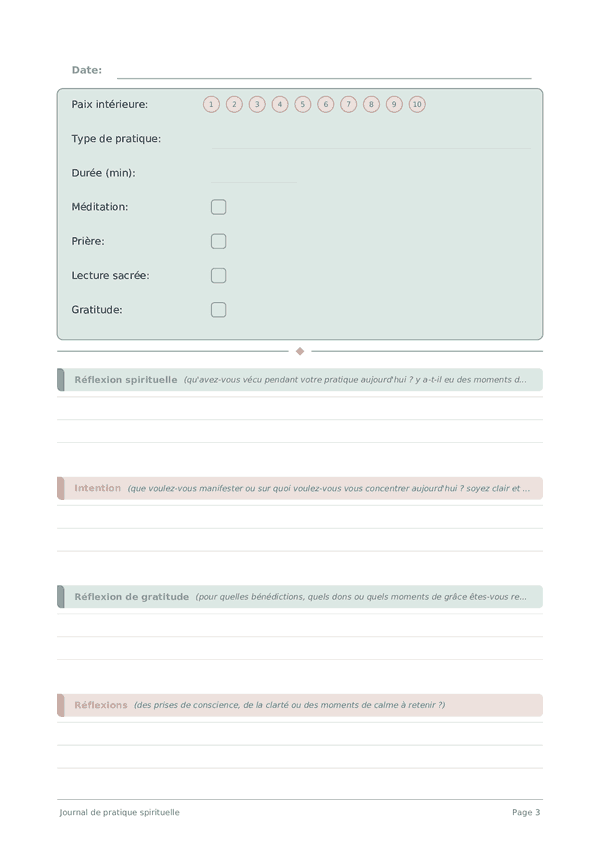
Journal de pratique spirituelle
Nourrissez votre vie intérieure par la pratique et la réflexion quotidiennes
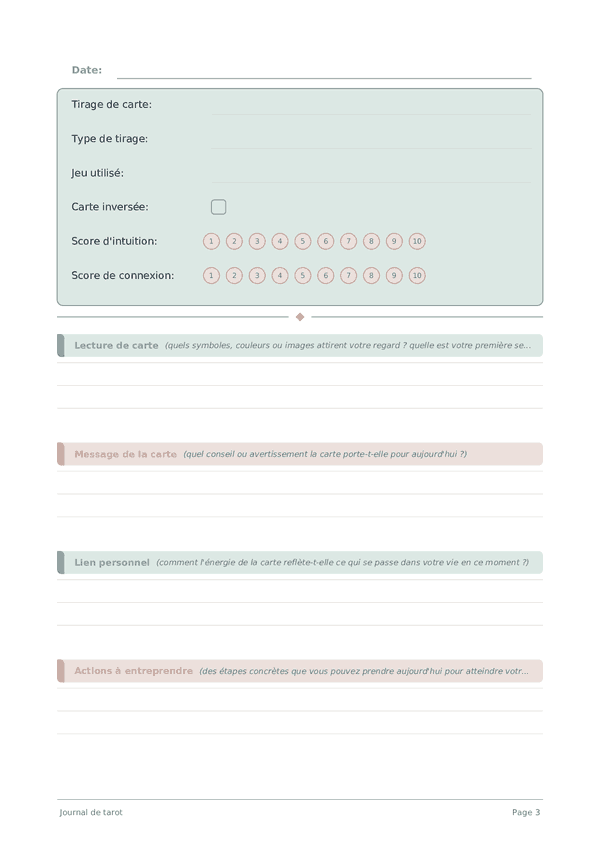
Journal de tarot
Suivez vos tirages quotidiens, vos étalements et vos intuitions
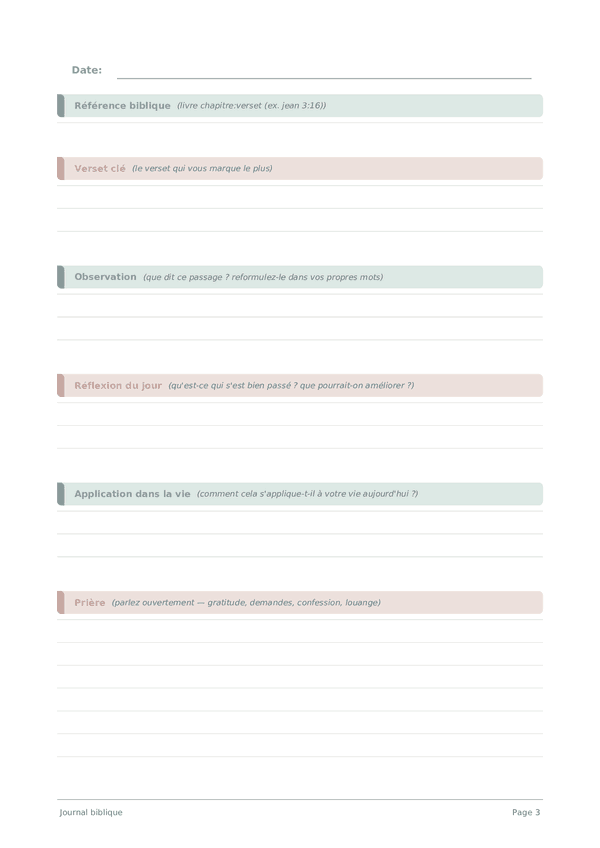
Journal biblique
Écriture, Observation, Application, Prière — la méthode SOAP
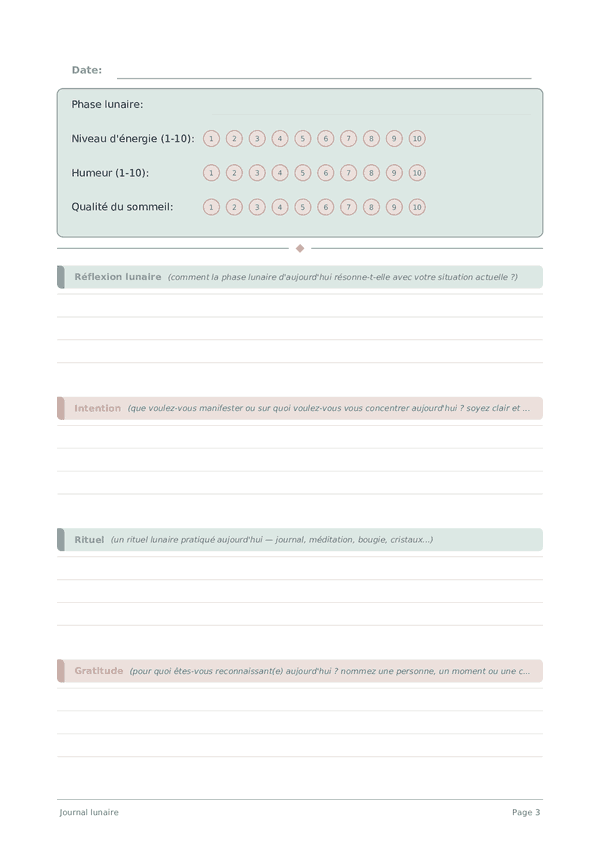
Journal lunaire
Alignez-vous avec le cycle lunaire — suivez, réfléchissez et lâchez prise
Molette pour zoomer, glisser pour déplacer