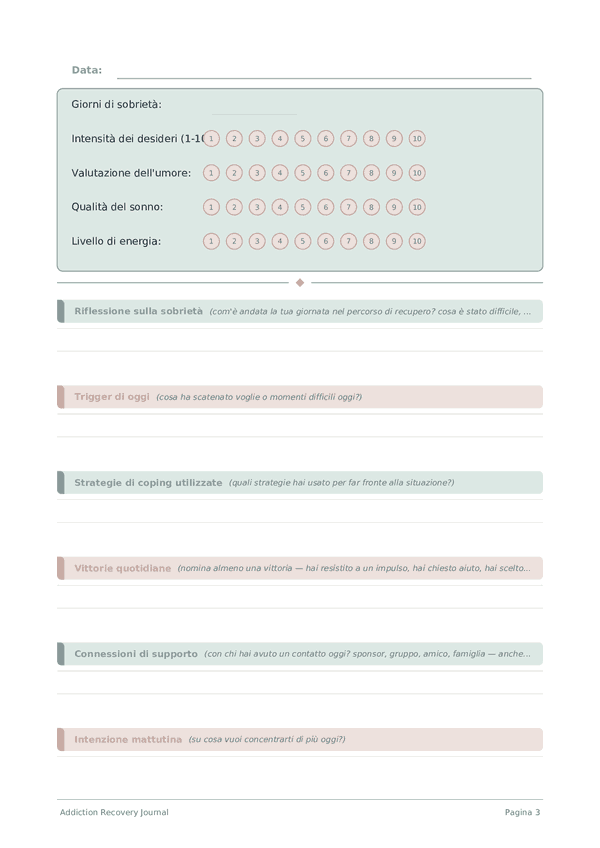
Printable Diario del Recupero dalle Dipendenze
Monitora la tua sobrietà e costruisci resilienza ogni giorno
Personalizza campi
Attiva o disattiva i campi. Clicca la matita per rinominare, oppure aggiungi i tuoi campi.
Cos'è questo diario?
Questo è un diario ibrido — ogni pagina combina una sezione di tracciamento rapido in cima con un'area di scrittura a righe in basso. Ciò ti consente di catturare sia dati misurabili che riflessioni in forma libera in un unico posto.
Come compilare ogni campo
La parte superiore di ogni pagina ha campi a compilazione rapida (valutazioni, caselle di controllo, numeri). Sotto c'è una sezione a righe per scrivere. Ecco cosa significa ogni campo:
Giorni di sobrietà
Registra quanti giorni consecutivi sei stato sobrio. Vedere questo numero crescere è un potente motivatore. Se ricomincia da capo, riprendi a contare senza vergogna.
Intensità dei desideri (1-10)
Quanto sono forti i tuoi impulsi oggi? Da 1 (appena percettibile) a 10 (travolgente)
Valutazione dell'umore
Valuta il tuo stato emotivo (1-10) per tracciare il tuo percorso di guarigione
Qualità del sonno
Valuta quanto è stato riposante il tuo sonno. 1 significa terribile e agitato, 5 significa profondo e rigenerante. La qualità conta quanto la quantità.
Livello di energia
Quanto ti senti energico/a stamattina? (1=esausto, 5=completamente carico)
Riflessione sulla sobrietà
Com'è andata la tua giornata nel percorso di recupero? Cosa è stato difficile, cosa ti ha aiutato a restare forte, e come ti senti ora?
Trigger di oggi
Cosa ha scatenato voglie o momenti difficili oggi?
Strategie di coping utilizzate
Quali strategie hai usato per far fronte alla situazione?
Vittorie quotidiane
Nomina almeno una vittoria — hai resistito a un impulso, hai chiesto aiuto, hai scelto un'attività sana
Connessioni di supporto
Con chi hai avuto un contatto oggi? Sponsor, gruppo, amico, famiglia — anche una breve conversazione conta
Intenzione mattutina
Su cosa vuoi concentrarti di più oggi?
Per cosa sono grato oggi
Elenca 1–3 cose per cui sei grato oggi. Possono essere grandi o piccole — un buon pasto, una parola gentile, il sole. Scrivere di gratitudine è una delle pratiche di benessere più supportate scientificamente.
Consigli per il successo
Quando e con quale frequenza scrivere
Compila una pagina al giorno. La parte del tracker richiede meno di un minuto; cerca di farlo a un orario costante. La sezione di scrittura può essere fatta nello stesso momento o riservata quando hai 5 minuti tranquilli. Entrambe le parti insieme ti danno il quadro più completo della tua giornata.
Domande frequenti
Cosa registra ogni giorno il Diario del Recupero dalla Dipendenza?
Registra i giorni di sobrietà, quattro valutazioni su scala 1–10 (intensità del craving, umore, qualità del sonno, energia) e sette riflessioni scritte: intenzione mattutina, riflessione sul percorso di recupero, trigger, strategie di coping usate, vittorie quotidiane, connessioni di supporto e gratitudine. Questa struttura rispecchia il modello di auto-monitoraggio descritto nei Principi del Trattamento della Dipendenza da Droghe del NIDA (2020). Supporta — ma non sostituisce — la presa in carico da parte di un professionista certificato nel trattamento delle dipendenze.
Come si scrive un'intenzione mattutina davvero utile?
Rendila specifica, legata a un comportamento concreto e collegata a un rischio che prevedi per quel giorno: «Rifiutare l'invito dopo il lavoro», «Chiamare il mio sponsor prima della cena di famiglia». Le intenzioni di tipo se-allora hanno evidenza nella ricerca sul cambiamento comportamentale e si allineano con la pianificazione della prevenzione delle ricadute descritta nel NIDA (2020, Principi del Trattamento della Dipendenza da Droghe, 3a ed.). Intenzioni vaghe come «essere forte» portano a meno risultati concreti rispetto a piani situazionali specifici.
In cosa si differenzia questo diario da un quaderno di lavoro dei 12 passi?
I quaderni di lavoro di AA e del Twelve-Step Facilitation strutturano il progresso attraverso 12 passi specifici (metodologia del Big Book di Alcoholics Anonymous World Services). Questo diario è indipendente dai passi: raccoglie metriche quotidiane e riflessioni utili in qualsiasi approccio — AA, SMART Recovery, CBT o trattamento assistito da farmaci. Molte persone li usano entrambi: il quaderno dei 12 passi per la struttura del programma, questo modello per i dati giornalieri su craving e umore che il proprio counselor esamina tra le sessioni.
Questo diario può guarire la mia dipendenza?
No — non esiste un modello di «guarigione» per il disturbo da uso di sostanze, che il DSM-5-TR (American Psychiatric Association, 2022) classifica come una condizione cronica e recidivante gestita nel corso della vita. Un trattamento efficace combina farmaci laddove indicati (buprenorfina, naltrexone, acamprosato approvati dalla FDA), psicoterapia e supporto tra pari. La scrittura del diario favorisce la consapevolezza di sé e la comunicazione con i clinici. Per accedere al trattamento negli Stati Uniti, chiama il numero gratuito e riservato di SAMHSA: 1-800-662-HELP (4357).
Quali evidenze supportano il monitoraggio congiunto di craving e umore?
L'affetto negativo è uno dei fattori scatenanti di ricaduta più documentati nella medicina delle dipendenze, affrontato nei modelli cognitivo-comportamentali di prevenzione delle ricadute descritti nel SAMHSA TIP 35 (Potenziare la Motivazione al Cambiamento nel Trattamento del Disturbo da Uso di Sostanze, 2019). Registrare i craving insieme all'umore aiuta a rivelare i trigger affettivi dietro le spinte compulsive. Le revisioni Cochrane sulla CBT per i disturbi da uso di sostanze supportano l'approccio di auto-monitoraggio di base quando usato in abbinamento a una terapia strutturata, non come intervento autonomo.
Come usare produttivamente il campo dei trigger?
Annota la situazione, le persone presenti, l'emozione che ha preceduto il craving e il tuo stato fisico (fame, stanchezza, solitudine — l'acronimo HALT usato in molti programmi di recupero). Dopo due settimane, cerca schemi ricorrenti: stessa persona, stesso luogo, stessa ora del giorno. Porta questa lista di trigger al tuo counselor — informa il piano di prevenzione delle ricadute al centro nei Principi del Trattamento della Dipendenza da Droghe del NIDA (2020, 3a edizione).
Se ho una ricaduta, devo continuare a scrivere il diario?
Sì. La ricaduta fa parte del decorso riconosciuto della malattia nel DSM-5-TR (American Psychiatric Association, 2022) e nell'ICD-11 (OMS, 2022), e non rappresenta un fallimento personale. Riprendi le annotazioni il giorno successivo — i dati su ciò che ha preceduto la scivolata diventano la mappa dei trigger più preziosa che avrai. Contatta tempestivamente il tuo professionista del trattamento. Se non ne hai uno, la linea di assistenza SAMHSA 1-800-662-HELP (4357) ti mette in contatto con i servizi locali 24 ore su 24, 7 giorni su 7.
Quanto tempo passa prima di vedere schemi utili in questo diario?
Due-quattro settimane di annotazioni giornaliere costanti generano di solito dati sufficienti per identificare i temi dei trigger, i momenti ad alto rischio e le strategie di coping efficaci — una finestra temporale coerente con la pratica della terapia cognitivo-comportamentale nei contesti delle dipendenze. Il NIDA (2020, Principi del Trattamento della Dipendenza da Droghe) raccomanda un monitoraggio continuo per almeno 90 giorni nelle fasi iniziali del recupero, poiché il rischio di ricaduta è più alto nei primi tre mesi. Condividi le tendenze con il tuo counselor.
Potrebbe piacerti anche
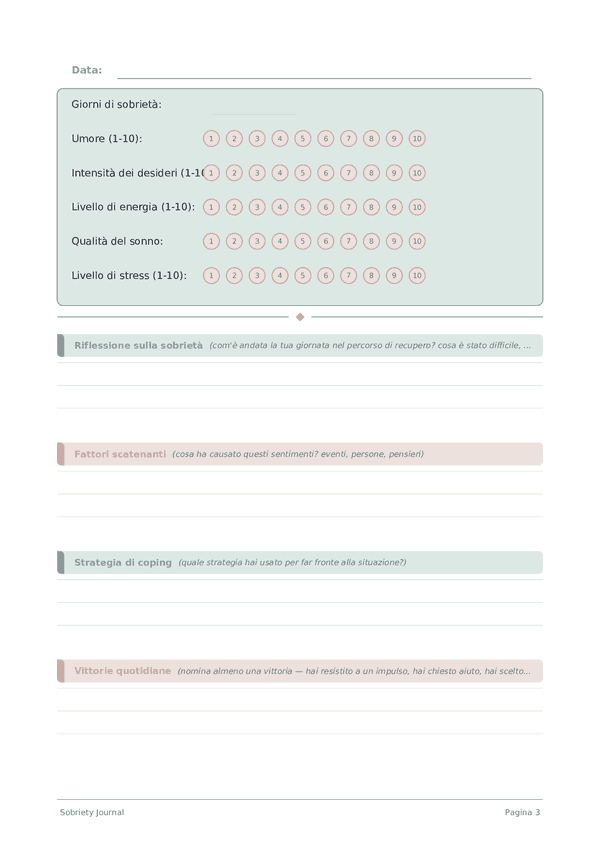
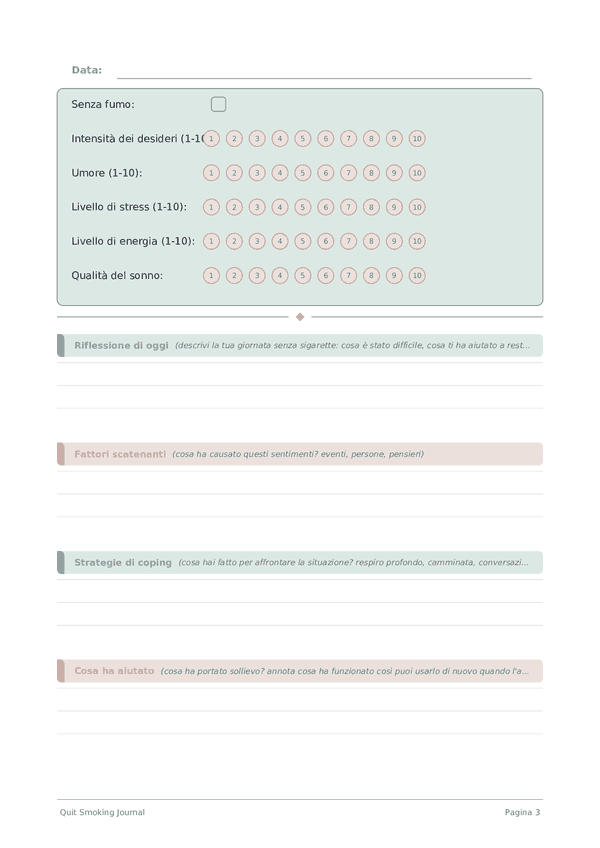
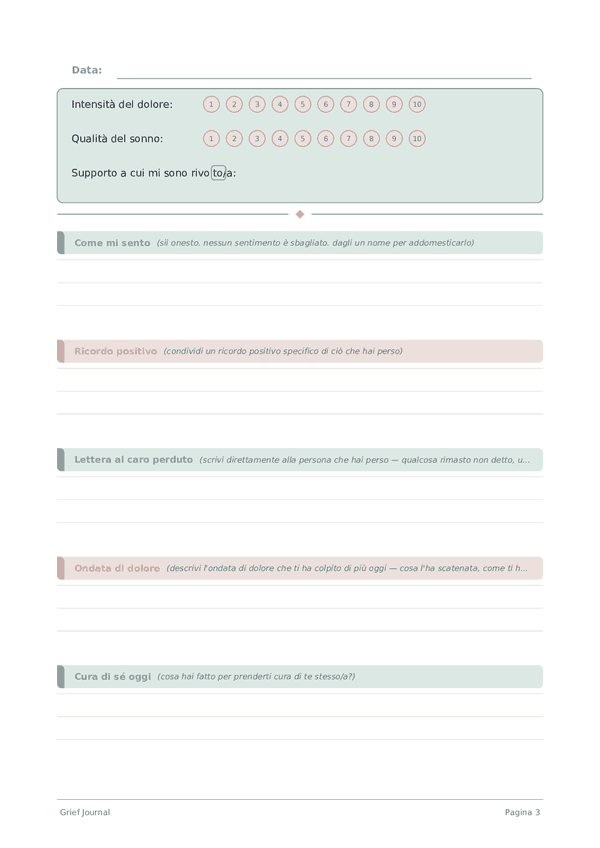
Scorri per ingrandire, trascina per spostare