Printable Diario della Sobrietà
Il tuo compagno quotidiano per il recupero e la crescita
Personalizza campi
Attiva o disattiva i campi. Clicca la matita per rinominare, oppure aggiungi i tuoi campi.
Cos'è questo diario?
Questo è un diario ibrido — ogni pagina combina una sezione di tracciamento rapido in cima con un'area di scrittura a righe in basso. Ciò ti consente di catturare sia dati misurabili che riflessioni in forma libera in un unico posto.
Come compilare ogni campo
La parte superiore di ogni pagina ha campi a compilazione rapida (valutazioni, caselle di controllo, numeri). Sotto c'è una sezione a righe per scrivere. Ecco cosa significa ogni campo:
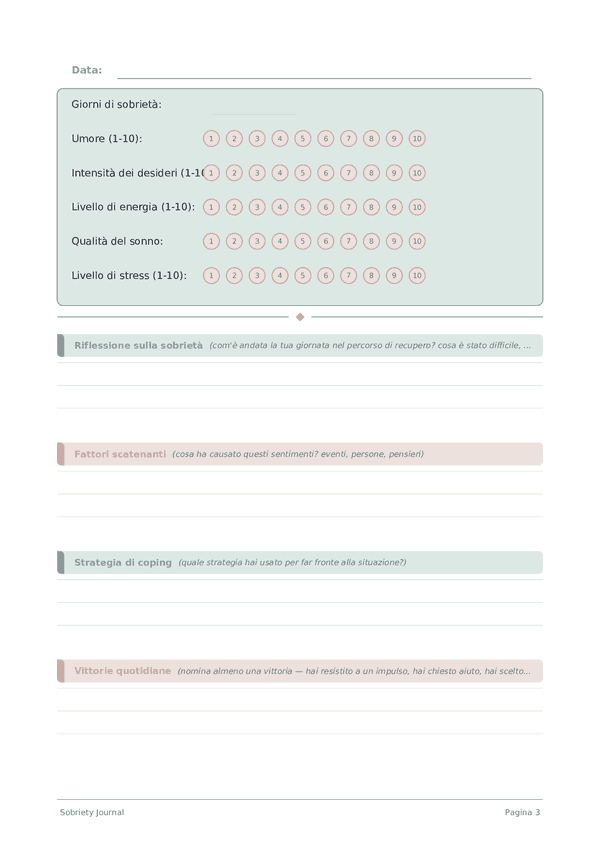
Giorni di sobrietà
Registra quanti giorni consecutivi sei stato sobrio. Vedere questo numero crescere è un potente motivatore. Se ricomincia da capo, riprendi a contare senza vergogna.
Umore (1-10)
Valuta il tuo stato emotivo complessivo della giornata. 1 significa molto basso o depresso, 10 significa eccezionalmente felice e positivo. Non pensarci troppo — vai con la tua sensazione istintiva.
Intensità dei desideri (1-10)
Quanto sono forti i tuoi impulsi oggi? Da 1 (appena percettibile) a 10 (travolgente)
Livello di energia (1-10)
Valuta il tuo livello di energia fisica e mentale. 1 significa esausto e svuotato, 10 significa pieno di energia e sveglio. Questo ti aiuta a identificare quali attività aumentano o drenano la tua energia.
Qualità del sonno
Valuta quanto è stato riposante il tuo sonno. 1 significa terribile e agitato, 5 significa profondo e rigenerante. La qualità conta quanto la quantità.
Livello di stress (1-10)
Valuta il tuo stress su una scala da 1 a 10. Nel tempo, identificherai i tuoi schemi di stress e le strategie di coping più efficaci.
Riflessione sulla sobrietà
Com'è andata la tua giornata nel percorso di recupero? Cosa è stato difficile, cosa ti ha aiutato a restare forte, e come ti senti ora?
Fattori scatenanti
Identifica cosa ha causato le tue reazioni emotive — eventi, persone, pensieri, ambienti. Riconoscere i trigger ti dà il potere di prepararti o evitarli.
Strategia di coping
Quale strategia hai usato per far fronte alla situazione?
Vittorie quotidiane
Nomina almeno una vittoria — hai resistito a un impulso, hai chiesto aiuto, hai scelto un'attività sana
Per cosa sono grato oggi
Elenca 1–3 cose per cui sei grato oggi. Possono essere grandi o piccole — un buon pasto, una parola gentile, il sole. Scrivere di gratitudine è una delle pratiche di benessere più supportate scientificamente.
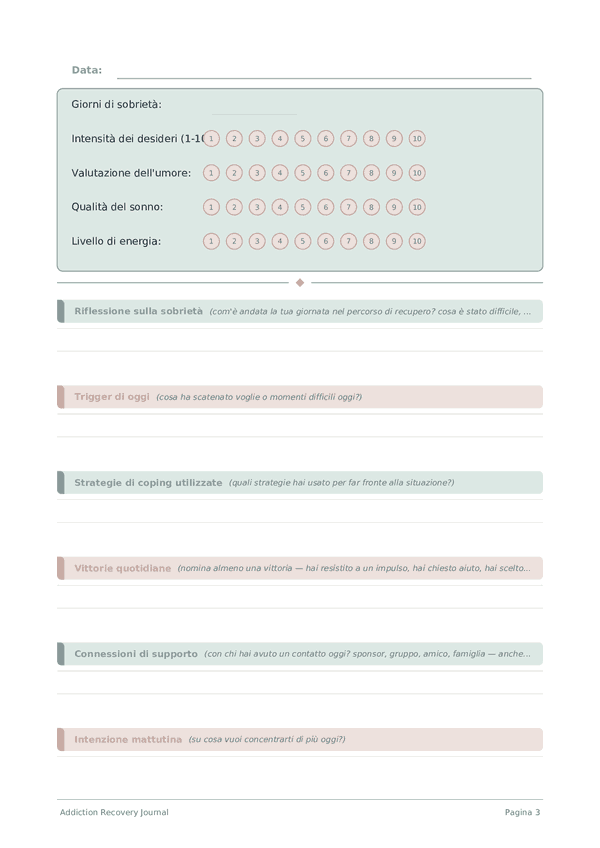
Connessioni di supporto
Con chi hai avuto un contatto oggi? Sponsor, gruppo, amico, famiglia — anche una breve conversazione conta
Consigli per il successo
Quando e con quale frequenza scrivere
Compila una pagina al giorno. La parte del tracker richiede meno di un minuto; cerca di farlo a un orario costante. La sezione di scrittura può essere fatta nello stesso momento o riservata quando hai 5 minuti tranquilli. Entrambe le parti insieme ti danno il quadro più completo della tua giornata.
Domande frequenti
Cosa è progettato per monitorare il Diario della Sobrietà?
Tiene traccia dei giorni sobri consecutivi più sei metriche quotidiane (umore, intensità del craving, energia, qualità del sonno, stress) valutate 1–10, insieme a tracce di riflessione su trigger, strategie di coping, vittorie quotidiane, gratitudine e connessioni di supporto. Il NIDA (2020, Principi del Trattamento della Dipendenza da Droghe, 3a ed.) indica l'auto-monitoraggio come competenza fondamentale nella prevenzione delle ricadute. Questo è uno strumento di monitoraggio, non un sostituto del trattamento clinico — consulta uno specialista certificato nelle dipendenze per diagnosi e cura.
Come si compila la valutazione dell'intensità del craving?
Valuta il craving più forte che hai sentito quel giorno su una scala 0–10: 0 = nessun impulso, 5 = percepibile ma gestibile, 10 = travolgente. I materiali NIAAA di Rethinking Drinking raccomandano di registrare i craving entro poche ore dall'accadimento per maggiore accuratezza. Abbina ogni punteggio alto al campo dei trigger — ambiente, emozione o persona. Due-quattro settimane di dati rivelano di solito schemi che i clinici usano durante il Colloquio Motivazionale (Miller & Rollnick, 2023, Guilford Press).
Questo diario può sostituire il trattamento formale per la dipendenza?
No. Il disturbo da uso di sostanze è una condizione medica riconosciuta secondo il DSM-5-TR (American Psychiatric Association, 2022) e l'ICD-11 (OMS, 2022) che richiede cure evidence-based: farmaci (buprenorfina, naltrexone, acamprosato), psicoterapia e spesso supporto tra pari. Questo diario è uno strumento complementare di auto-monitoraggio da usare insieme al trattamento. Se sei in crisi o non sai da dove iniziare, chiama il numero gratuito e riservato di SAMHSA: 1-800-662-HELP (4357), attivo 24 ore su 24, 7 giorni su 7.
La scrittura quotidiana del diario supporta davvero la sobrietà a lungo termine?
L'auto-monitoraggio è una componente fondamentale della prevenzione cognitivo-comportamentale delle ricadute, validata nelle revisioni Cochrane degli interventi psicosociali per l'uso di sostanze. Il NIDA (2020, Principi del Trattamento della Dipendenza da Droghe) identifica il monitoraggio quotidiano di trigger e risposte di coping come efficace quando abbinato alla consulenza. Il diario da solo non è una cura — funziona al meglio insieme alla terapia, ai farmaci quando indicati e al supporto tra pari come AA, SMART Recovery o programmi di trattamento certificati.
In cosa si differenzia dalle app contadisobrio?
Le app mostrano il numero dei giorni; questo modello ibrido cattura il perché di ogni giornata — riflessione su carta su trigger, strategia di coping usata e connessioni di supporto, su cui i modelli CBT pongono l'accento. Scrivere a mano può approfondire l'elaborazione emotiva durante il percorso di recupero. Il compromesso: nessun promemoria automatico o notifiche push. Molte persone in recupero usano entrambi — un'app per contare i giorni, questo diario per il contenuto riflessivo in stile Colloquio Motivazionale che il loro counselor esamina.
Il diario è adatto durante il recupero precoce e l'astinenza?
Il recupero precoce spesso comporta un'astinenza acuta che può essere medicalmente pericolosa — l'astinenza da alcol e benzodiazepine in particolare richiede una disintossicazione supervisionata secondo i criteri ASAM. Usa questo diario solo dopo la stabilizzazione medica, idealmente con il contributo del tuo team di cura. Le valutazioni di umore, sonno, craving e stress aiutano i clinici a individuare peggioramenti. Se i sintomi di astinenza peggiorano o hai pensieri suicidari, contatta i servizi di emergenza o chiama immediatamente la linea di assistenza SAMHSA 1-800-662-HELP.
Con quale frequenza dovrei completare le annotazioni per vedere schemi utili?
Ogni giorno, idealmente alla stessa ora — la mattina è consigliata nei Principi del Trattamento della Dipendenza da Droghe del NIDA (2020) per fissare l'intenzione. Due-quattro settimane di annotazioni costanti rivelano di solito schemi di trigger e momenti ad alto rischio che informano un piano di prevenzione delle ricadute, coerente con il modello cognitivo-comportamentale (modello Marlatt & Donovan ampiamente usato nella medicina delle dipendenze). I giorni saltati sono normali; riprendi senza autocritica invece di abbandonare lo strumento.
A cosa serve il registro delle connessioni di supporto?
Annota con chi hai parlato — sponsor, terapeuta, familiari, incontro di supporto tra pari — ogni giorno. Il legame sociale è un fattore protettivo citato nel SAMHSA TIP 35 (Potenziare la Motivazione al Cambiamento nel Trattamento del Disturbo da Uso di Sostanze, 2019) e nella letteratura sul Twelve-Step Facilitation. Esaminare questo campo settimanalmente aiuta a identificare l'isolamento, un rischio documentato di ricaduta. Se il registro rimane vuoto per più giorni di fila, consideralo un segnale per contattare il tuo sponsor, il tuo counselor o la linea di assistenza SAMHSA.
Potrebbe piacerti anche
Scorri per ingrandire, trascina per spostare