Printable Diario per Smettere di Fumare
Monitoraggio quotidiano e riflessione per il tuo percorso senza fumo
Personalizza campi
Attiva o disattiva i campi. Clicca la matita per rinominare, oppure aggiungi i tuoi campi.
Cos'è questo diario?
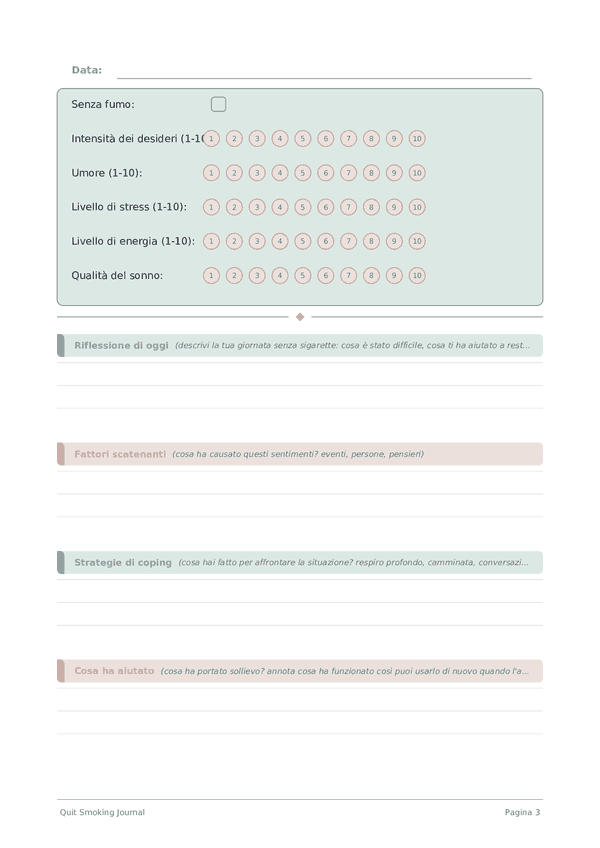
Questo è un diario ibrido — ogni pagina combina una sezione di tracciamento rapido in cima con un'area di scrittura a righe in basso. Ciò ti consente di catturare sia dati misurabili che riflessioni in forma libera in un unico posto.
Come compilare ogni campo
La parte superiore di ogni pagina ha campi a compilazione rapida (valutazioni, caselle di controllo, numeri). Sotto c'è una sezione a righe per scrivere. Ecco cosa significa ogni campo:
Senza fumo
Spunta questo per ogni giorno in cui non fumi. Visualizzare la tua serie di giorni senza fumo rafforza la tua determinazione.
Intensità dei desideri (1-10)
Quanto sono forti i tuoi impulsi oggi? Da 1 (appena percettibile) a 10 (travolgente)
Umore (1-10)
Valuta il tuo stato emotivo complessivo della giornata. 1 significa molto basso o depresso, 10 significa eccezionalmente felice e positivo. Non pensarci troppo — vai con la tua sensazione istintiva.
Livello di stress (1-10)
Valuta il tuo stress su una scala da 1 a 10. Nel tempo, identificherai i tuoi schemi di stress e le strategie di coping più efficaci.
Livello di energia (1-10)
Valuta il tuo livello di energia fisica e mentale. 1 significa esausto e svuotato, 10 significa pieno di energia e sveglio. Questo ti aiuta a identificare quali attività aumentano o drenano la tua energia.
Qualità del sonno
Valuta quanto è stato riposante il tuo sonno. 1 significa terribile e agitato, 5 significa profondo e rigenerante. La qualità conta quanto la quantità.
Riflessione di oggi
Guarda indietro alla tua giornata con onestà. Cosa è andato bene? Cosa potrebbe migliorare? Non si tratta di giudizio — si tratta di imparare e crescere.
Fattori scatenanti
Identifica cosa ha causato le tue reazioni emotive — eventi, persone, pensieri, ambienti. Riconoscere i trigger ti dà il potere di prepararti o evitarli.
Strategie di coping
Cosa hai fatto per affrontare la situazione? Respiro profondo, camminata, conversazione...
Cosa ha aiutato
Cosa ha portato sollievo? Annota cosa ha funzionato così puoi usarlo di nuovo quando l'ansia aumenta.
Realizzazioni
Cosa hai fatto oggi? Elenca le attività completate e i progressi fatti
Consigli per il successo
Quando e con quale frequenza scrivere
Compila una pagina al giorno. La parte del tracker richiede meno di un minuto; cerca di farlo a un orario costante. La sezione di scrittura può essere fatta nello stesso momento o riservata quando hai 5 minuti tranquilli. Entrambe le parti insieme ti danno il quadro più completo della tua giornata.
Domande frequenti
Cosa monitora ogni giorno il Diario per Smettere di Fumare?
Una casella di spunta per i giorni senza fumo più cinque valutazioni 1–10 (intensità del craving, umore, stress, energia, qualità del sonno), con tracce di riflessione su trigger, strategie di coping, cosa ha aiutato e risultati raggiunti. La struttura si allinea con l'auto-monitoraggio per la cessazione del fumo descritto nel rapporto del Chirurgo Generale degli Stati Uniti Smoking Cessation: A Report of the Surgeon General (2020). Supporta — ma non sostituisce — metodi evidence-based per smettere di fumare come la terapia sostitutiva della nicotina, la vareniclina o la consulenza.
Come monitorare le oscillazioni di umore e stress legate all'astinenza?
Valuta umore e stress alla stessa ora ogni giorno — la mattina è comune, poiché i sintomi di astinenza dalla nicotina raggiungono il picco nella prima settimana e tendono a ridursi nell'arco di 2–4 settimane secondo il Chirurgo Generale degli Stati Uniti (2020, rapporto Smoking Cessation). Annota nella riflessione se le valutazioni si collegano a trigger specifici (caffè, dopo i pasti, guida) oppure all'astinenza generale. Sintomi persistenti e gravi dell'umore richiedono di contattare il proprio medico — il rischio di depressione aumenta durante la cessazione.
Basta il diario da solo per smettere di fumare?
Il diario da solo ha effetti modesti; il Chirurgo Generale degli Stati Uniti (2020, Smoking Cessation: A Report of the Surgeon General) e i materiali del CDC Tips From Former Smokers mostrano che combinare il supporto comportamentale con la farmacoterapia approvata dalla FDA (terapia sostitutiva della nicotina, vareniclina, bupropione) raddoppia circa il successo rispetto alla sola forza di volontà. Usa questo diario insieme a una quitline (1-800-QUIT-NOW negli Stati Uniti), al tuo medico o ai servizi locali di supporto per smettere di fumare, per la combinazione più solida basata sulle evidenze.
A cosa serve la valutazione dell'intensità del craving?
Tiene traccia della forza dell'impulso su una scala 0–10 nel momento più forte della giornata. I craving raggiungono tipicamente il picco nella prima settimana di cessazione e diminuiscono nell'arco di 4–12 settimane, secondo il Chirurgo Generale degli Stati Uniti (2020, rapporto Smoking Cessation). Abbinare ogni valutazione al trigger (luogo, emozione, persona, ora) costruisce una mappa personale che i clinici usano nella consulenza cognitivo-comportamentale per la cessazione. I valori in calo nel corso delle settimane sono un segnale documentato di neuroadattazione.
In cosa si differenzia da un'app per smettere di fumare?
Le app automatizzano serie, denaro risparmiato e tappe di recupero della salute; questo modello cartaceo cattura contenuti riflessivi — trigger, strategie di coping usate, cosa ha funzionato concretamente — che rispecchiano la consulenza cognitivo-comportamentale per la cessazione descritta nei materiali del Chirurgo Generale degli Stati Uniti (2020). Il compromesso: nessuna notifica. Molte persone che smettono usano entrambi, con il diario come registro che il proprio medico o consulente per la cessazione può esaminare per adeguare personalizzare la terapia sostitutiva della nicotina o la consulenza.
Posso usarlo se sto scalando con la terapia sostitutiva della nicotina?
Sì. La terapia sostitutiva della nicotina (cerotti, gomme, pastiglie) è raccomandata dal Chirurgo Generale degli Stati Uniti (2020, rapporto Smoking Cessation) e dal NHS UK come supporto di prima linea. La casella di spunta segna le giornate completamente senza fumo; la riflessione registra i tempi di assunzione della NRT e i craving residui. Condividi questi dati con il tuo medico in modo che il dosaggio possa essere adeguato. Segui sempre il protocollo NRT del tuo clinico — non modificare il dosaggio autonomamente basandoti solo sulle annotazioni del diario.
Se scivolo e fumo una sigaretta, devo azzerare tutto?
Una singola scivolata non è una ricaduta completa, e i materiali del CDC e del Chirurgo Generale degli Stati Uniti (2020) sulla cessazione sottolineano che la maggior parte delle persone richiede più tentativi prima di smettere in modo duraturo. Lascia vuota la casella di spunta per quel giorno, poi scrivi in modo esaustivo su cosa l'ha scatenata e su cosa faresti diversamente. Riprendi il giorno successivo. Se le scivolate diventano frequenti, contatta la tua quitline o il tuo medico — il tuo piano di supporto potrebbe aver bisogno di aggiustamenti.
Per quanto tempo dovrei continuare a usare il diario dopo aver smesso?
Il rischio di ricaduta rimane elevato per almeno 12 mesi dopo la data di cessazione — il Chirurgo Generale degli Stati Uniti (2020, Smoking Cessation: A Report of the Surgeon General) documenta che la maggior parte delle ricadute avviene entro i primi tre mesi. Le annotazioni giornaliere nelle settimane 1–12 sono quelle più preziose; passa a check-in settimanali fino al mese 12. Continua a monitorare più a lungo se incontri fattori di stress importanti, che sono trigger di ricaduta documentati.
Potrebbe piacerti anche
Scorri per ingrandire, trascina per spostare