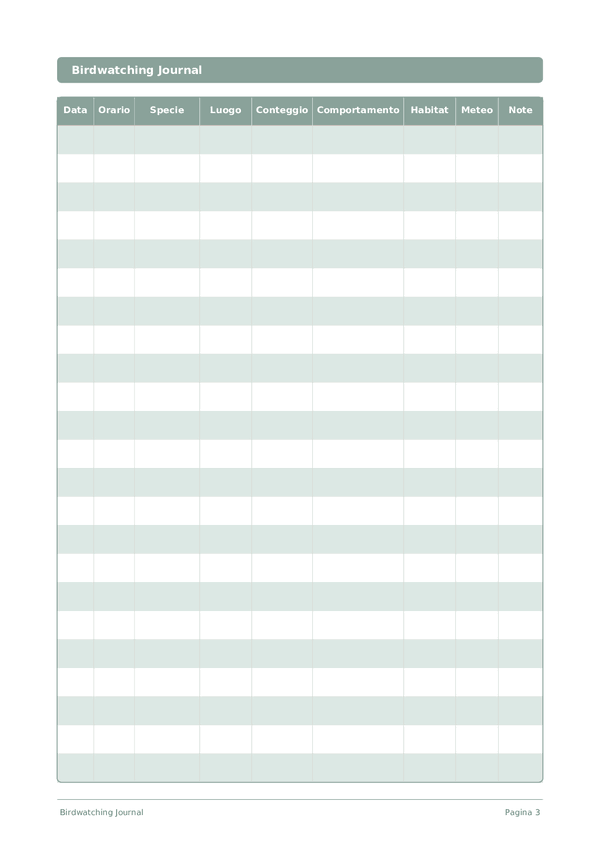
Printable Diario di Birdwatching
Registra ogni avvistamento di uccelli con specie, habitat e comportamento
Personalizza campi
Attiva o disattiva i campi. Clicca la matita per rinominare, oppure aggiungi i tuoi campi.
Cos'è questo diario?
Questo è un diario a registro tabellare — ogni pagina contiene una tabella strutturata con colonne per registrare i dati. Perfetto per tenere traccia di spese, allenamenti, letture o qualsiasi attività che beneficia di voci organizzate e confrontabili.
Come compilare ogni campo
Ogni pagina è una tabella con colonne. Compila una riga per ogni voce. Ecco a cosa serve ogni colonna:
Data
Scrivi la data di oggi. Questo ancora la tua voce nel tempo e aiuta quando si rivedono le voci in seguito.
Orario
Registra l'ora della misurazione o dell'evento. Una tempistica coerente rende i dati confrontabili e rivela schemi legati all'ora del giorno.
Specie
Nome della specie di pesce catturato
Luogo
Dove è stata scattata la foto?
Conteggio
Comportamento
Habitat
Meteo
Soleggiato, nuvoloso, pioggia, vento — condizioni attuali
Note
Aggiungi qualsiasi contesto o pensiero aggiuntivo. Questa colonna tuttofare è per tutto ciò che non si adatta altrove ma potrebbe essere utile in seguito.
Consigli per il successo
Quando e con quale frequenza scrivere
Aggiungi voci man mano che gli eventi accadono durante il giorno. Per i registri finanziari, annota ogni transazione immediatamente. Per i registri di attività, compila dopo ogni sessione. Fai una revisione settimanale o mensile per analizzare i tuoi dati ed estrarre intuizioni.
Domande frequenti
Quali campi rendono un avvistamento utile per la citizen science?
Il protocollo eBird del Cornell Lab of Ornithology richiede specie, data, ora, posizione, numero e habitat — esattamente le colonne che questo diario fornisce. Aggiungere comportamento e condizioni meteorologiche aumenta ulteriormente il valore scientifico. I protocolli di rilevamento dell'Audubon Society concordano sullo stesso insieme minimo. Il tuo registro cartaceo può essere trascritto su eBird in seguito, contribuendo dati utili ai dataset sulla migrazione e sull'abbondanza che i ricercatori effettivamente analizzano.
Devo registrare i nomi comuni o scientifici delle specie?
Entrambi vanno bene, purché tu sia coerente. Il Cornell Lab e eBird accettano i nomi comuni in inglese abbinati a liste standardizzate; iNaturalist e l'IOC World Bird List usano i binomi scientifici per un'identificazione univoca. Per il birdwatching multilingue o per le specie rare, scrivi entrambi — "Merlo americano (Turdus migratorius)". La colonna delle specie è ampia (22 unità) proprio per consentire questa doppia notazione quando necessario.
Quanto deve essere dettagliata la colonna dell'habitat?
Abbastanza da permettere a uno sconosciuto di trovare lo stesso microhabitat. Le linee guida di rilevamento RSPB e Audubon distinguono i biomi ampi dai microhabitat — "margine di foresta decidua, piano medio della chioma" è molto più utile di "foresta". La risoluzione dell'habitat determina il valore analitico dei record a lungo termine: ti permette di correlare la presenza delle specie con il tipo di vegetazione, la vicinanza all'acqua e il grado di disturbo quando in seguito analizzi i dati.
Cos'è considerato una nota utile sul comportamento?
I comportamenti che indicano il ruolo ecologico: alimentazione (e di cosa), canto, richiamo, corteggiamento, nidificazione, altezza di foraggiamento, mobbing, migrazione. I resoconti di Cornell's Birds of the World catalogano i comportamenti per specie — le tue note alimentano lo stesso vocabolario. Evita voci vaghe come "attivo". Verbi specifici come "raccogliere insetti dalla corteccia di quercia" rendono le voci ricercabili e rivelano schemi di utilizzo dell'habitat che i soli totali di conteggio non possono mostrare.
In cosa si differenzia da Merlin o dall'app eBird?
Merlin identifica le specie; eBird registra le liste di controllo. Entrambi dipendono dalla batteria del telefono e dall'attenzione allo schermo — che possono spezzare quella quiete che gli uccelli premiano. Questo registro cartaceo libera occhi e orecchie, ti permette di abbozzare i segni distintivi che Merlin non può catturare e produce un record permanente indipendente dai cambiamenti dell'account. Molti birdwatcher esperti usano entrambi: l'app sul momento, la carta per la permanenza.
In che modo il meteo influenza quello che vedrò?
Notevolmente. Le linee guida sul campo dell'RSPB e del Cornell Lab indicano che i mattini nuvolosi possono prolungare l'attività del coro dell'alba, i fronti meteorologici scatenano concentrazioni di uccelli durante la migrazione e i venti forti riducono il rilevamento dei passeriformi. Registrare la colonna meteo accanto alle specie ti permette di correlare nel tempo — alla fine riconoscerai quali condizioni nel tuo territorio abituale producono le migliori ore di birdwatching.
Quanto tempo passa prima che i dati mostrino dei pattern?
Circa un anno intero. I cicli annuali richiedono 12 mesi per emergere — prime arrivate, picco migratorio, riproduzione, partenza. Con 14 righe per pagina, chi fa birdwatching settimanalmente riempie una pagina ogni stagione. I dati eBird del Cornell Lab mostrano che le liste personali pluriennali migliorano significativamente la capacità di rilevamento anno dopo anno. I pattern di tempistica migratoria diventano predittivi dopo due o tre cicli annuali.
Questo diario è adatto ai principianti?
Sì. I principianti traggono il massimo beneficio dalla struttura: i campi obbligatori come conteggio e comportamento allenano l'attenzione disciplinata che distingue i birdwatcher dagli osservatori occasionali. I materiali del Bird Academy del Cornell Lab raccomandano di tenere un registro fin dal primo giorno, anche se identifichi solo tre specie comuni per uscita. La colonna delle note si adatta alle identificazioni incerte — scrivi "passero, petto striato, bosco di pini" finché non riesci a confermarlo in seguito.
Potrebbe piacerti anche
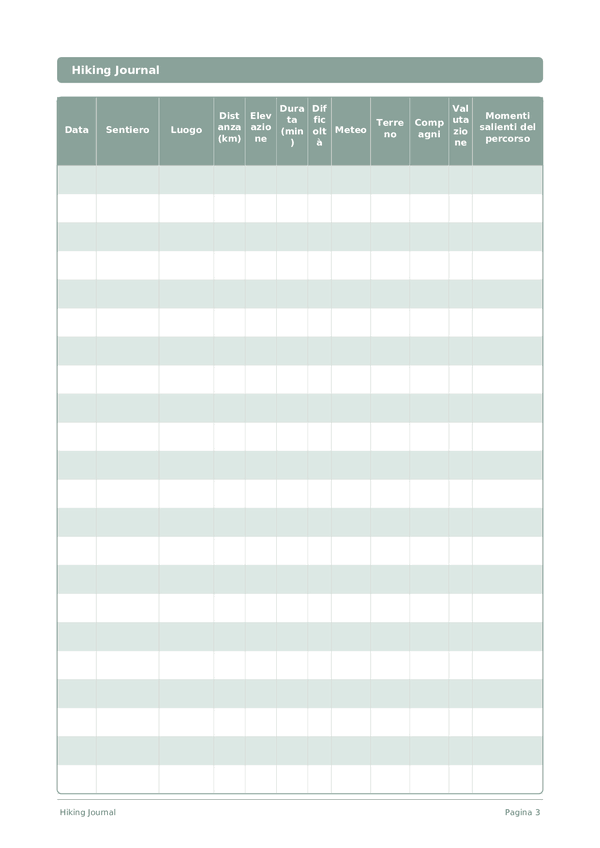
Diario del Trekking
Monitora ogni sentiero, vetta e avventura all'aperto
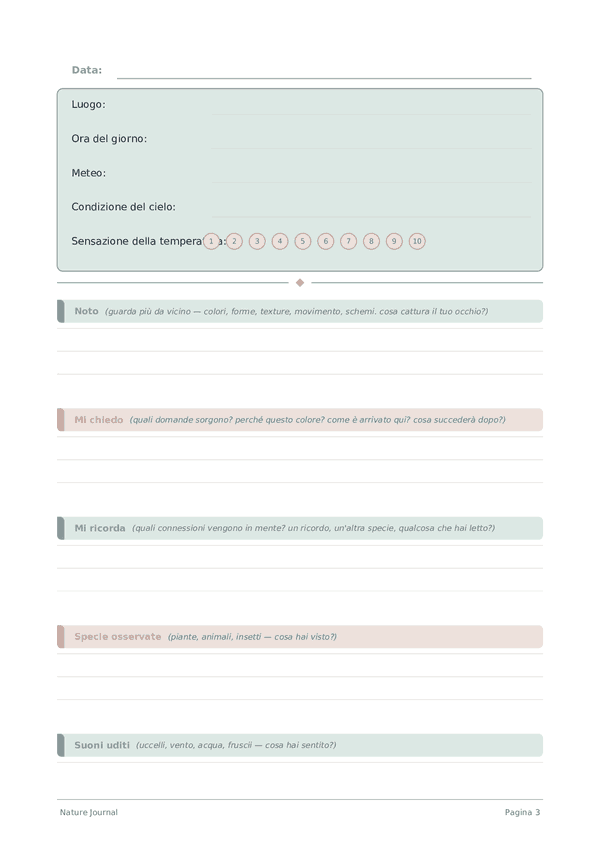
Diario della Natura
Osserva, meravigliati e connettiti con il mondo naturale
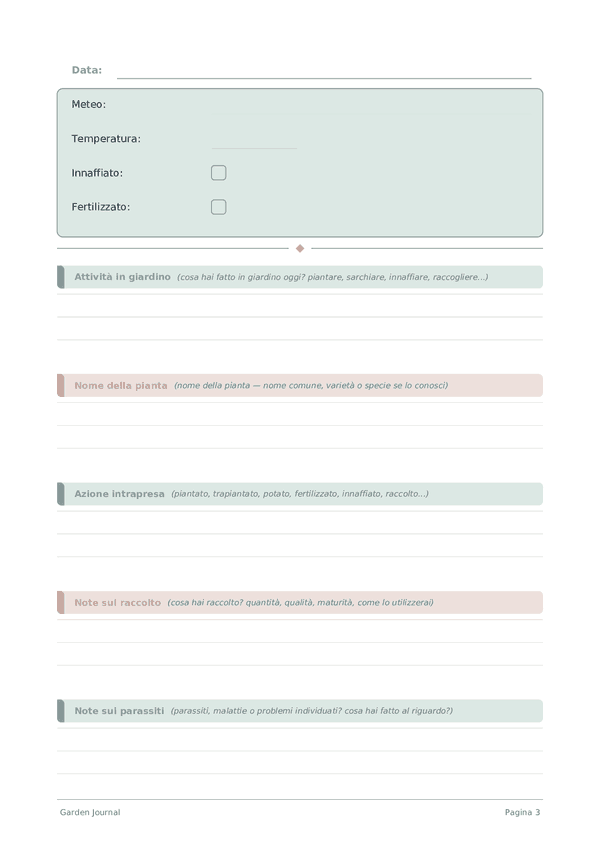
Diario del Giardino
Pianifica, monitora e impara da ogni stagione di crescita
Diario del Meteo
Osservazioni meteorologiche quotidiane per meteorologi amatoriali
Scorri per ingrandire, trascina per spostare