Printable Diario del Giardino
Pianifica, monitora e impara da ogni stagione di crescita
Personalizza campi
Attiva o disattiva i campi. Clicca la matita per rinominare, oppure aggiungi i tuoi campi.
Cos'è questo diario?
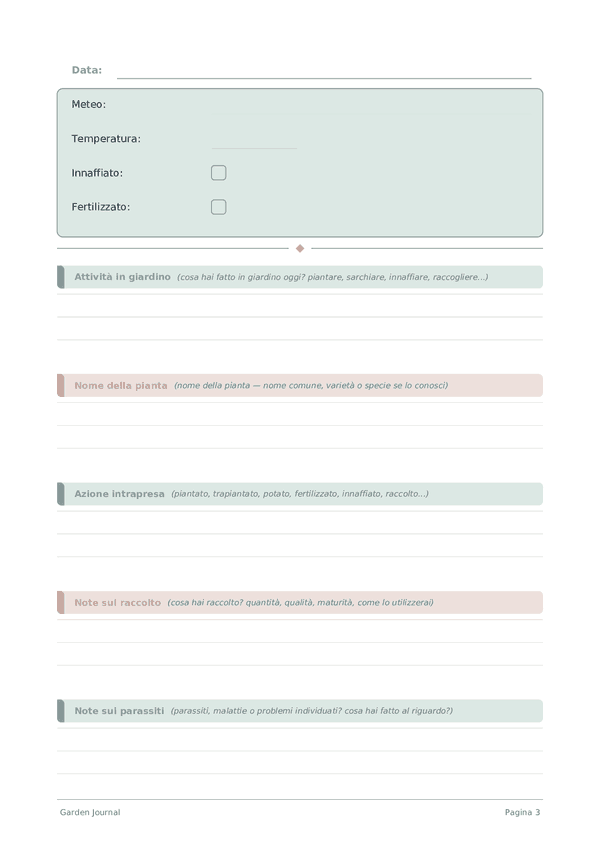
Questo è un diario ibrido — ogni pagina combina una sezione di tracciamento rapido in cima con un'area di scrittura a righe in basso. Ciò ti consente di catturare sia dati misurabili che riflessioni in forma libera in un unico posto.
Come compilare ogni campo
La parte superiore di ogni pagina ha campi a compilazione rapida (valutazioni, caselle di controllo, numeri). Sotto c'è una sezione a righe per scrivere. Ecco cosa significa ogni campo:
Meteo
Soleggiato, nuvoloso, pioggia, vento — condizioni attuali
Temperatura
Registra la tua temperatura corporea basale. I cambiamenti di temperatura aiutano a monitorare l'ovulazione e la salute complessiva del ciclo.
Innaffiato
Hai innaffiato il giardino o delle piante specifiche oggi?
Fertilizzato
Hai applicato fertilizzante o correttivi al suolo alle tue piante oggi?
Attività in giardino
Cosa hai fatto in giardino oggi? Piantare, sarchiare, innaffiare, raccogliere...
Nome della pianta
Nome della pianta — nome comune, varietà o specie se lo conosci
Azione intrapresa
Piantato, trapiantato, potato, fertilizzato, innaffiato, raccolto...
Note sul raccolto
Cosa hai raccolto? Quantità, qualità, maturità, come lo utilizzerai
Note sui parassiti
Parassiti, malattie o problemi individuati? Cosa hai fatto al riguardo?
Osservazioni
Osservazioni generali sul giardino — progresso della crescita, effetti del meteo, condizione del suolo, fauna selvatica
Consigli per il successo
Quando e con quale frequenza scrivere
Compila una pagina al giorno. La parte del tracker richiede meno di un minuto; cerca di farlo a un orario costante. La sezione di scrittura può essere fatta nello stesso momento o riservata quando hai 5 minuti tranquilli. Entrambe le parti insieme ti danno il quadro più completo della tua giornata.
Domande frequenti
Cosa devo scrivere in un diario del giardino ogni giorno?
La Royal Horticultural Society raccomanda di annotare meteo, temperatura, annaffiatura, concimazione e qualsiasi azione intrapresa su piante specifiche — esattamente la struttura di tracciamento e le domande guidate qui presenti. Aggiungi avvistamenti di parassiti e note sul raccolto quando pertinente. Le voci quotidiane non devono essere lunghe; una o due righe più le caselle di controllo per annaffiato e concimato sono sufficienti per costruire un utile registro stagionale.
Perché tenere traccia del meteo e della temperatura insieme alle attività del giardino?
Le prestazioni delle piante sono influenzate dal meteo. I materiali della Cooperative Extension dell'USDA sottolineano la correlazione tra temperatura, precipitazioni e date di gelo con i risultati delle piante per perfezionare la pratica locale. La sezione del tracciatore posiziona meteo e temperatura accanto alle caselle di controllo per annaffiato e concimato proprio così da individuare, ad esempio, che l'irrigazione eccessiva coincideva con settimane fresche e nuvolose — un pattern invisibile senza la registrazione quotidiana.
Come si inseriscono le zone di rusticità USDA?
Le Zone di Rusticità delle Piante USDA definiscono i minimi invernali medi per regione e guidano la scelta delle perenni. Il diario non stampa una zona ma si aspetta che tu conosca la tua — scrivila all'interno della copertina. Poi registra la prima gelata, l'ultima gelata e le variazioni di temperatura insolite nel tuo tracciatore quotidiano. Nel corso degli anni i tuoi record perfezionano la zona ufficiale con una versione accurata per il microclima del tuo giardino esatto.
Cosa va nel campo note sui parassiti?
Specie (o miglior ipotesi), piante colpite, gravità, contesto meteorologico e qualsiasi intervento. La guida ai parassiti RHS raccomanda di registrare le date del primo avvistamento ogni stagione — gli afidi nella stessa settimana di maggio ogni anno rivelano una pressione prevedibile. Evita di ricorrere subito a trattamenti generali; prima registra, poi identifica, poi agisci. "Bringing Nature Home" di Doug Tallamy (Timber Press, 2007) ricorda ai giardinieri che molti bruchi sono risorse dell'ecosistema, non parassiti.
In cosa si differenzia da un'app di giardinaggio?
Le app inviano promemoria generici in base alla tua posizione. Questo diario registra ciò che è accaduto davvero nel tuo terreno, nel tuo microclima, tra le tue mani. I campi note sul raccolto e observations catturano informazioni qualitative — sapore, vigore, pressione delle malattie — che nessuna app raccoglie. Molti giardinieri esperti usano entrambi: un'app per l'identificazione delle piante e gli avvisi di gelo, la carta per la narrazione che abbraccia l'intera stagione.
Quanto tempo passa prima che il diario ripaghi?
Una stagione di crescita completa produce utili confronti; tre stagioni iniziano a rivelare pattern affidabili. I materiali didattici della RHS e dell'American Horticultural Society sottolineano entrambi che il giardinaggio è una disciplina pluriennale — ciò che fallisce un anno può prosperare il successivo a causa del meteo. Rileggere le voci passate prima di ogni semina primaverile è il momento in cui il valore del diario si accumula più visibilmente.
I principianti devono monitorare ogni pianta o solo il giardino in generale?
Inizia con il tracciatore quotidiano generale e tre o quattro piante prioritarie che ti stanno davvero a cuore — pomodori, rose, qualunque cosa ti motivi. Il campo nome della pianta della sezione con righe si adatta a voci mirate senza obbligare a includere ogni specie. La guida per principianti della Royal Horticultural Society mette in guardia dal monitoraggio eccessivo che porta all'abbandono. L'ampiezza della copertura cresce naturalmente man mano che l'abitudine si consolida.
In che modo registrare i raccolti cambia la pianificazione della stagione successiva?
Le rese mostrano il ritorno sull'investimento. Se le tue zucchine hanno prodotto 14 frutti e i tuoi peperoni due, l'allocazione delle aiuole la prossima primavera cambia di conseguenza. Le pubblicazioni dell'American Horticultural Society raccomandano di tenere traccia della quantità e della qualità (gusto, durata di conservazione) insieme. Nel corso di tre stagioni la colonna note sul raccolto diventa la pagina più consultata quando si progettano le aiuole dell'anno successivo e si ordinano i semi.
Potrebbe piacerti anche
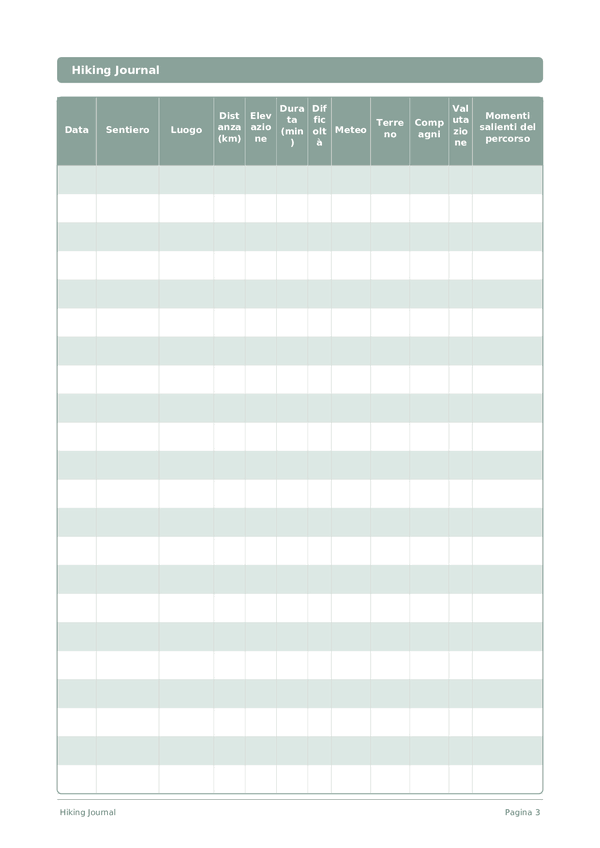
Diario del Trekking
Monitora ogni sentiero, vetta e avventura all'aperto
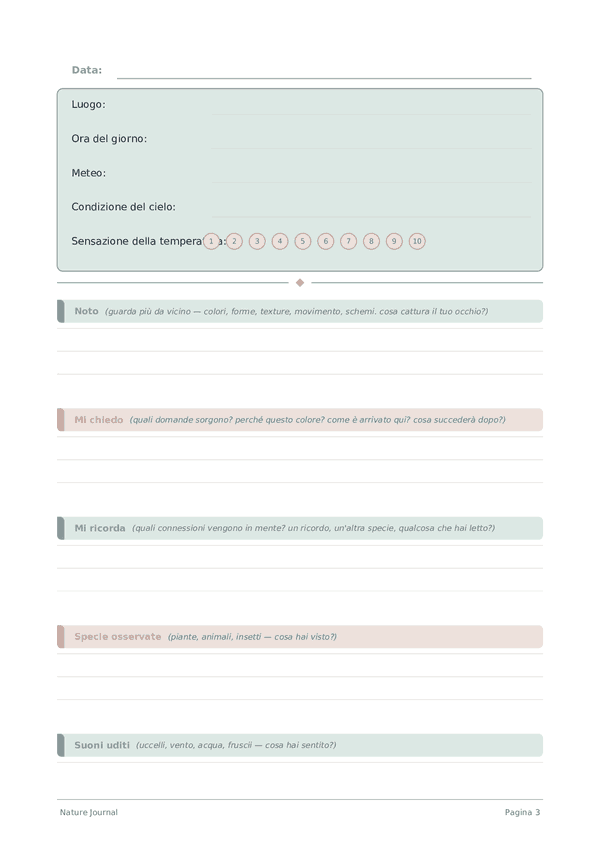
Diario della Natura
Osserva, meravigliati e connettiti con il mondo naturale
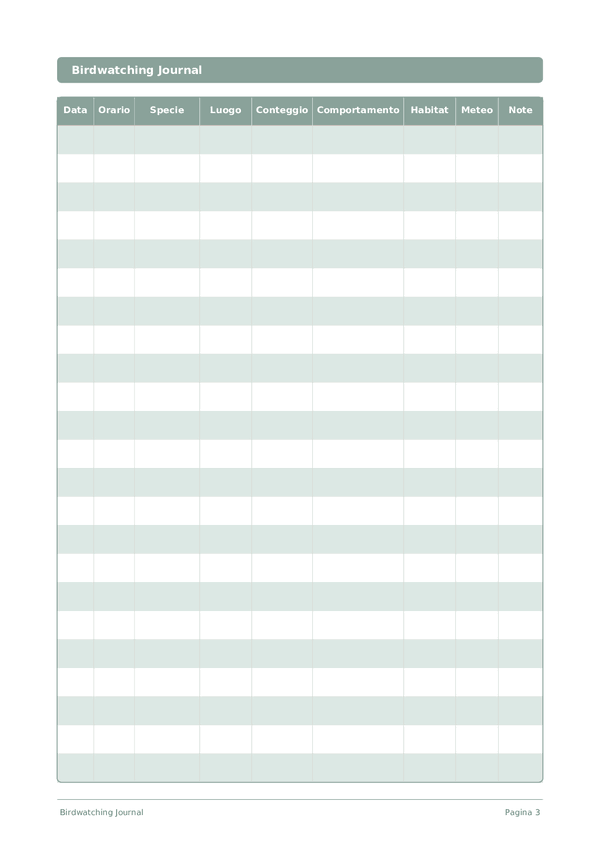
Diario di Birdwatching
Registra ogni avvistamento di uccelli con specie, habitat e comportamento
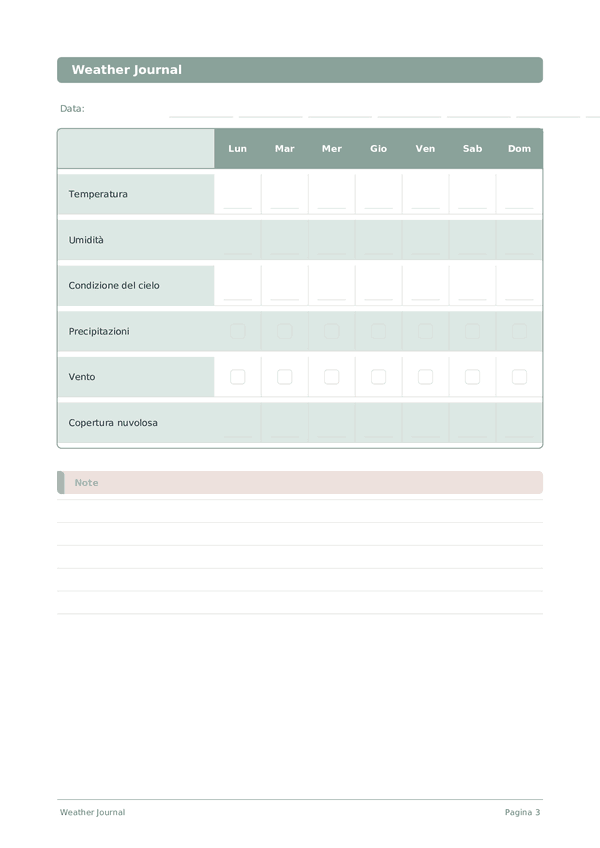
Diario del Meteo
Osservazioni meteorologiche quotidiane per meteorologi amatoriali
Scorri per ingrandire, trascina per spostare