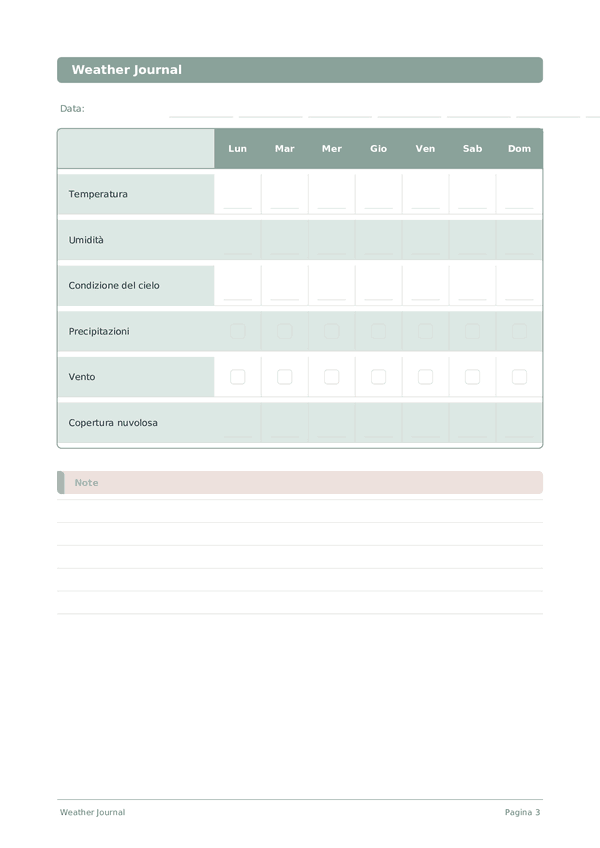
Printable Diario del Meteo
Osservazioni meteorologiche quotidiane per meteorologi amatoriali
Personalizza campi
Attiva o disattiva i campi. Clicca la matita per rinominare, oppure aggiungi i tuoi campi.
Cos'è questo diario?
Questo è un diario di monitoraggio settimanale — una griglia visiva in cui segni le abitudini, valuti le tue metriche o spunti i compiti giorno per giorno. Ogni pagina copre una settimana, rendendo facile individuare schemi e costruire coerenza.
Come compilare ogni campo
Ogni pagina è una griglia settimanale. Le righe sono i tuoi elementi da monitorare, le colonne sono i giorni della settimana. Ecco cosa significa ogni elemento:
Temperatura
Registra la tua temperatura corporea basale. I cambiamenti di temperatura aiutano a monitorare l'ovulazione e la salute complessiva del ciclo.
Umidità
Condizione del cielo
Com'è il cielo adesso? Descrivi le nuvole, la limpidezza o il tempo
Precipitazioni
Vento
Copertura nuvolosa
Consigli per il successo
Quando e con quale frequenza scrivere
Segna il tracker ogni sera prima di dormire. Richiede meno di un minuto. Alla fine di ogni settimana, prenditi 5 minuti per rivedere la griglia e notare gli schemi. Ogni mese, sfoglia tutte le settimane per vedere il tuo arco di progresso.
Domande frequenti
Perché registrare il meteo manualmente quando esistono previsioni e app?
Le previsioni predicono le medie regionali; questo diario registra il tuo microclima esatto. I programmi di Cooperative Extension e di citizen science come CoCoRaHS si affidano alle rilevazioni manuali dei volontari proprio perché le stazioni automatizzate mancano le variazioni locali. Le colline, le valli e i giardini in ombra divergono dai dati ufficiali dell'aeroporto di diversi gradi. Un registro personale quotidiano costruisce una baseline climatica accurata che nessuna app commerciale fornisce.
A che ora del giorno devo effettuare le misurazioni?
La coerenza conta più dell'ora esatta. Le linee guida del Cooperative Observer Program e di CoCoRaHS raccomandano la stessa ora ogni giorno — tipicamente al mattino tra le 7 e le 9 — così i confronti su più giorni rimangono validi. Il diario non stampa uno slot orario proprio perché tu scelga quello che si adatta al tuo programma, poi lo rispetti. Gli orari variabili producono dati rumorosi; gli orari coerenti producono un segnale.
Come stimo l'umidità senza un sensore?
Gli indizi visivi la approssimano: rugiada abbondante, finestre appannate e abiti che aderiscono alla pelle suggeriscono un'umidità relativa dell'80% o più; l'elettricità statica e le labbra screpolate suggeriscono meno del 40%. Per la precisione, un igrometro di base costa poco e si abbina naturalmente a questo diario. La nota how to use suggerisce la stima senza sensore proprio perché il diario rimanga utile prima che tu investa in strumenti.
Come funziona la valutazione della copertura nuvolosa da 1 a 10?
Rispecchia la scala internazionale degli okta usata dai servizi meteorologici di tutto il mondo, che misura la copertura del cielo in ottavi. Tradotta in 1–10: 1 = cielo blu limpido, 5 = cumuli sparsi, 8 = per lo più coperto, 10 = cielo completamente nuvoloso. Le valutazioni quotidiane rivelano le tendenze di soleggiamento e ti permettono di correlare i giorni nuvolosi con l'umore, la crescita del giardino o la resa solare se hai pannelli.
Quanto tempo passa prima di vedere pattern significativi?
Un anno solare completo cattura un ciclo di stagioni. Tre anni permettono il confronto — questo aprile era più caldo degli ultimi due? Le convenzioni sui dati del Cooperative Observer Program trattano i record di 30 anni come normali climatiche, ma il diari meteorologico personale diventa utile al segno del primo anno e visibilmente prezioso dal terzo anno in poi, specialmente per giardinieri e atleti all'aperto.
I dati registrati possono correlarsi con l'umore o la salute?
Molte persone percepiscono una connessione. Esiste ricerca sul disturbo affettivo stagionale e sulla sensibilità al meteo, ma i risultati sono contrastanti e individuali. Registrare copertura nuvolosa, precipitazioni e il proprio stato soggettivo in parallelo (in una colonna separata per l'umore o su un post-it) ti permette di verificare il tuo pattern personale. Questa è conoscenza di sé osservazionale, non diagnosi — consulta un medico per sintomi d'umore persistenti.
In cosa si differenzia dalle stazioni meteorologiche domestiche automatizzate?
Le stazioni registrano automaticamente temperatura e umidità ma generano dati rumorosi che nessuno revisiona. Il diario impone una pausa quotidiana di 60 secondi per guardare il cielo, annotare le condizioni e valutare la copertura nuvolosa — osservazioni che nessun sensore cattura. Molti appassionati usano entrambi: la stazione registra i numeri precisi, il diario costruisce nel tempo la narrazione leggibile dall'uomo e il tuo occhio meteorologico.
Devo includere eventi insoliti come le tempeste o la prima gelata?
Sì — rendili prominenti. Le linee guida del Cooperative Observer Program trattano la prima gelata, l'ultima gelata, le tempeste severe e i massimi/minimi estremi come dati di primo piano. Sottolinea queste voci o mettici un asterisco così spiccano quando sfogli il diario. I giardinieri si affidano in modo particolare alle date di gelata pluriennali; gli atleti all'aperto tracciano la frequenza delle tempeste e la durata dei periodi secchi per la pianificazione delle attività.
Potrebbe piacerti anche
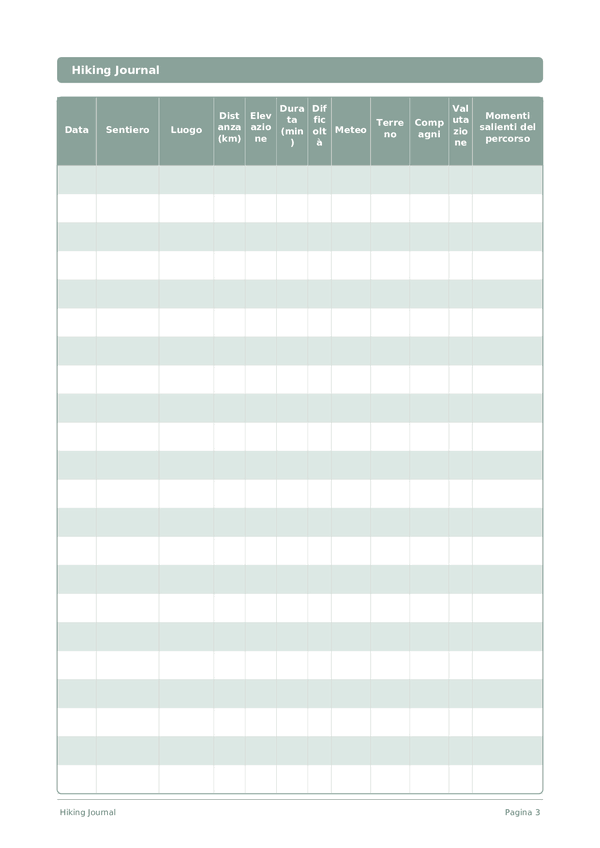
Diario del Trekking
Monitora ogni sentiero, vetta e avventura all'aperto
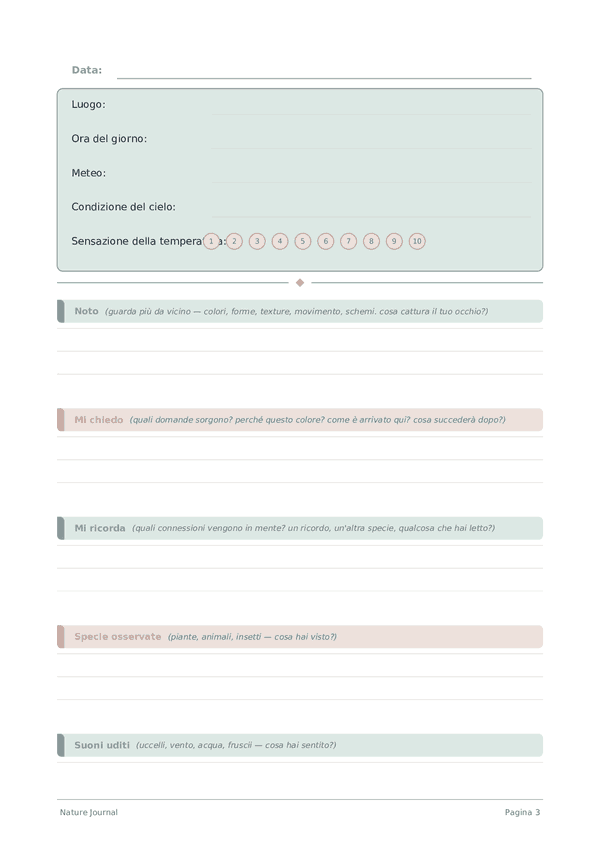
Diario della Natura
Osserva, meravigliati e connettiti con il mondo naturale
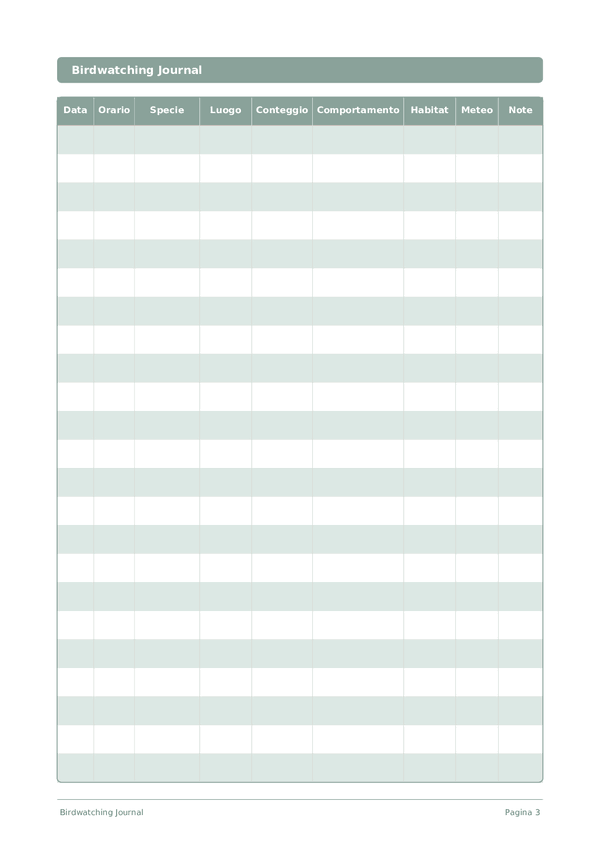
Diario di Birdwatching
Registra ogni avvistamento di uccelli con specie, habitat e comportamento
Diario del Giardino
Pianifica, monitora e impara da ogni stagione di crescita
Scorri per ingrandire, trascina per spostare