Printable Diario della Pesca
Registra le catture, i luoghi e le condizioni di pesca
Personalizza campi
Attiva o disattiva i campi. Clicca la matita per rinominare, oppure aggiungi i tuoi campi.
Cos'è questo diario?
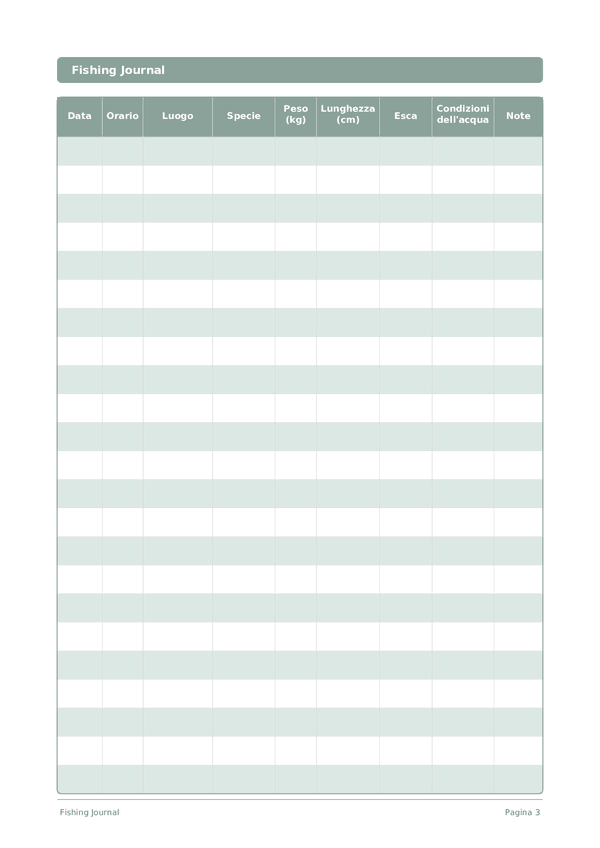
Questo è un diario a registro tabellare — ogni pagina contiene una tabella strutturata con colonne per registrare i dati. Perfetto per tenere traccia di spese, allenamenti, letture o qualsiasi attività che beneficia di voci organizzate e confrontabili.
Come compilare ogni campo
Ogni pagina è una tabella con colonne. Compila una riga per ogni voce. Ecco a cosa serve ogni colonna:
Data
Scrivi la data di oggi. Questo ancora la tua voce nel tempo e aiuta quando si rivedono le voci in seguito.
Orario
Registra l'ora della misurazione o dell'evento. Una tempistica coerente rende i dati confrontabili e rivela schemi legati all'ora del giorno.
Luogo
Dove è stata scattata la foto?
Specie
Nome della specie di pesce catturato
Peso (kg)
Registra il tuo peso se lo stai monitorando. Pesati alla stessa ora ogni giorno per dati coerenti. Concentrati sulle tendenze settimanali, non sulle fluttuazioni quotidiane.
Lunghezza (cm)
Lunghezza del pesce in centimetri
Esca
Esca viva, girella, mosca, jig, verme di plastica, esca da superficie...
Condizioni dell'acqua
Limpida, torbida, agitata, calma, velocità della corrente, marea...
Note
Aggiungi qualsiasi contesto o pensiero aggiuntivo. Questa colonna tuttofare è per tutto ciò che non si adatta altrove ma potrebbe essere utile in seguito.
Consigli per il successo
Quando e con quale frequenza scrivere
Aggiungi voci man mano che gli eventi accadono durante il giorno. Per i registri finanziari, annota ogni transazione immediatamente. Per i registri di attività, compila dopo ogni sessione. Fai una revisione settimanale o mensile per analizzare i tuoi dati ed estrarre intuizioni.
Domande frequenti
Quali campi forniscono le migliori informazioni sulle catture nel tempo?
Tutte e nove le colonne contano, ma esca, condizioni dell'acqua, meteo e orario sono i predittori più affidabili del successo ripetibile. Registrare specie, peso e lunghezza costruisce il tuo archivio personale di record. Incrociare l'esca con la limpidezza dell'acqua e l'ora del giorno rivela schemi invisibili alla sola memoria. La colonna delle note cattura la fase lunare, le tendenze barometriche e le strutture — variabili che i pescatori esperti tracciano costantemente.
Come devo descrivere le condizioni dell'acqua?
Usa termini ripetibili: limpidezza (limpida / velata / torbida), livello (basso / normale / alto / in aumento / in calo), temperatura se nota, e superficie (calma / increspata / mossa). La coerenza tra le voci conta più del vocabolario. Una volta registrate 20–30 uscite, puoi ordinare le voci per condizione dell'acqua e vedere rapidamente quali scelte di esca hanno prodotto pesce in ogni scenario — questo è il vero valore del diario.
Perché registrare le uscite infruttuose, non solo le catture?
I dati negativi hanno pari valore. Una giornata a zero in condizioni specifiche di acqua e meteo ti insegna cosa non funziona lì, che è la metà del riconoscimento dei pattern. Lascia vuota la colonna delle specie ma compila posizione, meteo, acqua ed esca. Nel corso di una stagione, le voci vuote si raggruppano attorno a finestre di cattive condizioni prevedibili — una conoscenza che migliora la pianificazione delle future uscite più di quanto non facciano i soli conteggi di cattura.
Devo registrare le coordinate GPS esatte o la posizione generica?
Abbastanza specifica da permetterti di tornare. Molti pescatori codificano i punti con etichette personali ("curva a nord-ovest sotto il salice") invece delle coordinate, per mantenere privati i posti migliori se il diario venisse perso. La colonna della posizione, larga 16 unità, si adatta a entrambi gli approcci. Per le acque molto grandi, abbina un nome in codice a una sezione generale del lago o del fiume così il contesto rimane comprensibile anni dopo.
In cosa si differenzia dalle app come Fishbrain?
Le app di pesca registrano le catture in modo social e raccolgono i punti caldi dalla community; questo diario cartaceo mantiene i tuoi dati privati e impone la registrazione deliberata in riva all'acqua. Le app dipendono dalla batteria e dal segnale — nessuno dei due affidabile nelle acque remote. Molti pescatori usano entrambi: l'app per la community e l'identificazione delle specie, il diario per i record personali riservati e le sessioni di analisi approfondita che la carta favorisce.
Cosa va nella colonna delle note?
Variabili non coperte altrove: tendenza della pressione barometrica, fase lunare, struttura pescata (drop-off, bordo delle alghe, tronco), attività degli altri pescatori, il tuo equipaggiamento e le lezioni post-uscita. Molti pescatori veterani dicono che le note sono dove vive il vero valore del diario — i pattern emergono da queste osservazioni qualitative più affidabilmente che dai soli conteggi grezzi delle catture. Sii specifico; le note vaghe invecchiano male.
Quanto tempo passa prima che i pattern diventino utili?
Una stagione intera (circa 12–20 uscite) inizia a rivelare le combinazioni di esca e condizioni dell'acqua. Tre stagioni rendono il diario predittivamente prezioso — darai un'occhiata alle condizioni, ricorderai voci simili del passato e sceglierai la lenza di conseguenza. Con 12 righe per pagina, una pagina copre una stagione regionale tipica. Rileggi le pagine della stagione precedente prima del giorno di apertura ogni anno.
Questo diario è utile per chi pratica il catch-and-release?
Sì — particolarmente. Registrare peso e lunghezza senza trattenere il pesce costruisce un onesto elenco personale di record e contribuisce alla cultura dei dati. La colonna delle note è ideale per annotare le condizioni di rilascio e il comportamento post-rilascio. Molti circoli di pesca a mosca e associazioni per i torrenti a trota incoraggiano diari personali dettagliati come parte dell'etica della pesca a basso impatto. Rinuncia alla foto, mantieni il record.
Potrebbe piacerti anche
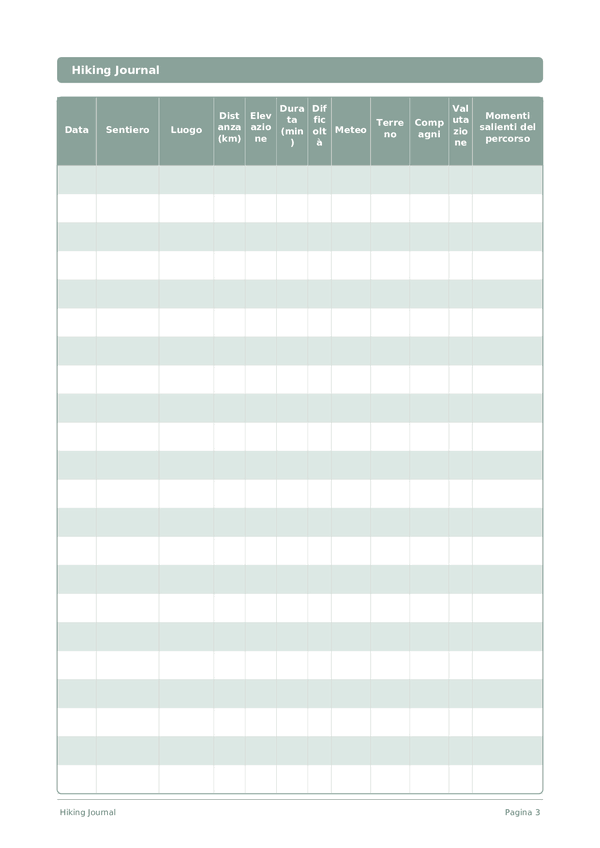
Diario del Trekking
Monitora ogni sentiero, vetta e avventura all'aperto
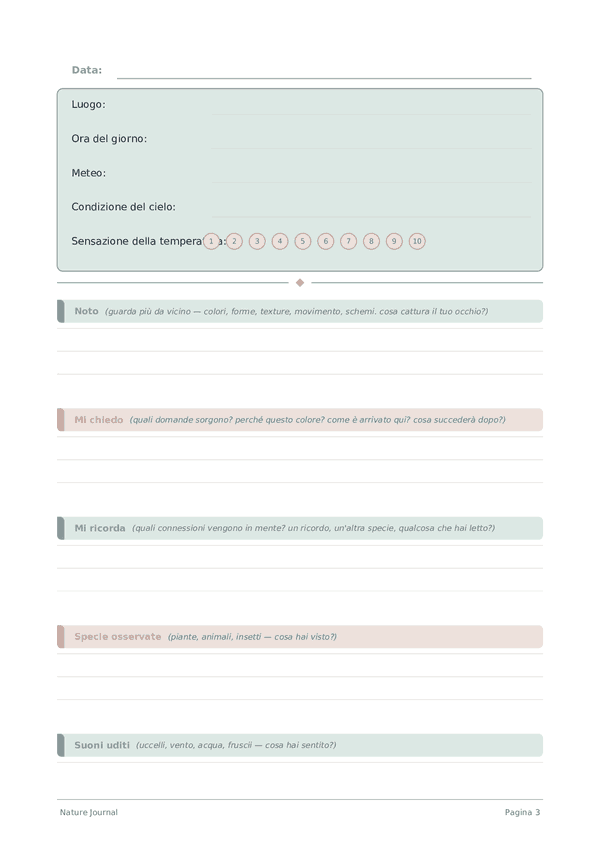
Diario della Natura
Osserva, meravigliati e connettiti con il mondo naturale
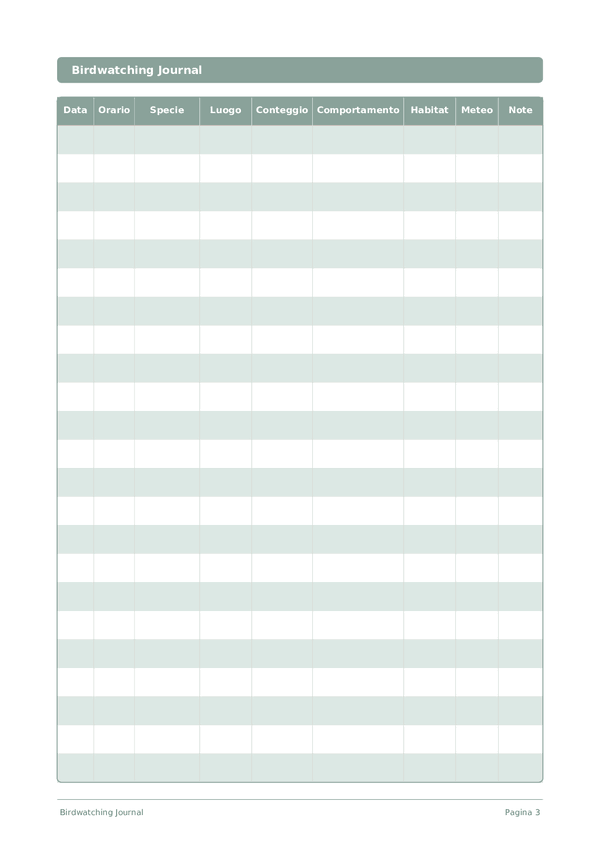
Diario di Birdwatching
Registra ogni avvistamento di uccelli con specie, habitat e comportamento
Diario del Giardino
Pianifica, monitora e impara da ogni stagione di crescita
Scorri per ingrandire, trascina per spostare