Printable Diario di Apprendimento delle Lingue
Tracker quotidiano per l'apprendimento delle lingue e diario di studio
Personalizza campi
Attiva o disattiva i campi. Clicca la matita per rinominare, oppure aggiungi i tuoi campi.
Cos'è questo diario?
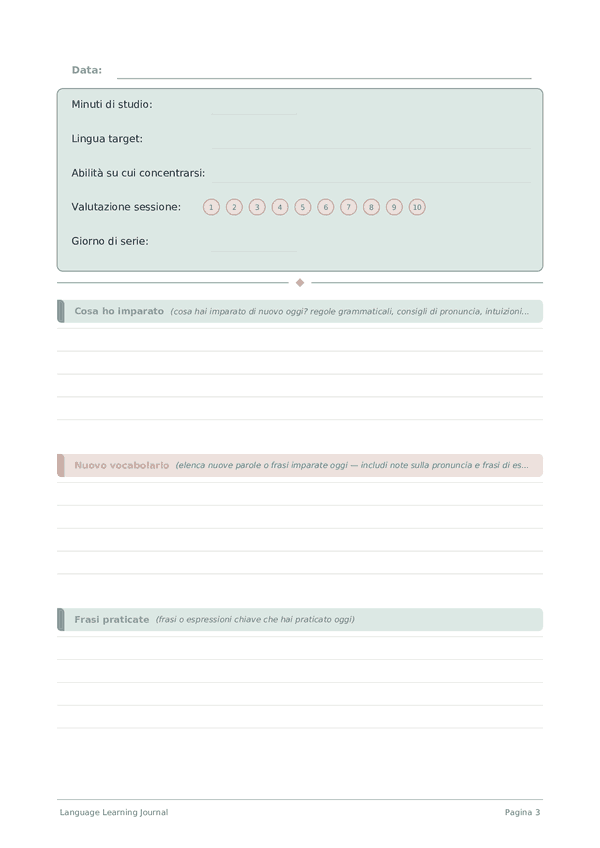
Questo è un diario ibrido — ogni pagina combina una sezione di tracciamento rapido in cima con un'area di scrittura a righe in basso. Ciò ti consente di catturare sia dati misurabili che riflessioni in forma libera in un unico posto.
Come compilare ogni campo
La parte superiore di ogni pagina ha campi a compilazione rapida (valutazioni, caselle di controllo, numeri). Sotto c'è una sezione a righe per scrivere. Ecco cosa significa ogni campo:
Minuti di studio
Minuti totali dedicati allo studio oggi
Lingua target
Quale lingua stai studiando? es. spagnolo, giapponese, francese
Abilità su cui concentrarsi
Lettura, scrittura, ascolto, parlato, vocabolario, grammatica...
Valutazione sessione
Quanto è stata efficace la tua sessione? (1=scarsa, 5=eccellente)
Giorno di serie
Quanti giorni consecutivi hai studiato?
Cosa ho imparato
Scrivi una cosa nuova che hai imparato oggi. Può essere un fatto, un'abilità, un'intuizione su te stesso o una lezione di vita. Imparare ogni giorno si accumula in saggezza.
Nuovo vocabolario
Elenca nuove parole o frasi imparate oggi — includi note sulla pronuncia e frasi di esempio
Frasi praticate
Frasi o espressioni chiave che hai praticato oggi
Note di grammatica
Regole grammaticali, schemi o strutture su cui ti sei concentrato
Consigli per il successo
Quando e con quale frequenza scrivere
Compila una pagina al giorno. La parte del tracker richiede meno di un minuto; cerca di farlo a un orario costante. La sezione di scrittura può essere fatta nello stesso momento o riservata quando hai 5 minuti tranquilli. Entrambe le parti insieme ti danno il quadro più completo della tua giornata.
Domande frequenti
Cosa traccia il Language Learning Journal per ogni sessione?
Cinque elementi nel tracker — minuti di studio (minuti di studio), lingua target (lingua target), abilità su cui concentrarsi (focus abilità: ascolto/parlato/lettura/scrittura/grammatica/vocabolario), valutazione sessione (valutazione sessione, 0-10) e giorno di serie (giorno della serie) — più quattro righe per cosa ho imparato (cosa ho imparato) con prompt per nuovo vocabolario (nuovo vocabolario), frasi praticate (frasi praticate) e note di grammatica (note grammaticali). La struttura si allinea con il quadro delle quattro abilità usato nel QCER (Quadro Comune Europeo di Riferimento per le Lingue, Consiglio d'Europa) e nelle linee guida ACTFL.
Perché il campo abilità su cui concentrarsi è importante — non basta 'praticare la lingua'?
Il QCER e le linee guida di competenza ACTFL trattano ascolto, parlato, lettura, scrittura, grammatica e vocabolario come competenze distinte che si sviluppano in modo disomogeneo. Tracciare abilità su cui concentrarsi espone le lacune — la maggior parte degli autoapprendenti si affida eccessivamente alla lettura e alle app di vocabolario evitando il parlato. Alternare il focus tra le sessioni produce una competenza più equilibrata rispetto a passare tutte le sessioni su ciò che ci sembra più comodo.
Quanti minuti al giorno sono necessari per fare progressi reali?
20-30 minuti al giorno di pratica focalizzata producono progressi visibili a livello QCER in 6-12 mesi per la maggior parte degli studenti. L'ipotesi dell'input di Krashen (1985, The Input Hypothesis, Longman) sostiene che l'input comprensibile è il principale motore dell'acquisizione. Il campo minuti di studio traccia il volume, ma valutare le sessioni per qualità conta di più — 20 minuti focalizzati battono 60 distratti.
Quanto nuovo vocabolario dovrei annotare per sessione?
5-10 parole ad alta utilità per sessione è sostenibile; di più invita al dimenticatoio. La ricerca sul vocabolario di Paul Nation mostra costantemente che gli studenti hanno bisogno di 6-20 incontri significativi con una parola in contesti diversi per acquisirla. Usa il campo nuovo vocabolario per le parole incontrate in un input reale, non in liste casuali — il vocabolario ancorato al contesto si fissa molto meglio delle liste di frequenza isolate.
Perché tenere traccia del contatore dei giorni consecutivi?
La costanza quotidiana guida l'acquisizione delle lingue più della durata delle sessioni, specialmente nelle fasi iniziali. Cepeda et al. (2006, Psychological Bulletin, 132(3), 354-380) hanno dimostrato che la pratica distribuita supera quella concentrata per la ritenzione a lungo termine — e la lingua è il caso di scuola. Il campo giorno di serie rende la costanza visibile. Un giorno da 10 minuti conta comunque; proteggi la serie prima di ottimizzare il volume.
Qual è la differenza rispetto a Duolingo o Anki?
Le app forniscono contenuti e allenano il ricordo; questo diario costruisce la metacognizione. I campi valutazione sessione e cosa ho imparato ti obbligano ad articolare ciò che hai capito — Roediger e Karpicke (2006, Psychological Science, 17(3), 249-255) mostrano che questo tipo di recupero ed elaborazione rafforza la memoria. Usa entrambi: l'app per l'input e la ripetizione spaziata, il diario per la riflessione e la rotazione delle abilità. Coprono parti diverse dell'acquisizione.
Cosa va nella sezione delle note grammaticali?
Una regola o un pattern che ti ha confuso o chiarito qualcosa nella sessione di oggi — non un riassunto da libro di testo. Esempio: «spagnolo ser vs estar — ser per caratteristiche permanenti (soy alta), estar per stati temporanei (estoy cansada)». Le voci brevi e personalmente significative sono più facili da ricordare delle referenze grammaticali riformattate. Nel tempo, queste note diventano un manuale di grammatica personale ordinato in base alle tue vere difficoltà, non alla sequenza di un libro di testo.
Questo diario è utile sia per i principianti che per i livelli avanzati?
Sì, ma il focus cambia. I principianti usano abilità su cui concentrarsi per assicurarsi di non saltare il parlato; i livelli avanzati lo usano per spingere le abilità deboli (spesso la scrittura o il parlato formale). I livelli QCER A1-C2 (Consiglio d'Europa) descrivono cosa richiede ogni livello nelle quattro abilità. Usa la valutazione per capire se le sessioni sono abbastanza impegnative — i plateau di comfort bloccano i progressi più di ogni altra cosa.
Potrebbe piacerti anche
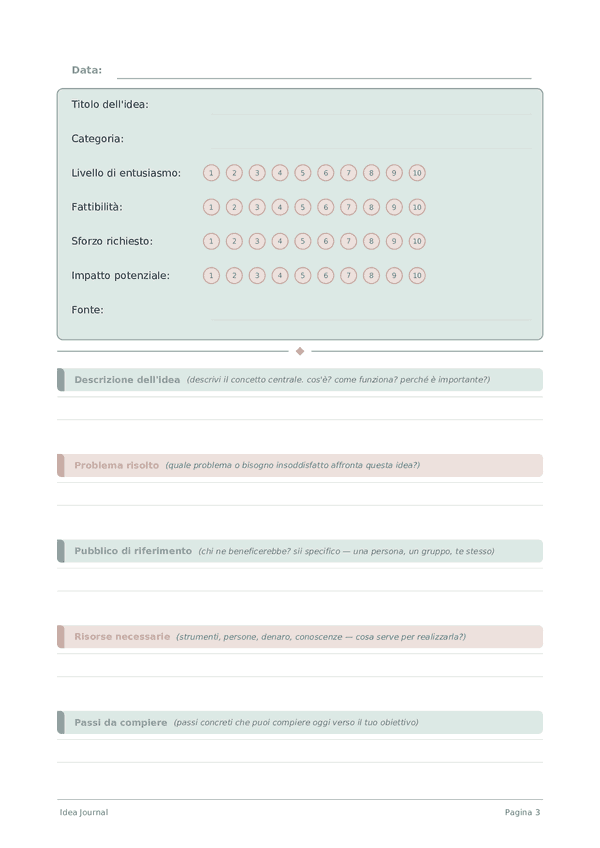
Diario delle Idee
Cattura, valuta e sviluppa le tue migliori idee
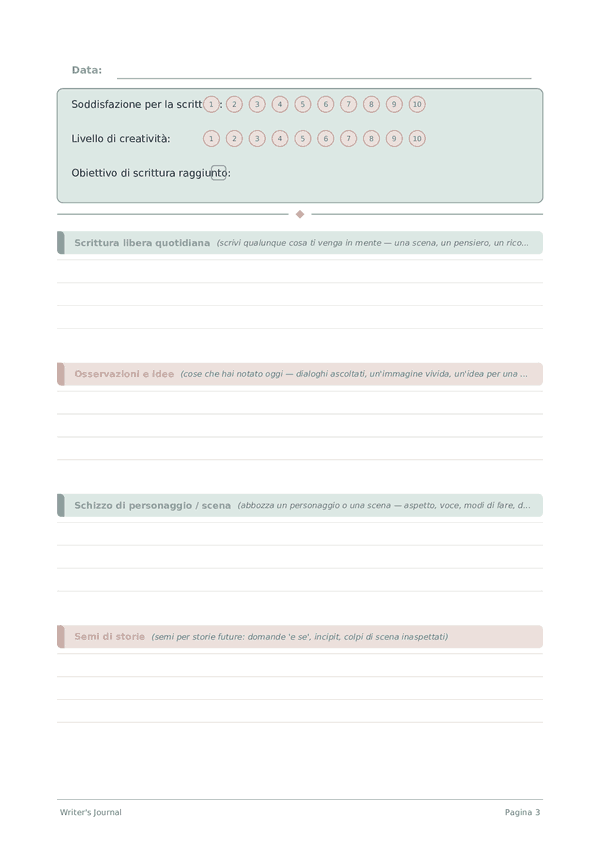
Diario dello Scrittore
Pratica quotidiana di scrittura creativa e sviluppo dell'arte
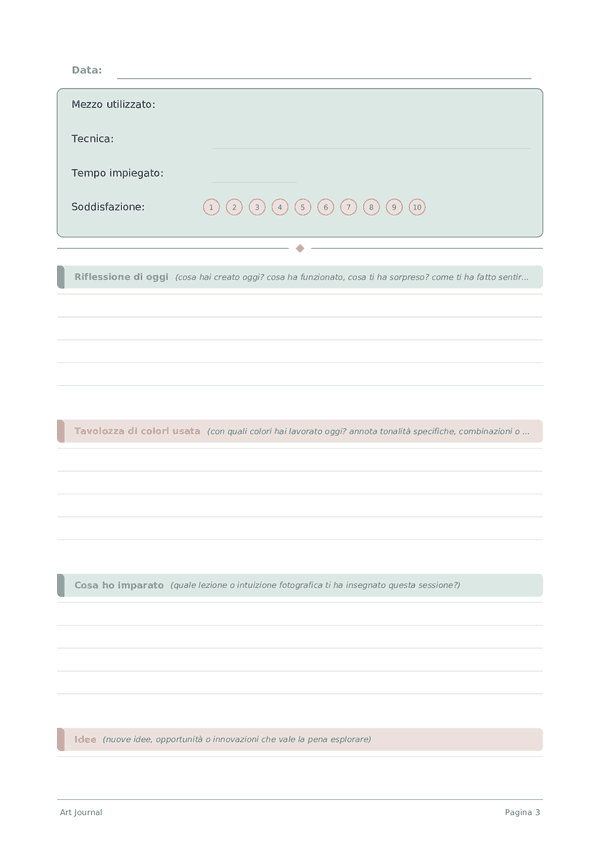
Diario d'Arte
Documenta il tuo processo creativo e la crescita artistica
Diario degli Schizzi
Pagine a griglia di punti aperte per schizzare, disegnare ed esplorare visivamente
Scorri per ingrandire, trascina per spostare