Printable Diario di Apprendimento
Impara più in profondità con la tecnica Feynman
Personalizza campi
Attiva o disattiva i campi. Clicca la matita per rinominare, oppure aggiungi i tuoi campi.
Cos'è questo diario?
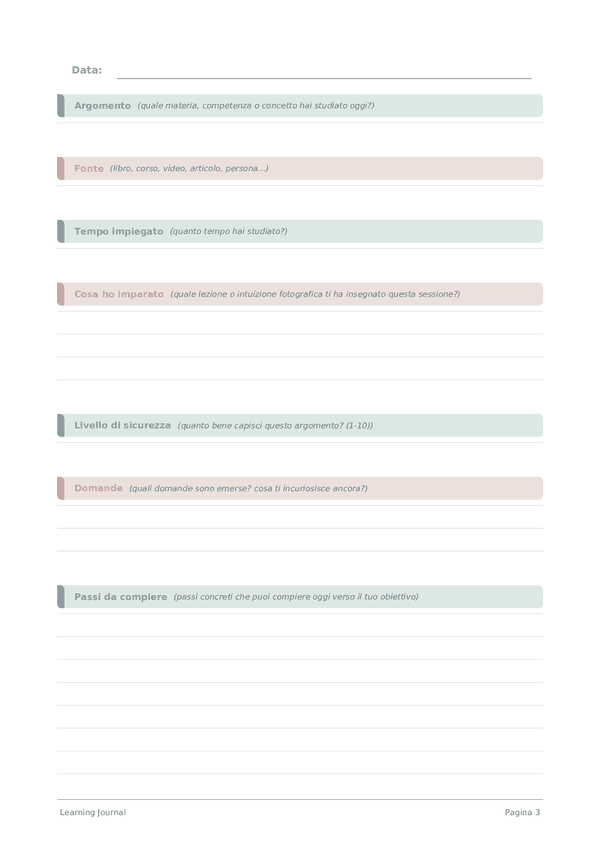
Questo è un diario con inserimenti giornalieri — ogni pagina rappresenta un giorno con domande strutturate che guidano la tua riflessione. Le sezioni sono progettate in modo che compilarle richieda solo 5–10 minuti, rendendo facile mantenere un'abitudine quotidiana.
Come compilare ogni campo
Ogni giorno troverai diverse sezioni etichettate con righe per scrivere. Ecco a cosa serve ogni sezione:
Argomento
Quale materia, competenza o concetto hai studiato oggi?
Fonte
Libro, corso, video, articolo, persona...
Tempo impiegato
Quanto tempo hai studiato?
Cosa ho imparato
Scrivi una cosa nuova che hai imparato oggi. Può essere un fatto, un'abilità, un'intuizione su te stesso o una lezione di vita. Imparare ogni giorno si accumula in saggezza.
Livello di sicurezza
Quanto bene capisci questo argomento? (1-10)
Domande
Quali domande sono emerse? Cosa ti incuriosisce ancora?
Passi da compiere
Suddividi il tuo obiettivo in azioni concrete. Cosa farai esattamente, quando e come? Più specifico è, meglio è.
Consigli per il successo
Quando e con quale frequenza scrivere
Compila una pagina al giorno. La maggior parte delle persone trova che la mattina (10 minuti dopo il risveglio) o la sera (prima di dormire) funzionino meglio. Scegli un orario e mantienilo per almeno due settimane prima di cambiare. La chiave è la regolarità, non la perfezione.
Domande frequenti
Cos'è la tecnica Feynman e come la applica questo diario?
La tecnica Feynman: scegli un argomento, spiegalo in linguaggio semplice come se stessi insegnando a un bambino, trova le lacune, affina. La struttura di questo diario la rispecchia — campo topic (argomento), cosa ho imparato scritto con le tue parole, livello di sicurezza (livello di fiducia) per trovare le lacune, campo questions (domande) per ciò che non sai spiegare, passi da compiere (passi successivi) per il follow-up. Ogni voce quotidiana forza il ciclo spiega-trova-affina su una singola sessione di apprendimento.
Perché spiegare ciò che ho imparato 'come se lo insegnassi a un bambino'?
Generare una spiegazione con le tue parole è pratica di recupero — il meccanismo di apprendimento più potente nelle scienze cognitive. Roediger e Karpicke (2006, Psychological Science, 17(3), 249-255) hanno mostrato che il recupero produce una ritenzione a lungo termine nettamente superiore alla rilettura. Semplificare per un pubblico non esperto espone le parole che stai ripetendo a pappagallo rispetto alle idee che capisci davvero. Le quattro righe di cosa ho imparato sono lo spazio di lavoro per questo esercizio.
Come uso il campo del livello di fiducia per trovare le lacune di conoscenza?
Valuta la tua fiducia sull'argomento del giorno immediatamente dopo aver scritto la spiegazione. Una bassa fiducia su un argomento che hai appena «imparato» è un segnale di illusione di competenza — riconoscere il materiale non equivale a saperlo richiamare o applicare (Bjork & Bjork, 2011, Psychology and the Real World, Worth Publishers). Usa queste valutazioni basse per segnalare gli argomenti da rivedere in modo spaziato nel campo passi da compiere.
Cosa va nella sezione domande?
Tutto ciò che non sei riuscito a rispondere nella tua spiegazione, più le cose su cui il materiale ti ha fatto venire curiosità. Le tre righe ti obbligano a nominare la tua ignoranza in modo specifico — «perché X causa Y?» anziché «non lo capisco». La teoria del carico cognitivo di Sweller (Educational Psychology Review, vari articoli) mostra che le domande articolate riducono il carico estraneo nelle sessioni di studio future perché arrivi con obiettivi focalizzati.
Come i passi successivi collegano l'apprendimento alla pratica?
Due righe per ciò che farai — rivedere con la ripetizione spaziata, costruire un piccolo progetto, trovare un esempio risolto, insegnare l'argomento. Senza questo passaggio, l'apprendimento rimane passivo. Il framework di pratica deliberata di Ericsson (Ericsson et al., 1993, Psychological Review, 100(3), 363-406) richiede un'applicazione mirata, non solo l'esposizione. I passi successivi più efficaci sono piccoli e con una scadenza: «rifare il problema 4.2 domani senza guardare gli appunti».
Con quale frequenza dovrei rileggere le voci di apprendimento passate?
Usa intervalli spaziati — 1 giorno, 3 giorni, 1 settimana, 2 settimane, 1 mese. Cepeda et al. (2006, Psychological Bulletin, 132(3), 354-380) hanno scoperto che gli intervalli crescenti ottimizzano la ritenzione a lungo termine. I campi data e topic del diario lo rendono scansionabile per la revisione. Rileggi prima la tua spiegazione; se riesci ad ampliarla o correggerla senza appunti, l'argomento si sta consolidando. Altrimenti, torna al materiale di partenza.
Qual è la differenza rispetto ad Anki o a un'app di flashcard?
Anki e le app SRS (discendenti da SuperMemo di Wozniak, 1985) ottimizzano il ricordo fattuale attraverso la ripetizione spaziata. Questo diario costruisce la comprensione attraverso la spiegazione e la riflessione — una funzione complementare, non ridondante. Usa entrambi: le voci del diario rivelano cosa capisci e cosa no; le flashcard allenano i fatti. Il campo questions diventa spesso la fonte delle tue migliori schede Anki.
Questo diario funziona per l'apprendimento tecnico, linguistico o umanistico?
Sì — la tecnica Feynman è neutra rispetto al dominio. Gli ingegneri la usano su algoritmi e dimostrazioni; chi studia le lingue la usa sulle regole grammaticali; gli studenti di storia la usano sulle catene causali. Oakley (2014, A Mind for Numbers, Tarcher) applica esplicitamente una spiegazione in linguaggio semplice simile alle materie STEM. Il campo source cattura il tipo di materiale così i pattern cross-dominio diventano visibili nel tempo.
Potrebbe piacerti anche
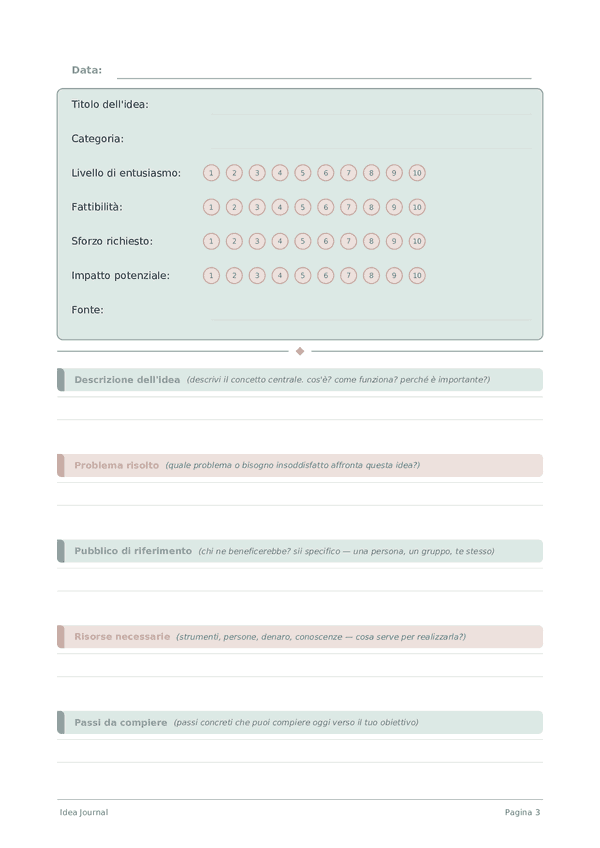
Diario delle Idee
Cattura, valuta e sviluppa le tue migliori idee
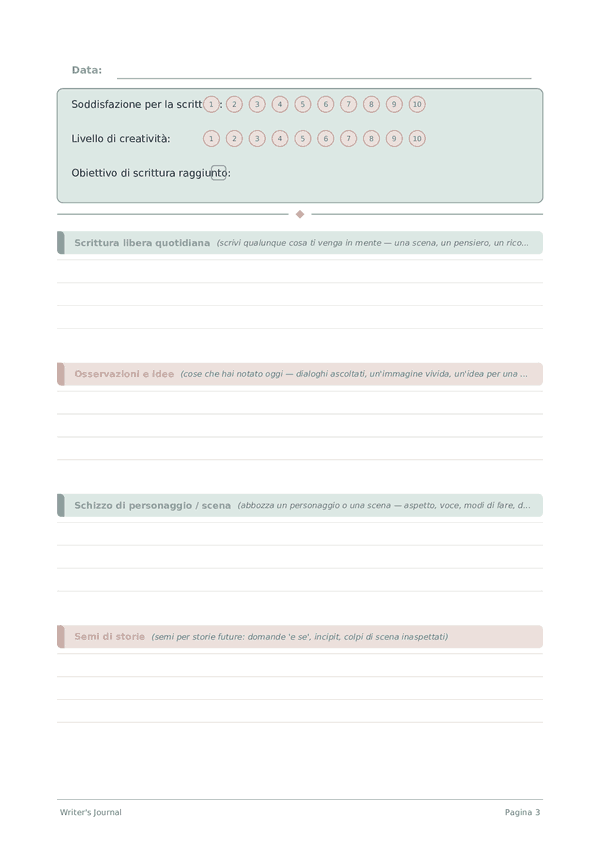
Diario dello Scrittore
Pratica quotidiana di scrittura creativa e sviluppo dell'arte
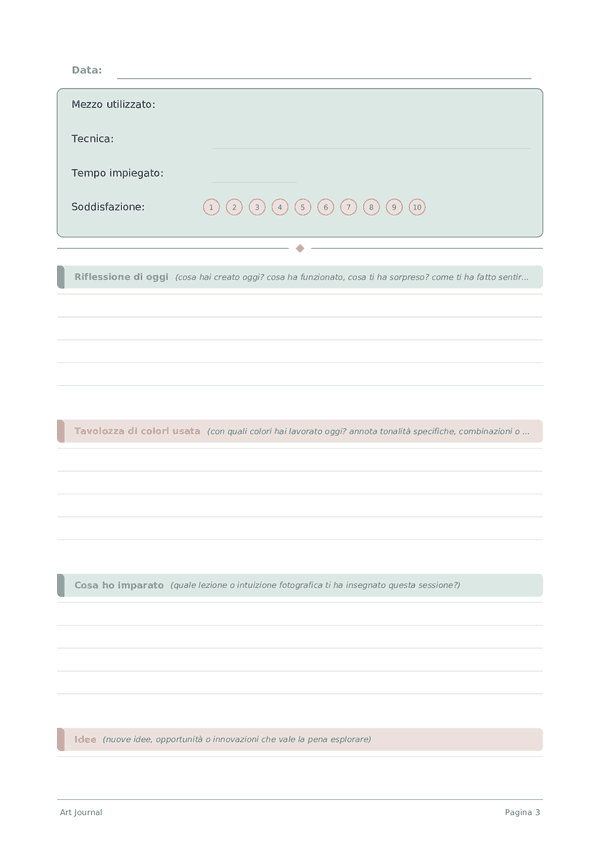
Diario d'Arte
Documenta il tuo processo creativo e la crescita artistica
Diario degli Schizzi
Pagine a griglia di punti aperte per schizzare, disegnare ed esplorare visivamente

Scorri per ingrandire, trascina per spostare