Printable Diario di Musica
Monitora le sessioni di pratica, il tempo e la crescita musicale
Personalizza campi
Attiva o disattiva i campi. Clicca la matita per rinominare, oppure aggiungi i tuoi campi.
Cos'è questo diario?
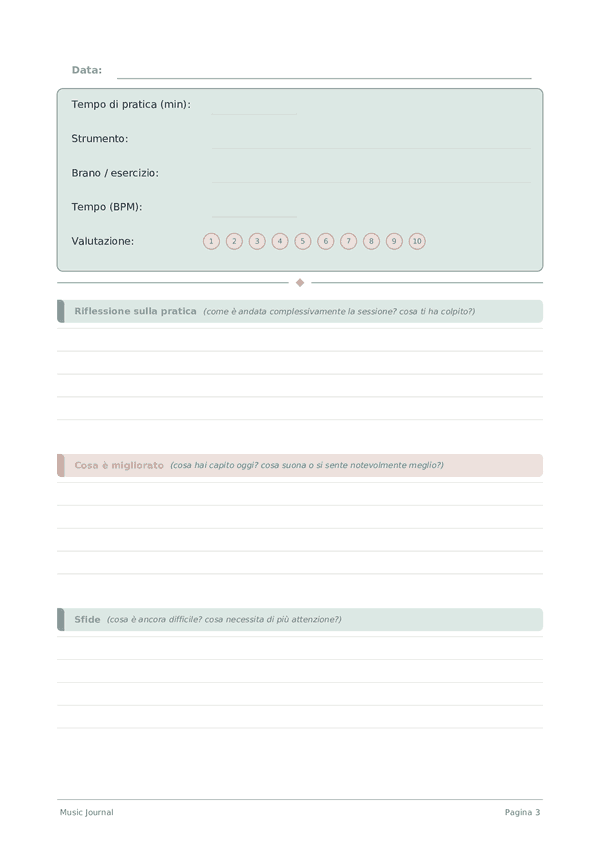
Questo è un diario ibrido — ogni pagina combina una sezione di tracciamento rapido in cima con un'area di scrittura a righe in basso. Ciò ti consente di catturare sia dati misurabili che riflessioni in forma libera in un unico posto.
Come compilare ogni campo
La parte superiore di ogni pagina ha campi a compilazione rapida (valutazioni, caselle di controllo, numeri). Sotto c'è una sezione a righe per scrivere. Ecco cosa significa ogni campo:
Tempo di pratica (min)
Quanti minuti hai praticato oggi?
Strumento
Chitarra, pianoforte, violino, voce, batteria...
Brano / esercizio
Nome del brano, canzone o esercizio su cui hai lavorato
Tempo (BPM)
Tempo target o raggiunto in BPM (battiti per minuto)
Valutazione
Valutazione complessiva dell'esperienza
Riflessione sulla pratica
Come è andata complessivamente la sessione? Cosa ti ha colpito?
Cosa è migliorato
Cosa hai capito oggi? Cosa suona o si sente notevolmente meglio?
Sfide
Cosa è ancora difficile? Cosa necessita di più attenzione?
Obiettivi per la prossima sessione
Su cosa ti concentrerai nella prossima sessione di pratica?
Consigli per il successo
Quando e con quale frequenza scrivere
Compila una pagina al giorno. La parte del tracker richiede meno di un minuto; cerca di farlo a un orario costante. La sezione di scrittura può essere fatta nello stesso momento o riservata quando hai 5 minuti tranquilli. Entrambe le parti insieme ti danno il quadro più completo della tua giornata.
Domande frequenti
Cosa traccia il Music Journal per ogni sessione di pratica?
Cinque campi nel tracker più la riflessione: tempo di pratica (min) (durata pratica, fino a 300 minuti), instrument (strumento), brano / esercizio (nome del brano), tempo (fino a 300 BPM) e una valutazione (0-10). Sei righe coprono la riflessione sulla pratica, cosa è migliorato (cosa è migliorato), challenges (difficoltà) e obiettivi per la prossima sessione (obiettivi per la prossima sessione). La struttura impone una pratica deliberata e intenzionale anziché un suonare passivo — che la ricerca mostra essere la differenza tra i musicisti che si bloccano e quelli che continuano a migliorare.
Perché annotare il tempo (BPM) per ogni sessione?
Il BPM è il marcatore più oggettivo della padronanza tecnica su un passaggio. Tracciarlo nelle sessioni rivela progressi reali che la sola sensazione non può fornire. Levitin (2006, This Is Your Brain on Music, Dutton) descrive come i musicisti che quantificano i guadagni di tempo restino motivati attraverso i plateau. Usa un metronomo, annota il tuo BPM pulito più alto e imposta il target per la sessione successiva a +2/+4 BPM. Nel tempo, la colonna diventa una curva di padronanza visibile.
Quanto deve durare ogni sessione quotidiana di pratica?
30-60 minuti di pratica focalizzata producono più progressi di 2-3 ore di suonare non focalizzato. Ericsson, Krampe e Tesch-Römer (1993, Psychological Review, 100(3), 363-406) hanno studiato i violinisti dei conservatori e scoperto che 3-5 ore deliberate al giorno erano il limite massimo per una qualità sostenuta — e che la qualità calava nettamente senza pause. Il campo duration del tracker ti aiuta a misurare il tempo focalizzato, non solo il tempo allo strumento.
Qual è la differenza tra pratica deliberata e semplicemente suonare?
La pratica deliberata punta a un punto debole specifico con attenzione focalizzata e feedback (Ericsson, 2016, Peak, Houghton Mifflin Harcourt). I campi obiettivi per la prossima sessione e challenges del diario sono l'impalcatura della pratica deliberata: ti obbligano a nominare su cosa stai lavorando, non solo a suonare. Il suonare casual mantiene le abilità; la pratica deliberata le costruisce. Entrambi hanno un posto, ma solo una guida la crescita.
Come uso efficacemente i prompt 'cosa è migliorato' e 'difficoltà'?
Sii specifico/a fino alla battuta, alla tecnica o al passaggio — «battute 17-24 pulite a 100 BPM» vale molto più di «è andata meglio». La specificità rende concreti gli obiettivi della sessione successiva. Roediger e Karpicke (2006, Psychological Science, 17(3), 249-255) mostrano che articolare ciò che sai rafforza la ritenzione. Il campo challenges è altrettanto prezioso: un problema irrisolto nominato oggi spesso si risolve in pochi giorni, mentre il vago «era difficile» non porta da nessuna parte.
Tenere un diario di pratica mi rende davvero un musicista migliore?
Sì — quando la riflessione è abbinata alla pratica focalizzata. Il framework delle «difficoltà desiderabili» di Bjork (Bjork & Bjork, 2011, Psychology and the Real World, Worth Publishers) mostra che il recupero con sforzo e la pratica variata producono abilità durevoli. Il valutazione sessione del diario crea feedback; il campo goals crea spunti di recupero per la prossima volta. I musicisti che tengono un diario identificano e correggono i punti deboli più rapidamente di chi suona soltanto.
Qual è la differenza rispetto a un'app metronomo o a un timer di pratica?
Le app misurano; il diario interpreta. I campi brano / esercizio e reflection collegano il numero BPM di oggi al contesto musicale — perché un passaggio sembra più difficile un giorno, quale diteggiatura ha aiutato, a quale tempo si è inceppato. Secondo la ricerca di Bjork sulla metacognizione (Bjork & Bjork, 2011), l'interpretazione e la definizione degli obiettivi guidano il trasferimento alla performance più del tempo grezzo registrato. Usa entrambi — l'app per i dati oggettivi, il diario per il significato.
Suono più strumenti — devo tenere diari separati?
Un solo diario funziona se compili il campo instrument ad ogni sessione. Rileggere tra strumenti diversi rivela spesso problemi comuni (ritmo, dinamica, ascolto) e successi trasferibili. Se insegni o ti esibisci principalmente con uno strumento, considera un diario dedicato a quello e questo per gli strumenti secondari. Il formato scala in entrambi i sensi; la costanza conta più della separazione.
Potrebbe piacerti anche
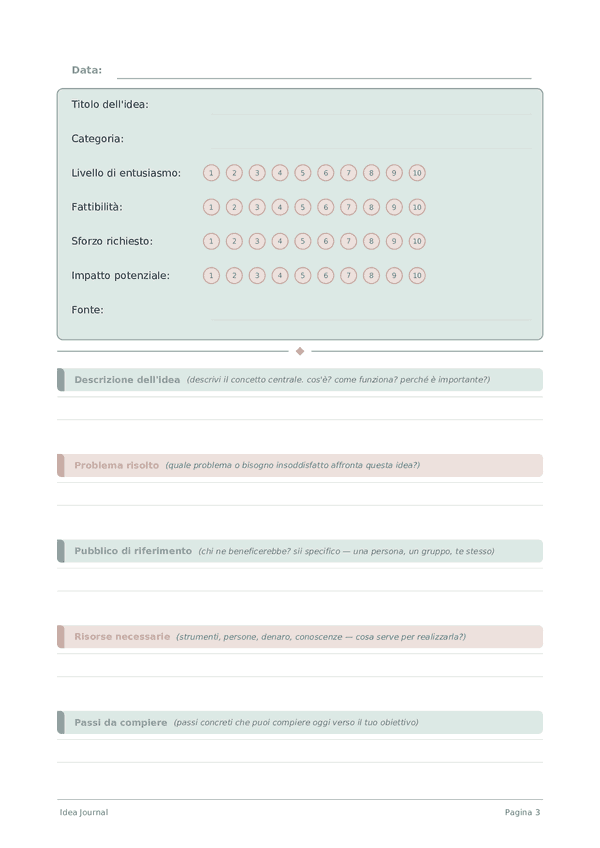
Diario delle Idee
Cattura, valuta e sviluppa le tue migliori idee
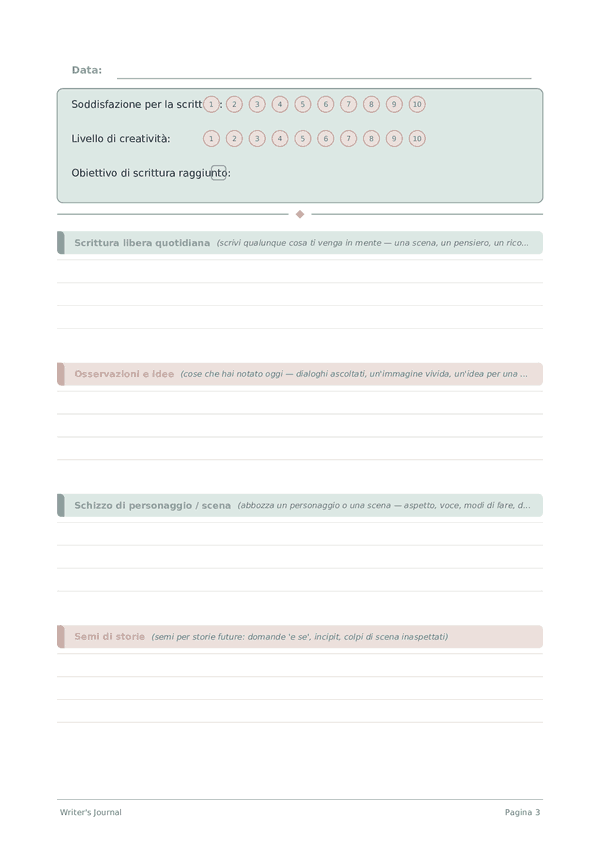
Diario dello Scrittore
Pratica quotidiana di scrittura creativa e sviluppo dell'arte
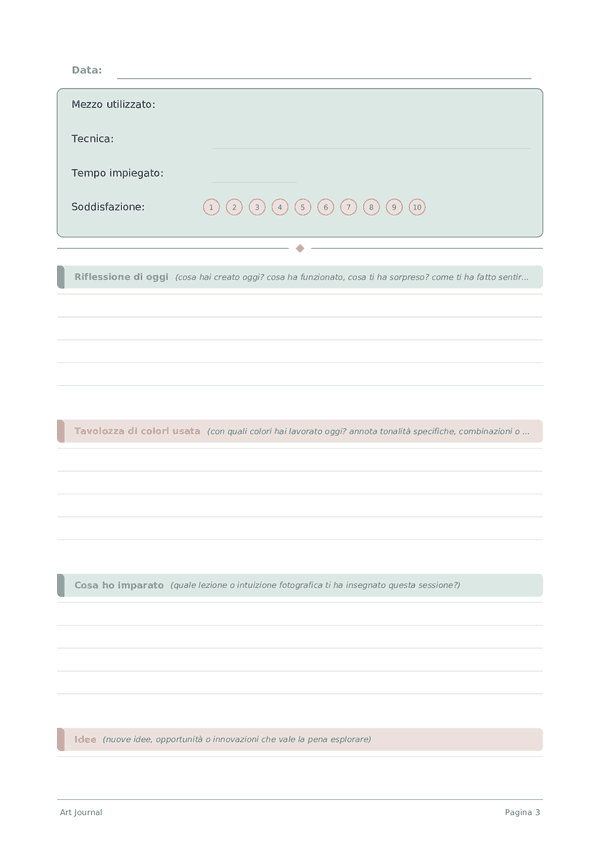
Diario d'Arte
Documenta il tuo processo creativo e la crescita artistica
Diario degli Schizzi
Pagine a griglia di punti aperte per schizzare, disegnare ed esplorare visivamente
Scorri per ingrandire, trascina per spostare