Printable Diario di Lettura
Rifletti su ogni libro che leggi
Personalizza campi
Attiva o disattiva i campi. Clicca la matita per rinominare, oppure aggiungi i tuoi campi.
Cos'è questo diario?
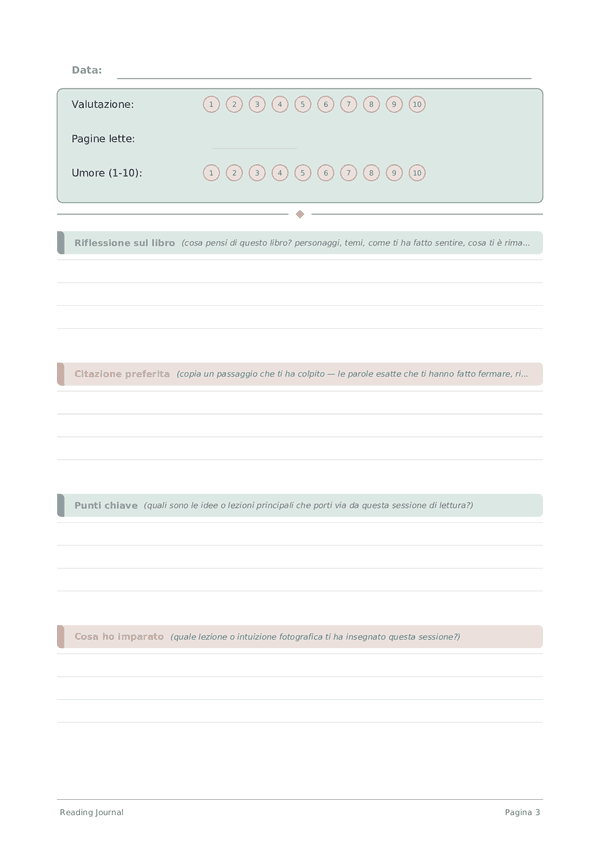
Questo è un diario ibrido — ogni pagina combina una sezione di tracciamento rapido in cima con un'area di scrittura a righe in basso. Ciò ti consente di catturare sia dati misurabili che riflessioni in forma libera in un unico posto.
Come compilare ogni campo
La parte superiore di ogni pagina ha campi a compilazione rapida (valutazioni, caselle di controllo, numeri). Sotto c'è una sezione a righe per scrivere. Ecco cosa significa ogni campo:
Valutazione
Valutazione complessiva dell'esperienza
Pagine lette
Quante pagine hai letto oggi? Anche poche pagine contano — la costanza è ciò che importa
Umore (1-10)
Valuta il tuo stato emotivo complessivo della giornata. 1 significa molto basso o depresso, 10 significa eccezionalmente felice e positivo. Non pensarci troppo — vai con la tua sensazione istintiva.
Riflessione sul libro
Cosa pensi di questo libro? Personaggi, temi, come ti ha fatto sentire, cosa ti è rimasto
Citazione preferita
Copia un passaggio che ti ha colpito — le parole esatte che ti hanno fatto fermare, riflettere o sentire
Punti chiave
Quali sono le idee o lezioni principali che porti via da questa sessione di lettura?
Cosa ho imparato
Scrivi una cosa nuova che hai imparato oggi. Può essere un fatto, un'abilità, un'intuizione su te stesso o una lezione di vita. Imparare ogni giorno si accumula in saggezza.
Consiglieresti
Consiglieresti questo libro? A chi e perché?
Consigli per il successo
Quando e con quale frequenza scrivere
Compila una pagina al giorno. La parte del tracker richiede meno di un minuto; cerca di farlo a un orario costante. La sezione di scrittura può essere fatta nello stesso momento o riservata quando hai 5 minuti tranquilli. Entrambe le parti insieme ti danno il quadro più completo della tua giornata.
Domande frequenti
Cosa traccia il Reading Journal per ogni voce?
Un tracker (rating/valutazione 0-10, pagine lette/pagine lette fino a 9999, mood/umore 0-10) più 8 righe per riflessione sul libro (riflessione sul libro) con prompt per citazione preferita (citazione preferita), punti chiave (punti chiave), cosa ho imparato (cosa ho imparato) e consiglieresti (lo consiglierei). Il formato ibrido si adatta sia alla riflessione per libro al completamento che alla registrazione per sessione durante le letture lunghe. La struttura trasforma la lettura da attività passiva in pratica di apprendimento attiva.
Perché annotare le pagine lette — non è il finire il libro ciò che conta?
Pagine lette mantiene l'abitudine quotidiana ed espone i pattern. Alcuni lettori sovrastimano costantemente il proprio ritmo; altri scoprono di leggere più di quanto pensassero. Willingham (2017, The Reading Mind, Jossey-Bass) sottolinea che il predittore più forte della comprensione della lettura è il coinvolgimento sostenuto — che si costruisce con la lettura quotidiana costante più che con sessioni di binge occasionali. Anche 10 pagine registrate ogni giorno superano il volume effettivo della maggior parte dei lettori casual.
Come scrivo una sezione punti chiave utile?
Due o tre idee specifiche del libro espresse con le tue parole, non quelle dell'autore. Wolf (2018, Reader, Come Home, HarperOne) descrive come la lettura profonda richieda al cervello di costruire anziché ricevere passivamente — la tua formulazione è la costruzione. I takeaway vaghi («libro importante») sbiadiscono; quelli specifici («l'interesse composto lavora contro di te nel debito tanto quanto lavora a tuo favore nei risparmi») sopravvivono.
Tenere un diario di lettura migliora davvero la ritenzione?
Sì — per la stessa ragione per cui l'effetto del testing funziona nell'apprendimento accademico. Roediger e Karpicke (2006, Psychological Science, 17(3), 249-255) hanno mostrato che il recupero e l'articolazione producono una memoria a lungo termine molto più forte della rilettura. I prompt di riflessione impongono il recupero; il campo citazione preferita richiede selezione. I lettori che tengono un diario ricordano circa 2-3 volte di più di un libro dopo sei mesi rispetto a chi si limita a finirlo e andare avanti.
Qual è la differenza rispetto a Goodreads o a un'app di lettura?
Goodreads registra che hai letto un libro e la tua valutazione; questo diario cattura cosa ne hai tratto. Le 8 righe di riflessione sono il luogo dove la lettura diventa apprendimento. Le app ottimizzano per la condivisione social e gli algoritmi di raccomandazione; questo diario ottimizza per la comprensione personale. Usali entrambi se vuoi — Goodreads per il tracciamento e la scoperta, il diario per i libri che vale la pena ricordare bene.
E se sto leggendo narrativa — i takeaway e 'cosa ho imparato' si applicano?
Sì. La narrativa insegna in modo diverso — su personaggi, linguaggio, verità emotiva, struttura narrativa — ma insegna. Maryanne Wolf (2018, Reader, Come Home, HarperOne) descrive come la lettura letteraria profonda sviluppi l'empatia e la riflessione in modo misurabile. Punti chiave può catturare un'osservazione sulla tecnica, un'immagine ricorrente o cosa è cambiato nel tuo pensiero. Consiglieresti diventa più sfumato per la narrativa: a chi, e per quale scopo?
Devo scrivere per libro o per sessione di lettura?
Per sessione per i libri lunghi o complessi; per libro per le letture più brevi o leggere. La registrazione multi-sessione cattura le impressioni che evolvono — la tua visione di un personaggio o di un argomento cambia spesso man mano che il libro si dipana. Il campo pagine lette supporta entrambi gli approcci. Le ricerche sulla lettura e l'istruzione mostrano costantemente che il coinvolgimento distribuito e la riflessione producono una comprensione più profonda rispetto alle reazioni di una singola sessione.
Con quale frequenza dovrei rileggere le voci di lettura passate?
Trimestralmente per la revisione dei pattern; a fine anno per il quadro completo. L'effetto spaziatura (Cepeda et al., 2006, Psychological Bulletin, 132(3), 354-380) rende la ri-lettura distribuita lo strumento più potente per l'integrazione a lungo termine. La revisione di fine anno con attenzione alle valutazioni e alle citazioni preferite rivela anche i cambiamenti di gusto e le preoccupazioni attuali — il diario diventa un registro involontario dello sviluppo intellettuale nel corso degli anni.
Potrebbe piacerti anche
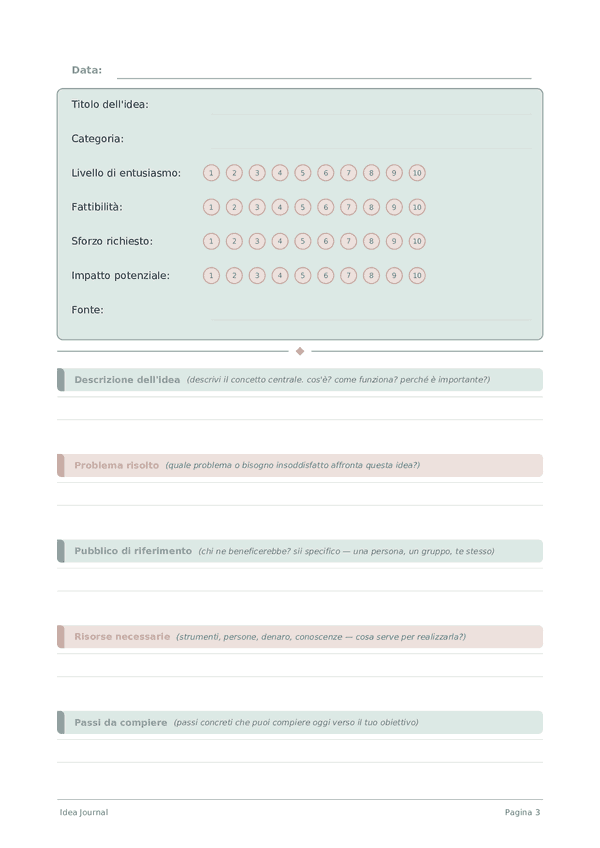
Diario delle Idee
Cattura, valuta e sviluppa le tue migliori idee
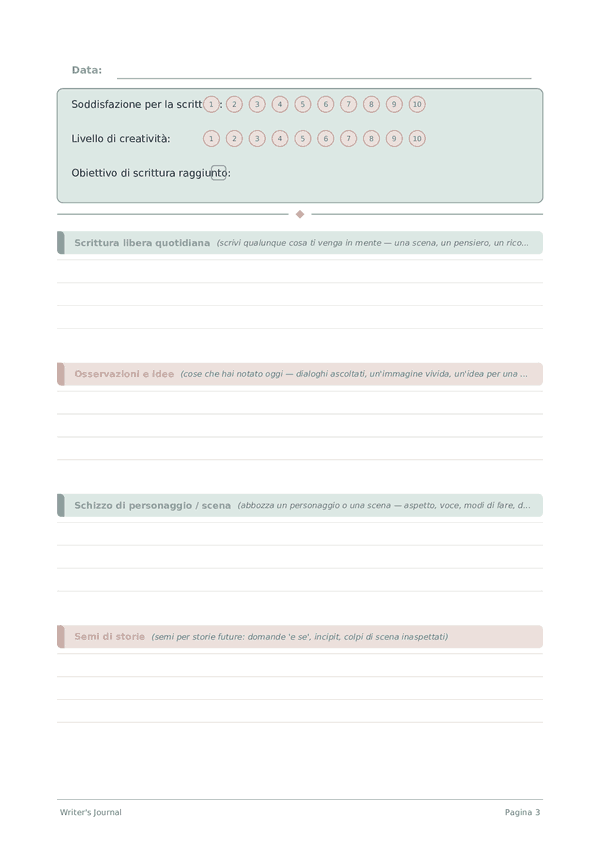
Diario dello Scrittore
Pratica quotidiana di scrittura creativa e sviluppo dell'arte
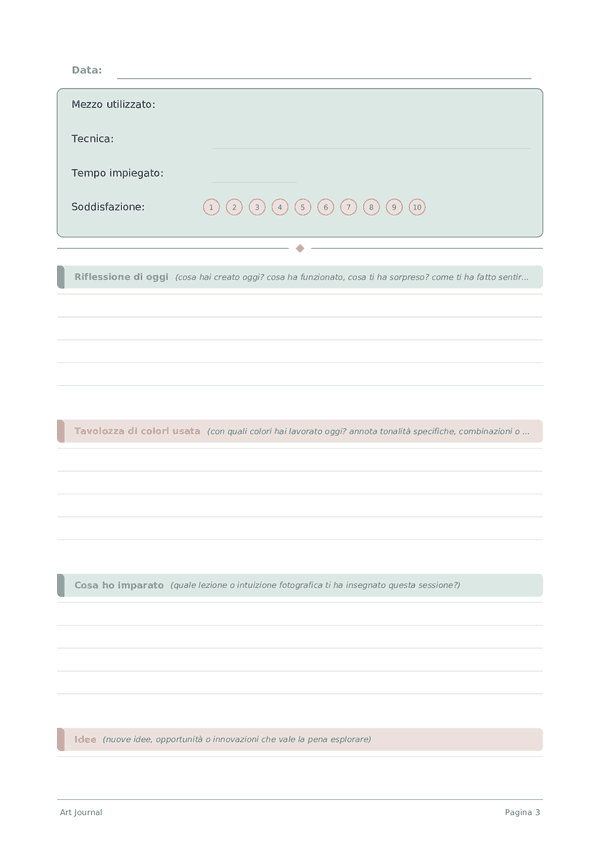
Diario d'Arte
Documenta il tuo processo creativo e la crescita artistica
Diario degli Schizzi
Pagine a griglia di punti aperte per schizzare, disegnare ed esplorare visivamente
Scorri per ingrandire, trascina per spostare