Printable Diario di Riflessione
Chiudi ogni giornata con chiarezza, intuizione e intenzione
Personalizza campi
Attiva o disattiva i campi. Clicca la matita per rinominare, oppure aggiungi i tuoi campi.
Cos'è questo diario?
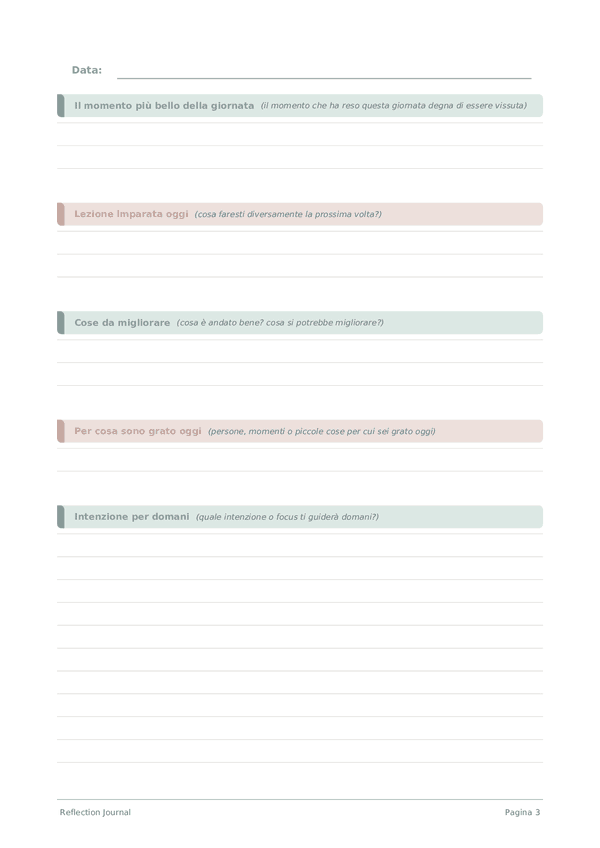
Questo è un diario con inserimenti giornalieri — ogni pagina rappresenta un giorno con domande strutturate che guidano la tua riflessione. Le sezioni sono progettate in modo che compilarle richieda solo 5–10 minuti, rendendo facile mantenere un'abitudine quotidiana.
Come compilare ogni campo
Ogni giorno troverai diverse sezioni etichettate con righe per scrivere. Ecco a cosa serve ogni sezione:
Il momento più bello della giornata
Qual è stata la parte migliore della tua giornata? Cattura il momento che ha reso oggi degno di essere vissuto. Questi momenti salienti diventano una raccolta dei tuoi ricordi più felici.
Lezione imparata oggi
Cattura un'intuizione dall'esperienza di oggi. Nel tempo, queste lezioni diventano una biblioteca di saggezza personale.
Cose da migliorare
Identifica un'area specifica in cui puoi fare meglio domani. Sii costruttivo, non critico — si tratta di crescita, non di auto-giudizio.
Per cosa sono grato oggi
Elenca 1–3 cose per cui sei grato oggi. Possono essere grandi o piccole — un buon pasto, una parola gentile, il sole. Scrivere di gratitudine è una delle pratiche di benessere più supportate scientificamente.
Intenzione per domani
Quale intenzione o focus ti guiderà domani?
Consigli per il successo
Quando e con quale frequenza scrivere
Compila una pagina al giorno. La maggior parte delle persone trova che la mattina (10 minuti dopo il risveglio) o la sera (prima di dormire) funzionino meglio. Scegli un orario e mantienilo per almeno due settimane prima di cambiare. La chiave è la regolarità, non la perfezione.
Domande frequenti
Cosa rende efficace questa struttura a cinque parti?
Highlight, lezione imparata oggi, cose da migliorare, per cosa sono grato oggi e intenzione per domani coprono insieme l'amplificazione degli eventi positivi (ricerca di Bryant sul savoring, 2003, Journal of Mental Health, 12(2)), la creazione di significato (Park, 2010, Psychological Bulletin, 136(2)), la gratitudine e le intenzioni di implementazione (Gollwitzer, 1999, American Psychologist, 54(7)). Ogni meccanismo basato sull'evidenza occupa una breve sezione, adattandosi alla finestra di 5-10 minuti senza diluire gli ingredienti attivi.
Come scrivo un utile 'lezione imparata oggi'?
Converti l'esperienza in un principio trasferibile, non in un'autocritica. Park (2010, Psychological Bulletin, 136(2)) sul meaning-making e il ciclo di apprendimento esperienziale di Kolb trattano entrambi la riflessione come il passo che trasforma gli eventi in apprendimento. Una lezione utile è una frase che indica cosa sai ora e puoi applicare domani — non «non avrei dovuto fare X» ma «le riunioni alle 8 di mattina prosciugano la mia concentrazione mattutina».
Perché c'è una riga 'intenzione per domani'?
Le intenzioni di implementazione — piani se-allora — colmano il divario tra sapere e fare. Gollwitzer (1999, American Psychologist, 54(7)) e Gollwitzer e Sheeran (2006, Advances in Experimental Social Psychology, 38) hanno analizzato 94 studi mostrando che le intenzioni specificate con cue situazionali raddoppiavano i tassi di azione. Due righe è lo spazio per un chiaro enunciato se-allora, non una lunga lista di cose da fare.
'cose da migliorare' è uguale all'autocritica?
No, e la distinzione è importante. Neff (2011, «Self-Compassion», William Morrow) ha mostrato che la self-compassion si correla con la crescita e la motivazione; la dura autocritica predice il contrario. Formula la riga come un passo successivo costruttivo — cosa faresti diversamente — non come un giudizio morale. Tre righe dovrebbero produrre un cambiamento specifico e attuabile, non un elenco di fallimenti.
Quando farlo — davvero di sera?
Fine giornata è convenzionale, ma la ricerca è mista. Il sonno consolida i ricordi emotivi (Walker, 2009, Annals of the New York Academy of Sciences, 1156); riflettere prima di dormire può preparare l'elaborazione. Alcuni trovano la riflessione tarda ruminativa — Trapnel e Campbell (1999, JPSP, 76(2)) hanno distinto la riflessione sana dalla ruminazione. Se la riflessione ti tiene sveglio, spostala a inizio serata.
Cosa faccio se la mia giornata non ha un vero 'highlight'?
Trova il momento positivo più piccolo onestamente. La teoria broaden-and-build di Fredrickson (2001, American Psychologist, 56(3)) ha mostrato che anche piccoli eventi positivi hanno effetti misurabili quando vengono notati. La ricerca di Bryant sul savoring suggerisce che dedicarsi deliberatamente ai micro-positivi — un buon caffè, uno scambio gentile — allena il rilevamento dell'affetto positivo. Tre righe accolgono il piccolo; non hai bisogno di un'esperienza di punta.
In cosa si differenzia da un diario della gratitudine?
Un diario della gratitudine si concentra su un meccanismo. Il Diario della Riflessione aggiunge la creazione di significato, la revisione costruttiva e l'intenzione futura — un ciclo di fine giornata più completo. Emmons e McCullough (2003, JPSP, 84(2)) hanno stabilito gli effetti della gratitudine; gli interventi focalizzati sulla riflessione come il «miglior sé possibile» di Seligman et al. (2005, American Psychologist, 60(5)) operano attraverso meccanismi diversi ma complementari.
Quanto velocemente dovrei aspettarmi risultati?
Seligman et al. (2005, American Psychologist, 60(5)) hanno rilevato che un esercizio strutturato di psicologia positiva produceva cambiamenti nel benessere rilevabili entro una settimana e mantenuti per sei mesi. Per individuare schemi tra le giornate, aspetta 2-4 settimane. La struttura a cinque parti è densamente carica, quindi il completamento quotidiano per un mese è il dosaggio minimo per vedere se si adatta alle tue esigenze.
Potrebbe piacerti anche
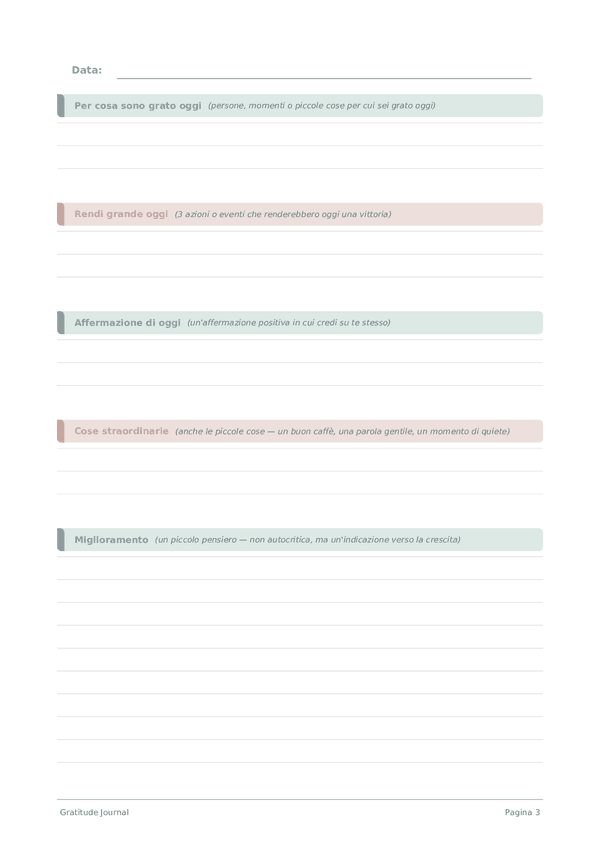
Diario della Gratitudine
Coltiva la riconoscenza e la positività ogni giorno
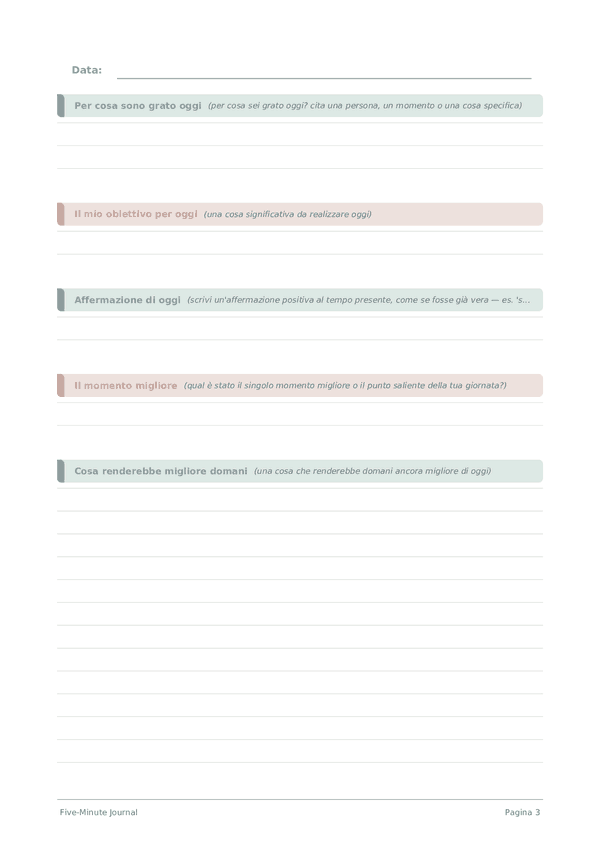
Diario dei Cinque Minuti
Diario quotidiano di gratitudine e riflessione in cinque minuti
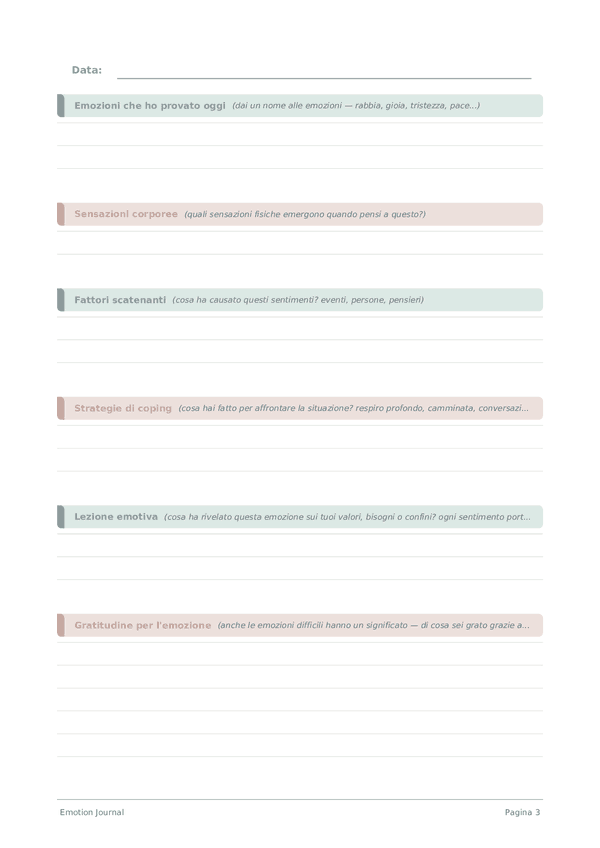
Diario delle Emozioni
Comprendi, elabora e cresci attraverso le tue emozioni
Tracker delle Abitudini
Costruisci abitudini migliori un giorno alla volta
Scorri per ingrandire, trascina per spostare