Printable Gartentagebuch
Planen, verfolgen und von jeder Gartensaison lernen
A structured daily log for gardeners. Record weather, watering, fertilizing, plant activities, harvests, and pest observations — all in one place. Build a season-by-season knowledge base that helps you grow more successfully each year.
Felder anpassen
Schalten Sie Felder ein oder aus. Klicken Sie auf den Stift zum Umbenennen oder fügen Sie eigene Felder hinzu.
Vorteile
Anleitung
Was ist dieses Journal?
A garden journal is a daily log for tracking weather conditions, plant care activities, and observations in your garden. By recording what you planted, watered, harvested, and noticed, you build a seasonal record that becomes more valuable each year — revealing what works in your specific soil, climate, and microenvironment.
This journal is for gardeners of all types — from balcony container growers to homesteaders with acres. Whether you grow flowers, vegetables, herbs, or a mix of everything, consistent journaling transforms your garden from a series of annual experiments into a cumulative body of knowledge.
Master gardeners consistently cite their journals as their most valuable tool. The garden journal captures information that no book or website can provide: what grew well in your specific conditions, when your microclimate's last frost actually occurs, which pest strategies worked in your soil, and the exact timing that produced your best harvests. Over years, this data becomes irreplaceable.
Ausgefülltes Beispiel
So sieht ein typischer Eintrag aus, wenn er ausgefüllt ist:
Wie Sie jedes Feld ausfüllen
Oben auf jeder Seite befinden sich schnell ausfüllbare Felder (Bewertungen, Kontrollkästchen, Zahlen). Darunter ist ein linierter Bereich zum Schreiben. Hier erfahren Sie, was jedes Feld bedeutet:
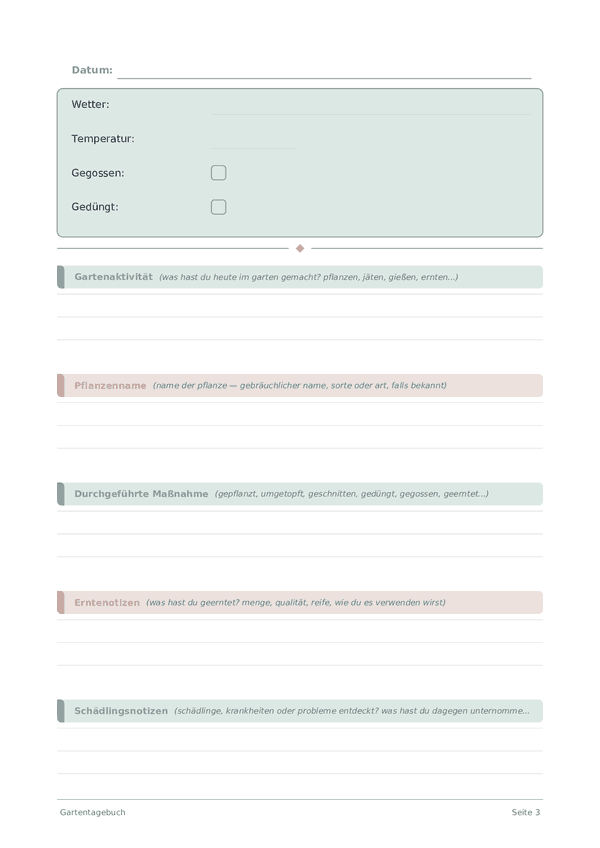
Wetter
Sonnig, bewölkt, Regen, Wind — aktuelle Bedingungen
Temperatur
Notieren Sie Ihre Basaltemperatur. Temperaturveränderungen helfen, den Eisprung und die allgemeine Zyklusgesundheit zu verfolgen.
Gegossen
Hast du heute deinen Garten oder bestimmte Pflanzen gegossen?
Gedüngt
Hast du heute Dünger oder Bodenverbesserer auf deine Pflanzen aufgetragen?
Gartenaktivität
Was hast du heute im Garten gemacht? Pflanzen, Jäten, Gießen, Ernten...
Pflanzenname
Name der Pflanze — gebräuchlicher Name, Sorte oder Art, falls bekannt
Durchgeführte Maßnahme
Gepflanzt, umgetopft, geschnitten, gedüngt, gegossen, geerntet...
Erntenotizen
Was hast du geerntet? Menge, Qualität, Reife, wie du es verwenden wirst
Schädlingsnotizen
Schädlinge, Krankheiten oder Probleme entdeckt? Was hast du dagegen unternommen?
Beobachtungen
Allgemeine Gartenbeobachtungen — Wachstumsfortschritt, Wettereinflüsse, Bodenzustand, Tierwelt
Tipps für den Erfolg
Wann und wie oft schreiben
During the growing season, write a brief entry every day or every other day \u2014 even just noting weather, watering, and any visible changes. Weekly, do a deeper walkthrough and record plant health, new growth, and pest activity. At season\u2019s end, review the full log and write a summary of what worked, what failed, and what to change. In the off-season, revisit your journal monthly when planning next year\u2019s garden.
Häufig gestellte Fragen
Was sollte ich täglich in ein Gartenjournal schreiben?
Die Royal Horticultural Society empfiehlt, Wetter, Temperatur, Gießen, Düngen und jede konkrete Pflanzenaktion zu protokollieren — genau die Tracker- und Linienprompt-Struktur hier. Ergänzen Sie Schädlingsbeobachtungen und Erntenotizen, wenn relevant. Tägliche Einträge brauchen keine Länge; eine oder zwei Zeilen plus die Häkchen für gegossen und gedüngt reichen, um eine nutzbare Saisonaufzeichnung aufzubauen. BUND und NABU empfehlen ähnliche Strukturen für Naturgartenbeobachtungen.
Warum Wetter und Temperatur zusammen mit Gartenarbeiten erfassen?
Pflanzenleistung ist wettergetrieben. Materialien des USDA Cooperative Extension Service betonen die Korrelation von Temperatur, Niederschlag und Frostdaten mit Pflanzenergebnissen, um lokale Praxis zu verfeinern. Der Trackerbereich platziert Wetter und Temperatur neben den Häkchen für Gießen und Düngen, gerade damit Sie zum Beispiel erkennen, dass Überwässerung mit kühlen bewölkten Wochen zusammenfiel — ein Muster, das ohne tägliches Protokoll unsichtbar bleibt.
Wie passen Pflanzenhärtezonen hier hinein?
USDA Plant Hardiness Zones definieren mittlere Winterminima regional und leiten die Auswahl mehrjähriger Pflanzen. In Europa nutzen Gärtner äquivalente Zonen (Deutschland überwiegend Zone 6–8). Das Journal druckt keine Zone, erwartet aber, dass Sie Ihre kennen — tragen Sie sie auf der Innenseite des Deckels ein. Protokollieren Sie dann ersten Frost, letzten Frost und ungewöhnliche Temperaturschwankungen. Über Jahre verfeinern Ihre Daten die offizielle Zone zur mikroklima-genauen Version.
Was kommt in die Schädlings-Notiz-Aufforderung?
Art (oder beste Vermutung), betroffene Pflanzen, Schweregrad, Wetterkontext und jede Intervention. Die RHS-Schädlingsleitfäden empfehlen, das erste Sichtungsdatum pro Saison festzuhalten — Blattläuse in derselben Maiwoche jedes Jahr offenbaren vorhersagbaren Druck. Vermeiden Sie schnelle Breitbandsprays; erst protokollieren, identifizieren, dann handeln. Doug Tallamy erinnert in „Bringing Nature Home" (Timber Press, 2007) daran, dass viele Raupen ökosystemnützlich sind, keine Schädlinge.
Wie unterscheidet sich das von einer Garten-App?
Apps schicken generische Erinnerungen basierend auf Ihrem Standort. Dieses Journal erfasst, was tatsächlich in Ihrem Boden, Ihrem Mikroklima, mit Ihren Händen passierte. Die Erntenotizen und Beobachtungsaufforderungen erfassen qualitative Informationen — Geschmack, Wuchsstärke, Krankheitsdruck — die keine App sammelt. Viele erfahrene Gärtner nutzen beides: eine App zur Pflanzenbestimmung und Frostwarnung, Papier für die saisonübergreifende Geschichte und Mustererkennung.
Wie lange dauert es, bis sich das Journal auszahlt?
Eine volle Wachstumssaison liefert nützliche Vergleiche; drei Saisons offenbaren verlässliche Muster. Bildungsmaterialien von RHS, American Horticultural Society und dem Bundesverband der Garten- und Landschaftsbauer (BGL) betonen, dass Gartenbau eine mehrjährige Disziplin ist — was in einem Jahr scheitert, kann im nächsten gedeihen, abhängig vom Wetter. Die Durchsicht vergangener Einträge vor jeder Frühjahrspflanzung ist der Moment, in dem sich der Journalwert am sichtbarsten vervielfacht.
Sollen Anfänger jede Pflanze oder den Garten insgesamt tracken?
Beginnen Sie mit dem allgemeinen Tagestracker plus drei oder vier Prioritätspflanzen, die Ihnen wirklich wichtig sind — Tomaten, Rosen, was auch immer motiviert. Das Feld pflanzenname im Linienbereich erlaubt fokussierte Einträge, ohne jede Art zu erzwingen. Die Anfängerleitlinien der Royal Horticultural Society warnen vor Übertracking, das zur Aufgabe führt. Die Abdeckungsbreite wächst natürlich, wenn die Gewohnheit hält und Freude bringt.
Wie verändert das Protokollieren von Ernten die Planung der nächsten Saison?
Erträge zeigen den ROI. Wenn Ihre Zucchini 14 Früchte produzierte und Ihre Paprika zwei, verschiebt sich die Beetzuteilung im nächsten Frühjahr entsprechend. Publikationen der American Horticultural Society empfehlen, Menge und Qualität (Geschmack, Lagerfähigkeit) gemeinsam zu tracken. Über drei Saisons wird die Erntenotizen-Spalte zur am meisten konsultierten Seite beim Entwurf der Beete für das nächste Jahr und bei Saatgutbestellungen.
Das könnte Ihnen auch gefallen
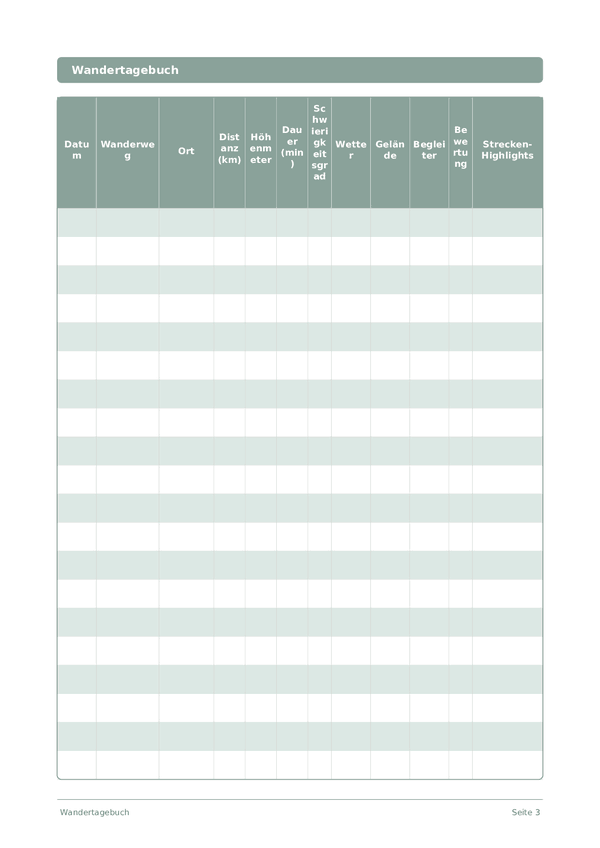
Wandertagebuch
Jeden Wanderweg, Gipfel und jedes Outdoor-Abenteuer verfolgen
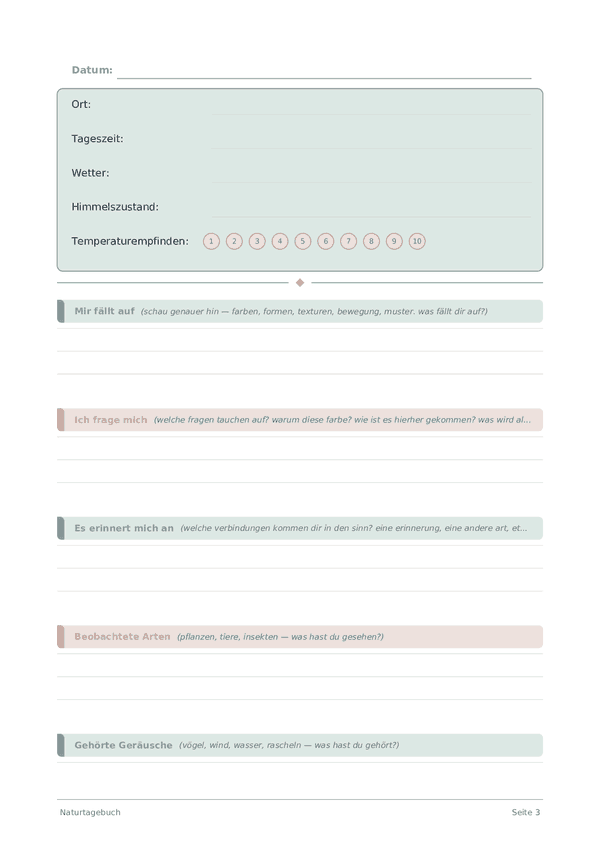
Naturtagebuch
Beobachten, staunen und sich mit der Natur verbinden
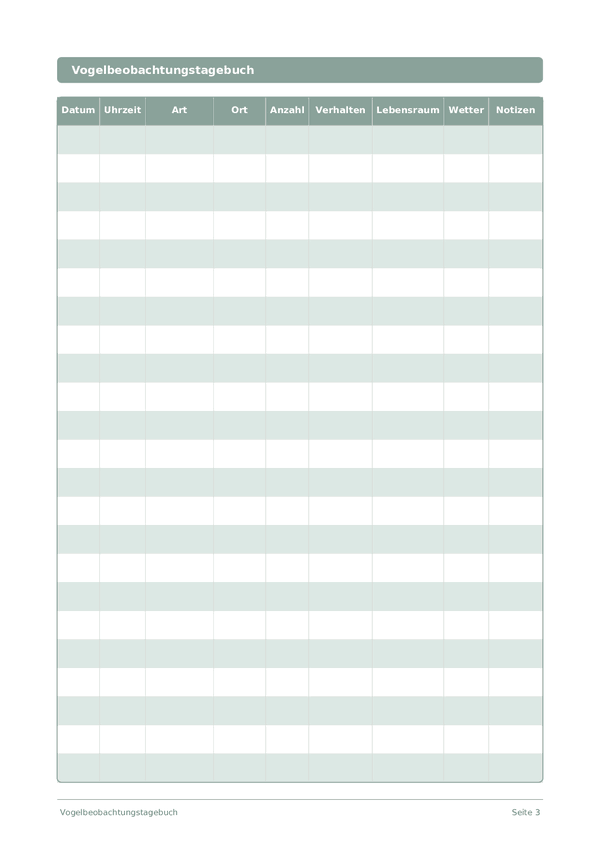
Vogelbeobachtungstagebuch
Jede Vogelsichtung mit Art, Lebensraum und Verhalten festhalten
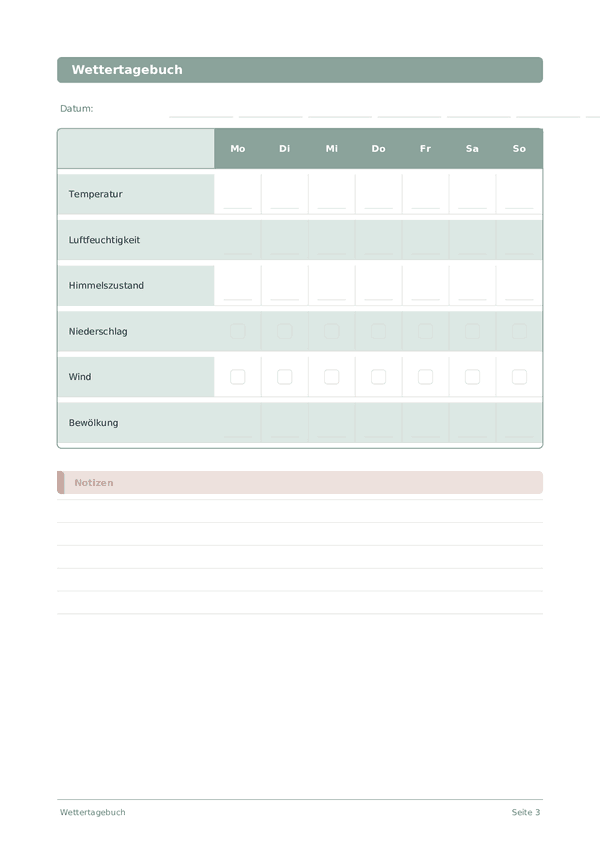
Wettertagebuch
Tägliche Wetterbeobachtungen für Hobby-Meteorologen
Scrollen zum Zoomen, ziehen zum Bewegen