Printable Wettertagebuch
Tägliche Wetterbeobachtungen für Hobby-Meteorologen
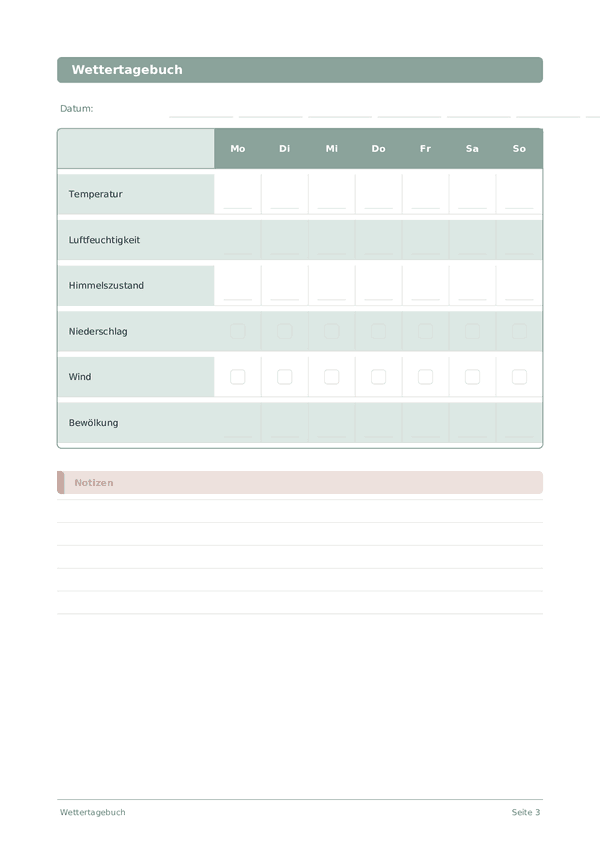
A structured daily log for anyone who wants to track local weather conditions with precision and consistency. Record temperature, humidity, sky condition, precipitation, wind, and cloud cover each day to build a meaningful personal climate record. Over weeks and months, patterns emerge — seasonal shifts, microclimatic quirks, and correlations with everyday life become visible.
Felder anpassen
Schalten Sie Felder ein oder aus. Klicken Sie auf den Stift zum Umbenennen oder fügen Sie eigene Felder hinzu.
Vorteile
Anleitung
Was ist dieses Journal?
A weather journal is a daily tracker for recording local weather conditions with precision. By logging temperature, humidity, sky conditions, and precipitation each day, you build a hyperlocal climate record that reveals seasonal patterns, microclimates, and long-term trends that official weather stations may miss.
This journal is for weather enthusiasts, gardeners, photographers, outdoor planners, and anyone fascinated by the ever-changing atmosphere. It is also valuable for documenting how weather affects your mood, energy, and activities — creating a personal weather-life correlation record.
Citizen weather observation has a long and valuable history in meteorology. Your daily records contribute to understanding local climate patterns that coarse-grained weather data cannot capture. Over years, this journal becomes a personal almanac — telling you exactly when your area's seasons shift, which weeks bring the best light for photography, and how your garden's microclimate differs from the nearest weather station.
Ausgefülltes Beispiel
So sieht ein typischer Eintrag aus, wenn er ausgefüllt ist:
| Mon | Tue | Wed | Thu | Fri | Sat | Sun | |
|---|---|---|---|---|---|---|---|
| Temperatur | 8 | 11 | 14 | 12 | 9 | 7 | 10 |
| Luftfeuchtigkeit | 72 | 65 | 58 | 70 | 78 | 82 | 68 |
| Himmelszustand | Overcast | Partly sunny | Clear | Cloudy | Rain | Fog AM, clear PM | Partly cloudy |
| Niederschlag | ✓ | ✓ | |||||
| Wind | ✓ | ✓ | ✓ | ||||
| Bewölkung | 9 | 5 | 1 | 7 | 10 | 6 | 4 |
Wie Sie jedes Feld ausfüllen
Jede Seite ist ein Wochenraster. Die Zeilen sind Ihre Tracking-Elemente, die Spalten sind die Wochentage. Hier erfahren Sie, was jedes Element bedeutet:
Temperatur
Notieren Sie Ihre Basaltemperatur. Temperaturveränderungen helfen, den Eisprung und die allgemeine Zyklusgesundheit zu verfolgen.
Luftfeuchtigkeit
Himmelszustand
Wie sieht der Himmel gerade aus? Beschreibe Wolken, Klarheit oder Wetter
Niederschlag
Wind
Bewölkung
Tipps für den Erfolg
Wann und wie oft schreiben
Record observations at the same time every day without exception \u2014 consistency is the foundation of meaningful weather data. Morning readings capture overnight changes; afternoon readings capture the day\u2019s peak conditions. A twice-daily habit takes under 2 minutes each time. Weekly, scan your entries for developing patterns. Monthly and seasonally, compare this period to the same period in previous years. After one full year, your data becomes a genuine reference for your local microclimate.
Häufig gestellte Fragen
Warum Wetter manuell protokollieren, wenn es Prognosen und Apps gibt?
Prognosen sagen regionale Mittel voraus; dieses Journal zeichnet Ihr exaktes Mikroklima auf. Citizen-Science-Programme wie CoCoRaHS und Beobachterstationen des Deutschen Wetterdienstes (DWD) verlassen sich auf manuelle Freiwilligenmessungen, gerade weil automatisierte Stationen lokale Variation übersehen. Hügelkuppen, Täler und schattige Gärten weichen mehrere Grad von offiziellen Flughafendaten ab. Ein tägliches persönliches Logbuch baut eine genaue Klimabasislinie, die keine kommerzielle App liefert.
Zu welcher Tageszeit sollte ich meine Messungen vornehmen?
Konsistenz zählt mehr als die exakte Stunde. Die Leitlinien des Cooperative Observer Program und CoCoRaHS empfehlen täglich dieselbe Zeit — typischerweise morgens zwischen 7 und 9 Uhr — damit Mehrtagesvergleiche gültig bleiben. Der Deutsche Wetterdienst nutzt für Klimastationen 7:30 MEZ als Standardtermin. Das Journal druckt absichtlich keinen festen Zeitslot, damit Sie wählen, was zu Ihrem Zeitplan passt, und ihn dann halten. Schwankende Zeiten erzeugen Rauschen.
Wie schätze ich die Luftfeuchtigkeit ohne Sensor?
Visuelle Hinweise approximieren sie: starker Tau, beschlagene Fenster und klebrige Kleidung deuten auf über 80 % relative Feuchte; statische Elektrizität und rissige Lippen auf unter 40 %. Für Genauigkeit kostet ein einfaches Hygrometer wenig und passt natürlich zu diesem Journal. Die how to use-Notiz schlägt sensorlose Schätzung gerade deshalb vor, damit das Journal nützlich bleibt, bevor Sie in Instrumente investieren.
Wie funktioniert die 1–10-Bewölkungsbewertung?
Sie spiegelt die internationale Okta-Skala wider, die von meteorologischen Diensten weltweit (einschließlich des Deutschen Wetterdienstes) verwendet wird und Himmelsbedeckung in Achteln misst. Übersetzt auf 1–10: 1 = klar blau, 5 = vereinzelte Kumuluswolken, 8 = überwiegend bedeckt, 10 = vollständige Wolkendecke. Tägliche Bewertungen offenbaren Sonnenscheintrends und erlauben es, Wolkentage mit Stimmung, Gartenwachstum oder Solarertrag zu korrelieren.
Wie lange dauert es, bis ich sinnvolle Muster sehe?
Ein voller Kalenderjahreszyklus erfasst alle Jahreszeiten einmal. Drei Jahre erlauben Vergleiche — war dieser April wärmer als die beiden vorherigen? Die Datenkonventionen des Cooperative Observer Program behandeln 30-jährige Reihen als Klimanormalwerte (DWD ebenso), aber persönliches Wetterjournaling wird zur Einjahresmarke nützlich und ab dem dritten Jahr sichtbar wertvoll — besonders für Gärtner und Outdoor-Sportler.
Können meine Daten mit Stimmung oder Gesundheit korrelieren?
Viele Menschen nehmen eine Verbindung wahr. Forschung zu saisonal-affektiver Störung und Wetterfühligkeit existiert, doch die Ergebnisse sind gemischt und individuell. Das parallele Protokollieren von Bewölkung, Niederschlag und subjektivem Zustand (in einer separaten Stimmungsspalte oder Haftnotiz) erlaubt es, das eigene Muster zu prüfen. Dies ist beobachtende Selbsterkenntnis, keine Diagnose — konsultieren Sie bei anhaltenden Stimmungssymptomen eine Ärztin oder einen Arzt.
Wie unterscheidet sich das von automatischen Heim-Wetterstationen?
Stationen protokollieren Temperatur und Luftfeuchtigkeit automatisch, erzeugen aber rauschige Daten, die niemand durchsieht. Das Journal erzwingt eine tägliche 60-Sekunden-Pause, um den Himmel zu betrachten, Bedingungen zu notieren und Bewölkung zu bewerten — Beobachtungen, die kein Sensor erfasst. Viele Enthusiasten betreiben beides: die Station für präzise Zahlen, das Journal für die menschenlesbare Erzählung und Ihr meteorologisches Auge über die Zeit.
Sollte ich ungewöhnliche Ereignisse wie Stürme oder ersten Frost notieren?
Ja — heben Sie sie deutlich hervor. Die Leitlinien des Cooperative Observer Program und des Deutschen Wetterdienstes behandeln ersten Frost, letzten Frost, schwere Stürme und Extremhochs/-tiefs als wichtige Datenpunkte. Unterstreichen oder markieren Sie diese Einträge mit Sternchen, damit sie beim Zurückblättern auffallen. Gärtner verlassen sich besonders auf mehrjährige Frostdaten; Outdoor-Sportler tracken Sturmhäufigkeit und Trockenperiodenlänge für die Aktivitätsplanung.
Das könnte Ihnen auch gefallen
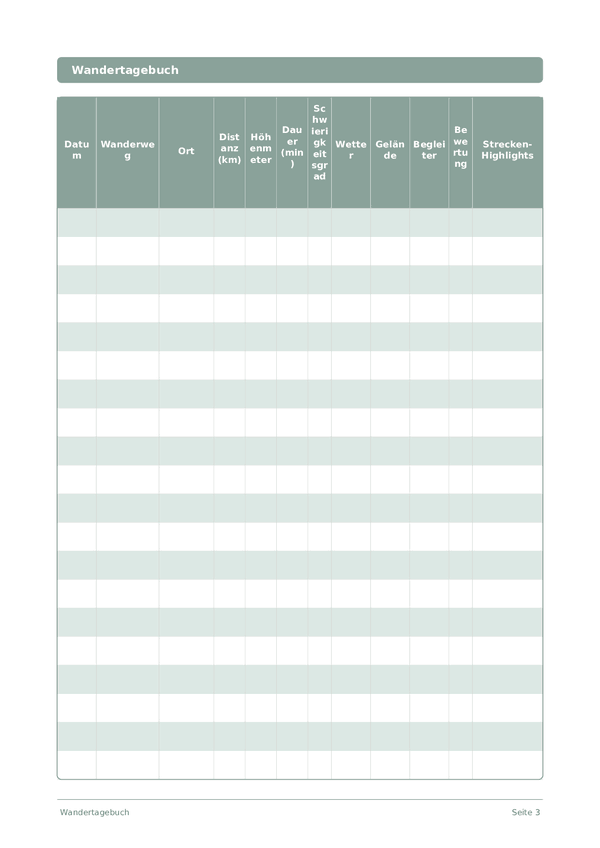
Wandertagebuch
Jeden Wanderweg, Gipfel und jedes Outdoor-Abenteuer verfolgen
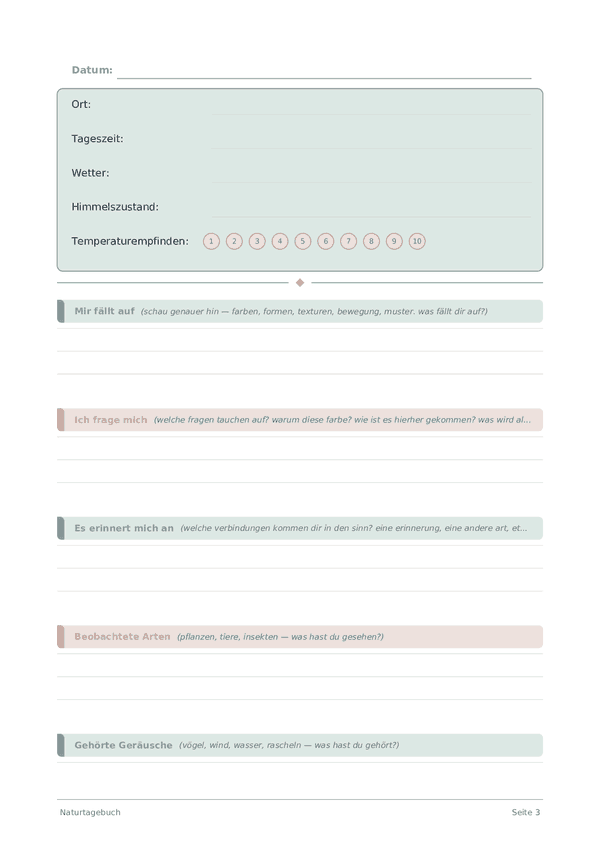
Naturtagebuch
Beobachten, staunen und sich mit der Natur verbinden
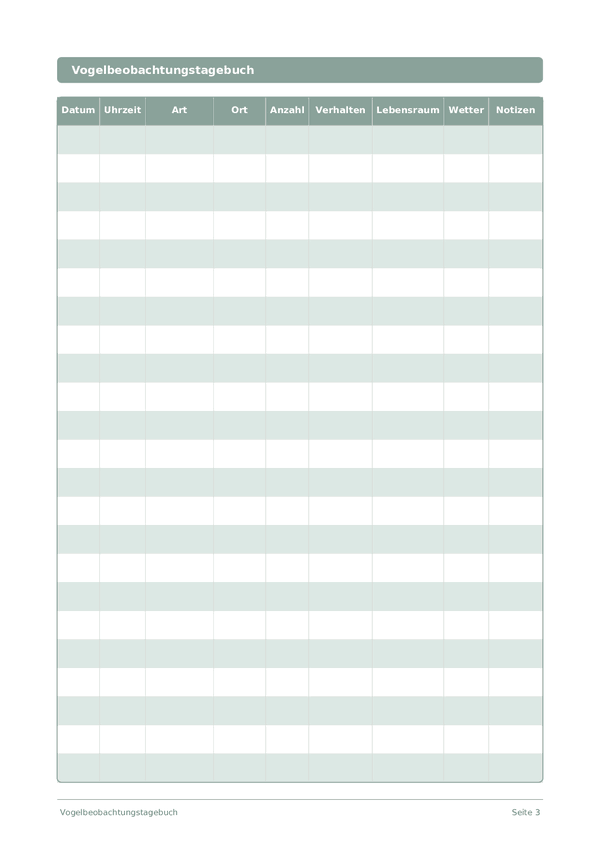
Vogelbeobachtungstagebuch
Jede Vogelsichtung mit Art, Lebensraum und Verhalten festhalten
Gartentagebuch
Planen, verfolgen und von jeder Gartensaison lernen
Scrollen zum Zoomen, ziehen zum Bewegen