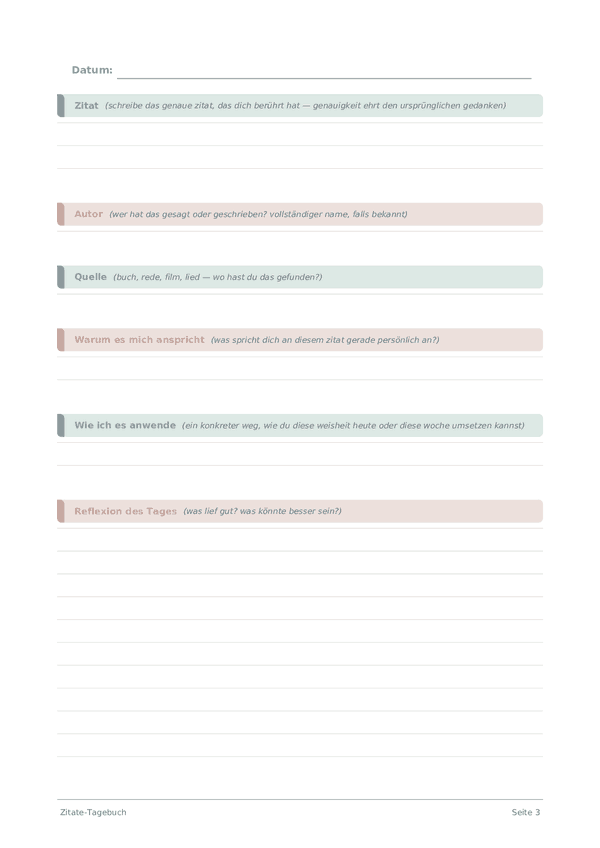
Printable Zitate-Tagebuch
Tägliche inspirierende Zitatesammlung und Reflexionstagebuch
Build a personal library of meaningful quotes and deepen their impact through reflection. Transform inspiring words into practical wisdom by exploring why they resonate and how to apply them.
Felder anpassen
Schalten Sie Felder ein oder aus. Klicken Sie auf den Stift zum Umbenennen oder fügen Sie eigene Felder hinzu.
Was ist dieses Journal?
A quote journal transforms the simple act of collecting quotations into a reflective practice that deepens your thinking. Instead of passively highlighting a line and moving on, each entry asks you to sit with the words — to consider who said them, why they resonate, and how they connect to your own life. This turns scattered bookmarks into a curated library of wisdom that you have actively processed.
Every page captures the quote itself, the author and source, your reflection on why it matters to you, a concrete thought on how it applies to your current situation, and any spark of inspiration it ignites. The structured format ensures you do more than admire a clever sentence — you engage with it, question it, and make it yours.
Add a new entry whenever a quote stops you in your tracks, whether you find it in a book, a podcast, a conversation, or scrolling online. Over months, your journal becomes a personal philosophy book — one where every page carries not just someone else's words, but your own growing understanding of what matters to you.
Ausgefülltes Beispiel
So sieht ein typischer Eintrag aus, wenn er ausgefüllt ist:
Wie Sie jedes Feld ausfüllen
Jeden Tag finden Sie mehrere beschriftete Abschnitte mit Zeilen zum Schreiben. Hier erfahren Sie, wofür jeder Abschnitt gedacht ist:
Zitat
Schreibe das genaue Zitat, das dich berührt hat — Genauigkeit ehrt den ursprünglichen Gedanken
Autor
Wer hat das gesagt oder geschrieben? Vollständiger Name, falls bekannt
Quelle
Buch, Rede, Film, Lied — wo hast du das gefunden?
Warum es mich anspricht
Was spricht dich an diesem Zitat gerade persönlich an?
Wie ich es anwende
Ein konkreter Weg, wie du diese Weisheit heute oder diese Woche umsetzen kannst
Reflexion des Tages
Blicken Sie ehrlich auf Ihren Tag zurück. Was lief gut? Was könnte besser sein? Es geht nicht um Urteile — es geht um Lernen und Wachstum.
Tipps für den Erfolg
Wann und wie oft schreiben
Add quotes as you encounter them — there is no benefit to batching. Keep the journal or a capture tool nearby so nothing slips through the cracks. Aim for at least two or three quotes per week; fewer than that and the journal loses momentum, more is fine. Monthly, review your collection and highlight the five quotes that still hit hardest. Over time, these highlighted quotes become a personal manifesto of your deepest values — a resource to revisit during difficult decisions or periods of doubt.
Häufig gestellte Fragen
Wofür ist das Zitate-Journal gedacht?
Ein strukturiertes Journal zum Sammeln und Reflektieren bedeutsamer Zitate. Jeder Eintrag hat sechs Felder: das Zitat selbst (3 Zeilen), Autor, Quelle, warum es resoniert (2 Zeilen), wie anzuwenden (2 Zeilen) und breitere Reflexion (3 Zeilen). Die Struktur verwandelt passives Zitate-Speichern in aktive Praxis — Worte werden erst nützlich, wenn du artikulierst, warum sie wichtig sind und wie du sie nutzt.
Warum die Quelle eines Zitats notieren, nicht nur den Autor?
Die Quelle liefert Verifikation und Kontext. Viele weit geteilte Zitate sind falsch zugeordnet oder erfunden — "Buch, Seite, Jahr" (oder "Interview, Publikation") zu notieren zwingt dich, zu bestätigen, dass das Zitat echt ist. Es erlaubt zudem, zum umliegenden Kontext zurückzukehren, der oft nützlicher ist als die isolierte Zeile. Das Autorfeld allein, üblich in sozialen Medien, fördert Falschzuordnungen.
Wie nutze ich "warum es resoniert" und "wie anzuwenden" zusammen?
"Warum es resoniert" ist die Diagnose — welche aktuelle Sorge oder Situation spricht das Zitat an? "Wie anzuwenden" ist das Rezept — welches Verhalten oder Denken würde sich ändern, wenn du es ernst nähmst? Ohne beides wird Zitate-Sammeln zur Dekoration. Roediger und Karpicke (2006, Psychological Science, 17(3), 249-255) zeigen, dass Elaboration — neues Material mit bestehendem Wissen zu verbinden — Inhalt erst haften lässt.
Vertieft das Schreiben über Zitate wirklich ihre Wirkung?
Ja. Elaborative Enkodierung — in eigenen Worten zu erklären, warum etwas zählt — erzeugt stärkeres Gedächtnis und verhaltensmäßige Umsetzung als erneutes Lesen. Es ist derselbe Mechanismus, der die Feynman-Technik im akademischen Lernen wirken lässt. Die dreizeilige Reflexion ist die elaborative Arbeit; ohne sie ist das Zitat im Grunde ein Screenshot. Die meisten gespeicherten Zitate werden nie wiedergelesen; geschriebene schon.
Wie unterscheidet sich das von Zitatspeichern in Goodreads oder einer Notiz-App?
Apps speichern Text; dieses Journal erzwingt Interpretation. Goodreads sammelt markierte Zitate; die sechs Felder hier zwingen, etwas damit zu tun. Die Reibung der Handschrift verlangsamt dich zudem auf Denkgeschwindigkeit, was laut mehreren Kognitionsstudien das Verständnis verbessert. Nutze Apps für Massensammlung, wenn du willst; dieses Journal für die Zitate, die das Nachdenken wert sind.
Wie oft sollte ich ein neues Zitat hinzufügen — täglich, wöchentlich?
Qualität vor Häufigkeit. Ein Zitat pro Woche, über das du tatsächlich reflektierst, schlägt fünf pro Tag, die ohne Gedanken geloggt werden. Das Journal arbeitet als Tropfpraxis: ein bewusst gewähltes Zitat, zu dem du in einem Monat zurückkehrst, formt Denken oft mehr als ein ganzes Buch. Wenn ein Zitat keine sechs Reflexionsfelder verdient, verdient es vermutlich keine Seite.
Wie sehe ich vergangene Einträge wirksam durch?
Monatliches Durchlesen mit Aufmerksamkeit, welche Zitate sich noch wahr anfühlen und welche jetzt hohl wirken. Der Spacing-Effekt (Cepeda et al., 2006, Psychological Bulletin, 132(3), 354-380) macht wiederholte Wiederbegegnung zum stärksten Werkzeug für langfristige Ideenintegration. Zitate, die mehrere Durchsichten überleben, werden Teil deiner Betriebsphilosophie; verblassende enthüllen, was nur Mode statt echte Einsicht war.
Was, wenn ich einem Zitat widersprechen will — trotzdem behalten?
Ja, und die Felder "warum es resoniert" und Reflexion sind genau dafür gedacht. Ein Zitat, dem du sorgfältig widersprichst, enthüllt deine eigenen Positionen klarer als eines, dem du zunickst. Schriftlich verarbeiteter Widerspruch erzeugt stärkere Argumentation als Zustimmung, laut Arbeiten zu Argumentation und Lernen. Markiere solche Einträge deutlich — sie werden bei späterer Durchsicht oft die wertvollsten.
Das könnte Ihnen auch gefallen
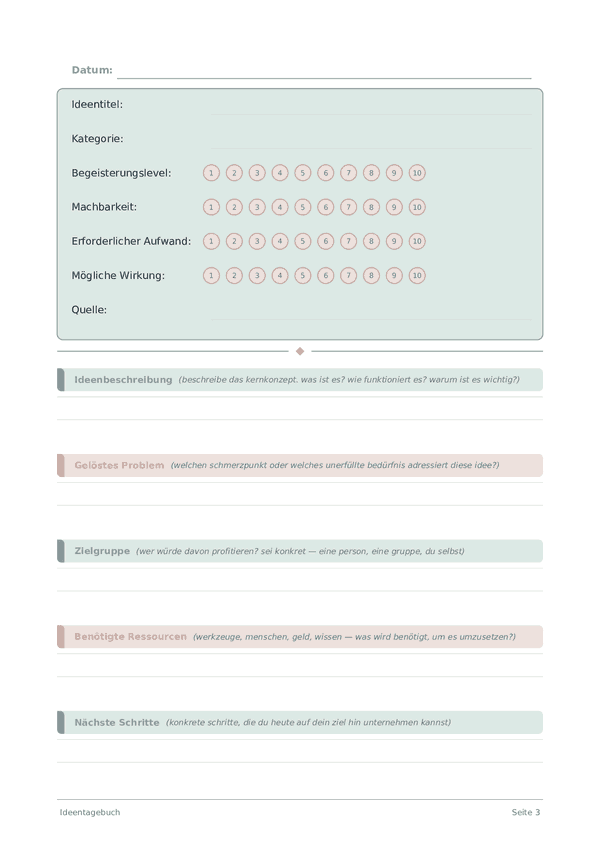
Ideentagebuch
Ihre besten Ideen festhalten, bewerten und weiterentwickeln
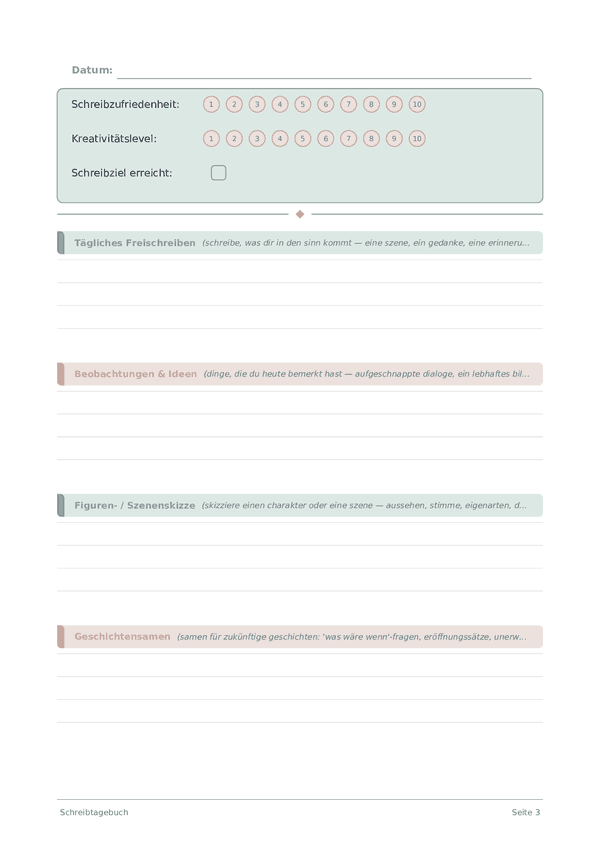
Schreibtagebuch
Tägliche kreative Schreibpraxis & Handwerksentwicklung
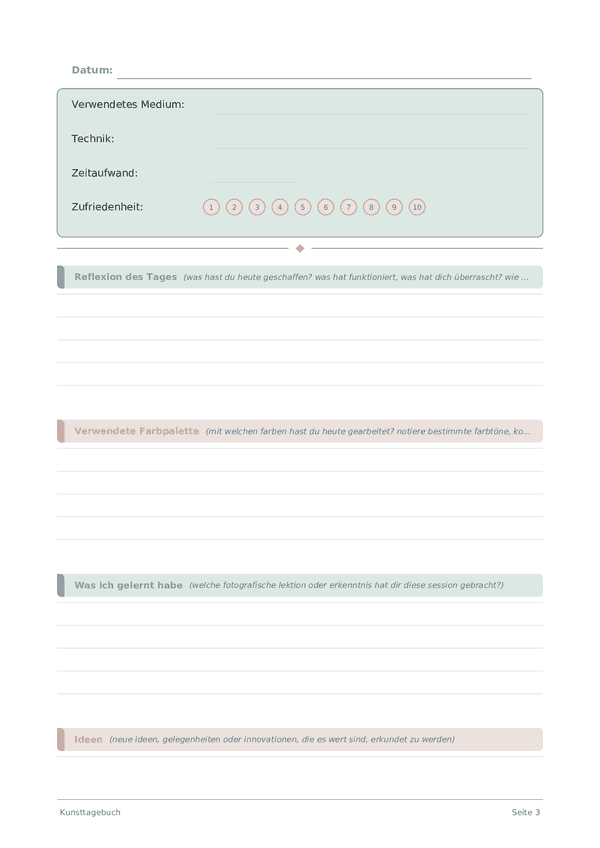
Kunsttagebuch
Dokumentieren Sie Ihren kreativen Prozess und künstlerisches Wachstum
Skizzenbuch-Tagebuch
Offene Punktraster-Seiten zum Skizzieren, Zeichnen und visuellen Entdecken

Scrollen zum Zoomen, ziehen zum Bewegen