Printable Schreibtagebuch
Tägliche kreative Schreibpraxis & Handwerksentwicklung
A structured daily journal for writers of all levels. Each page combines quick satisfaction and creativity trackers with generous writing space for freewriting, character sketches, story seeds, and craft reflection. Whether you write fiction, poetry, memoir, or essays — this journal builds the daily habit that transforms aspiring writers into practicing ones.
Felder anpassen
Schalten Sie Felder ein oder aus. Klicken Sie auf den Stift zum Umbenennen oder fügen Sie eigene Felder hinzu.
Vorteile
Anleitung
Was ist dieses Journal?
A Writer's Journal is a hybrid tool that pairs daily writing metrics with creative reflection. The top section tracks your writing satisfaction, creativity level, and whether you met your writing goal. The bottom section provides generous space for freewriting, capturing observations and ideas, sketching characters or scenes, planting story seeds, and reflecting on your writing practice. It is both a log and a creative incubator.
Every published author will tell you that consistency matters more than inspiration. This journal supports that consistency by making your writing practice visible and measurable. The tracker section takes the guesswork out of progress — you can see at a glance whether your satisfaction and creativity are trending up or down over weeks. The writing sections keep your creative muscles engaged even on days when the main project feels stuck.
Use the freewrite section first thing each morning to warm up your writing brain. Do not edit, do not censor — just let words flow for ten minutes. Then fill in observations, character sketches, or story seeds throughout the day as they occur to you. At the end of the day, complete the tracker and write a brief reflection on what worked and what did not. Over months, this journal becomes a goldmine of raw material for your larger projects.
Ausgefülltes Beispiel
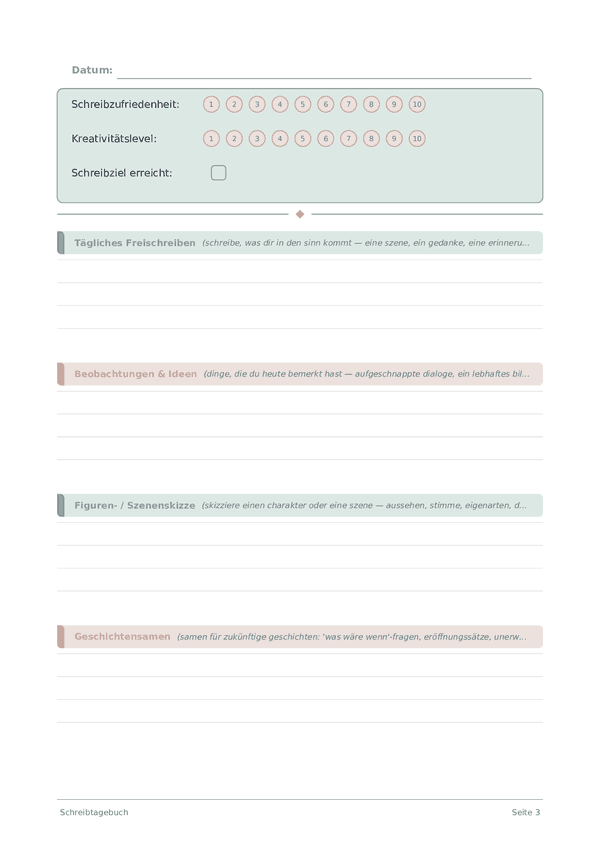
So sieht ein typischer Eintrag aus, wenn er ausgefüllt ist:
Wie Sie jedes Feld ausfüllen
Oben auf jeder Seite befinden sich schnell ausfüllbare Felder (Bewertungen, Kontrollkästchen, Zahlen). Darunter ist ein linierter Bereich zum Schreiben. Hier erfahren Sie, was jedes Feld bedeutet:
Schreibzufriedenheit
Wie zufrieden bist du mit dem heutigen Schreiben? 1 = frustriert, 10 = zutiefst erfüllt
Kreativitätslevel
Wie kreativ hast du dich heute gefühlt? 1 = völlig blockiert, 10 = Ideen sprudeln nur so
Schreibziel erreicht
Hast du dein Schreibziel heute erreicht — Wortzahl, Zeit oder Seiten? Ja, nein oder teilweise
Tägliches Freischreiben
Schreibe, was dir in den Sinn kommt — eine Szene, ein Gedanke, eine Erinnerung. Nicht korrigieren, einfach die Worte fließen lassen
Beobachtungen & Ideen
Dinge, die du heute bemerkt hast — aufgeschnappte Dialoge, ein lebhaftes Bild, eine Geschichte-Idee
Figuren- / Szenenskizze
Skizziere einen Charakter oder eine Szene — Aussehen, Stimme, Eigenarten, Details der Umgebung
Geschichtensamen
Samen für zukünftige Geschichten: 'Was wäre wenn'-Fragen, Eröffnungssätze, unerwartete Wendungen
Schreibreflexion
Was hast du heute über dein Schreiben gelernt? Was hat funktioniert, wo hast du gestockt?
Tipps für den Erfolg
Wann und wie oft schreiben
Write daily, ideally at the same time to build a routine. Morning pages work best for clearing mental clutter; evening sessions suit reflective and narrative writing. Aim for a minimum of 15-20 minutes or 300 words — enough to warm up and produce something real. Weekly, reread the week’s entries and highlight any phrases, ideas, or scenes worth developing. Monthly, review your word count trends and satisfaction ratings to see if your practice is growing or stagnating, and adjust your routine accordingly.
Häufig gestellte Fragen
Was ist ein Schreib-Journal und für wen ist es?
Es ist ein tägliches Journal für Schreibende jeder Stufe — Fiction, Lyrik, Memoiren, Essays. Jede Seite kombiniert einen kurzen Tracker (Schreibzufriedenheit, Kreativitätslevel, Ziel-erreicht-Häkchen) mit zehn linierten Zeilen für tägliches Freewriting, Beobachtungen, Charakter- oder Szenenskizzen, Story-Keime und Handwerksreflexion. Ziel ist die konsequente Praxis, die Anne Lamott (1994, Bird by Bird, Anchor) und Stephen King (2000, On Writing, Scribner) beide als die eigentliche Arbeit des Schreibens beschreiben.
Wie lange sollte ich pro Seite freewriten?
Fünfzehn bis zwanzig Minuten sind Standard — lange genug, um über Oberflächengedanken hinauszukommen. Pennebakers Protokolle zum expressiven Schreiben (in Dutzenden veröffentlichter Studien zu Schreiben und Wohlbefinden) verwenden konsequent 15-20-Minuten-Sitzungen. Schreibe ohne Anhalten oder Korrigieren; wenn du stockst, wiederhole deinen letzten Satz. Die zehn linierten Zeilen entsprechen handschriftlich ungefähr diesem Umfang.
Wie nutze ich Zufriedenheits- und Kreativitätsbewertung effektiv?
Bewerte direkt nach dem Schreiben, nicht davor. Über Wochen zeigen die beiden Werte, wann du am besten arbeitest — Tageszeit, Schlafniveau, nach Sport, vor E-Mails. Csikszentmihalyi (1990, Flow, Harper) betonte, dass Schaffende keinen konstanten Flow haben; Tracking deckt die Bedingungen auf, die ihn erzeugen. Das Ziel-erreicht-Häkchen trennt Anstrengung vom Output: ein Tagesziel zu erreichen ist wichtiger, als sich brillant zu fühlen.
Verbessert tägliches Schreiben wirklich das Handwerk?
Ja — die Prinzipien der deliberate practice aus Ericsson, Krampe und Tesch-Römer (1993, Psychological Review, 100(3), 363-406) übertragen sich aufs Schreiben, wenn Sitzungen spezifische Ziele und Reflexion enthalten. Das Schreib-Journal baut diesen Kreislauf: ein klares Ziel oben, fokussierte Praxis im Freewriting, Handwerksreflexion unten. Ericssons späteres Buch Peak (2016, Houghton Mifflin Harcourt) erweitert dies auf kreative Bereiche.
Was kommt in den Charakter- oder Szenenskizzen-Abschnitt?
Ein kurzer Absatz — körperliches Detail, Stimme, Geste, eine aufschlussreiche Handlung. Lamott (1994, Bird by Bird, Anchor) nennt diese "short assignments" und argumentiert, dass Bücher genau so entstehen: nicht in Bögen, sondern in kleinen, konkreten Stücken. Nutze sinnliche Spezifik statt Abstraktion. Die heutige Zwei-Zeilen-Skizze kann morgen zum Kapitel werden, aber ihre erste Aufgabe ist, dein Auge für Details zu schulen.
Wie unterscheidet sich das von Morning Pages oder Journaling-Apps?
Morning Pages (drei Seiten Bewusstseinsstrom) klären den mentalen Lärm; dieses Journal dient dem Handwerk. Der Tracker erzwingt Messung, die zusätzlichen Prompts (Story-Keime, Charakterskizze) erzwingen generativen Output, und die Reflexionszeile baut Metakognition über dein eigenes Schreiben auf. Apps fehlt die Reibung, die laut Zinsser (2006, On Writing Well, Harper Perennial) klareres Denken erzwingt — langsame Handschrift erzeugt oft schärfere Prosa.
Was schreibe ich bei einer Schreibblockade?
Nutze die Prompts der Reihe nach: Beobachtungen vom Tag, ein aufgeschnappter Satz, ein sinnliches Detail, eine einzige Charaktergeste. Blockade bedeutet meist, das Falsche schreiben zu wollen — Lamott (1994, Bird by Bird, Anchor) empfiehlt den "one-inch picture frame"-Ansatz: schreibe nur, was in eine winzige Szene passt. Der Freewriting-Bereich ist genau dafür gemacht — niedrigschwellige Generierung, keine fertige Prosa.
Wann sehe ich echte Verbesserung durch tägliches Journaling?
Erwarte spürbare Veränderung in 8-12 Wochen konsequenter Praxis und messbares Handwerkswachstum in 6-12 Monaten. Ericssons Forschung (Ericsson et al., 1993, Psychological Review, 100(3)) zeigt, dass fokussierte, reflektierte Praxis — nicht rohe Stunden — die Fortschritte erzeugt. Zwanzig Minuten täglich mit Zufriedenheits-Tracker und Reflexions-Prompts sind wirksamer als zwei unfokussierte Stunden pro Woche. Sieh Einträge monatlich durch, um Fortschritt zu bestätigen.
Das könnte Ihnen auch gefallen
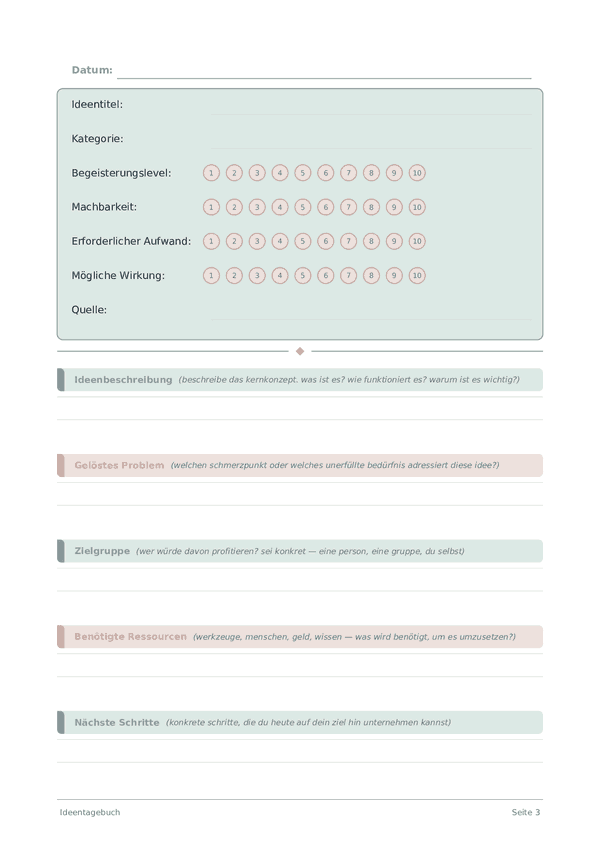
Ideentagebuch
Ihre besten Ideen festhalten, bewerten und weiterentwickeln
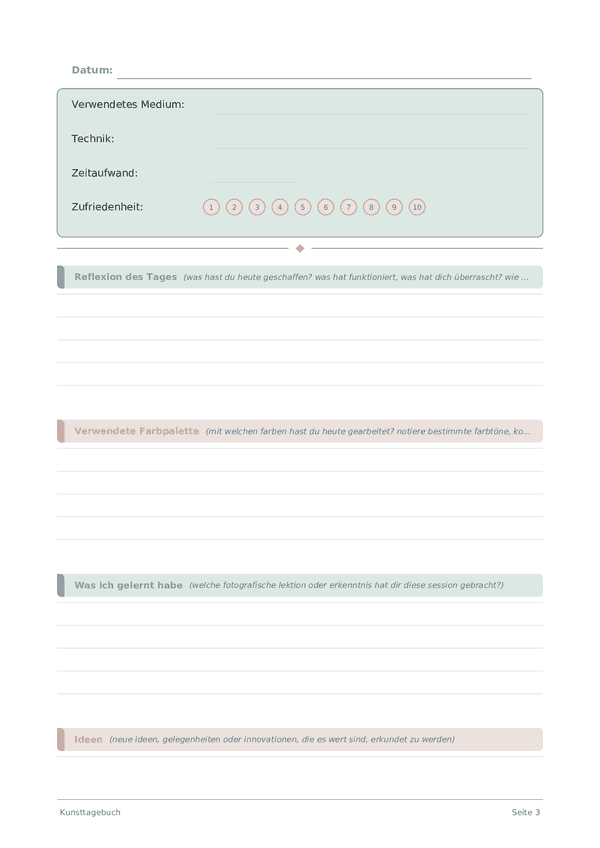
Kunsttagebuch
Dokumentieren Sie Ihren kreativen Prozess und künstlerisches Wachstum
Skizzenbuch-Tagebuch
Offene Punktraster-Seiten zum Skizzieren, Zeichnen und visuellen Entdecken

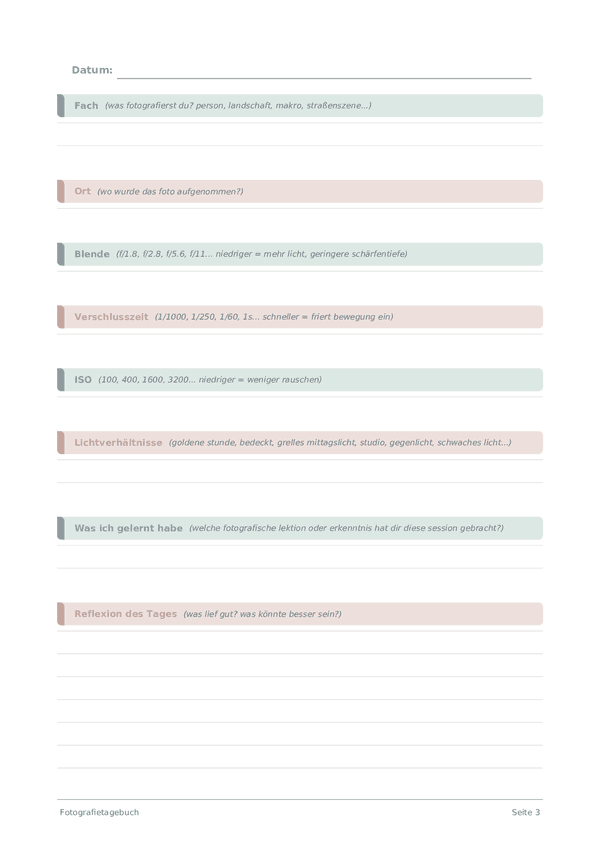
Fotografietagebuch
Shootings, Einstellungen und kreative Erkenntnisse nach jeder Session festhalten
Scrollen zum Zoomen, ziehen zum Bewegen