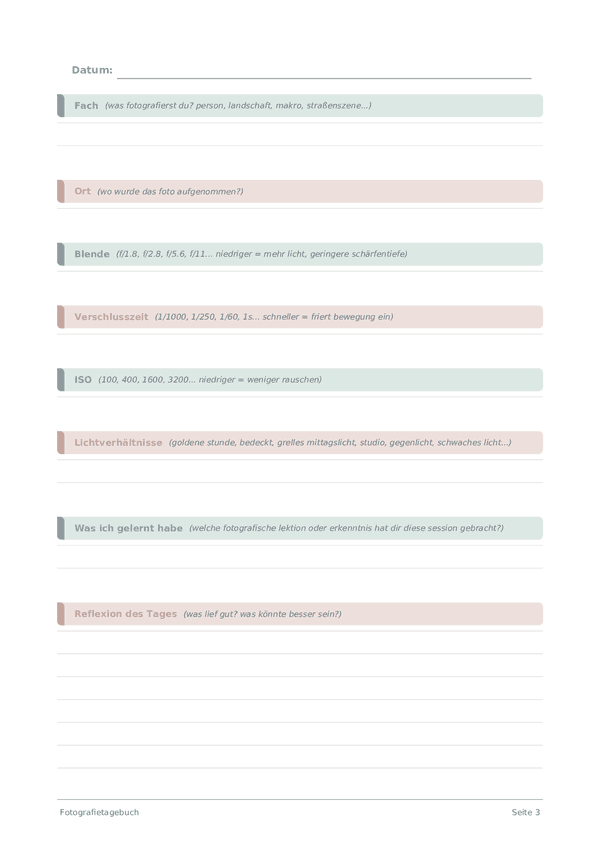
Printable Fotografietagebuch
Shootings, Einstellungen und kreative Erkenntnisse nach jeder Session festhalten
A structured photography journal to record subjects, camera settings, lighting, and reflections. Reviewing your process helps you develop consistent technique and a stronger photographic vision.
Felder anpassen
Schalten Sie Felder ein oder aus. Klicken Sie auf den Stift zum Umbenennen oder fügen Sie eigene Felder hinzu.
Vorteile
Anleitung
Was ist dieses Journal?
A photography journal is a dedicated space where you document every shoot — from camera settings and lighting conditions to creative reflections and lessons learned. Whether you are a hobbyist discovering your style or a working photographer refining your craft, writing down the details of each session accelerates your growth in ways that reviewing photos alone cannot.
Each entry prompts you to record the subject you photographed, the technical settings you chose (aperture, shutter speed, ISO), and the lighting you worked with. More importantly, it asks you to reflect on what you learned and what you would do differently next time. Over weeks and months these notes reveal patterns in your decision-making that help you become a more intentional photographer.
Use this journal right after a shoot while the details are still fresh. It takes only a few minutes per session and builds a searchable archive of your entire photographic journey — one that no camera roll can replace.
Ausgefülltes Beispiel
So sieht ein typischer Eintrag aus, wenn er ausgefüllt ist:
Wie Sie jedes Feld ausfüllen
Jeden Tag finden Sie mehrere beschriftete Abschnitte mit Zeilen zum Schreiben. Hier erfahren Sie, wofür jeder Abschnitt gedacht ist:
Fach
Was fotografierst du? Person, Landschaft, Makro, Straßenszene...
Ort
Wo wurde das Foto aufgenommen?
Blende
f/1.8, f/2.8, f/5.6, f/11... Niedriger = mehr Licht, geringere Schärfentiefe
Verschlusszeit
1/1000, 1/250, 1/60, 1s... Schneller = friert Bewegung ein
ISO
100, 400, 1600, 3200... Niedriger = weniger Rauschen
Lichtverhältnisse
Goldene Stunde, bedeckt, grelles Mittagslicht, Studio, Gegenlicht, schwaches Licht...
Was ich gelernt habe
Schreiben Sie eine neue Sache auf, die Sie heute gelernt haben. Es kann eine Tatsache sein, eine Fähigkeit, eine Erkenntnis über sich selbst oder eine Lebenslektion. Tägliches Lernen summiert sich zu Weisheit.
Reflexion des Tages
Blicken Sie ehrlich auf Ihren Tag zurück. Was lief gut? Was könnte besser sein? Es geht nicht um Urteile — es geht um Lernen und Wachstum.
Tipps für den Erfolg
Wann und wie oft schreiben
Make a journal entry after every dedicated shoot or photo walk while the experience is still tactile. If you shoot casually throughout the week, batch your reflections into one focused session on the weekend. Monthly, review your entries to identify recurring themes and technical gaps. Quarterly, select your ten best images from journal entries and compare them to the previous quarter — this curated comparison reveals growth that daily shooting alone obscures.
Häufig gestellte Fragen
Was erfasst das Fotografie-Journal nach jedem Shooting?
Acht Felder pro Sitzung: Motiv, Ort, Blende, Belichtungszeit, ISO, Lichtbedingungen, Gelerntes und Reflexion. Das Belichtungsdreieck (Blende, Verschluss, ISO) plus Motiv und Licht ergeben eine vollständige technische Aufzeichnung jedes Shots oder jeder Sitzung. Die Felder für Lernen und Reflexion verwandeln das technische Log in ein Werkzeug der deliberate practice statt einer bloßen Metadaten-Ablage.
Warum Blende, Verschlusszeit und ISO notieren, wenn die Kamera EXIF speichert?
EXIF sagt dir, was die Kamera getan hat; das Journal zwingt dich, dich zu erinnern, warum. "f/1.8, weil ich geringe Schärfentiefe wollte" schafft explizite Begründung, die Ericsson et al. (1993, Psychological Review, 100(3), 363-406) als wesentlich für deliberate practice bezeichnen. Ohne Verbalisierung werden Einstellungen Gewohnheit statt Wahl. EXIF-Suche und -Sortierung ist mühsam; ein strukturiertes Papier-Log lässt sich in Minuten durchsehen.
Wie beschreibe ich Lichtbedingungen nützlich in zwei Zeilen?
Decke vier Elemente ab: Quelle (natürlich/künstlich/gemischt), Richtung (Front, Seite, Gegenlicht, oben), Qualität (hart, weich, diffus) und Farbe (warm, neutral, kühl). Beispiel: "16 Uhr, bewölkt, weiches Nordfenster-Seitenlicht, kühles Blau." Über 30-50 Sitzungen wird daraus eine selbstgebaute Lichtreferenz. Fotografen, die Licht benennen, sehen es schärfer — ein wahrnehmungspsychologischer Trainingseffekt, belegt in vielen visuellen Disziplinen.
Was schreibe ich in "Gelerntes" versus "Reflexion"?
Gelerntes = eine konkrete, übertragbare Lektion ("Gegenlicht-Motive brauchen +1 EV Belichtungskorrektur"). Reflexion = breitere Gedanken zur Sitzung — was kreativ war, was frustriert hat, was du anders versuchen würdest. Die Trennung spiegelt die Struktur der deliberate practice aus Ericsson (2016, Peak, Houghton Mifflin Harcourt) wider: eine technische Erkenntnis plus metakognitive Durchsicht beschleunigen Fertigkeitswachstum mehr als jedes allein.
Verbessert das Loggen von Shootings wirklich die Fotografie?
Ja — aus dem gleichen Grund, aus dem deliberate practice in jedem Können-Bereich wirkt. Roediger und Karpicke (2006, Psychological Science, 17(3), 249-255) zeigten, dass Abruf und Artikulation das Gedächtnis stärker stärken als erneutes Anschauen. Einstellungen und Begründungen aufzuschreiben ist Abrufübung. Fotografen, die konsequent journalen, erkennen ihre Fehlermuster 2-3x schneller als jene, die Bilder nur visuell durchsehen.
Wie unterscheidet sich das Journal von Lightroom-Stichwörtern oder einer Foto-App?
Lightroom katalogisiert Bilder; dieses Journal katalogisiert dein Denken. Die acht Felder erzwingen narrative Begründung, die keine App erfasst: das Warum hinter Einstellungen, die gefühlte Qualität des Lichts, die Lücke zwischen Absicht und Resultat. Nutze beides — Lightroom für Bildverwaltung, das Journal für Handwerksentwicklung. Papier-Durchsicht reduziert zudem Bildschirmermüdung und verbessert das Erinnern laut mehreren Kognitionsstudien.
Soll ich das pro Aufnahme oder einmal pro Sitzung ausfüllen?
Einmal pro Sitzung bei alltäglichen Shoots; pro Keeper-Aufnahme bei Portfolio- oder Lernarbeit. Ziele auf 5-10 Minuten Journaling pro Stunde Fotografieren — genug, um die wichtigsten technischen Entscheidungen und eine klare Lektion festzuhalten. Pro Bild auszufüllen ist übertrieben und zerstört die Gewohnheit; nur Großshoots zu erfassen verliert das Lernen kleiner Sitzungen, wo das meiste Wachstum passiert.
Wie oft sollte ich vergangene Einträge durchsehen?
Wöchentliche Übersicht, monatliche tiefe Durchsicht. Der Spacing-Effekt aus Cepeda et al. (2006, Psychological Bulletin, 132(3), 354-380) zeigt, dass verteilte Durchsicht Lernen konsolidiert. Suche nach wiederkehrenden Fehlern ("ich unterbelichte Schnee immer wieder") und entstehendem Stil ("mich zieht Seitenlicht in flachen Winkeln an"). Das Journal wird zum persönlichen Fotografie-Handbuch — aus deinen eigenen Mustern, nicht aus Allgemeintipps.
Das könnte Ihnen auch gefallen
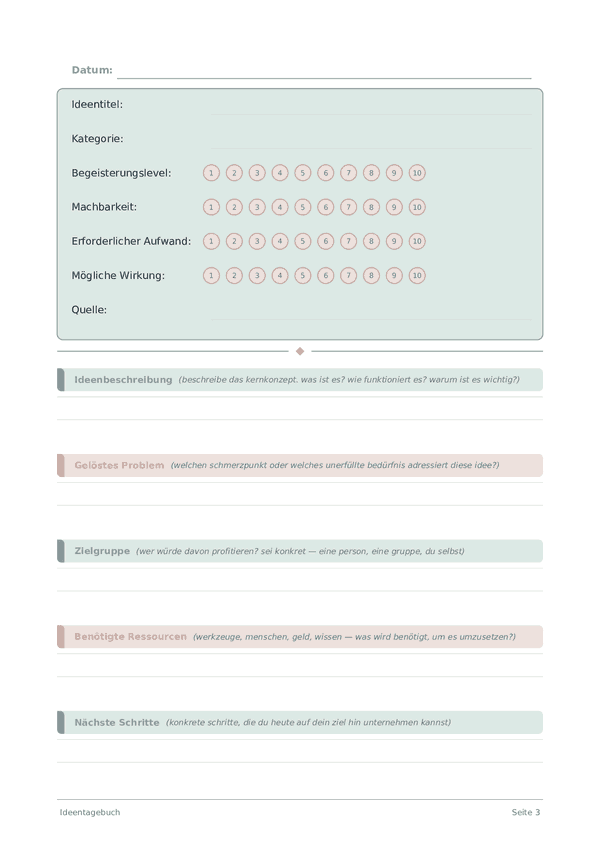
Ideentagebuch
Ihre besten Ideen festhalten, bewerten und weiterentwickeln
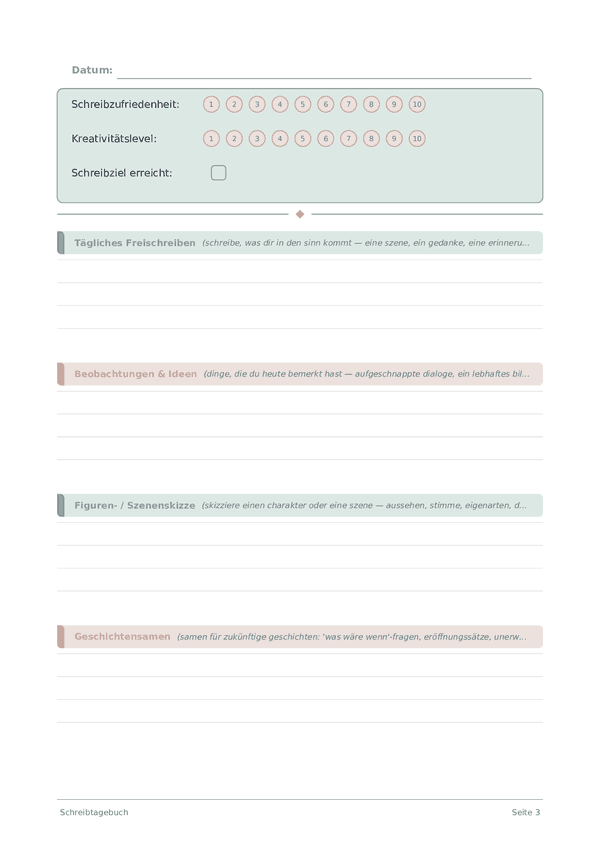
Schreibtagebuch
Tägliche kreative Schreibpraxis & Handwerksentwicklung
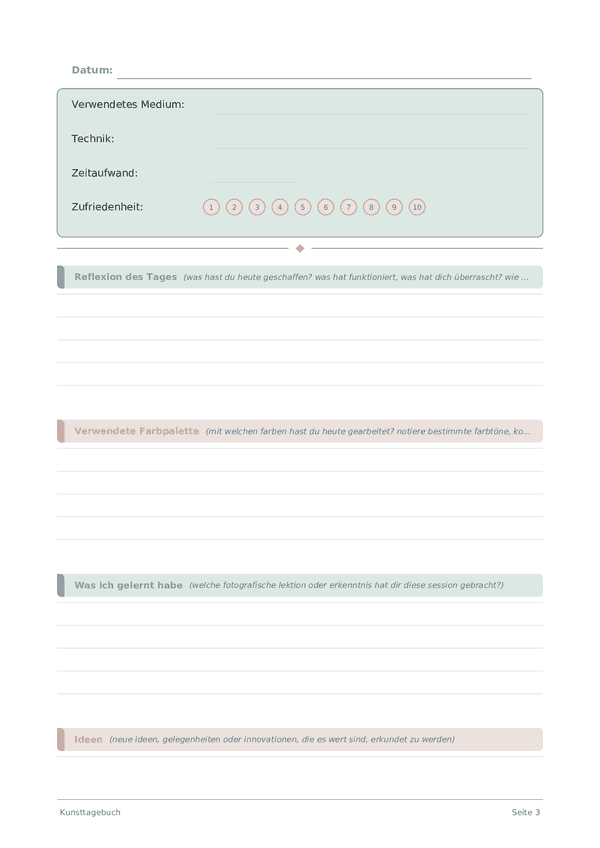
Kunsttagebuch
Dokumentieren Sie Ihren kreativen Prozess und künstlerisches Wachstum
Skizzenbuch-Tagebuch
Offene Punktraster-Seiten zum Skizzieren, Zeichnen und visuellen Entdecken

Scrollen zum Zoomen, ziehen zum Bewegen