Printable ADHD Journal
Your structured daily companion for focus, calm, and momentum
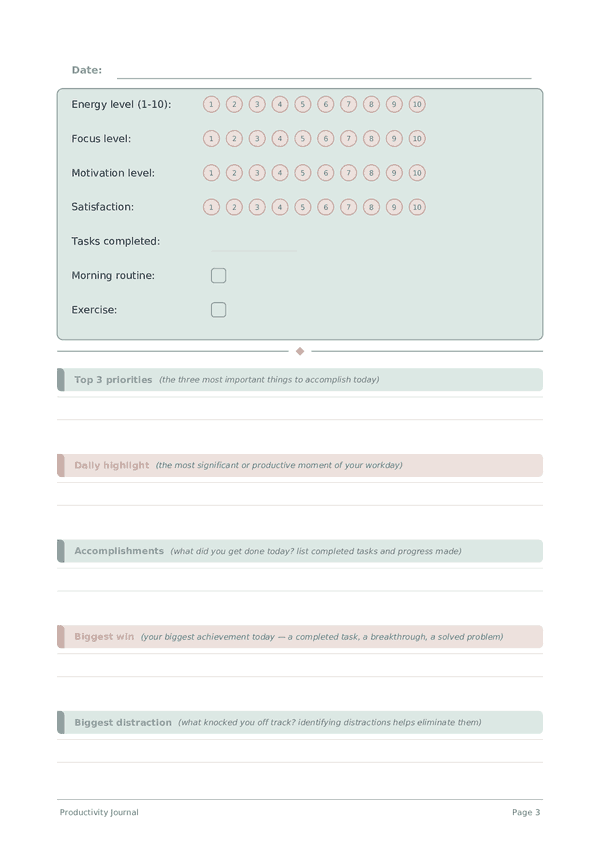
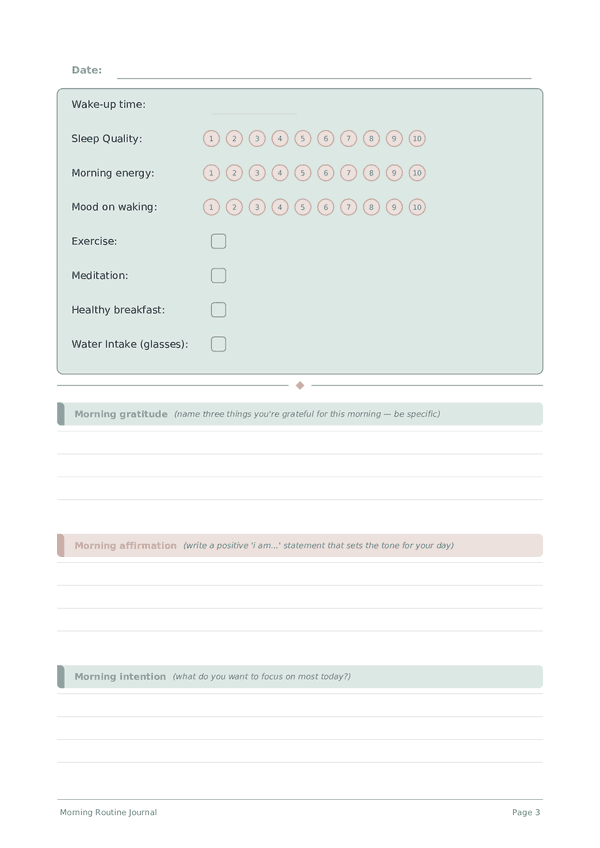
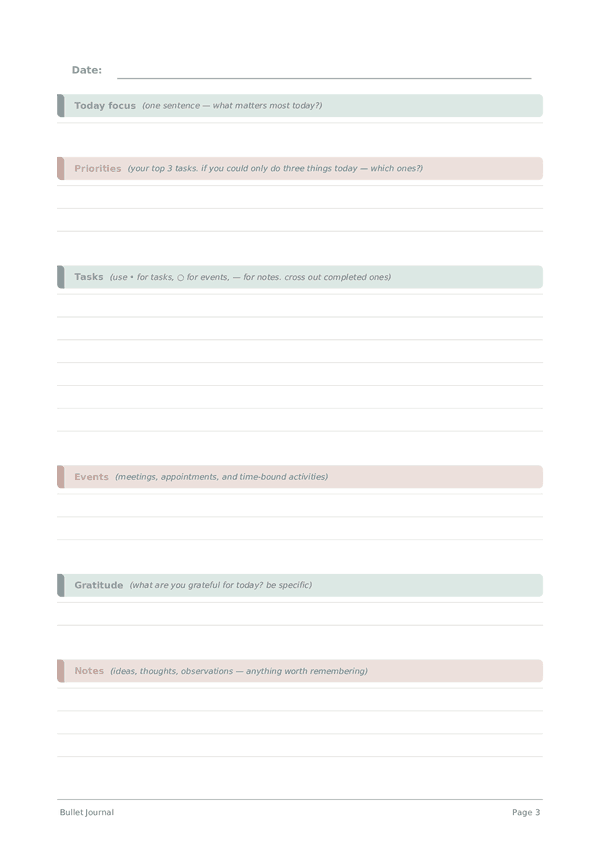
A daily journal designed specifically for people with ADHD. Each page helps you cut through the mental noise — track your focus and energy, capture the brain dump, set a clear intention, and prioritise what actually matters. Built around neurodivergent needs: minimal structure, maximum clarity.
Customize fields
Toggle fields on or off. Click the pencil to rename, or add your own fields.
Benefits
How to Use
What is this journal?
An ADHD journal is a daily support tool designed specifically for the ADHD brain. By tracking focus, mood, energy, and medication alongside writing about intentions, priorities, and brain dumps, you externalize the mental clutter and create a system that works with your neurology rather than against it.
This journal is for adults and teens with ADHD — diagnosed or suspected — who struggle with executive function, focus, time blindness, and emotional regulation. It is built to be quick and low-friction, because an elaborate journaling system that requires too much executive function defeats its own purpose.
ADHD coaching research shows that external accountability systems dramatically improve follow-through for ADHD brains. The brain dump section is particularly powerful — getting racing thoughts onto paper frees up working memory that ADHD brains need for task execution. Tracking patterns in focus and energy helps identify optimal windows for different types of work, turning self-knowledge into a productivity advantage.
Filled example
Here's what a typical entry looks like when filled in:
How to fill in each field
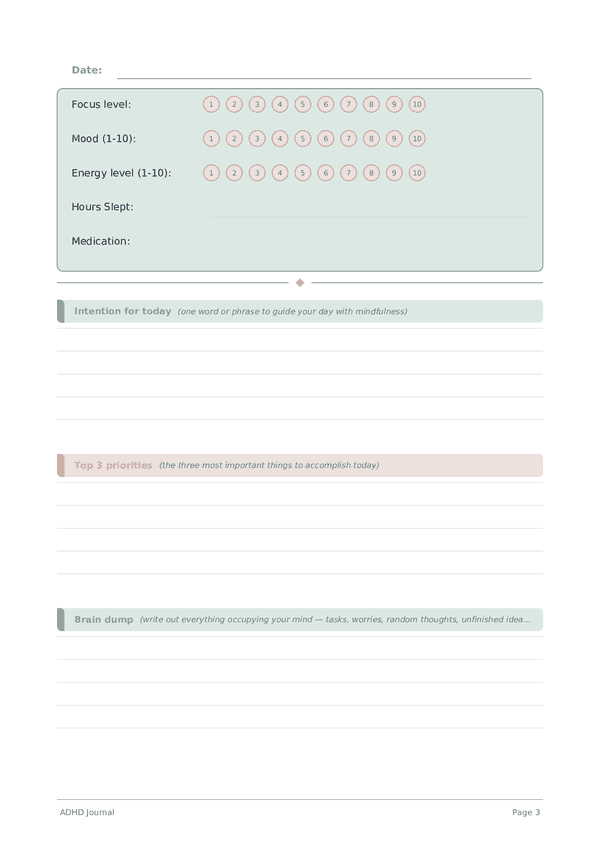
The top of each page has quick-fill fields (ratings, checkboxes, numbers). Below that is a lined section for writing. Here's what each field means:
Focus level
How well can you concentrate right now? Rate from 1 (scattered) to 10 (laser focus)
Mood (1-10)
Rate your overall emotional state for the day. 1 means very low or depressed, 10 means exceptionally happy and positive. Don't overthink — go with your gut feeling.
Energy level (1-10)
Rate your physical and mental energy level. 1 means exhausted and drained, 10 means fully energized and alert. This helps you identify what activities boost or drain your energy.
Hours Slept
Write how many hours you actually slept (not just time in bed). Tracking this alongside mood and energy often reveals powerful connections.
Medication
Record medications taken, including name and dosage. Consistent tracking helps you and your doctor evaluate treatment effectiveness.
Intention for today
One word or phrase to guide your day with mindfulness
Top 3 priorities
The three most important things to accomplish today
Brain dump
Write out everything occupying your mind — tasks, worries, random thoughts, unfinished ideas. Free up space
Today's reflection
Look back at your day honestly. What went well? What could be better? This isn't about judgment — it's about learning and growing.
Tips for success
When and how often to write
Write twice daily: a 2-minute evening entry (what worked today, what didn\u2019t, tomorrow\u2019s top 3) and a 1-minute morning check-in (energy level, medication, today\u2019s anchor task). Keep the journal next to where you actually sit — if it requires getting up to find it, ADHD friction will win. Weekly, spend 10 minutes reviewing patterns: which days were productive and why, which strategies helped, which times of day were your cognitive peaks. This journal works best when it is short, consistent, and immediately accessible.