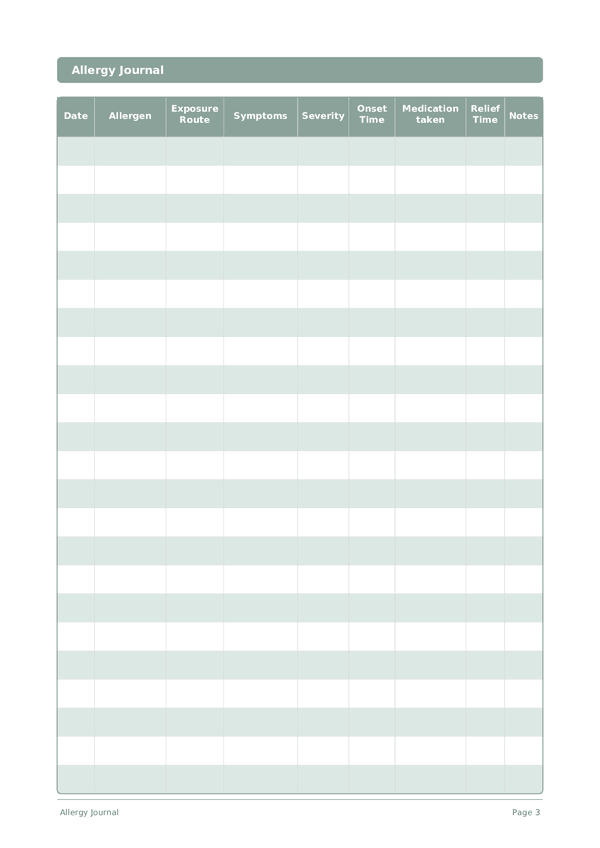
Printable Allergy Journal
Allergy reaction tracker and exposure log
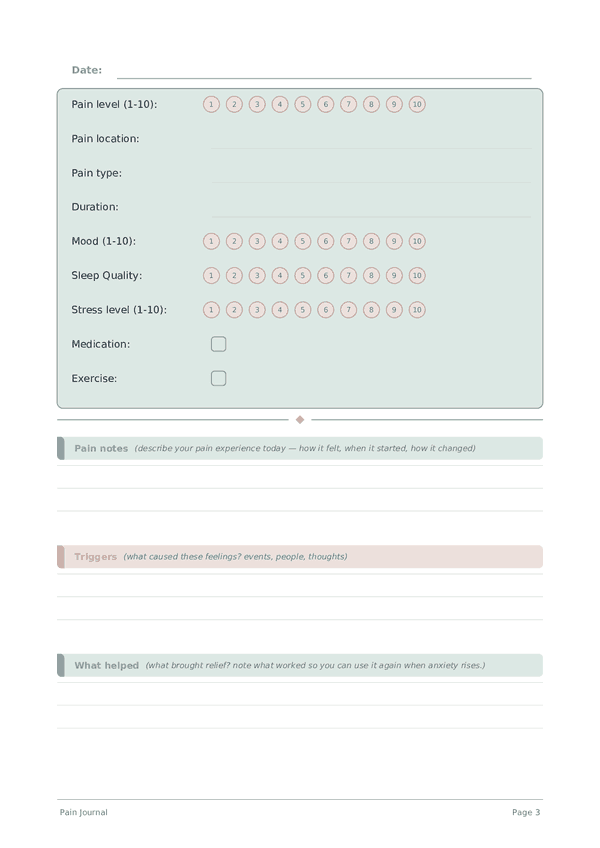
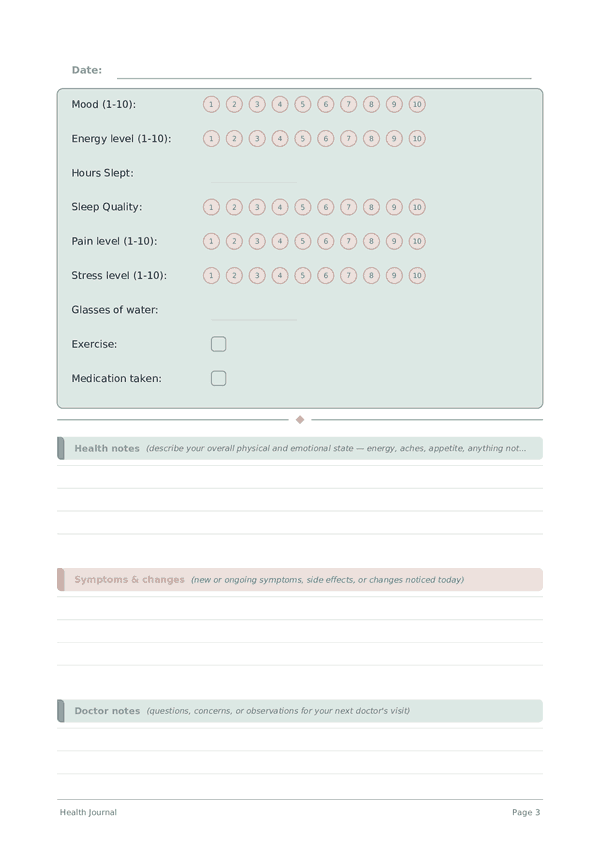
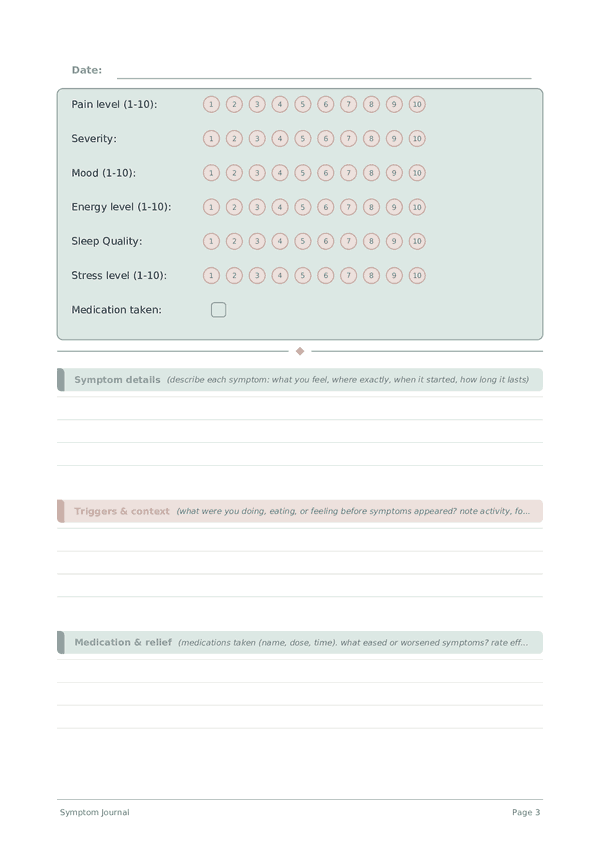
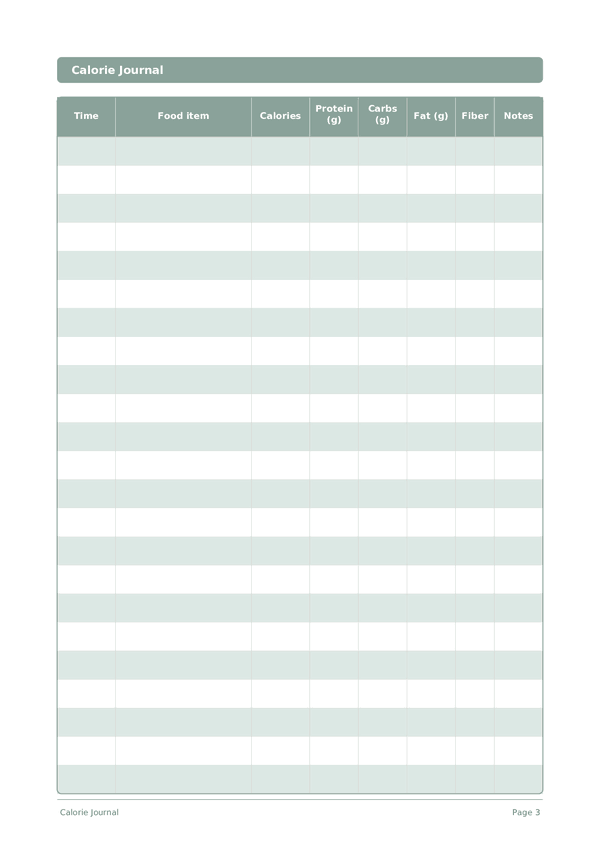
Track allergic reactions with detailed exposure and symptom logging. Identify patterns, monitor treatment effectiveness, and build comprehensive records to share with your allergist for better diagnosis and management.
Customize fields
Toggle fields on or off. Click the pencil to rename, or add your own fields.
What is this journal?
An allergy journal is a systematic log for tracking allergic reactions and identifying the substances that trigger them. Whether you are dealing with food allergies, seasonal hay fever, skin sensitivities, or environmental allergens, this journal helps you record each incident with enough detail to spot patterns and make informed decisions about avoidance strategies and treatments.
Allergies can be frustratingly difficult to pin down, especially when multiple allergens are involved or reactions are delayed. By recording the allergen, how you were exposed, the symptoms that appeared, their severity, timing, and what provided relief, you build a comprehensive history that an allergist can use to guide testing and treatment. Many people discover previously unrecognized triggers simply by reviewing a few weeks of careful entries.
This journal is particularly valuable for parents tracking children's allergies, individuals with multiple sensitivities, or anyone preparing for allergy testing. It ensures that no reaction goes undocumented and provides the detailed evidence needed for accurate diagnosis and effective management plans.
Filled example
Here's what a typical entry looks like when filled in:
| Date | Allergen | Exposure Route | Symptoms | Severity | Onset Time | Medication taken | Relief Time | Notes |
|---|---|---|---|---|---|---|---|---|
| 2026-02-28 | Pollen (birch) | Inhalation | Sneezing, itchy eyes, runny nose | 6 | Within 30 min | Cetirizine 10mg | 1 hour | Windy day, was outdoors for 2 hours |
| 2026-03-01 | Shrimp | Ingestion | Hives on arms, lip swelling | 8 | 15 minutes | Diphenhydramine 25mg | 3 hours | Accidental exposure in restaurant dish |
| 2026-03-02 | Dust mites | Inhalation | Nasal congestion, cough | 4 | 1 hour | Nasal corticosteroid spray | 2 hours | After cleaning old bookshelf |
| 2026-03-03 | Nickel (jewelry) | Skin contact | Red rash, itching at contact area | 5 | 6 hours | Hydrocortisone cream | 2 days | Wore new earrings for first time |
How to fill in each field
Each page is a table with columns. Fill in one row per entry. Here's what each column is for:
Date
Write today's date. This anchors your entry in time and helps when reviewing entries later.
Allergen
Record the allergen or suspected trigger. Being precise helps you and your doctor identify exactly what causes reactions.
Exposure Route
Symptoms
List symptoms you experienced today. Be specific about type, location, and severity. Patterns in symptoms often point to triggers or treatment needs.
Severity
How severe are your symptoms today? Rate from 1 (mild) to 10 (debilitating)
Onset Time
Medication taken
Did you take your medication today? Note what, when, and any doses missed
Relief Time
Notes
Add any additional context or thoughts. This catch-all column is for anything that doesn't fit elsewhere but might be useful later.
Tips for success
When and how often to write
Log every allergic reaction immediately with full details — waiting even a few hours causes you to forget potential triggers. During allergy season, make a brief daily entry even on symptom-free days, noting weather, outdoor time, and pollen exposure. This creates a complete picture for your allergist. If you suspect food allergies, log every meal and snack for at least 2 weeks to establish patterns. Before allergy appointments, review your journal to summarize your top triggers, most effective treatments, and any new or worsening reactions.