Printable Art Journal
Document your creative process and artistic growth
A structured art journal that combines quick session tracking with reflective writing. Log your medium, technique, time spent, and satisfaction for each creative session, then reflect on what you created, the colors you used, and what you learned. Perfect for artists, illustrators, and anyone exploring visual expression.
Customize fields
Toggle fields on or off. Click the pencil to rename, or add your own fields.
Benefits
How to Use
What is this journal?
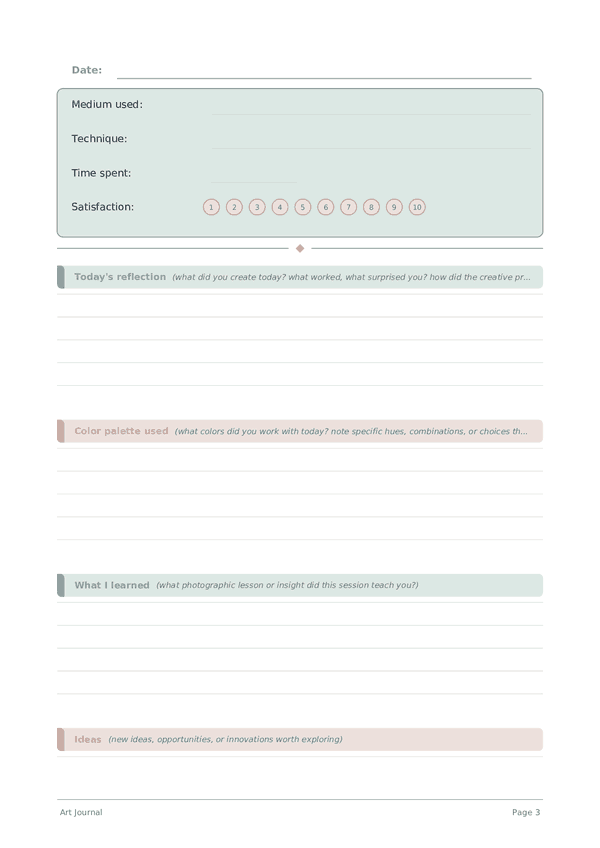
An Art Journal is a hybrid reflection tool for visual artists who want to grow intentionally. The top section tracks the medium used, technique practiced, time spent, and your satisfaction with the session. The bottom section provides space for written reflection, documenting your color palette, noting what you learned, and capturing ideas for future work. Together, they create a complete record of your artistic development.
Making art is inherently experiential, and much of what you learn in a session gets lost if you do not take a moment to articulate it. This journal bridges the gap between doing and understanding. When you write about why a certain color combination worked or why a technique felt awkward, you accelerate your learning in ways that practice alone cannot achieve.
Fill in the tracker immediately after each art session while the experience is still vivid. In the reflection section, write honestly about what went well and what frustrated you. Document the specific colors you mixed and the techniques you tried. Over months, this journal becomes an invaluable reference — a personal art education textbook written by the only teacher who knows exactly what you need to learn next: yourself.
Filled example
Here's what a typical entry looks like when filled in:
How to fill in each field
The top of each page has quick-fill fields (ratings, checkboxes, numbers). Below that is a lined section for writing. Here's what each field means:
Medium used
What medium did you work with today? e.g. watercolor, oil, pencil, charcoal, digital
Technique
What technique did you focus on or experiment with? e.g. dry brush, layering, crosshatching
Time spent
How long did you study?
Satisfaction
How satisfied are you with today's session? (1=frustrated, 5=very satisfied)
Today's reflection
Look back at your day honestly. What went well? What could be better? This isn't about judgment — it's about learning and growing.
Color palette used
What colors did you work with today? Note specific hues, combinations, or choices that felt right
What I learned
Write one new thing you learned today. It can be a fact, a skill, an insight about yourself, or a life lesson. Daily learning compounds into wisdom.
Ideas
Capture your ideas before they disappear. No idea is too small or silly. Some of the best breakthroughs start as rough, half-formed thoughts.
Tips for success
When and how often to write
Aim for two to three sessions per week, each 20 to 45 minutes. Daily practice is wonderful but can create pressure that kills spontaneity — art journaling thrives on desire, not obligation. Keep your journal accessible (on your desk, not in a drawer) so you can grab it whenever inspiration strikes. Once a month, flip through the entire journal without judgment, just noticing which pages pull your eye. This review often sparks new ideas and reminds you how far your visual vocabulary has come.